Wet vs. Dried Cassava Pulp: What’s the Difference, and Which Is More Cost-Effective?
By Sri Thong Admin · Published 2026-06-06 · Updated 2026-06-07
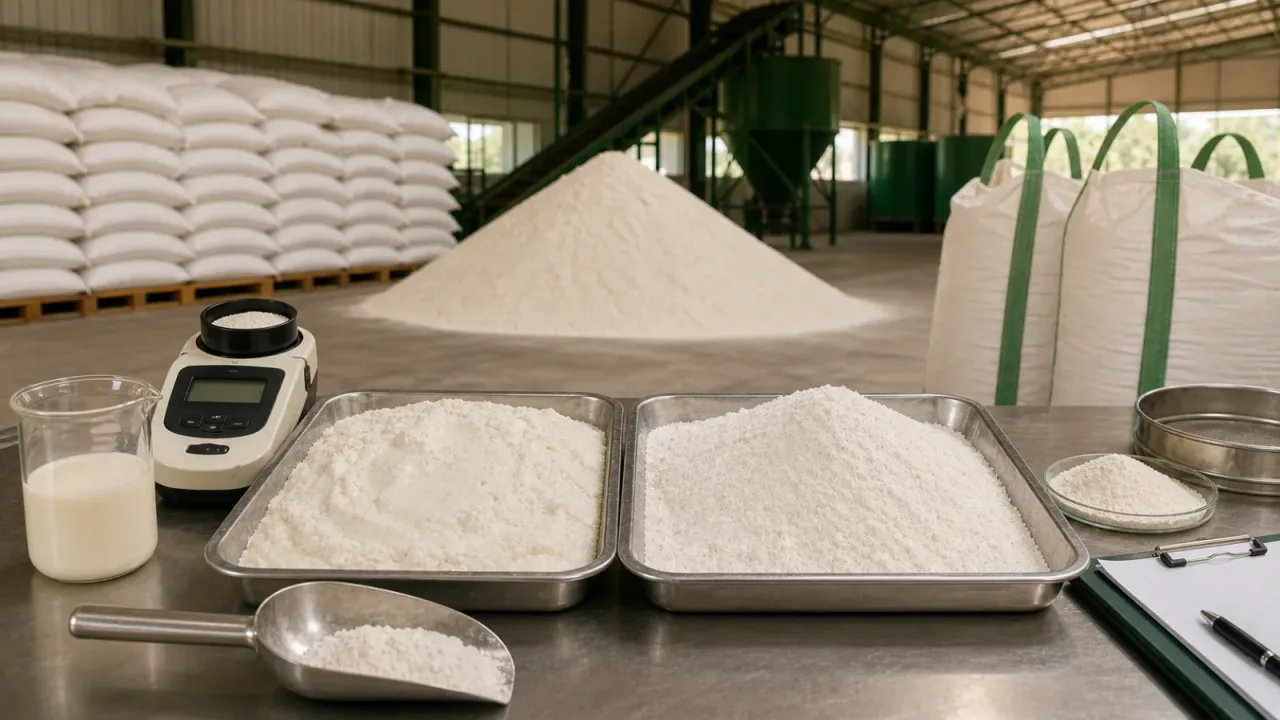
Executive Summary for Decision Making
Choosing between "wet" and "dry" cassava pulp for the animal feed industry cannot be based on the price per ton alone. The key lies in considering the "Cost per Nutrient Unit," which must account for moisture content and its impact on energy density (ME), the logistical burden of transporting water in wet pulp, and warehouse management risks—namely spoilage in wet pulp and mold growth in dry pulp. Therefore, the most cost-effective decision depends on the animal type (ruminants vs. monogastrics) and the raw material handling capabilities of each factory or farm.
Introduction: Cassava Pulp and Energy Cost Management in the Modern Era
In an era where the prices of primary raw materials like maize and soybean meal are highly volatile and trending upward, animal feed producers and farmers must seek more cost-effective alternative energy sources to maintain competitiveness. Cassava pulp has become a highly popular strategic raw material, as it is a massive byproduct of the cassava starch processing industry in Thailand.
However, a major challenge for animal nutritionists and procurement departments is evaluating the cost-effectiveness between wet and dry cassava pulp. This article will delve into technical and economic data to enable precise decision-making, focusing on achieving maximum production efficiency and the lowest total cost.
In-depth Physical Characteristics and Production Processes
Wet Cassava Pulp
Wet cassava pulp is a direct byproduct of the starch processing stage, characterized by a thick liquid or pulp with very high moisture content (often exceeding 70-80%). Its physical state is soft and moist because it is a product of the separation and washing stages, meaning water is the primary component of its total weight.
Dry Cassava Pulp
Dry cassava pulp is produced by subjecting wet pulp to a drying process, using heat to remove water from the plant tissue until an appropriate moisture level for storage is reached (typically below 12-14%). This process results in distinct physical changes: the material becomes firmer, the nutrient density per unit of weight increases, and it takes on a flake or dry powder form, making it easier to manage as a dry ingredient.
Nutritional Comparison: More Than Just Weight
Metabolizable Energy (ME) and the Dry Matter (DM) Aspect
The most common error in comparison is comparing weight vs. weight without considering dry matter. When formulating diets, nutritionists must use the Dry Matter (DM) value as the standard, because the water in wet cassava pulp provides no energy to the animals.
When considering energy per ton: Dry cassava pulp provides significantly higher ME than wet cassava per ton because the majority of wet pulp's weight is water, whereas dry pulp is concentrated nutrients. Therefore, purchasing wet pulp at a lower price "per ton" than dry pulp does not necessarily mean the energy cost is lower if the water content in the wet pulp is too high.
The Moisture Factor and Nutrient Dilution Effect
The high moisture content in wet cassava pulp leads to the Nutrient Dilution Effect. As water content increases, the proportion of Crude Protein (CP) and Crude Fiber (CF) per unit of weight immediately decreases. Diet formulation must, therefore, carefully adjust for moisture levels to ensure the animals receive the required nutrient levels according to production standards.
Safety Issues and Hydrogen Cyanide (HCN) Management
Cassava naturally contains cyanide compounds (Hydrogen Cyanide - HCN), which can be dangerous to animals if consumed in high amounts. In wet cassava pulp, the starch washing process helps reduce HCN levels to a certain extent, but production must be closely monitored. In dry cassava pulp, the heat from the drying process helps break down HCN, reducing it to levels that are safe for use in animal feed.
Economic and Logistics Value Analysis
Cost per Nutrient Unit
In the animal feed business, profit does not come from the lowest raw material price, but from the "lowest nutrient cost." For example, if dry cassava pulp is 10,000 THB/ton and wet cassava pulp is 4,000 THB/ton, but the wet pulp is 80% water, it means 1 ton of wet pulp contains only 200 kg of actual nutrients, compared to the high nutrient concentration in dry pulp. Therefore, the true cost must be calculated in Baht per MJ ME (Baht per unit of energy).
Hidden Transportation and Logistics Costs
This is the deciding factor for feed mills. Transporting wet cassava pulp is essentially "transporting water," which unnecessarily increases freight costs. If the source of wet pulp is far from the factory, the transportation cost may become so high that the total cost per nutrient unit exceeds that of dry pulp, even if the dry pulp source is further away due to its higher nutrient concentration.
Inventory Management Challenges
Wet Cassava Pulp: Has a very short shelf-life; carries a risk of undesirable fermentation and spoilage, which affects the odor and quality of the feed. If management systems are inadequate, it can lead to microbial contamination issues.Dry Cassava Pulp: While it can be stored longer, a major risk is Mold and Aflatoxin if moisture control during storage or warehouse ventilation is insufficient.
Selection Strategies by Animal Type and Production Goals
Ruminants (Beef/Dairy Cattle)
For ruminant farmers, wet cassava pulp can be used effectively through the Silage (fermentation) process, which helps extend shelf-life and preserve nutritional value. Using wet cassava pulp in silage form significantly reduces both roughage and concentrate costs.
Monogastrics (Swine/Poultry)
For complete feed production (Feed Mills) for monogastric animals, dry cassava pulp is the more appropriate choice due to the need for precision nutrition (controlling nutrient levels) and the convenience of mixing it with other ingredients in a mixer without altering the overall moisture of the diet formula.
Conclusion and Recommendations (Decision Matrix)
Summary Table of Key Characteristics
| Consideration Factor | Wet Cassava Pulp | Dry Cassava Pulp |
| Nutrient Density | Low (due to high moisture) | High (concentrated nutrients)
Pre-purchase Decision ChecklistBefore finalizing an order or contract, you should verify the following factors:
If you require further technical insights regarding product specifications or wish to request a sample for testing in your feed formulation, please contact our technical department immediately for information and a quotation. Sources

Author information Sri Thong AdminB2B dried cassava pulp content specialist Affiliation SRITHONG PRODUCTTAPIOCA COMPANY LIMITED Related articles
What Is Dried Cassava Pulp? Uses and Which Businesses It FitsAn in-depth analysis of using dried cassava pulp as an alternative ingredient in the animal feed industry to reduce production costs and manage the price risks of primary raw materials, along with nutritional quality control guidelines to achieve maximum efficiency for both ruminants and monogastric animals. 
Why Feed Mills Should Keep a Backup Dry Cassava Pulp Supplier in KoratSustainability strategy in the animal feed supply chain through multi-sourcing of dried cassava pulp in Nakhon Ratchasima to mitigate single-supplier dependency risks, control logistics costs, and maintain raw material quality stability amidst market volatility. 
Documents Feed Mills Should Request from Cassava Pulp SuppliersA summary of essential documents that animal feed mills must verify from cassava pulp suppliers, covering nutrition, contamination safety, production standards, and traceability, in order to manage risks and ensure consistent raw material quality control. |