Documents Feed Mills Should Request from Cassava Pulp Suppliers
By Sri Thong Admin · Published 2026-06-25 · Updated 2026-06-06
Summary of the importance of inspecting cassava pulp raw material documents for animal feed factories
Quality management of Cassava Pulp in the animal feed industry is not merely about comparing prices per ton, but is a matter of Risk Management that affects production costs and animal safety within the food chain. Controlling nutritional variability and preventing contamination from mycotoxins or heavy metals are core priorities that animal feed factories must address. Therefore, requesting documents such as the Certificate of Analysis (CoA), Safety Analysis reports, and Audit Reports from suppliers is an indispensable step to ensure that the raw materials entering the production process meet consistent standards, allow for accurate feed formulation, and reduce the risk of finished product quality issues.
1. Nutritional Profile Verification
The accuracy of animal feed formulas depends on the consistency of raw materials. If nutritional values in cassava pulp have high variability, nutritionists will be unable to accurately calculate energy and protein values, leading to wasted costs from over-supplementing nutrients or failures in achieving animal production performance. Documents to be inspected include:
Certificate of Analysis (CoA) per Batch/Lot
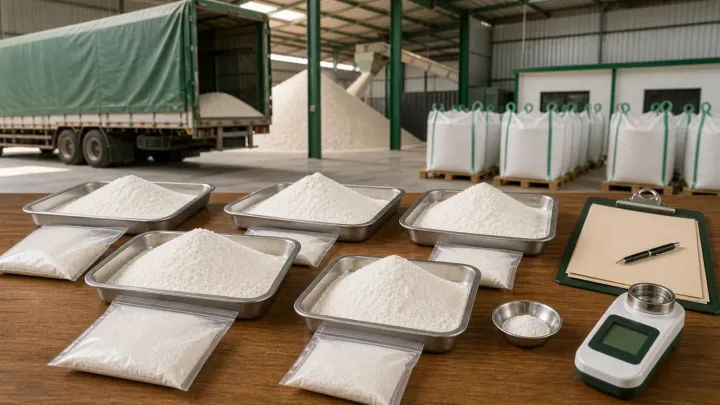
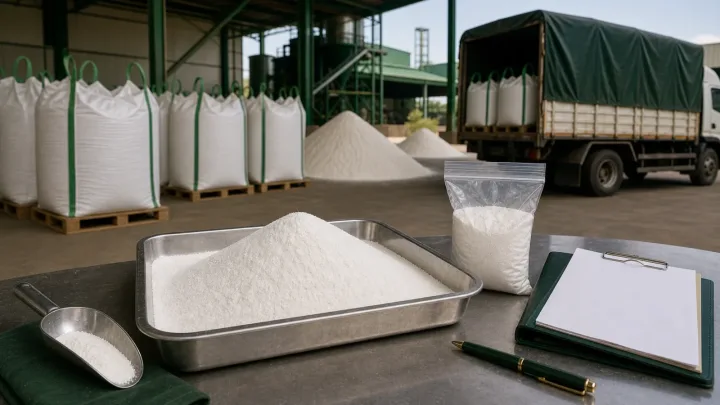
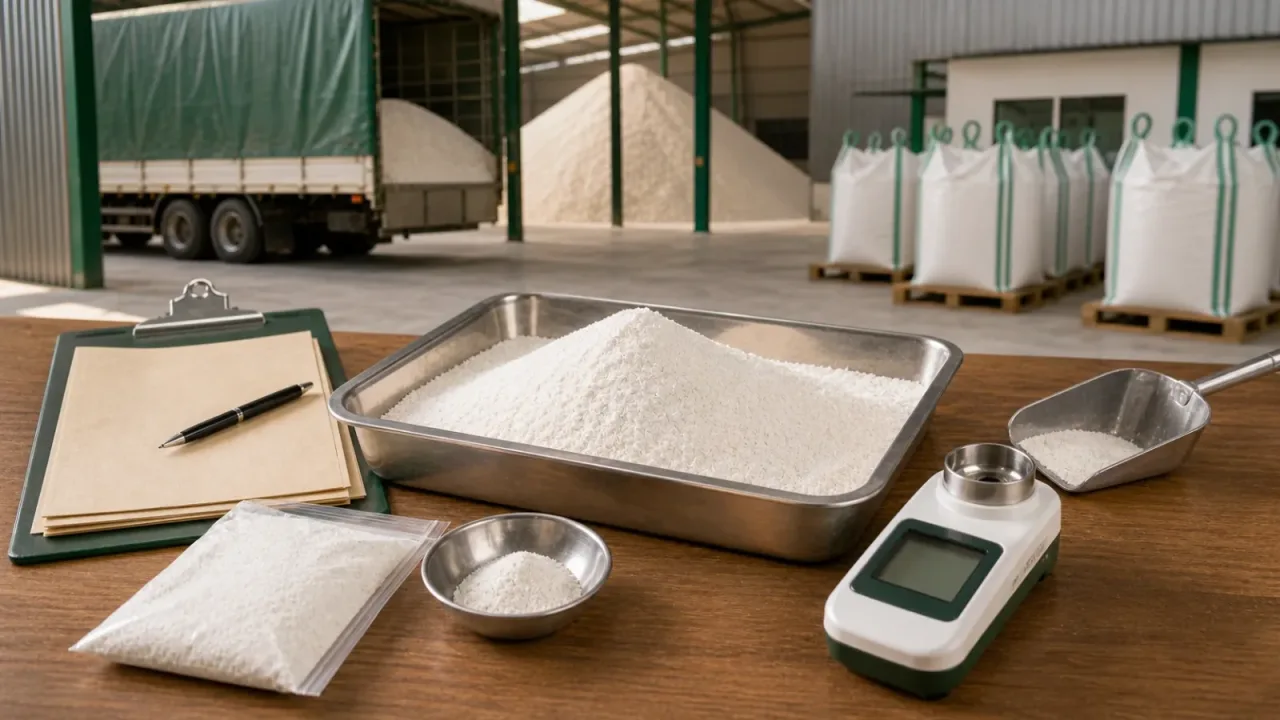
This document is the most critical piece that must be received with every delivery lot to confirm that the goods arriving at the factory meet the agreed-upon quality, with the following parameters to be checked:
- Moisture Content: A key indicator for controlling shelf-life. If moisture exceeds the standard threshold, it increases the risk of mold growth and spoilage during storage in silos.
- Starch Content: Since cassava pulp is a primary energy source, checking the starch content allows nutritionists to correctly calculate the Available Energy in the feed formula.
- Crude Fiber: Directly affects digestibility in various animals, such as swine or ruminants. Excessively high fiber may lead to stunted growth rates.
- Crude Protein: Although cassava pulp is an energy source, monitoring protein consistency helps maintain the amino acid balance in the feed formula.
- Ash Content: Used as an indicator of impurities or minerals present in the raw material. High ash content indicates low purity.
Standard Specification Sheet
This document specifies the Minimum Standards that the supplier guarantees in the long term, serving as a benchmark for purchase contracts and for use during incoming inspection at the factory.
2. Safety & Contaminant Control
In an era of stringent Food Safety standards, even minor contamination in raw materials can cause massive damage to the reputation and costs of an animal feed factory. The documents to be requested are as follows:
Mycotoxin Analysis Report
Because cassava pulp is a product with high moisture content, if the drying or storage processes are inadequate, it becomes a breeding ground for mold. Testing for Aflatoxin and other toxins (such as Fumonisins) is essential to prevent these toxins from entering the animal feed production process.
Heavy Metals Test Report
Controlling the levels of heavy metals such as Arsenic (As), Lead (tPb), and Cadmium (Cd) is a matter of great importance to both laws and international standards, as these heavy metals can accumulate in animal tissues and impact subsequent consumers.
Pesticide Residues Report
To control upstream risks, factories should request documents confirming that there are no pesticide residues in hazardous amounts that might have contaminated the fresh cassava before entering the processing stage.
Microbiological Analysis Report
Controlling Salmonella and Enterobacteriaceae serves as an indicator of the cleanliness of the cassava pulp production process, especially in the case of fresh or high-moisture cassava pulp, which carries a higher biological risk.
3. Production & Management Standards
Choosing a supplier with international management systems helps reduce the burden of on-site quality inspections for the animal feed factory. Documents to consider include:
Certification Standards
Cassava pulp production facilities should possess GMP (Good Manufacturing Practice) and HACCP (Hazard Analysis and Critical Control Points) certifications to confirm that risk points in the production process are systematically controlled, as well as relevant ISO standards to ensure confidence in the quality management system.
Process Flow Chart & Control Point
Requesting a production process flowchart allows the factory's Quality Control (QC) team to assess which Critical Control Points (CCPs) might pose a contamination risk, such as the impurity removal stage or the drying stage.
Supplier Audit Report
If there is an audit from a third-party agency or the results of a supplier's internal audit, it serves as a confirmation of transparency and the ability to maintain consistent production standards.
4. Traceability & Logistics Control
Traceability is the final line of defense in crisis management if quality issues are discovered later.
Traceability System
Suppliers must have a system capable of identifying the Origin of Raw Material, specifically which cultivation site a particular lot of cassava pulp came from, so that the scope of the problem can be controlled and limited in the event of contamination.
Logistics & Transportation Sanitation Record
The cleanliness of the transport vehicles is a factor that is often overlooked. Requesting a Vehicle Cleaning Log helps prevent cross-contamination from other goods previously transported. Additionally, for fresh cassava pulp, controlling temperature or moisture management during transport is equally important.
Batch/Lot Identification System
A clear Batch or Lot identification system on packaging or delivery documents allows animal feed factories to manage inventory efficiently and implement a FEFO (First Expired, First Out) system to reduce losses from deteriorated raw materials.
Summary Table: Essential Documents to Request from Cassava Pulp Suppliers
| Document Category | Essential Documents | Primary Objective |
| Nutrition | CoA, Spec Sheet | Control feed formula accuracy and costs |
| Safety | Mycotoxin, Heavy Metals, Micro, Pesticide Report | Prevent risks from toxins and pathogens |
| Standard | GMP, HACCP, ISO, Process Flow | Confirm the reliability of the production process |
| Logistics | Traceability, Cleaning Log, Batch ID | Traceability and inventory management |
Sources
- Thai Tapioca Starch Association - Tapioca Production - https://www.thaitapiocastarch.org/en/information/statistics/tapioca_production - ใช้ยืนยันภาพรวมผลผลิตมันสำปะหลังไทยและบริบท supply ของอุตสาหกรรม
- Thai Tapioca Starch Association - Export Tapioca Products - https://www.thaitapiocastarch.org/en/information/statistics/export_tapioca_products - ใช้ยืนยันสถิติส่งออกผลิตภัณฑ์มันสำปะหลัง รวมถึงหมวด Pulp
- Thai Tapioca Starch Association - Tapioca Starch Processing - https://thaitapiocastarch.org/en/information/learning_industry/tapioca_starch_processing - ใช้อธิบายกระบวนการผลิตแป้งมันและที่มาของผลพลอยได้จากโรงงานแป้งมัน
- ACFS / TAS 8803-2561 - มาตรฐานสินค้าเกษตร กากมันสำปะหลัง - https://www.opsmoac.go.th/udonthani-dwl-files-471491791858 - ใช้อ้างอิงนิยามกากมันสำปะหลังแห้ง/ผง/อัดเม็ด และข้อกำหนดพื้นฐาน เช่น ไม่พบเชื้อราหรือสิ่งแปลกปลอมที่มองเห็นได้
- FAO - Roots, tubers, plantains and bananas in animal feeding - https://www.fao.org/4/T0554E/T0554E05.htm - ใช้ยืนยันประเด็นความชื้น สิ่งปลอมปน เถ้า ทราย และความเสี่ยง aflatoxin ในสินค้า cassava/feed
- FAO - Thailand Feed and Feed Ingredient Standards - https://www.fao.org/fileadmin/user_upload/affris/docs/standard/Thailand_Feed_and_Feed_Ingredient_Standards.pdf - ใช้เป็นตัวอย่างโครงสร้างค่าวิเคราะห์วัตถุดิบอาหารสัตว์ เช่น moisture, protein, fiber, ash
- DLD - การตรวจอะฟลาทอกซินในวัตถุดิบอาหารสัตว์ - https://qcontrol.dld.go.th/images/Prototype/knowledge/analysis/2565/13.pdf - ใช้สนับสนุนหัวข้อ aflatoxin, วิธีวิเคราะห์ และเหตุผลที่ควรตรวจเป็นรอบเมื่อมีความเสี่ยง

Author information
Sri Thong Admin
B2B dried cassava pulp content specialist
Affiliation
SRITHONG PRODUCTTAPIOCA COMPANY LIMITED