Why Feed Mills Should Keep a Backup Dry Cassava Pulp Supplier in Korat
By Sri Thong Admin · Published 2026-06-25 · Updated 2026-06-06
Executive Summary: Sustainability Strategy in the Animal Feed Supply Chain through Strategic Procurement in Nakhon Ratchasima
In the context of highly volatile animal feed raw material markets, Single Source Dependency represents a critical risk to production lines. This article highlights the strategic necessity of establishing a multi-sourcing procurement system, focusing on creating backup sources for Dried Cassava Pulp in Nakhon Ratchasima, the nation's starch industry hub. Having backup suppliers in this strategic area not only mitigates the risk of raw material shortages due to seasonal and climatic factors but also serves as a key tool for Freight Cost Optimization and increasing bargaining power, thereby maintaining long-term Raw Material Cost stability and consistency in nutritional quality within feed formulas.
1. The Role of Cassava Pulp in the Modern Animal Feed Industry
In the process of Feed Formulation, managing Energy Sources is essential for controlling total costs. Finding raw materials with appropriate Metabolable Energy (ME) at a cost-effective price is the primary challenge for animal nutritionists.
Currently, the animal feed industry faces challenges from the price volatility of key raw materials, particularly maize, which tends to rise according to global market mechanisms and domestic production constraints. Consequently, "Dried Cassava Pulp" has become a highly important Strategic Alternative Ingredient because it is a widely available by-product of the cassava starch industry with consistent energy-providing properties. If mills can manage the use of cassava pulp efficiently, it will reduce reliance on expensive ingredients and help balance the total cost of the feed formula.
2. Analyzing the Strategic Potential of "Nakhon Ratchasima" (The Korat Advantage)
Selecting raw material sources in Nakhon Ratchasima is not merely about convenience but is about industrial structural advantage, which can be divided into three main dimensions:
2.1 Serving as a Starch Hub
Nakhon Ratchasima is one of the areas with the highest density of cassava starch factories in Thailand, resulting in Mass Availability of dried cassava pulp in the market continuously and in volumes sufficient to meet the needs of large-scale animal feed mills. Having production sources concentrated in a single area facilitates easy access to raw materials and ensures volume stability.
2.2 Logistics Efficiency
The proximity between production sources and regional animal feed mills reduces transportation distance, which directly impacts "Food Miles" and allows for Freight Cost Optimization, as shown in the cost importance comparison table:
| Logistics Factor | Impact on Feed Mill | Economic Benefit |
| Shorter transportation distance | Reduced fuel consumption and vehicle depreciation | Reduced total raw material cost (Landing Cost) |
| Shorter Lead Time | Increased speed in replenishing raw material stock | Reduced risk of Out of Stock |
| In-transit temperature/moisture control | Reduced risk of product degradation | Maintaining Nutrient Integrity |
3. Supply Chain Resilience & Risk Management
Bulk raw material procurement for feed mills involves hidden risks that procurement executives must carefully consider. Having backup suppliers in Nakhon Ratchasima helps close risk gaps in three main areas:
- Seasonality Risk: Although cassava pulp is a by-product, production volume fluctuates according to the cassava harvest season. Having multiple backup suppliers in the area ensures sufficient product rotation during seasonal transitions.
- Climate Risk: Natural phenomena such as El Niño, which leads to drought, may impact the volume of fresh cassava roots entering starch factories. Distributing procurement sources among multiple suppliers in strategic areas will help mitigate the impact of production decreases in any single point.
- Single Source Dependency Risk: If a primary supplier experiences machinery breakdown or labor issues, having backup suppliers pre-evaluated for standards will ensure that the animal feed mill's production lines do not face disruptions.
The strategy of creating a Buffer Stock by leveraging the advantage of close proximity in Korat will enable mills to maintain maximum Inventory Stability.
4. Cost Control & Price Volatility Management
In terms of procurement, creating options is creating bargaining power. Having more than one supplier in Nakhon Ratchasima creates a fair Price Competition mechanism, enabling animal feed mills to achieve true Raw Material Cost Optimization.
When mills have diverse raw material options in a primary production hub, they can implement a hybrid procurement strategy, combining Long-term Contracts to lock in prices with Spot Market purchases to take advantage of market price dips. The correlation between shorter transportation distances and increased profit Margins for animal feed mills is significant.
5. Technical Quality Assurance
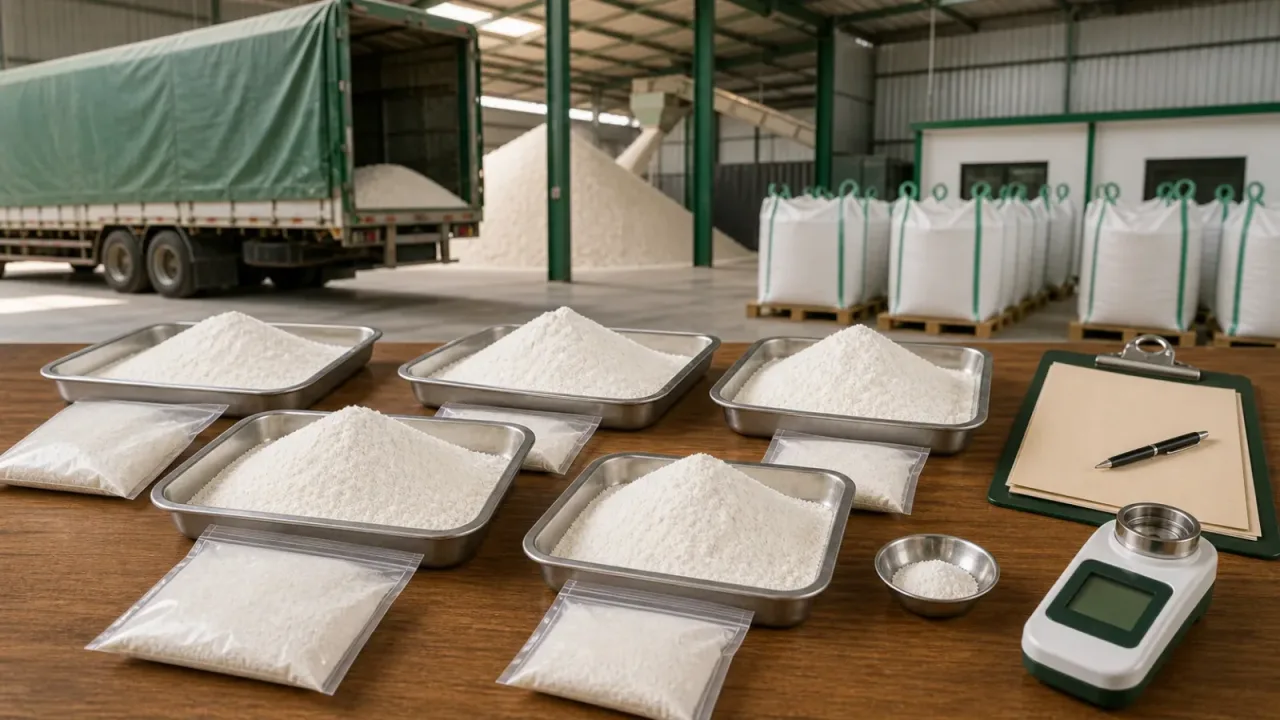
The most significant challenge in using cassava pulp is "Consistency." Multi-sourcing in the Nakhon Ratchasima area allows the Quality Control (QC) department to better monitor and control technical parameters:
- Nutrient Consistency: Monitoring ME (Metabolizable Energy) and Moisture Content to comply with the standards specified in the feed formula.
- Food Safety & Contamination Control: Screening multiple supplier sources reduces the risk of chemical residues or mold contamination (e.g., Aflatoxin). If an abnormality is found in any particular lot, the mill can immediately switch to products from other sources that have already been verified through a COA (Certificate of Analysis).
6. Strategic Conclusion
Establishing a Multi-sourcing procurement structure in a strategic area like Nakhon Ratchasima is not an added administrative burden, but rather an investment in Business Continuity Planning (BCP). When comparing "increased procurement costs from managing multiple suppliers" against the "massive risk of production line disruptions," the Economic Viability clearly favors the importance of creating a raw material backup system.
Recommendations for Animal Feed Mill Executives: A Long-term Procurement Strategy should be planned, focusing on building partnerships with suppliers in the lower Northeastern region and establishing clear technical Specifications to ensure that future supplier base expansion is systematic and capable of being audited to international standards.
Sources
- Thai Tapioca Starch Association - Tapioca Production - https://www.thaitapiocastarch.org/en/information/statistics/tapioca_production - ใช้ยืนยันภาพรวมผลผลิตมันสำปะหลังไทยและบริบท supply ของอุตสาหกรรม
- Thai Tapioca Starch Association - Export Tapioca Products - https://www.thaitapiocastarch.org/en/information/statistics/export_tapioca_products - ใช้ยืนยันสถิติส่งออกผลิตภัณฑ์มันสำปะหลัง รวมถึงหมวด Pulp
- Thai Tapioca Starch Association - Tapioca Starch Processing - https://thaitapiocastarch.org/en/information/learning_industry/tapioca_starch_processing - ใช้อธิบายกระบวนการผลิตแป้งมันและที่มาของผลพลอยได้จากโรงงานแป้งมัน
- ACFS / TAS 8803-2561 - มาตรฐานสินค้าเกษตร กากมันสำปะหลัง - https://www.opsmoac.go.th/udonthani-dwl-files-471491791858 - ใช้อ้างอิงนิยามกากมันสำปะหลังแห้ง/ผง/อัดเม็ด และข้อกำหนดพื้นฐาน เช่น ไม่พบเชื้อราหรือสิ่งแปลกปลอมที่มองเห็นได้
- FAO - Roots, tubers, plantains and bananas in animal feeding - https://www.fao.org/4/T0554E/T0554E05.htm - ใช้ยืนยันประเด็นความชื้น สิ่งปลอมปน เถ้า ทราย และความเสี่ยง aflatoxin ในสินค้า cassava/feed
- FAO - Thailand Feed and Feed Ingredient Standards - https://www.fao.org/fileadmin/user_upload/affris/docs/standard/Thailand_Feed_and_Feed_Ingredient_Standards.pdf - ใช้เป็นตัวอย่างโครงสร้างค่าวิเคราะห์วัตถุดิบอาหารสัตว์ เช่น moisture, protein, fiber, ash
- DLD - การตรวจอะฟลาทอกซินในวัตถุดิบอาหารสัตว์ - https://qcontrol.dld.go.th/images/Prototype/knowledge/analysis/2565/13.pdf - ใช้สนับสนุนหัวข้อ aflatoxin, วิธีวิเคราะห์ และเหตุผลที่ควรตรวจเป็นรอบเมื่อมีความเสี่ยง

Author information
Sri Thong Admin
B2B dried cassava pulp content specialist
Affiliation
SRITHONG PRODUCTTAPIOCA COMPANY LIMITED