Shipping Dried Cassava Pulp from Korat to Chanthaburi
By Sri Thong Admin · Published 2026-06-24 · Updated 2026-06-06
Executive Summary: The Heart of Dried Cassava Pulp Supply Chain Management
The success of managing the dried cassava pulp supply chain—from primary production sources in Nakhon Ratchasima to animal feed production bases in Chanthaburi—does not depend solely on purchasing raw materials at appropriate prices, but on "controlling the stability of technical standards" throughout the entire transportation route. Key success indicators include moisture control to prevent mold, closed-system logistics management to reduce cross-contamination, and strategic logistics planning to minimize weight shrinkage and hidden costs. Maintaining the quality of macronutrients (Starch, Fiber, Protein) and controlling cyanide levels in accordance with COA standards is the core essential for reducing risks in the animal feed production process and maximizing economic value for the end-user feed mills.
1. Introduction: Economic Context and the Livestock Industry Connection
In the animal feed production industry, Dried Cassava Pulp is a vital strategic raw material acting as a high-efficiency energy source, particularly in the production of feed for ruminants, such as beef and dairy cattle, as well as swine, due to its optimal starch content and competitive energy costs in the market.
The geographical connection between "Nakhon Ratchasima," the nation's largest cassava production and processing hub, and "Chanthaburi," a center for the livestock industry and large-scale farms, creates a demand for the movement of massive quantities of raw materials over long distances. The key challenge for supply chain managers is maintaining the stability of raw materials from origin to destination, as distance and weather fluctuations during transport can directly impact the nutritional value and the total cost of the raw materials.
2. Technical Specifications & Quality Control
Quality control prior to loading onto transport vehicles is the most critical step to ensure that the goods delivered to the feed mills meet the specifications stipulated in the sales contract. Inspection must cover the following technical aspects:
- Moisture Content Control: Moisture must be controlled at an appropriate level (according to each factory's standard criteria) to prevent the proliferation of mold, particularly Aspergillus flavus, which is the cause of Aflatoxin production, which is harmful to animals.
- Nutritional Integrity: Monitoring the levels of Starch, Fiber, and Crude Protein to ensure that the energy provided in the feed formula meets the calculated requirements.
- Contaminant Control: Measuring residual Cyanide levels, as well as controlling cleanliness from physical impurities such as Sand and Dust.
| Key Parameter | Importance to Production | Impact if Substandard |
| Moisture | Prevents spoilage and mold | Mold (Mycotoxin) and spoilage |
| Starch | Primary Energy Source | Energy value in formula fails to meet criteria |
| Cyanide | Animal safety | Toxicity to livestock |
| Inerts/Sand | Raw material cleanliness | Waste in production process and machinery wear |
3. Logistics & Transportation Management
Transporting raw materials from Nakhon Ratchasima to Chanthaburi requires logistics engineering planning to reduce fluctuations in cost and product quality.
3.1 Route Optimization: Selecting routes that not only save distance but also consider road conditions and travel time to minimize heat accumulation within the product, which could stimulate microbial activity in the cassava pulp.
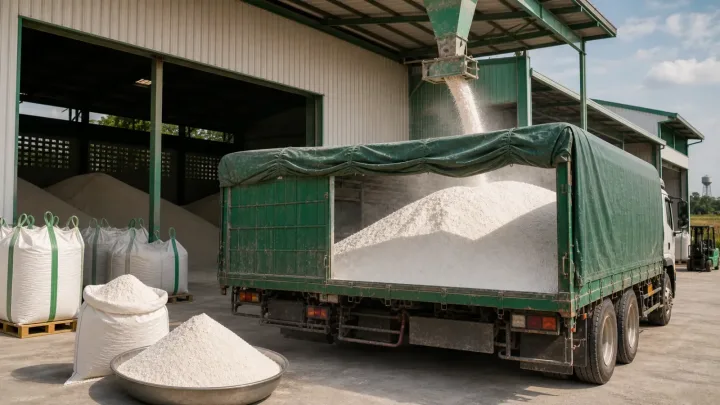
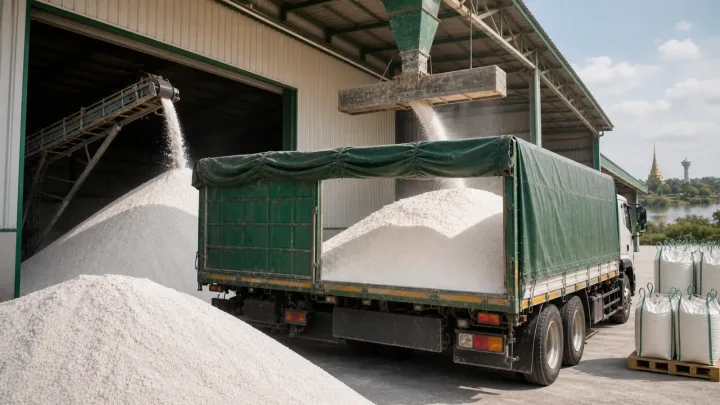
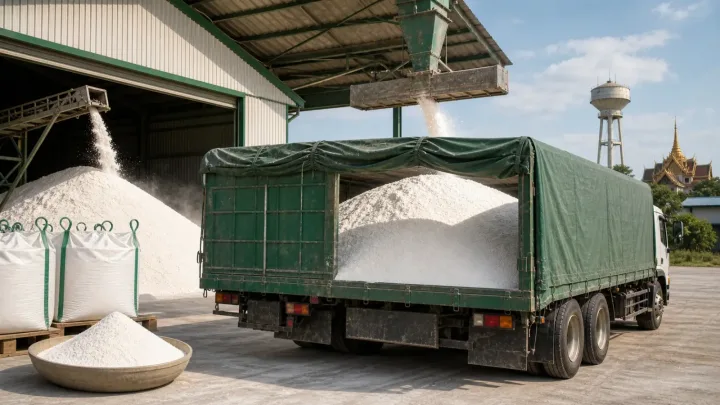
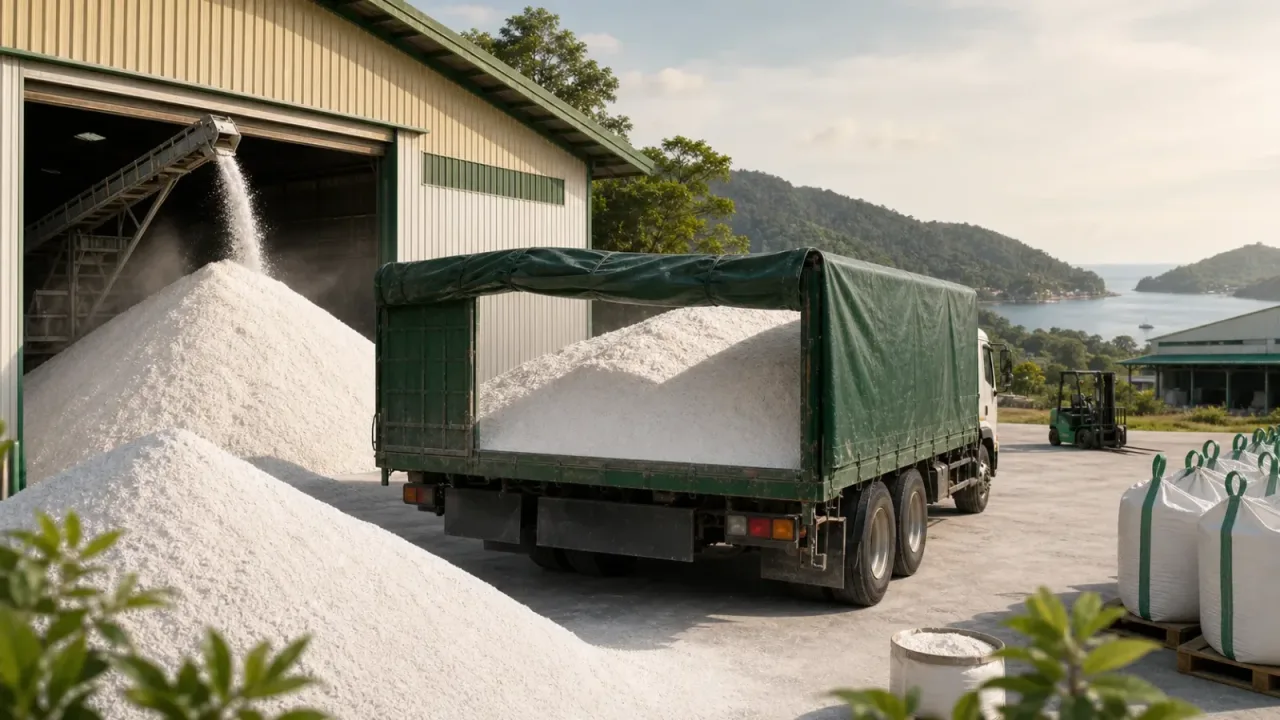
3.2 Vehicle Type and Closed System Management: The use of Bulk Trailers featuring a Closed System is extremely important in preventing external relative humidity and rain from entering the cargo hold, which are primary factors in raw material degradation.
3.3 Loading Techniques and Weight Distribution: Distributing the weight of the raw materials evenly within the cargo hold helps maintain the stability of the truck during turns or on inclines and helps prevent the compaction of materials, which could affect the aeration within the product pile.
3.4 Lead Time Management: Real-time coordination between the origin factory (Korat) and the destination receiving point (Chanthaburi) to reduce waiting time, which helps mitigate the risk of raw material degradation while idling.
4. In-transit Risk Management
Risks occurring during long-distance movement of raw materials require proactive measures:
- Temperature and Relative Humidity Control: Monitoring to prevent heat accumulation within the cargo hold, which could lead to chemical changes in the starch properties.
5. Economic Feasibility & Cost Analysis
When purchasing raw materials for animal feed mills, considering only the "Price per Ton" may not be the most accurate approach. Total Cost of Ownership (TCO) analysis is therefore crucial:
The transportation cost structure includes: fuel costs, vehicle depreciation, driver wages, and toll fees, all of which directly affect the final cost price.
Break-even Analysis: Factories must compare "purchasing low-priced raw materials with long distances (High Logistics Cost)" against "purchasing high-priced raw materials with short distances (Low Logistics Cost)", while incorporating quality risks and shrinkage rates into the calculation. Accurate decision-making will help maintain production margins amidst fluctuating raw material prices.
6. Conclusion & Strategic Recommendations
The Key Success Factors in managing the dried cassava pulp supply chain are the seamless integration of "technical quality" and "logistics efficiency." Moving high-quality raw materials from Nakhon Ratchasima to Chanthaburi requires strict control standards, from the grading process and the selection of appropriate vehicles to in-transit risk management.
In the future, the implementation of Smart Logistics} technologies, such as moisture sensors within the cargo hold or the use of Data Analytics to forecast price fluctuations and route optimization, will be vital tools for creating a competitive advantage. Furthermore, focusing on Supply Chain Sustainability—by reducing loss and minimizing energy consumption in transportation—will become the new standard prioritized by leading animal feed mills worldwide.
If you require additional technical information, COA analysis results, or wish to request product samples for production standard testing, please contact our sales and technical departments immediately.
Sources
- Thai Tapioca Starch Association - Tapioca Production - https://www.thaitapiocastarch.org/en/information/statistics/tapioca_production - ใช้ยืนยันภาพรวมผลผลิตมันสำปะหลังไทยและบริบท supply ของอุตสาหกรรม
- Thai Tapioca Starch Association - Export Tapioca Products - https://www.thaitapiocastarch.org/en/information/statistics/export_tapioca_products - ใช้ยืนยันสถิติส่งออกผลิตภัณฑ์มันสำปะหลัง รวมถึงหมวด Pulp
- Thai Tapioca Starch Association - Tapioca Starch Processing - https://thaitapiocastarch.org/en/information/learning_industry/tapioca_starch_processing - ใช้อธิบายกระบวนการผลิตแป้งมันและที่มาของผลพลอยได้จากโรงงานแป้งมัน
- ACFS / TAS 8803-2561 - มาตรฐานสินค้าเกษตร กากมันสำปะหลัง - https://www.opsmoac.go.th/udonthani-dwl-files-471491791858 - ใช้อ้างอิงนิยามกากมันสำปะหลังแห้ง/ผง/อัดเม็ด และข้อกำหนดพื้นฐาน เช่น ไม่พบเชื้อราหรือสิ่งแปลกปลอมที่มองเห็นได้
- GP Autoparts - Truck Law 2024 - https://www.gpautoparts.co.th/en/truck-law-2024-latest-regulations-and-penalties-that-truck-owners-need-to-know/ - ใช้ประกอบข้อจำกัดน้ำหนักรถบรรทุก เช่น 10 ล้อ 25 ตัน เพื่ออธิบาย full truck load
- Google Maps - https://www.google.com/maps - ใช้เป็นแหล่งตรวจระยะทางจริงก่อนเผยแพร่บทความจังหวัด เพราะระยะทางเปลี่ยนตามจุดเริ่มต้นและเส้นทาง
- Department of Land Transport - https://www.dlt.go.th/ - ใช้เป็นแหล่งอ้างอิงหน่วยงานกำกับดูแลการขนส่งทางบกเมื่อต้องตรวจข้อกำหนดล่าสุด

Author information
Sri Thong Admin
B2B dried cassava pulp content specialist
Affiliation
SRITHONG PRODUCTTAPIOCA COMPANY LIMITED