Shipping Dried Cassava Pulp from Korat to Nakhon Phanom
By Sri Thong Admin · Published 2026-06-24 · Updated 2026-06-06
The supply chain management of Dried Cassava Pulp from main production sources in Nakhon Ratchasima to livestock hubs in Nakhon Phanom is not merely about transporting goods from one point to another, but rather about managing "nutrient degradation" and "hidden logistics costs." The core lies in technical quality control—ranging from monitoring moisture content and mycotoxins at the loading point and selecting appropriate transport types to minimize weight loss from evaporation (Shrinkage), to implementing traceability systems to ensure that the raw materials reaching the final animal feed factories maintain their nutritional value and the highest biosafety standards, which directly impacts production efficiency and the Total Cost of Ownership (TCO) of the animal feed business.
Logistics Management and Quality Control of Dried Cassava Pulp: From Korat Production Sources to Nakhon Phanom Livestock Hubs
1. The Importance of Dried Cassava Pulp in the Animal Feed Industry
Dried Cassava Pulp is considered a vital energy source in animal feed formulas due to the appropriate proportion of residual starch from the cassava starch production process. However, the main challenges of this raw material are the fluctuation of chemical compositions and the risk of degradation.
Geographically, Thailand has clear production and utilization zones: Lower Isan, particularly Nakhon Ratchasima, serves as a Processing Hub, while Upper Isan, such as Nakhon Phanom, acts as a Livestock Hub. The long distance between the production source and the consumption source makes "logistics system efficiency" a key variable in determining animal feed costs and the quality of the end product.
2. Technical Characteristics and Raw Material Standards to be Controlled
In B2B procurement, considering product specifications involves more than just the price per ton; nutritional value and safety standards must also be considered as follows:
- Nutritional Analysis: Controlling starch content to meet energy requirements in the formula, monitoring fiber levels to ensure they are not too high to affect digestibility, and maintaining stable protein levels.
- Moisture Content Control: Moisture is a primary factor causing mold growth. If moisture levels exceed the specified standards, it leads to heat accumulation within the product and spoilage during long-distance transportation.
- Biosafety Standards: Monitoring mycotoxins, especially Aflatoxin, as contamination during the production process or improper storage can severely impact animal health and animal feed export standards.
3. Sourcing & Procurement Management
The process begins with strictness at the production sources in Nakhon Ratchasima, focusing on three main pillars:
Supplier Selection: Auditing Cassava Starch Factories to ensure they have clean production processes and standardized waste management systems.
Loading Inspection: Quality Control (QC) officers must perform sampling to measure moisture content and check for foreign matter before the goods are loaded onto the vehicle, preventing the acceptance of sub-standard products at the origin.
Buffer Stock Management: Since agricultural yields fluctuate seasonally, procurement planning must calculate sufficient buffer stocks to prevent raw material shortages during the off-season.
4. Logistics Strategy and Long-Distance Transportation
Transporting from Korat to Nakhon Phanom involves long distances, requiring strategic planning to maintain product quality and control costs:
- Route Optimization: Selecting routes with the shortest duration (Lead Time Reduction) to minimize the product's exposure to environments that risk moisture increase.
- Vehicle Selection:
- Closed Van/Container: Ideal for products requiring maximum protection from moisture and dust, despite higher costs.
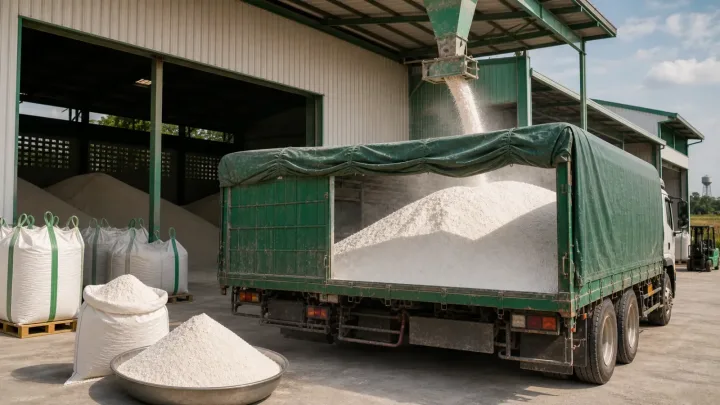
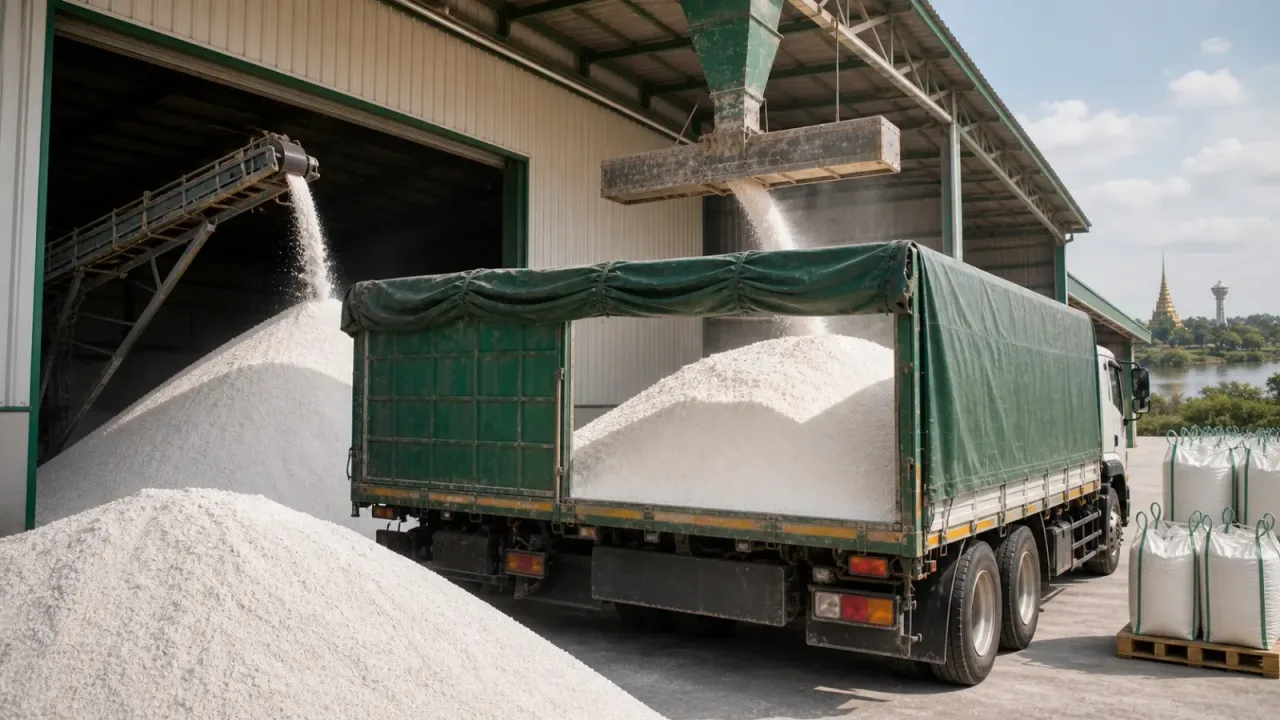
- Open Truck: Must be securely and tightly covered with tarpaulins to protect against rain and wind, which are critical variables for moisture in cassava pulp.
5. In-transit Quality Assurance
Risks often overlooked in long-distance raw material transportation include:
Shrinkage Management: Moisture evaporation during travel under high temperatures can lead to weight loss, affecting payments and inventory management. Therefore, recording weight at both the origin and destination is indispensable.
Cross-contamination: Using vehicles that previously transported chemicals or other strong-smelling raw materials may cause the cassava pulp to absorb odors, affecting the quality of the animal feed formula.
Tracking & Traceability: Utilizing GPS technology to monitor vehicle locations and recording travel data to provide transparency to customers, ensuring that the product has traveled through appropriate conditions throughout the journey.
6. Destination Management and Receiving
When the goods arrive at the animal feed factory in Nakhon Phanom, the inspection process must be systematic:
Work Process Operational Details Receiving Inspection Randomly inspect moisture, odor, color, and foreign matter immediately upon the truck's arrival. Warehouse Management Store in well-ventilated areas to prevent heat accumulation. Inventory Control (FIFO) Utilize the First-In, First-Out system to reduce the risk of old stock remaining in inventory until it degrades. 7. Economic Feasibility Analysis
In procurement decision-making, animal feed factory executives must use the Total Cost of Ownership (TCO) concept instead of looking solely at the price per ton, by considering the following comparison table:
Consideration Factor Nearby Source (Low Transport Cost) Distant Source (High Quality/Low Price) Raw material price per ton Higher Lower Transportation and Logistics Cost Low High Degradation Risk Low High (Requires a good control system) True Total Cost Stable and easy to control Must be managed for cost-effectiveness 8. Conclusion and Expert Recommendations
Success in moving dried cassava pulp across regions depends on the integration between "origin product quality" and "destination logistics efficiency." Controlling moisture levels and mycotoxins is the key metric for supplier reliability.
In the future, Smart Logistics technologies, such as the use of real-time moisture and temperature sensors inside containers, will play a vital role in elevating the standards of animal feed raw material transportation, reducing risks, and building confidence for animal feed manufacturers on an international level.
Sources
- Thai Tapioca Starch Association - Tapioca Production - https://www.thaitapiocastarch.org/en/information/statistics/tapioca_production - ใช้ยืนยันภาพรวมผลผลิตมันสำปะหลังไทยและบริบท supply ของอุตสาหกรรม
- Thai Tapioca Starch Association - Export Tapioca Products - https://www.thaitapiocastarch.org/en/information/statistics/export_tapioca_products - ใช้ยืนยันสถิติส่งออกผลิตภัณฑ์มันสำปะหลัง รวมถึงหมวด Pulp
- Thai Tapioca Starch Association - Tapioca Starch Processing - https://thaitapiocastarch.org/en/information/learning_industry/tapioca_starch_processing - ใช้อธิบายกระบวนการผลิตแป้งมันและที่มาของผลพลอยได้จากโรงงานแป้งมัน
- ACFS / TAS 8803-2561 - มาตรฐานสินค้าเกษตร กากมันสำปะหลัง - https://www.opsmoac.go.th/udonthani-dwl-files-471491791858 - ใช้อ้างอิงนิยามกากมันสำปะหลังแห้ง/ผง/อัดเม็ด และข้อกำหนดพื้นฐาน เช่น ไม่พบเชื้อราหรือสิ่งแปลกปลอมที่มองเห็นได้
- GP Autoparts - Truck Law 2024 - https://www.gpautoparts.co.th/en/truck-law-2024-latest-regulations-and-penalties-that-truck-owners-need-to-know/ - ใช้ประกอบข้อจำกัดน้ำหนักรถบรรทุก เช่น 10 ล้อ 25 ตัน เพื่ออธิบาย full truck load
- Google Maps - https://www.google.com/maps - ใช้เป็นแหล่งตรวจระยะทางจริงก่อนเผยแพร่บทความจังหวัด เพราะระยะทางเปลี่ยนตามจุดเริ่มต้นและเส้นทาง
- Department of Land Transport - https://www.dlt.go.th/ - ใช้เป็นแหล่งอ้างอิงหน่วยงานกำกับดูแลการขนส่งทางบกเมื่อต้องตรวจข้อกำหนดล่าสุด

Author information
Sri Thong Admin
B2B dried cassava pulp content specialist
Affiliation
SRITHONG PRODUCTTAPIOCA COMPANY LIMITED