Shipping Dried Cassava Pulp from Korat to Sakon Nakhon
By Sri Thong Admin · Published 2026-06-24 · Updated 2026-06-06
Executive Summary: Cassava Pulp Supply Chain Management (Korat - Sakon Nakhon Route)
The logistics and supply chain management of Dried Cassava Pulp on the strategic route from Nakhon Ratchasima to Sakon Nakhon is not merely the movement of raw materials from one point to another, but rather the systematic management of "quality" and "cost." The core pillars include strict Technical Specification control to prevent losses from moisture and mold, selecting appropriate transportation modes to minimize contamination risks, and enhancing cost efficiency through Backhaul Management strategies. These factors directly impact Feed Cost and the long-term stability of feed formulas. Understanding every dimension of the supply chain is therefore a vital tool for feed mills to create a competitive advantage.
1. Supply Chain Context
In Thailand's agro-industrial structure, the route between Nakhorn Ratchasima (Korat) and Sakon Nakhon serves as a vital economic link between "cassava starch production sources" and "livestock industrial hubs," characterized by the following connections:
- Industrial Linkage: Nakhon Ratchasima is a massive hub for cassava starch production, while Sakon Nakhon and its surrounding areas are major livestock production bases (such as swine and beef cattle), creating a continuous demand for energy-rich raw materials.
- Nutritional Role: Dried cassava pulp serves as a primary energy source in animal feed formulas. Maintaining nutritional consistency during long-distance transportation is the highest priority for feed mills.
- Long-haul Logistics Challenges: Transporting over long distances from the lower Northeast to the upper Northeast involves challenges related to distance, time, and weather, which directly impact raw material quality if managed inefficiently.
2. Product Specification & Quality Control
For B2B customers, raw material quality must be verifiable through a Certificate of Analysis (COA). Key control standards include:
Moisture Content Control
Moisture is the most critical variable in dried cassava pulp transportation. If moisture levels exceed standards (generally not exceeding 12-14%, depending on the agreement), it leads to fermentation and mold growth, which is hazardous to animals and reduces nutritional value.
Physical Impurities
Controlling the levels of sand, dust, and foreign matter to prevent damage to machinery in the feed production process (such as grinders or pellet mills) and to maintain product cleanliness standards.
| Key Parameters | Control Target | Impact of Non-compliance |
| Moisture | Below specified threshold (e.g., < 14%) | Mold, spoilage, weight loss |
| Impurities | Limit sand and foreign matter | Machinery damage, increased maintenance costs |
| Energy/Fiber (Starch/Fiber) | Constant according to agreed specs | Inconsistent feed formulas, higher feed cost per unit |
Packaging Standards
The choice of packaging affects warehouse management and moisture control:
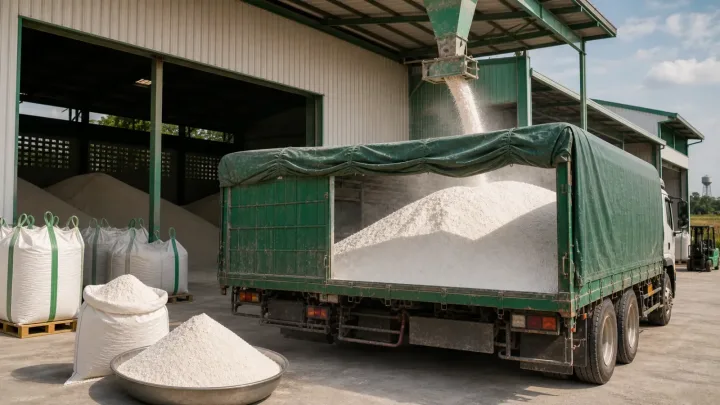
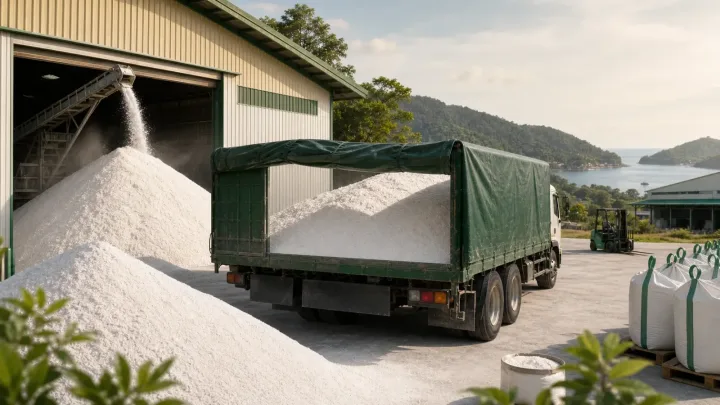
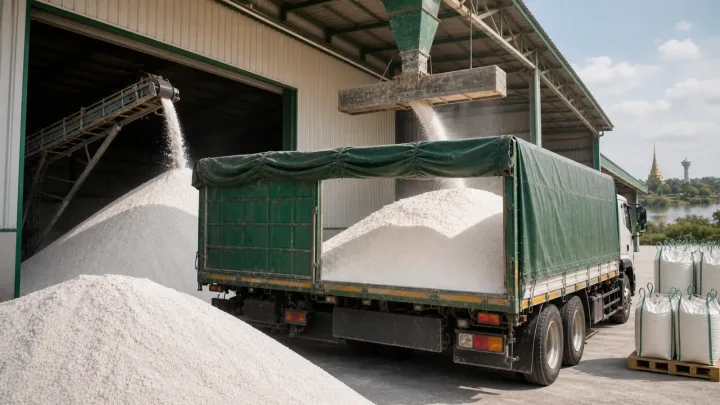
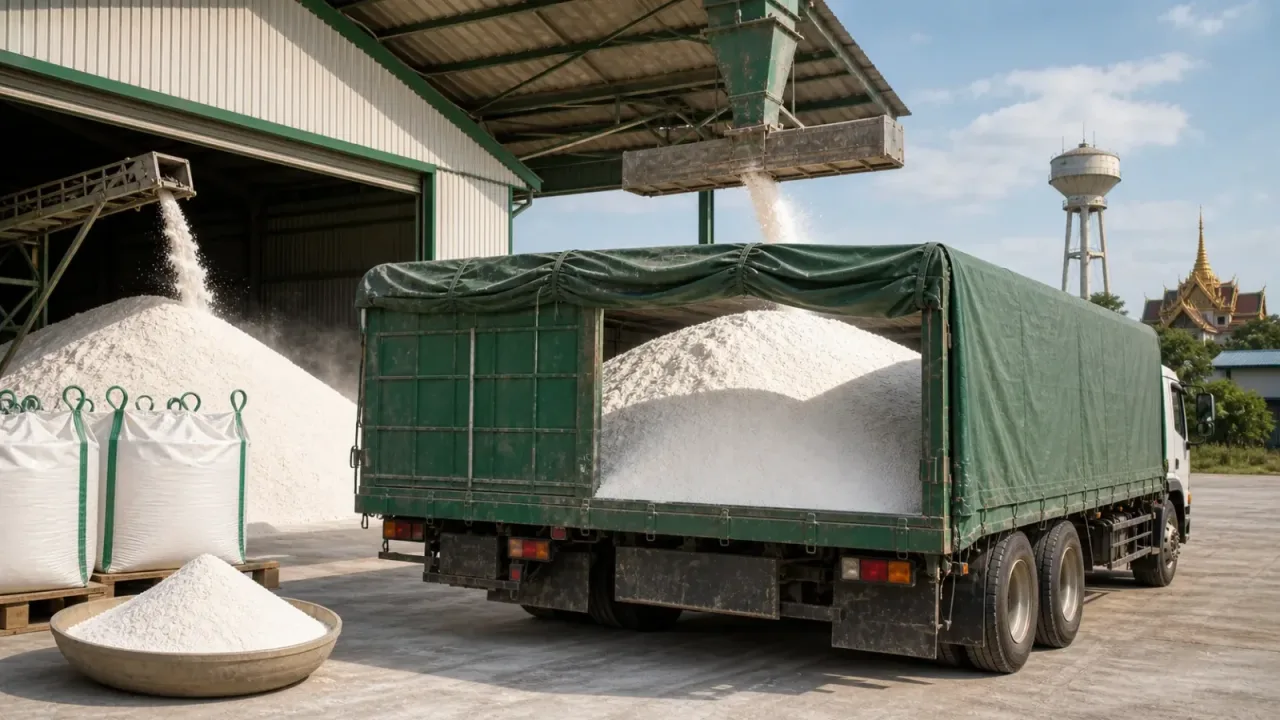
- Bulk Transportation: Suitable for large volumes but requires fully covered trucks to prevent moisture from rain.
- Big Bag/Jumbo Bag: Enhances handling convenience, reduces contamination, and allows easier quality control at the unit level.
3. Logistics Optimization
Managing logistics costs on the Korat - Sakon Nakhon route requires consideration beyond just the transport cost per trip:
Route & Vehicle Analysis
Selecting Dump Trucks is suitable for rapid unloading but carries risks if the tarping system is incomplete, whereas Curtain Side/Box Trucks, despite slightly higher costs, provide maximum assurance in preventing moisture and contamination during long-distance travel.
Total Logistics Cost
Operators must consider all cost components, including fuel, driver wages, vehicle depreciation, and various fees, to determine the most appropriate Destination Price.
Backhaul Management Strategy
To achieve Logistics Cost Optimization, managing trucks so they do not run empty on the return trip from Sakon Nakhon to Korat (e.g., carrying other agricultural raw materials or consumer goods) is the key to maintaining price competitiveness for end customers.
4. Risk Management
Supply chain risks can be controlled through technology and clear operational processes:
- Environmental Control: Monitoring moisture levels inside the cargo area, especially during the rainy season, to prevent product degradation.
- Cross-contamination Prevention: Strict cleaning of truck compartments before reloading to prevent odors or residues from other types of goods.
- Tracking & Traceability: Utilizing GPS systems for real-time vehicle tracking allows feed mills to plan unloading precisely and enables traceability if quality issues arise.
5. Economic Feasibility
When making purchasing decisions, operators must analyze the difference between the Factory Gate Price and the Destination Price based on the following factors:
- Fuel Price Volatility: A primary cost factor that directly impacts raw material prices on long-distance routes.
- Value Creation: Choosing suppliers with stable logistics systems, even if the price is slightly higher, helps reduce the risk of raw material waste and reduces the burden of quality inspection at the factory, creating long-term value.
6. Conclusion & Future Trends
The animal feed industry is entering an era of sustainability and increased precision. A significant trend is the implementation of Precision Agriculture for forecasting raw material volumes and moving toward Green Logistics to reduce the Carbon Footprint in the supply chain, which will become a critical requirement for exporting animal feed to the global market.
For operators in the lower Northeast, creating a competitive advantage is not solely about offering the lowest price, but about the ability to deliver "consistent quality" and a "reliable management system" to become part of a stable and sustainable production chain.
Sources
- Thai Tapioca Starch Association - Tapioca Production - https://www.thaitapiocastarch.org/en/information/statistics/tapioca_production - ใช้ยืนยันภาพรวมผลผลิตมันสำปะหลังไทยและบริบท supply ของอุตสาหกรรม
- Thai Tapioca Starch Association - Export Tapioca Products - https://www.thaitapiocastarch.org/en/information/statistics/export_tapioca_products - ใช้ยืนยันสถิติส่งออกผลิตภัณฑ์มันสำปะหลัง รวมถึงหมวด Pulp
- Thai Tapioca Starch Association - Tapioca Starch Processing - https://thaitapiocastarch.org/en/information/learning_industry/tapioca_starch_processing - ใช้อธิบายกระบวนการผลิตแป้งมันและที่มาของผลพลอยได้จากโรงงานแป้งมัน
- ACFS / TAS 8803-2561 - มาตรฐานสินค้าเกษตร กากมันสำปะหลัง - https://www.opsmoac.go.th/udonthani-dwl-files-471491791858 - ใช้อ้างอิงนิยามกากมันสำปะหลังแห้ง/ผง/อัดเม็ด และข้อกำหนดพื้นฐาน เช่น ไม่พบเชื้อราหรือสิ่งแปลกปลอมที่มองเห็นได้
- GP Autoparts - Truck Law 2024 - https://www.gpautoparts.co.th/en/truck-law-2024-latest-regulations-and-penalties-that-truck-owners-need-to-know/ - ใช้ประกอบข้อจำกัดน้ำหนักรถบรรทุก เช่น 10 ล้อ 25 ตัน เพื่ออธิบาย full truck load
- Google Maps - https://www.google.com/maps - ใช้เป็นแหล่งตรวจระยะทางจริงก่อนเผยแพร่บทความจังหวัด เพราะระยะทางเปลี่ยนตามจุดเริ่มต้นและเส้นทาง
- Department of Land Transport - https://www.dlt.go.th/ - ใช้เป็นแหล่งอ้างอิงหน่วยงานกำกับดูแลการขนส่งทางบกเมื่อต้องตรวจข้อกำหนดล่าสุด

Author information
Sri Thong Admin
B2B dried cassava pulp content specialist
Affiliation
SRITHONG PRODUCTTAPIOCA COMPANY LIMITED