Shipping Dried Cassava Pulp from Korat to Kamphaeng Phet
By Sri Thong Admin · Published 2026-06-24 · Updated 2026-06-06
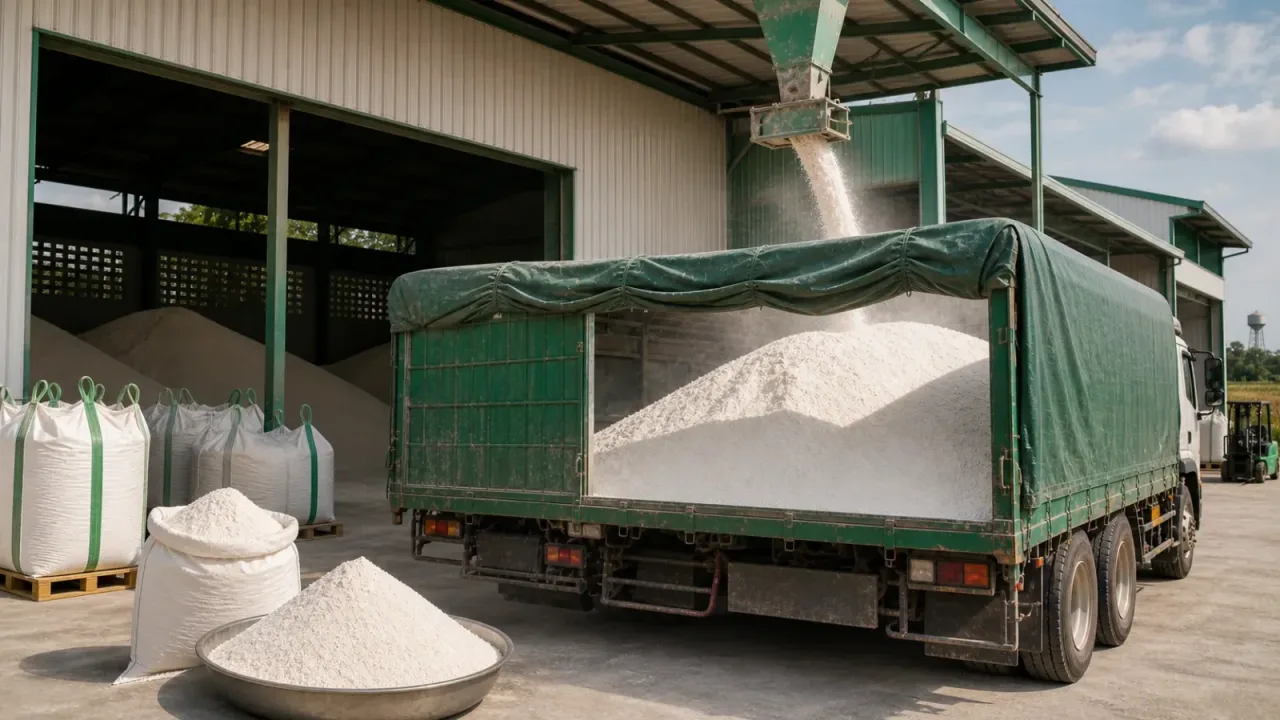
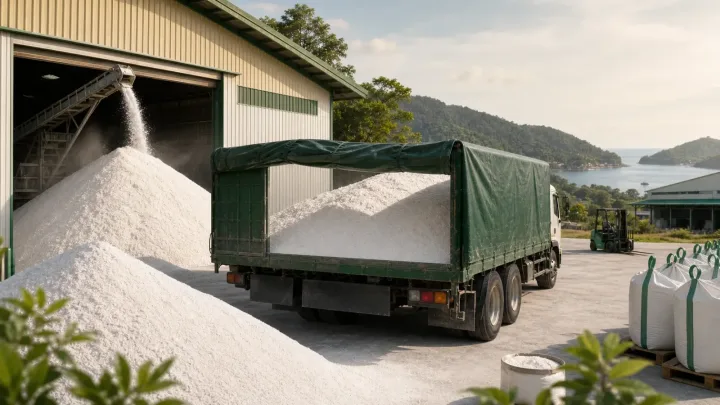
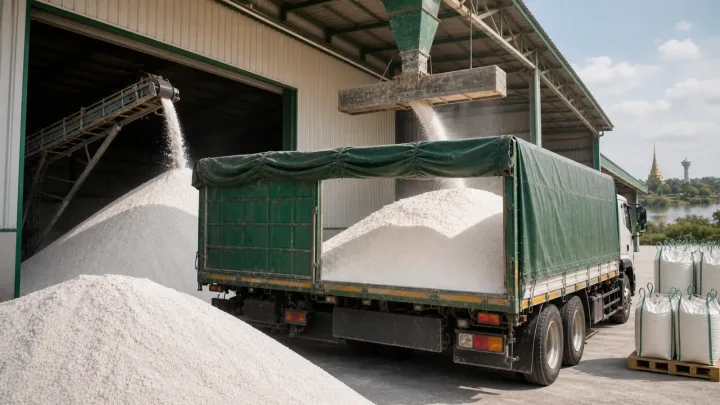
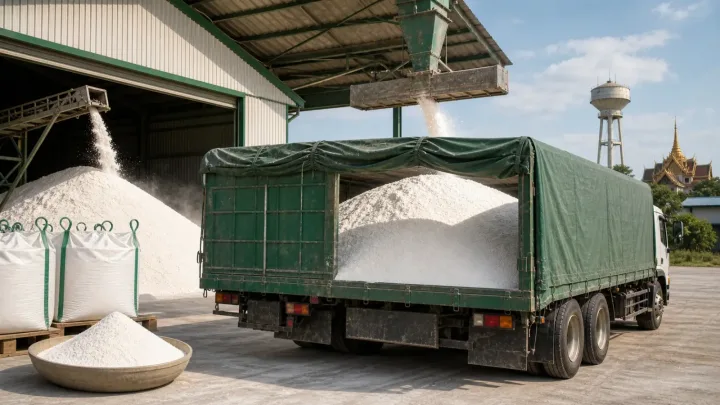
The logistics management of dried cassava pulp on the Nakhon Ratchasima - Kamphaeng Phet strategic route is more than just moving raw materials from one point to another; it is Quality Chain Management. This requires controlling everything from technical standards at the source and preventing risks during long-haul transportation to the verification process at the destination, in order to preserve nutritional properties and prevent raw material degradation. This article delves into the mechanisms of structural quality control and efficient cost management to ensure Feed Mill Continuity and long-term economic viability.
1. Economic Role and Supply Chain of Cassava Pulp
In the animal feed production industry, particularly for the Ruminant Feed group, dried cassava pulp serves as a vital energy source in feed formulations. Therefore, efficient supply chain management is the core of maintaining production costs.
The strategic connection between Nakhon Ratchasima, which serves as a major national hub for cassava collection and processing, and Kamphaeng Phet, a center for large-scale processing plants and feed mills, presents long-haul logistics challenges. The extended distance increases the risk of changes in the physical and chemical properties of the raw materials due to time and environmental conditions during transit.
2. Technical Specifications of Dried Cassava Pulp
Maintaining product consistency is the ultimate goal for procurement and quality control departments in feed mills, with the following technical parameters required for control:
- Moisture Content Control: A critical variable that must be maintained within standard limits to prevent the growth of mold and microorganisms, which could lead to the development of mycotoxins in animal feed.
- Contamination Analysis: Controlling the levels of sand, dust, and other physical foreign matters to prevent machinery wear and tear during the production process and to maintain the cleanliness of the feed formula.
- Particle Size and Caking Prevention: Managing particle size and preventing caking caused by moisture accumulation to ensure that raw materials can be uniformly mixed during the production process.
3. Pre-loading Quality Assurance
Quality control must begin before the goods are loaded onto the truck to implement preventive control and reduce risks during transit, through the following key steps:
Sampling Protocol: Utilizing statistical principles for sampling from production lots to ensure that the product representative is accurate and reflects the quality of the entire shipment.
Vehicle Hygiene Inspection: Trucks used for transportation must pass a cleanliness inspection, being free from foreign odors and any chemical residues from previous cargo (such as fertilizers or agricultural chemicals) that could cause cross-contamination.
Loading Optimization: Calculating the loading volume to be appropriate for the truck's weight capacity to achieve maximum ton-km efficiency without causing the product to be overly compressed and damaged.
4. Logistics & Transit Management
Managing the Nakhon Ratchasima - Kamphaeng Phet route requires in-depth planning to mitigate risks related to time and environmental conditions:
| Management Topic | Strategy Used | Objective |
| Route Optimization | Analyzing primary and alternative routes to avoid heavy traffic areas. | Reduce travel time and minimize risks from vibration. |
| Vehicle Selection | Selecting closed-body trucks or well-maintained tarpaulin trucks. | Protect against moisture from rain and dust during transit. |
| Weather Protection | Inspecting the integrity of tarpaulins and checking for vehicle leaks. | Maintain moisture levels according to specifications. |
5. Risk Management
In long-distance raw material transportation, risks cannot be eliminated to zero, but they can be managed through control systems:
Cross-contamination Control: Implementing measures to inspect the previous cargo history of each vehicle to prevent chemical contamination.
Real-time Tracking: Utilizing GPS tracking systems to monitor position, driving behavior, and lead time management according to the plan, which allows for an accurate Estimated Time of Arrival (ETA) at the factory.
Emergency Management: Preparing contingency plans for vehicle breakdowns or accidents to facilitate cargo transfer or replacement shipments without impacting the customer's production schedule.
6. Receiving & Verification
Upon arrival at the destination factory in Kamphaeng Phet, the verification process must be strictly conducted to ensure compliance with agreements:
- Arrival Inspection: Checking the condition of the packaging/tarpaulin and performing re-sampling to verify moisture levels and contamination.
- Weight & Document Verification: Comparing weights between the origin and destination, and verifying the accuracy of the Delivery Order.
- Traceability: Storing transportation data alongside the Certificate of Analysis (COA) to ensure that products can be traced back to the production source if quality issues are discovered later.
7. Cost Analysis and Economic Efficiency
Effective logistics management must consider the "Total Cost," not just the transportation fee per trip:
Variable Costs Analysis: Comprising fuel costs, vehicle depreciation, and labor costs, which vary based on distance and travel time.
Total Cost per Ton Analysis: Evaluating the cost-effectiveness between "transportation speed" and "received product quality." Fast transportation that carries a high risk to quality may result in increased total costs for the factory due to raw material damage.
Conclusion: Building a competitive advantage in the animal feed industry does not depend solely on raw material prices, but on the ability to manage supply chain reliability. Strict quality control from the source in Nakhon Ratchasima to the destination in Kamphaeng Phet is a vital factor in reducing production risks and building long-term confidence for entrepreneurs.
If you require further technical specifications, a quotation, or product samples for laboratory testing, please contact our team of experts immediately.
Sources
- Thai Tapioca Starch Association - Tapioca Production - https://www.thaitapiocastarch.org/en/information/statistics/tapioca_production - ใช้ยืนยันภาพรวมผลผลิตมันสำปะหลังไทยและบริบท supply ของอุตสาหกรรม
- Thai Tapioca Starch Association - Export Tapioca Products - https://www.thaitapiocastarch.org/en/information/statistics/export_tapioca_products - ใช้ยืนยันสถิติส่งออกผลิตภัณฑ์มันสำปะหลัง รวมถึงหมวด Pulp
- Thai Tapioca Starch Association - Tapioca Starch Processing - https://thaitapiocastarch.org/en/information/learning_industry/tapioca_starch_processing - ใช้อธิบายกระบวนการผลิตแป้งมันและที่มาของผลพลอยได้จากโรงงานแป้งมัน
- ACFS / TAS 8803-2561 - มาตรฐานสินค้าเกษตร กากมันสำปะหลัง - https://www.opsmoac.go.th/udonthani-dwl-files-471491791858 - ใช้อ้างอิงนิยามกากมันสำปะหลังแห้ง/ผง/อัดเม็ด และข้อกำหนดพื้นฐาน เช่น ไม่พบเชื้อราหรือสิ่งแปลกปลอมที่มองเห็นได้
- GP Autoparts - Truck Law 2024 - https://www.gpautoparts.co.th/en/truck-law-2024-latest-regulations-and-penalties-that-truck-owners-need-to-know/ - ใช้ประกอบข้อจำกัดน้ำหนักรถบรรทุก เช่น 10 ล้อ 25 ตัน เพื่ออธิบาย full truck load
- Google Maps - https://www.google.com/maps - ใช้เป็นแหล่งตรวจระยะทางจริงก่อนเผยแพร่บทความจังหวัด เพราะระยะทางเปลี่ยนตามจุดเริ่มต้นและเส้นทาง
- Department of Land Transport - https://www.dlt.go.th/ - ใช้เป็นแหล่งอ้างอิงหน่วยงานกำกับดูแลการขนส่งทางบกเมื่อต้องตรวจข้อกำหนดล่าสุด

Author information
Sri Thong Admin
B2B dried cassava pulp content specialist
Affiliation
SRITHONG PRODUCTTAPIOCA COMPANY LIMITED