Dry Cassava Pulp Full Truckload 25–30 Tons: How to Plan Transportation
By Sri Thong Admin · Published 2026-06-18 · Updated 2026-06-07
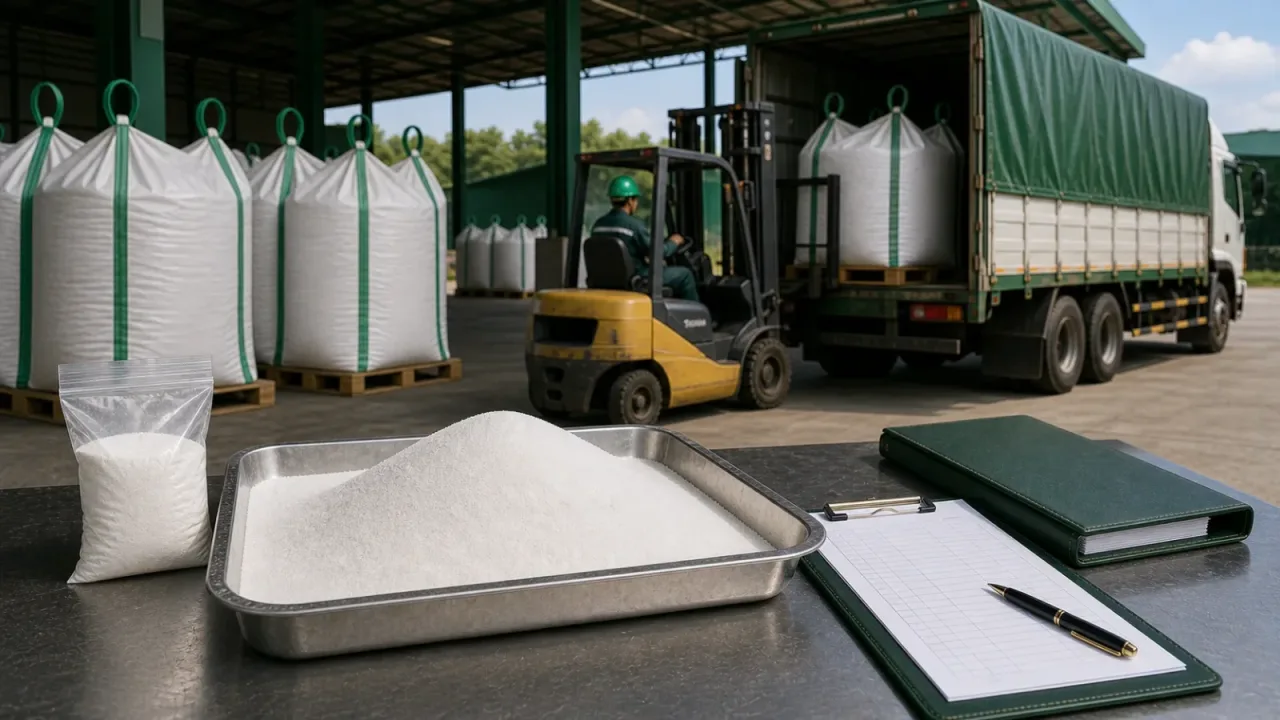
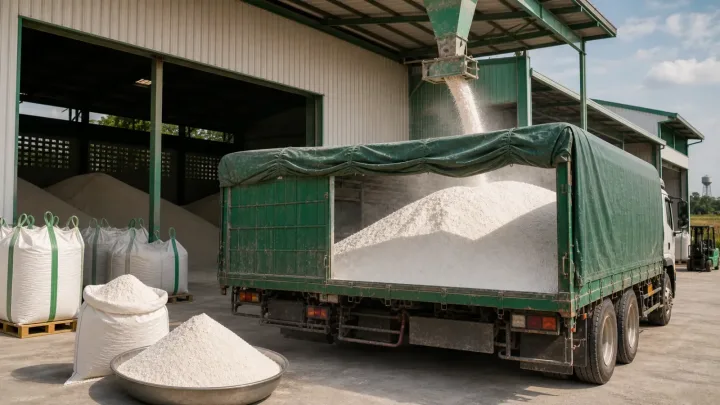
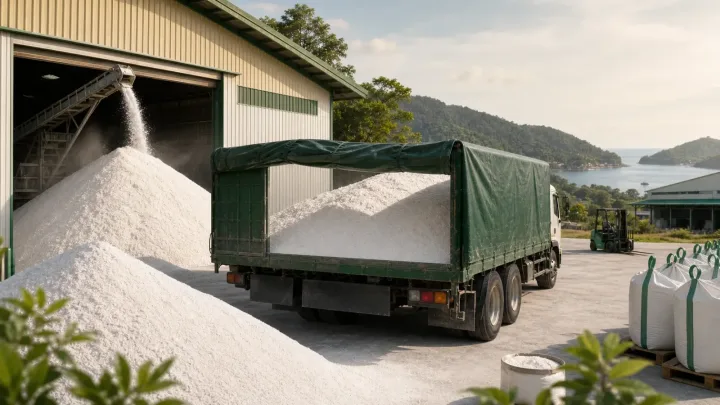
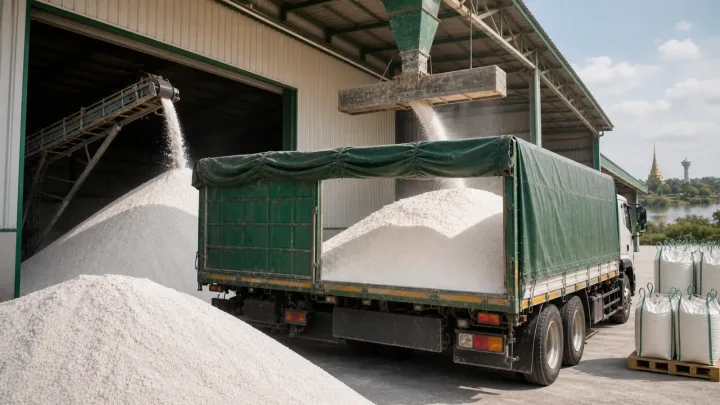
The logistics management of 25-30 tons of dried cassava pulp per load is not merely a matter of procuring transportation, but about controlling technical variables between Bulk Density, Moisture Content, and legal payload regulations. The ultimate goal is to reduce the Cost per Ton and maintain the nutritional value of the raw material until it reaches the factory. Effective planning must encompass everything from inspecting truck bed cleanliness and preventing moisture during transit to utilizing Key Performance Indicators (KPIs) for systematic assessment of transport losses.
1. The Importance of Transport Efficiency in the Animal Feed Supply Chain
In the animal feed production industry, Raw Material Cost represents the largest proportion of total production costs. Within this, "logistics costs" are a critical factor that can significantly impact the overall cost.
Managing bulk commodities, such as dried cassava pulp, presents unique challenges due to the large volume of each order. Inadequate management can lead to the following issues:
- Cost Volatility: Inefficient transportation leads to higher transport costs per ton, subsequently reducing the profit margin of the animal feed products.
- Quality Risk: Loss of quality during transit due to moisture or contamination results in the raw material failing to meet the specified COA (Certificate of Analysis) standards.
- Production Discontinuity: Delays in transportation directly impact the factory's Production Schedule.
Therefore, the primary goal of transport planning is not just the movement of materials, but achieving Cost Optimization alongside maintaining the Quality Integrity of the raw materials.
2. Analysis of Physical Properties and Technical Constraints of Dried Cassava Pulp
Planning for a 25-30 ton payload requires a deep understanding of the physical properties of cassava pulp to accurately calculate load capacity and prevent damage.
The Relationship between Bulk Density and Volume
Dried cassava pulp has a non-constant Bulk Density, which depends on moisture and particle size. Therefore, calculating a 25-30 ton load must also consider the truck's Volume. If the material density is too low, the truck may reach its Full Volume before reaching the Target Weight, resulting in inefficient, low-yield trips.
The Influence of Moisture Content and Mold Growth
Moisture is the most critical variable. If the moisture content exceeds standard levels (e.g., exceeding 12-14%), it has two detrimental effects:
1. Weight Overload: Higher moisture increases the payload weight without increasing the actual amount of raw material, thereby increasing transport costs unnecessarily.
2. Microbiological Risk: Moisture accumulation in the truck bed creates an environment conducive to mold growth, which can lead to the production of Mycotoxins that are hazardous to animals.
Hygroscopicity
Cassava pulp is highly hygroscopic, meaning it absorbs moisture from the air. If transport management is insufficient (e.g., poorly secured tarpaulins), the material will absorb dew or rain, leading to Caking and an increased risk of degradation.
3. Vehicle & Payload Management
Vehicle selection must balance Capacity and legal regulations to prevent issues such as legal enforcement and fines from Overweight loads.
| Vehicle Type | Suitability for 25-30 Tons | Considerations |
| 10-Wheel Truck (Single/Double Axle) | Suitable for short distances or weights not exceeding 15-18 tons.Loading 25 tons would immediately violate the law.||
| Semi-Trailer | Most suitable for weights of 25-30 tons.Must check the Tare Weight to calculate the Net Weight.
Weight Management Strategies:
- Gross Weight Management: The calculation of total weight (Vehicle Weight + Material Weight) must not exceed the legal limit (e.g., 50.5 tons for a 6-axle semi-trailer).
- Load Density & Void Space: Material should be arranged to minimize Void Space in the truck bed to prevent settling, which can shift the vehicle's Center of Gravity during cornering.
4. Management Strategies During Loading and Transit
The process from origin to destination must follow clear Standard Operating Procedures (SOP) to reduce Shrinkage.
Pre-loading: Vehicle Readiness
Inspecting Truck Hygiene is essential. The load area must be clean and free from contaminants from previous loads (e.g., stones, soil, or agricultural chemicals). Furthermore, the truck bed must be completely dry to reduce the risk of increasing the material's moisture content.
Loading Process: Weight Distribution Control
Loading techniques should focus on even weight distribution throughout the truck bed. Dumping the material in a single spot creates Stress on the vehicle's structure and can compromise stability during transit.
Weather Protection: External Factor Mitigation
The use of high-quality, intact Tarpaulins is indispensable. Leaks or tears must be inspected to prevent rain and dew, which are the primary causes of unnecessary weight gain and mold growth.
Route Optimization: Route Selection
Choosing the shortest route with the best road conditions not only helps reduce fuel costs but also minimizes Vibration, which can cause weight loss through dispersion or excessive compaction of the material.
5. Quality Control & Risk Mitigation
Transporting animal feed raw materials carries a high risk of Contamination. Therefore, risk management plans must be specified in the transport contracts.
- Contamination Control: Measures to inspect for Foreign Matter, such as plastic or metal fragments, that may be introduced by the transport vehicle.
- Temperature & Humidity Monitoring: For long-distance transport, random moisture checks may be required upon arrival to compare results against the COA before unloading into silos.
- Contingency Plan: A backup plan for vehicle breakdowns or accidents must include emergency contact lists and backup vehicles that can access the site immediately, ensuring the material is not left stranded and exposed to rain.
6. Logistics Cost & KPI Evaluation
To achieve maximum cost-efficiency, factory management should evaluate performance through quantitative indicators.
Key Performance Indicators (KPIs):
- Weight Loss %: The difference between the weight at the origin and the destination (if it exceeds a set limit, e.g., 0.5%, an investigation into the cause is required).
- On-time Delivery: The rate of deliveries arriving at the scheduled time to ensure production plan efficiency.
- Variable Cost per Ton: Calculating variable costs (fuel, tolls, labor) divided by the actual delivered weight.
Choosing a Transport Model:
Deciding between an In-house Fleet (factory-owned) provides higher quality control but entails higher Fixed Costs. Conversely, using Outsourced (subcontracted) trucks offers greater flexibility but requires particularly stringent Standard Operating Procedures (SOP).
7. Conclusion: Building a Sustainable and Precise Transport System
Achieving maximum efficiency in managing the transport of 25-30 tons of dried cassava pulp requires the integration of "understanding material properties" and "controlling logistics standards." Implementing technologies such as GPS Tracking for vehicle monitoring and Digital Logbooks for recording moisture and weight data for every trip will enable companies to achieve Traceability and precise cost control.
Establishing strict Standard Operating Procedures (SOP) for drivers and loading staff is the fundamental foundation for ensuring a stable animal feed supply chain, reducing quality risks, and creating a long-term competitive advantage.
Sources
- Thai Tapioca Starch Association - Tapioca Production - https://www.thaitapiocastarch.org/en/information/statistics/tapioca_production - ใช้ยืนยันภาพรวมผลผลิตมันสำปะหลังไทยและบริบท supply ของอุตสาหกรรม
- Thai Tapioca Starch Association - Export Tapioca Products - https://www.thaitapiocastarch.org/en/information/statistics/export_tapioca_products - ใช้ยืนยันสถิติส่งออกผลิตภัณฑ์มันสำปะหลัง รวมถึงหมวด Pulp
- Thai Tapioca Starch Association - Tapioca Starch Processing - https://thaitapiocastarch.org/en/information/learning_industry/tapioca_starch_processing - ใช้อธิบายกระบวนการผลิตแป้งมันและที่มาของผลพลอยได้จากโรงงานแป้งมัน
- ACFS / TAS 8803-2561 - มาตรฐานสินค้าเกษตร กากมันสำปะหลัง - https://www.opsmoac.go.th/udonthani-dwl-files-471491791858 - ใช้อ้างอิงนิยามกากมันสำปะหลังแห้ง/ผง/อัดเม็ด และข้อกำหนดพื้นฐาน เช่น ไม่พบเชื้อราหรือสิ่งแปลกปลอมที่มองเห็นได้
- GP Autoparts - Truck Law 2024 - https://www.gpautoparts.co.th/en/truck-law-2024-latest-regulations-and-penalties-that-truck-owners-need-to-know/ - ใช้ประกอบข้อจำกัดน้ำหนักรถบรรทุก เช่น 10 ล้อ 25 ตัน เพื่ออธิบาย full truck load
- Google Maps - https://www.google.com/maps - ใช้เป็นแหล่งตรวจระยะทางจริงก่อนเผยแพร่บทความจังหวัด เพราะระยะทางเปลี่ยนตามจุดเริ่มต้นและเส้นทาง
- Department of Land Transport - https://www.dlt.go.th/ - ใช้เป็นแหล่งอ้างอิงหน่วยงานกำกับดูแลการขนส่งทางบกเมื่อต้องตรวจข้อกำหนดล่าสุด

Author information
Sri Thong Admin
B2B dried cassava pulp content specialist
Affiliation
SRITHONG PRODUCTTAPIOCA COMPANY LIMITED