How to Evaluate a Dried Cassava Pulp Supplier Before Signing a Monthly Contract
By Sri Thong Admin · Published 2026-06-10 · Updated 2026-06-07
How to Evaluate Cassava Chips/Flakes Suppliers Before Signing Monthly Contracts: A Raw Material Risk Management Guide for Animal Feed Factories
Deciding on a Cassava Chips/Flakes supplier for monthly contracts should not solely focus on finding the lowest "price per ton." The core priority is evaluating the ability to maintain "nutritional quality" and "supply chain continuity" to prevent fluctuations in the Feed Conversion Ratio (FCR) and total production costs. An effective evaluation must encompass chemical parameters, traceability of origin, production process hygiene standards, logistics systems, and the transparency of Certificates of Analysis (COA) to transition the relationship from a mere buyer-seller dynamic to a Strategic Partner that helps mitigate long-term technical risks.
I. Introduction: The Importance of Stability in Energy Raw Materials
In the animal feed manufacturing industry, cassava chips serve as a vital primary energy source in feed formulations, particularly for monogastric animals. The challenge faced by feed mills is not a shortage of raw materials, but rather "Quality Inconsistency."
When a supplier fails to control the quality of cassava chips according to the agreed-upon specifications, it creates a domino effect on the production process as follows:
- Impact on FCR: If the starch content in the cassava chips is below standard, the energy intake of the animals will not meet the formulation requirements, resulting in a higher FCR, slower animal growth, and increased rearing costs.
- Cost Variance: Moisture levels exceeding the limit cause the actual weight received to be less than the contract weight, unexpectedly increasing the cost per unit of energy.
- Food Safety Risk: Contamination from mold or mycotoxins may result in finished products failing safety standard requirements.
II. Physical & Chemical Parameters Analysis
Technical evaluation is the first line of defense that the factory's Quality Control (QC) department must use when auditing suppliers, focusing on the following key points:
1. Moisture Content Control
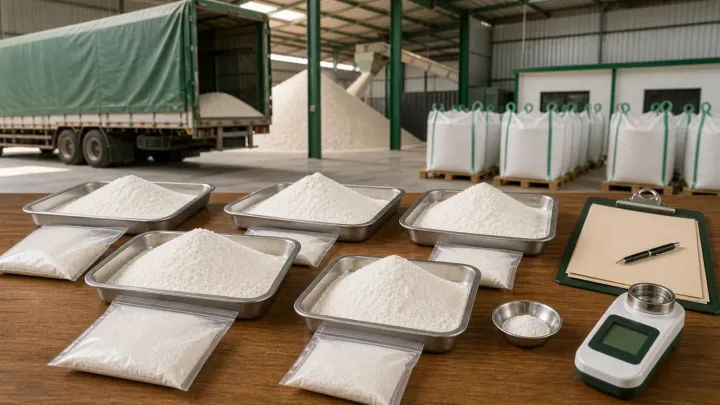
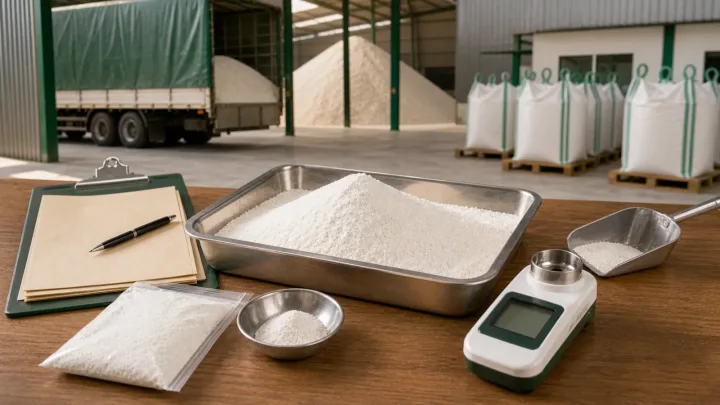
Moisture is the most critical factor in determining shelf-life. The generally acceptable standard is typically not exceeding 13-14%. If moisture levels are higher, it increases the risk of fermentation and creates an environment conducive to mold growth, which can lead to Aflatoxin contamination in the raw material.
2. Starch Content and Metabolizable Energy (ME)
The factory's goal is to obtain maximum energy at the most cost-effective price. Therefore, the evaluation must look at "Energy per Unit Price" rather than just price per ton. Accurate starch value verification allows Nutritionists to calculate Metabolizable Energy (ME) precisely.
3. Impurities & Contaminants
Non-cassava impurities such as sand, dust, and fiber content directly impact digestibility. If these levels are too high, nutrient intake decreases, which can adversely affect the animal's gastrointestinal health.
| Parameter | Risk if below standard | Spec Requirement |
| Moisture | Mold, spoilage, weight loss | Max 14% w/w |
| Sand/Dust | Reduced digestibility, machinery wear | Max 1-2% w/w |
| pH/Acid | Fermentation, chemical degradation | Appropriate pH per factory standard |
III. Production Process & Traceability Assessment
A supplier's reliability can be measured by their ability to maintain upstream control.
1. Traceability System
Feed mills should inquire about the source of the fresh cassava (Cassava Source), including the specific farming areas and management practices, as seasonality and soil conditions significantly impact the starch content of the cassava roots.
2. Drying Technology
It is essential to evaluate whether the supplier uses Sun-drying or Mechanical-drying processes. While sun-drying has lower costs, mechanical drying typically provides higher moisture consistency and cleanliness, reducing the risk of environmental contaminants.
3. Hygiene & Storage Management
How does the supplier's facility manage pest control and prevent cross-contamination between different lots of raw materials? Additionally, storage must be in a dry area with proper ventilation.
IV. Logistics & Supply Chain Reliability Assessment
The risk of stockouts can be mitigated by auditing the logistics system:
- Volume Consistency: Does the supplier have the capability to deliver the full monthly volume specified in the contract to prevent production line interruptions?
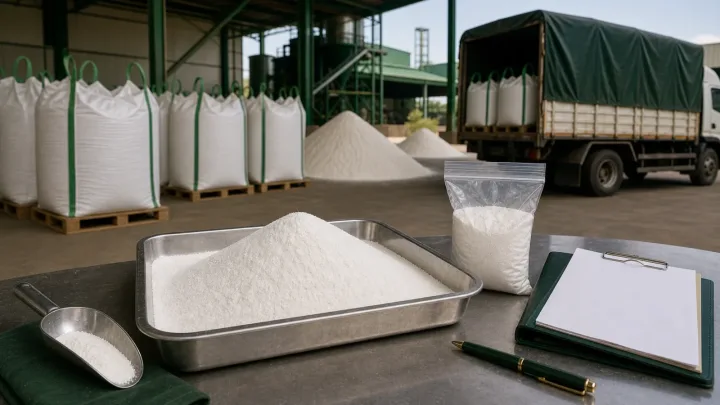
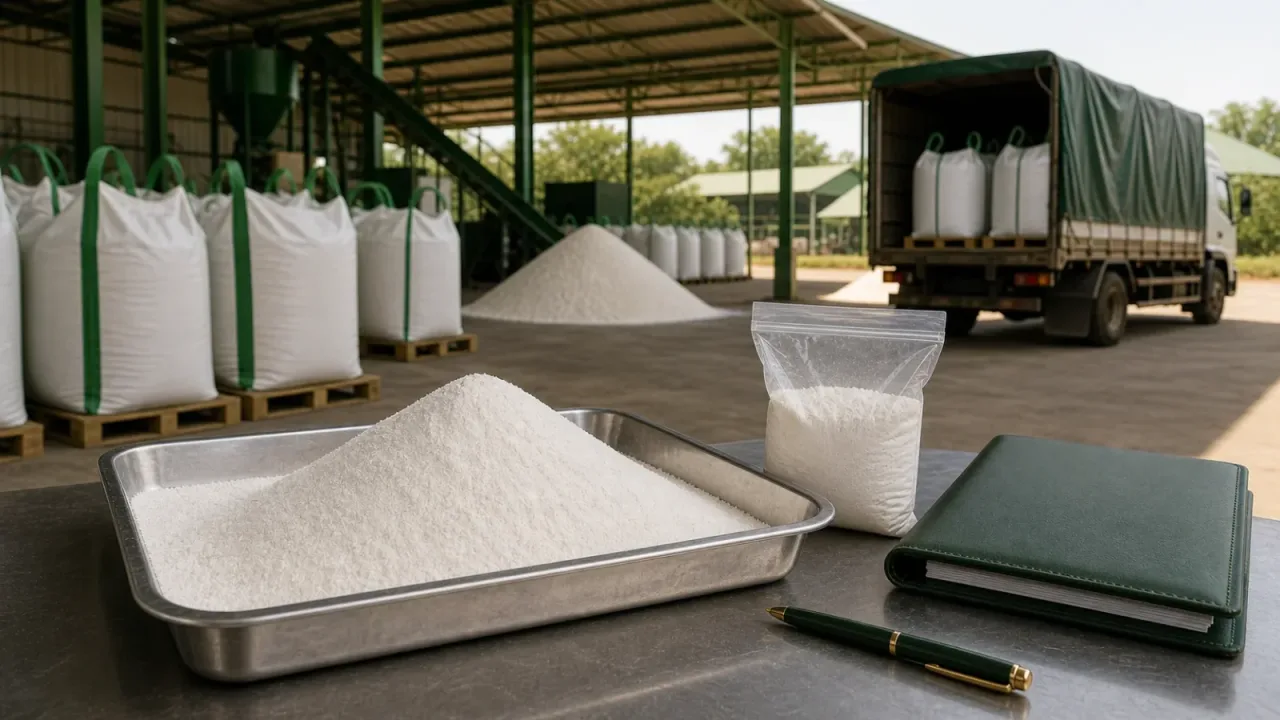
- Transport Hygiene: Transport vehicles must be clean and free from foreign odors. Most importantly, they must have "moisture protection systems" (such as intact tarpaulins) to prevent rain damage during transit.
- Lead Time & Delivery Schedule: Punctuality in delivery and the flexibility to adjust delivery plans during emergencies.
V. Documentation & Compliance Verification
Documentation serves as the most critical legal and technical evidence in B2B business transactions.
1. Certificate of Analysis (COA)
A professional supplier must be able to issue a COA that specifies the chemical and physical test results for "each delivered lot," rather than merely providing general standard test results.
2. Standard Certifications
Possessing GMP, HACCP, or other animal feed safety standards indicates that the supplier operates under international management systems, reducing the risk of product rejection by the factory's QC department.
3. Claim Policy & Contract Terms
The contract must clearly state the Rejection Criteria, such as: "If moisture exceeds 14% or impurities exceed the specified percentage, the factory reserves the right to reject the goods or request a proportional price reduction," as well as the compensation process if nutrient values do not meet the specifications.
VI. Trial Period & Risk Mitigation
Before entering into a long-term contract, trial steps should be implemented to reduce risk:
- Pre-contract Trial: Requesting samples for internal laboratory testing to verify starch, moisture, and impurity levels using the company's own instruments.
- Cost-Benefit Analysis: Calculating value using the "Price per unit of ME" formula to determine if a lower price truly provides more cost-effective energy.
- Contingency Plan: Always evaluating and preparing a Backup Supplier to diversify risk and avoid Single Sourcing Risk.
VII. Conclusion: Building Partnerships for Sustainability
Effective evaluation of Cassava Chips/Flakes suppliers is not just about checking numbers on paper; it is about finding partners ready to grow alongside us. Establishing a Long-term Partnership based on transparency, complete information, and consistent standards will serve as the essential foundation, enabling animal feed factories to control production costs and sustainably deliver maximum product quality to the end consumer.
Sources
- Thai Tapioca Starch Association - Tapioca Production - https://www.thaitapiocastarch.org/en/information/statistics/tapioca_production - ใช้ยืนยันภาพรวมผลผลิตมันสำปะหลังไทยและบริบท supply ของอุตสาหกรรม
- Thai Tapioca Starch Association - Export Tapioca Products - https://www.thaitapiocastarch.org/en/information/statistics/export_tapioca_products - ใช้ยืนยันสถิติส่งออกผลิตภัณฑ์มันสำปะหลัง รวมถึงหมวด Pulp
- Thai Tapioca Starch Association - Tapioca Starch Processing - https://thaitapiocastarch.org/en/information/learning_industry/tapioca_starch_processing - ใช้อธิบายกระบวนการผลิตแป้งมันและที่มาของผลพลอยได้จากโรงงานแป้งมัน
- ACFS / TAS 8803-2561 - มาตรฐานสินค้าเกษตร กากมันสำปะหลัง - https://www.opsmoac.go.th/udonthani-dwl-files-471491791858 - ใช้อ้างอิงนิยามกากมันสำปะหลังแห้ง/ผง/อัดเม็ด และข้อกำหนดพื้นฐาน เช่น ไม่พบเชื้อราหรือสิ่งแปลกปลอมที่มองเห็นได้
- FAO - Roots, tubers, plantains and bananas in animal feeding - https://www.fao.org/4/T0554E/T0554E05.htm - ใช้ยืนยันประเด็นความชื้น สิ่งปลอมปน เถ้า ทราย และความเสี่ยง aflatoxin ในสินค้า cassava/feed
- FAO - Thailand Feed and Feed Ingredient Standards - https://www.fao.org/fileadmin/user_upload/affris/docs/standard/Thailand_Feed_and_Feed_Ingredient_Standards.pdf - ใช้เป็นตัวอย่างโครงสร้างค่าวิเคราะห์วัตถุดิบอาหารสัตว์ เช่น moisture, protein, fiber, ash
- DLD - การตรวจอะฟลาทอกซินในวัตถุดิบอาหารสัตว์ - https://qcontrol.dld.go.th/images/Prototype/knowledge/analysis/2565/13.pdf - ใช้สนับสนุนหัวข้อ aflatoxin, วิธีวิเคราะห์ และเหตุผลที่ควรตรวจเป็นรอบเมื่อมีความเสี่ยง

Author information
Sri Thong Admin
B2B dried cassava pulp content specialist
Affiliation
SRITHONG PRODUCTTAPIOCA COMPANY LIMITED