Documents to Request from a Dried Cassava Pulp Supplier
By Sri Thong Admin · Published 2026-06-10 · Updated 2026-06-07
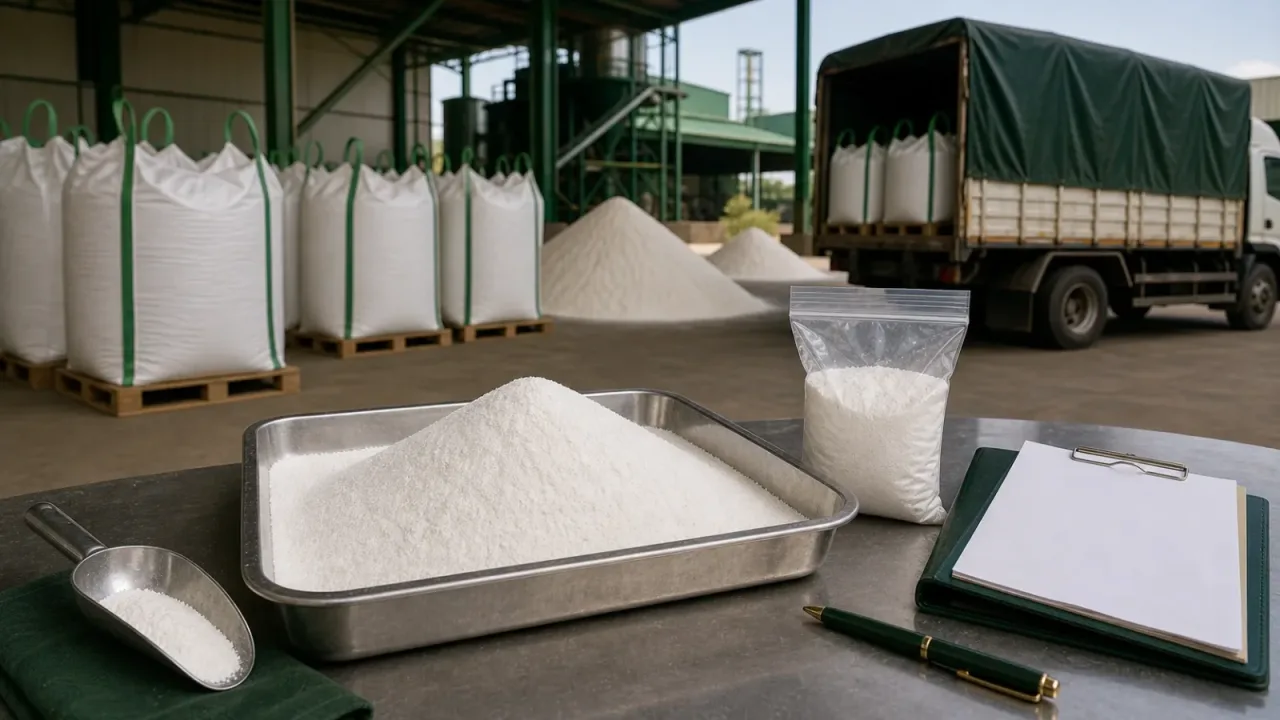
Executive Summary: Procuring Dry Cassava Pulp for the animal feed industry is not merely about comparing price per ton, but about Technical Risk Management. The core element that Nutritionists and Quality Control (QC) teams must use to evaluate Suppliers is a "comprehensive quality certification package" covering polymer value, energy content, and safety from contaminants. A systematic document audit—ranging from Certificate of Analysis (CoA) and production standards (GMP/HACCP) to Traceability systems—serves as a shield to prevent feed mills from facing Formula Deviation, Contamination, and legal risks. Requesting complete documentation during the supplier selection process ensures that the raw materials entering the production line maintain consistent standards and are safe for all types of animals.
1. Importance of Raw Material Quality Control in the Animal Feed Industry
In the complex process of animal feed production, raw materials like dry cassava pulp serve as vital sources of energy and fiber. However, Raw Material Variability is the greatest challenge for nutritionists. If the received raw materials are inconsistent in quality, it directly impacts the Metabolizable Energy in the feed formula and may increase production costs due to the need for formula adjustments to compensate for deficiencies.
Common technical risks resulting from a lack of quality control include:
- Excessive Moisture: Leads to rapid mold growth and nutrient degradation during storage.
- Residual Toxins: Such as Cyanide or Mycotoxins, which can adversely affect animal growth rates and health.
- Physical Contamination: Such as sand, metal, or foreign objects, which can damage production machinery (Extruder/Pellet Mill).
Therefore, technical documents are not just confirming papers; they are "Risk Mitigation" tools that enable the QC department to make precise decisions to accept or reject products based on factual data.
2. Nutritional Analysis Document Group (Certificate of Analysis - CoA)
The CoA is the most critical document for verifying that the delivered raw materials meet the agreed-upon specifications. The parameters that the nutrition department must prioritize are as follows:
| Key Parameters | Importance to Animal Feed Production |
| Moisture Content | Maintaining low moisture is a primary factor in preventing microbial growth and inhibiting mold formation during transport and storage. |
| Crude Protein & Residual Starch | Used to calculate Nutrient Density to ensure that the energy and protein levels received align with the price paid. |
| Crude Fiber & Ash | Excessive Ash content indicates contamination by inorganic matter or sand, while fiber levels must be appropriate for the specific type of animal. |
| pH Value | The stability of the pH value affects the stability of the feed formula and the activity of microorganisms in the animal's digestive tract. |
3. Safety & Contaminant Analysis Document Group
Beyond nutritional value, Safety is non-negotiable in the B2B industry. Documents in this group serve as indicators of a supplier's Critical Limit safety standards.
3.1 Management of Toxins and Hazardous Substances
Dry cassava pulp involves a critical issue regarding Residual Cyanide. A good supplier must provide test results confirming that toxin levels are within the Safe Limit for animals. Additionally, this includes Mycotoxin Screening to monitor for fungal toxins, such as Aflatoxin, which may contaminate the product due to substandard drying processes.
3.2 Heavy Metal and Impurity Control
Analyzing Heavy Metals (such as Lead, Cadmium, and Arsenic) is essential to prevent toxin accumulation in the food chain. This also includes documentation confirming Physical Impurities Control, such as reports from metal detector inspections and the removal of inert matter, to ensure machinery safety and feed pellet quality.
4. Production & Hygiene Standards Group
The standards of the manufacturer serve as an indicator of product Consistency. The documents that should be requested include:
- GMP (Good Manufacturing Practice) Standards: To confirm that the factory maintains good hygiene in the raw material handling process.
- HACCP (Hazard Analysis and Critical Control Points) System: To confirm that critical points in the production process, especially the drying stage, are analyzed and controlled.
- Process Log / Drying Temperature Record: Evidence of temperature records during the drying process, which is a key variable in destroying pathogenic microorganisms and maintaining stable moisture.
5. Traceability & Regulatory Compliance Group
In the event of Product Non-Conformance, a rapid data management system helps minimize damage.
- Batch/Lot Number & Production Date: Documents must clearly specify these to support inventory management (FIFO) and Product Recall capabilities.
- Raw Material Traceability: Information regarding the source of the fresh cassava used in processing to ensure that the upstream raw materials are from reliable sources and free from agricultural chemical contamination.
- Compliance Certificate: Certification that the product complies with the requirements of the Animal Feed Quality Control Act and other relevant national standards.
6. Conclusion and Recommendations for Procurement and QC Departments
Building sustainable relationships with suppliers in the B2B sector does not depend on the lowest price, but on "Data Transparency."
Best Practices:
- Routine Audit: Implement a periodic document checklist to verify that the CoA results for each lot remain within the specified standard limits.
- Non-Conformance Management: When discrepancies in documents or product quality are found, there must be a Corrective Action Request (CAR) process to ensure the supplier improves their process.
- Building Partnership: Choose suppliers who can provide Deep Data immediately upon request, as this is a sign of a high-quality and professional management system.
If you are looking for Dry Cassava Pulp with data transparency, complete CoA documentation, and verifiable production standards to ensure the stability of your animal feed formulas, please contact our sales team to request Specifications, product samples, or price inquiries.
Sources
- Thai Tapioca Starch Association - Tapioca Production - https://www.thaitapiocastarch.org/en/information/statistics/tapioca_production - ใช้ยืนยันภาพรวมผลผลิตมันสำปะหลังไทยและบริบท supply ของอุตสาหกรรม
- Thai Tapioca Starch Association - Export Tapioca Products - https://www.thaitapiocastarch.org/en/information/statistics/export_tapioca_products - ใช้ยืนยันสถิติส่งออกผลิตภัณฑ์มันสำปะหลัง รวมถึงหมวด Pulp
- Thai Tapioca Starch Association - Tapioca Starch Processing - https://thaitapiocastarch.org/en/information/learning_industry/tapioca_starch_processing - ใช้อธิบายกระบวนการผลิตแป้งมันและที่มาของผลพลอยได้จากโรงงานแป้งมัน
- ACFS / TAS 8803-2561 - มาตรฐานสินค้าเกษตร กากมันสำปะหลัง - https://www.opsmoac.go.th/udonthani-dwl-files-471491791858 - ใช้อ้างอิงนิยามกากมันสำปะหลังแห้ง/ผง/อัดเม็ด และข้อกำหนดพื้นฐาน เช่น ไม่พบเชื้อราหรือสิ่งแปลกปลอมที่มองเห็นได้
- FAO - Roots, tubers, plantains and bananas in animal feeding - https://www.fao.org/4/T0554E/T0554E05.htm - ใช้ยืนยันประเด็นความชื้น สิ่งปลอมปน เถ้า ทราย และความเสี่ยง aflatoxin ในสินค้า cassava/feed
- FAO - Thailand Feed and Feed Ingredient Standards - https://www.fao.org/fileadmin/user_upload/affris/docs/standard/Thailand_Feed_and_Feed_Ingredient_Standards.pdf - ใช้เป็นตัวอย่างโครงสร้างค่าวิเคราะห์วัตถุดิบอาหารสัตว์ เช่น moisture, protein, fiber, ash
- DLD - การตรวจอะฟลาทอกซินในวัตถุดิบอาหารสัตว์ - https://qcontrol.dld.go.th/images/Prototype/knowledge/analysis/2565/13.pdf - ใช้สนับสนุนหัวข้อ aflatoxin, วิธีวิเคราะห์ และเหตุผลที่ควรตรวจเป็นรอบเมื่อมีความเสี่ยง

Author information
Sri Thong Admin
B2B dried cassava pulp content specialist
Affiliation
SRITHONG PRODUCTTAPIOCA COMPANY LIMITED