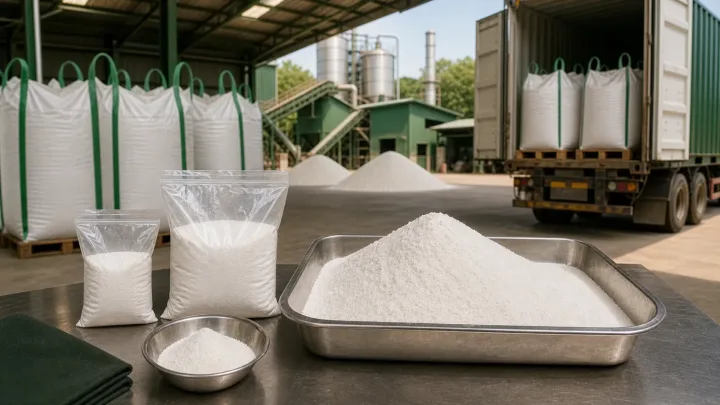
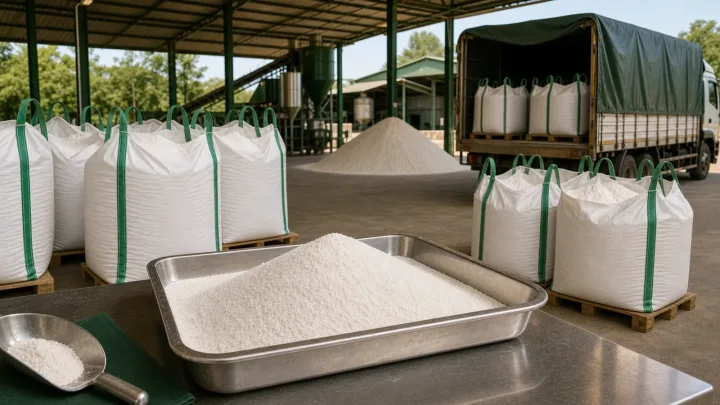
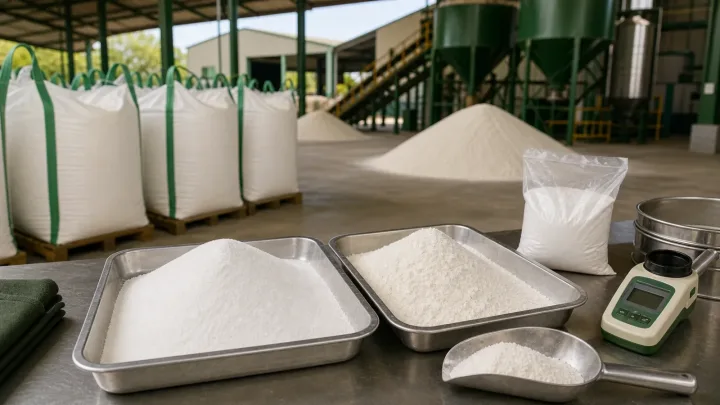
Checklist Before Ordering Your First Lot of Dried Cassava Pulp from a New Supplier
By Sri Thong Admin · Published 2026-06-09 · Updated 2026-06-07
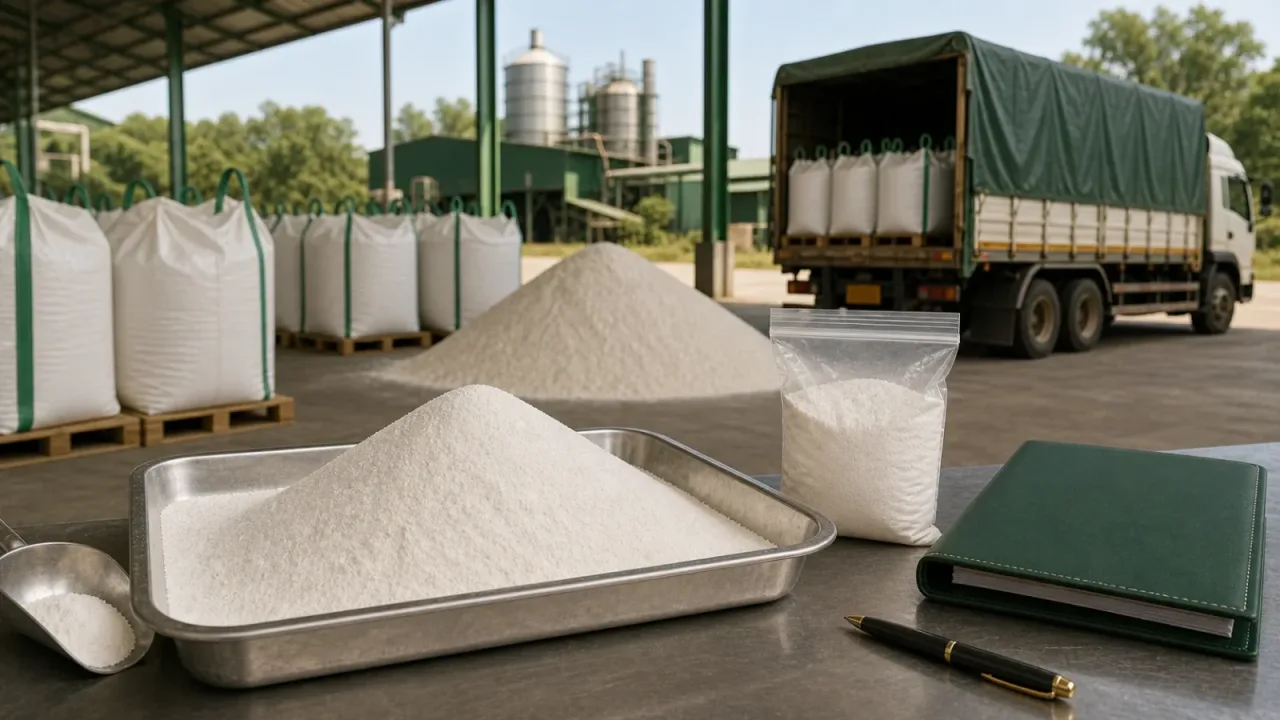
Executive Summary: Risk Management in Supplier Selection for Dried Cassava Chips
Purchasing Dried Cassava Chips from new suppliers for animal feed production is not just about comparing the price per ton; it is about assessing risks across the entire production chain. If raw materials lack nutritional standards or are contaminated, it directly impacts the Metabolizable Energy (ME) in the feed formula, animal safety, and production costs that may surge due to the loss of entire lots. This article compiles an in-depth checklist across 5 key dimensions: Nutritional Standards, Contamination Safety, Physical Characteristics, Documentation & Certification, and Logistics Stability. This serves as a standard auditing criteria before deciding on the first purchase order to ensure that the received raw materials maintain production standards and stabilize feed costs according to the factory's goals.
1. Nutritional Specification Audit
The heart of an animal feed factory is Formulation Control; therefore, the consistency of nutrients in dried cassava chips cannot be overlooked. This audit must focus on indicators that affect energy values and the proportion of macronutrients.
1.1 Starch Content
Starch is the primary energy source in dried cassava chips. Checking for sufficient starch levels according to standard criteria is essential to maintain a stable Metabolizable Energy (ME) value in the feed formula. If starch levels are below standard, the factory will need to increase the amount of cassava chips used to compensate for the energy, inevitably leading to a higher cost per unit of energy.
1.2 Moisture Content
Moisture is a critical factor affecting both quality and storage. Controlling moisture within agreed limits (e.g., not exceeding 12-14%) aims to prevent mold growth and fermentation during transport. Excessive moisture leads to raw material degradation before reaching the production process.
1.3 Ash Content
High ash content indicates the presence of mineral impurities or sand/soil in the raw materials. Checking the Ash Content helps assess the purity of the cassava chips and prevents the dilution of macronutrients in the feed formula.
1.4 Protein & Fiber Content
Although cassava chips have low protein, the consistency of Protein and Fiber levels must be checked to calculate the digestibility for animals. If fiber levels are too high, it may affect the feed intake rate and nutrient utilization in animals.
2. Safety & Contamination Risk Assessment
Raw material safety is the highest responsibility of an animal feed factory. Even minor contamination can result in product recalls and damage to the brand's reputation.
2.1 Cyanide/HCN Levels
Since cassava naturally contains HCN, checking cyanide levels after processing and drying is vital to ensure toxins are reduced to levels safe for animals (especially ruminants and swine) according to international safety standards.
2.2 Mycotoxin Screening
Excessive moisture during the drying process is a major factor leading to Aflatoxin and Fumonisin. Proactive screening for Mycotoxins is an indispensable step to prevent contamination in the production line, which is hazardous to animal health and end consumers.
2.3 Physical Impurities
Inspecting for soil, sand, stones, as well as metal fragments and foreign matter is not just about cleanliness, but about preventing damage to factory machinery, such as Hammer Mills and Pellet Mills, which can cause severe damage and high maintenance costs.
2.4 Chemical Residues
Checking for pesticide residues or chemicals that may remain from the cultivation or processing stages to ensure that raw materials comply with Food Safety standards and are free from hazardous chemicals that could affect meat quality.
3. Physical & Sensory Inspection
Visual and sensory evaluation serves as the first line of defense in at-gate inspection.
3.1 Chip Size & Shape
The uniformity of chip size directly affects grinding efficiency. If the size is too varied, it becomes difficult to control the particle size distribution in the feed formula and increases energy consumption during grinding.
3.2 Color Profile
The color of the chips can indicate quality. White or light yellow colors according to standards indicate freshness, while dark or black colors may be a sign of oxidation or spoilage due to moisture.
3.3 Odor Analysis
Smelling for abnormalities, such as an acidic smell from fermentation or a musty odor, is a rapid preliminary assessment used to decide whether to reject products likely to be degraded.
3.4 Cleanliness
Inspecting for cassava leaves, stems, or biological foreign matter to ensure that the raw materials have undergone an excellent cleaning process.
4. Documentation & Traceability Verification
A supplier's reliability is measured by the transparency of their data and their quality management system.
| Document/System to Audit | Importance to Animal Feed Factories |
|---|---|
| Certificate of Analysis (COA) | Used to confirm that the Lab analysis results of the current lot match the specifications agreed upon in the contract. |
| Traceability System | The ability to identify the source (cassava depot/plantation) to manage risks when problems are found. |
| Production Standards (GMP/HACCP) | Confirms that the supplier's production process has hygienic controls and critical control points (CCPs). |
| Quality Control Logs | Requesting to audit moisture and temperature control logs during drying to confirm process stability. |
5. Logistics & Supply Chain Reliability
Good raw materials are meaningless if delivery cannot be continuous or if damage occurs during transit.
5.1 Transport Hygiene
Inspecting the cleanliness of trucks and moisture protection (e.g., using tight-fitting and leak-free tarpaulins) to prevent cross-contamination and moisture from rain during transport.
5.2 Supply Consistency
Suppliers must be capable of managing the supply chain to meet factory demand, especially during peak seasons when market raw materials may be scarce.
5.3 Receiving & Sampling Protocol
Establishing clear "Rejection Criteria" between the buyer and seller. If products do not meet the specifications stated in the contract (e.g., excessive moisture or presence of contaminants), there must be a clear process for claims and returns to minimize the risk of bringing substandard raw materials into the production line.
If you are looking for high-standard dried cassava chips, complete with COA documentation and a full Traceability system to ensure the stability of your production line, contact our team of experts immediately to request specifications, product samples, or a quotation.
Sources
- Thai Tapioca Starch Association - Tapioca Production - https://www.thaitapiocastarch.org/en/information/statistics/tapioca_production - ใช้ยืนยันภาพรวมผลผลิตมันสำปะหลังไทยและบริบท supply ของอุตสาหกรรม
- Thai Tapioca Starch Association - Export Tapioca Products - https://www.thaitapiocastarch.org/en/information/statistics/export_tapioca_products - ใช้ยืนยันสถิติส่งออกผลิตภัณฑ์มันสำปะหลัง รวมถึงหมวด Pulp
- Thai Tapioca Starch Association - Tapioca Starch Processing - https://thaitapiocastarch.org/en/information/learning_industry/tapioca_starch_processing - ใช้อธิบายกระบวนการผลิตแป้งมันและที่มาของผลพลอยได้จากโรงงานแป้งมัน
- ACFS / TAS 8803-2561 - มาตรฐานสินค้าเกษตร กากมันสำปะหลัง - https://www.opsmoac.go.th/udonthani-dwl-files-471491791858 - ใช้อ้างอิงนิยามกากมันสำปะหลังแห้ง/ผง/อัดเม็ด และข้อกำหนดพื้นฐาน เช่น ไม่พบเชื้อราหรือสิ่งแปลกปลอมที่มองเห็นได้
- Thai Feed Mill Association - Member Directory - https://www.thaifeedmill.org/member/ - ใช้ยืนยันกลุ่มลูกค้าเป้าหมาย เช่น โรงงานอาหารสัตว์และผู้ประกอบการในห่วงโซ่อาหารสัตว์
- Google Search Central - Creating Helpful, Reliable, People-first Content - https://developers.google.com/search/docs/fundamentals/creating-helpful-content - ใช้เป็นกรอบการเขียนบทความที่ตอบ intent จริง ไม่ใช่ปั่น keyword
- Thai Tapioca Trade Association - https://ttta-tapioca.org/?lang=en - ใช้ดูทิศทางตลาดมันสำปะหลัง/มันเส้นและบริบทการค้าผลิตภัณฑ์มันสำปะหลัง

Author information
Sri Thong Admin
B2B dried cassava pulp content specialist
Affiliation
SRITHONG PRODUCTTAPIOCA COMPANY LIMITED