Dry Cassava Pulp for B2B: What Is the Minimum Order in Tons?
By Sri Thong Admin · Published 2026-06-09 · Updated 2026-06-07
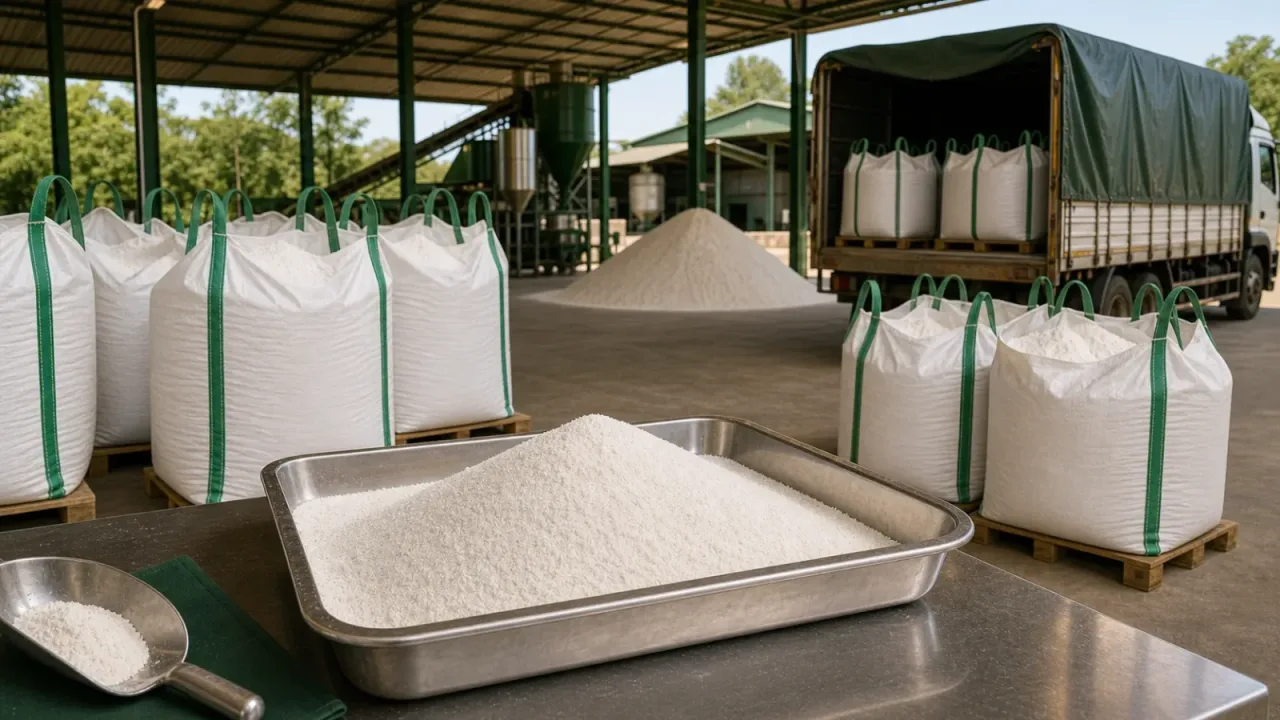
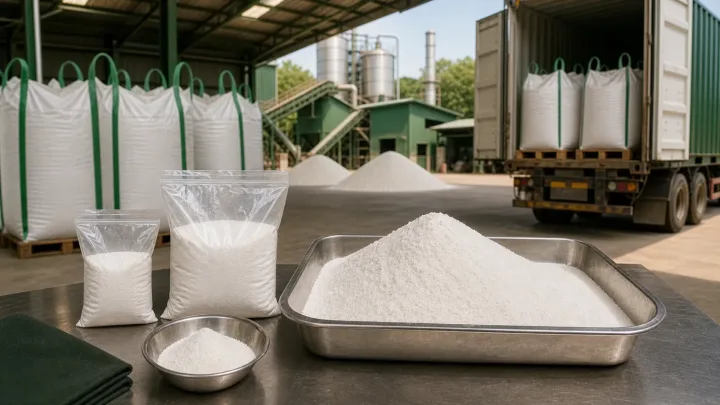
Key Summary: Determining the Minimum Order Quantity (MOQ) for dry cassava pulp in the B2B industry is not based on a fixed figure, but is the result of calculating the balance between Logistics Efficiency, Storage Cost, and the consistency of raw material quality. The primary factor that best minimizes unit costs is managing Full Truck Load (FTL) ordering patterns to reduce hidden costs related to freight and cargo handling. Therefore, procurement officers should consider order quantities alongside Moisture Content standards and seasonal risk management plans to maintain the long-term Total Cost of Ownership (TCO).
1. Introduction: The Role of Cassava Pulp in the Feed Mill Industry and B2B Trading Mechanisms
In the feed mill industry, Raw Material Cost management is the most critical factor, as raw material costs often account for more than 60-70% of total production costs. Cassava pulp serves as a cost-effective Energy Source compared to corn or broken rice, making it a raw material that feed mills must plan for procurement systematically.
The key difference between Retail purchasing and Commercial (B2B/Bulk) purchasing is the "quantitative mechanism." In the wholesale or B2B market, we are not talking about purchasing by the bag, but at the "ton" level, which leads to the concept of Minimum Order Quantity (MOQ). The MOQ figure in the dry cassava pulp market is not a fixed number applicable to every company; instead, it is primarily determined by the logistics structure and the supplier's delivery capacity.
2. Determinants of MOQ
The determination of Minimum Order Quantity by suppliers or starch factories is not merely a trade policy, but a result of real constraints and costs within the animal feed supply chain, as follows:
2.1 Supply Side Constraints
Managing Inventory Turnover for starch factories is a crucial factor. Cassava pulp is a by-product of the starch production process, and the volume produced daily is directly related to the primary starch production output. Therefore, ordering in quantities that align with production cycles and Residue Management determines how much surplus stock a supplier can reserve to support small-scale orders.
2.2 Logistics & Transportation Capacity
This is the factor that impacts MOQ the most, as transporting large quantities of agricultural products involves Freight Cost as a key variable. An order that is "not a full load" will significantly increase the transportation cost per ton. The standards used for calculating cargo capacity are as follows:
| Transport Type | Approximate Capacity (Tons) | B2B Usage Characteristics |
| 6-Wheel Truck | 7 - 10 Tons | Suitable for short distances or trial/sample deliveries |
| 10-Wheel Truck | 14 - 15 Tons | Standard volume for medium-scale procurement |
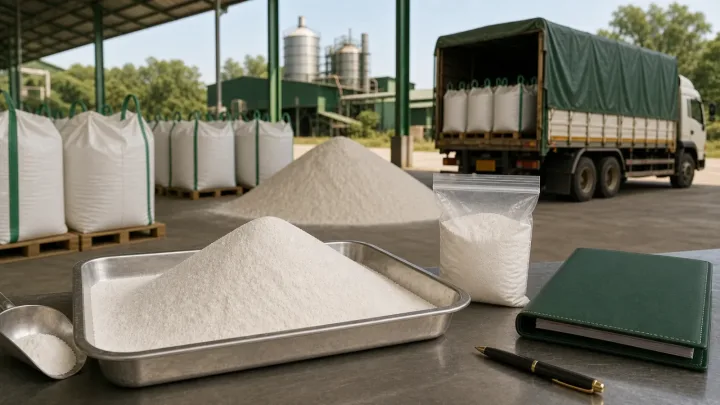
| Semi-Trailer | 28 - 30 Tons | Full Truck Load (FTL) for maximum efficiency |
Furthermore, "Distance" is a variable that determines cost-effective payload. As the transportation distance increases, fuel costs rise, causing suppliers to push for ordering quantities that reach maximum Payload Efficiency to maintain price competitiveness.
2.3 Operating Cost per Unit
Managing Loading/Unloading costs or the labor costs for cargo handling at both the factory and the warehouse involves a Fixed Cost per trip. If the order quantity is too low, these expenses are divided by fewer tons, causing the total cost per unit to surge.
3. Analyzing the Relationship between "Order Quantity" and "Price Structure" (Economy of Scale in Cassata Pulp)
3.1 Volume-based Pricing: FTL vs. LTL
In the B2B market, a clear price difference is found between Full Truck Load (FTL) and Less than Truckload (LTL) orders. FTL ordering allows suppliers to manage truck cycles more accurately, reduce empty return trips, and offer a lower Price per Ton, because the unit transportation cost is distributed across the maximum weight a single truck can carry.
3.2 Break-even Analysis for Buyers
Procurement officers must not look only at the "lowest price per ton" but must calculate the balance between:
- Raw Material Discount: Discounts gained from high-volume purchasing.
- Storage Cost: Warehouse rental, handling fees, and factory space utilization.
- Degradation Risk: If dry cassava pulp is stored for too long, issues with moisture or mold may arise, affecting animal feed quality.
4. Technical Quality Standards & Weight Accuracy
Large-scale purchasing is meaningless if quality is inconsistent or if the received weight does not match the agreement.
4.1 Impact of Moisture Content on Net Weight Calculation
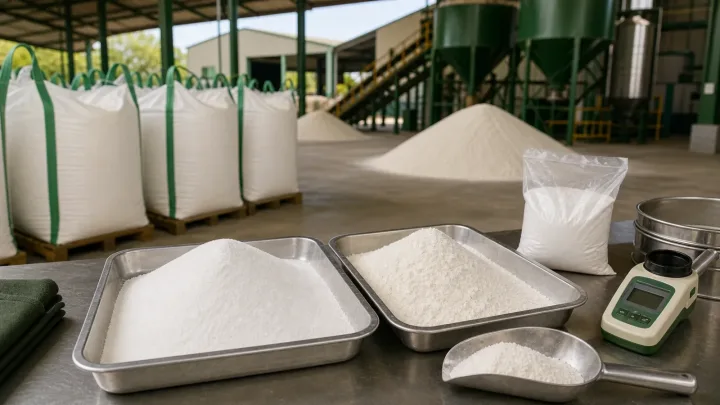
One of the most critical issues is "Paying for water" in dry cassava pulp. If the moisture level is higher than specified in the COA (Certificate of Analysis), the increased weight consists of water rather than raw material substance. Therefore, inspecting moisture levels before acceptance is an indispensable step in bulk goods receiving.
4.2 Nutritional Value and Impurities
Bulk purchasing must ensure that the same or consecutive lots meet nutrient standards (such as Starch and Fiber) and that Impurities (such as sand or dust) are consistent with Feed Formulation standards to prevent fluctuations in the production process.
4.3 Shrinkage & Loss Control
Large-scale transportation carries the risk of weight loss during transit (Shrinkage) due to moisture evaporation or spillage. Procurement officers must clearly agree on the "Net Weight at Destination" in the contract.
5. Procurement & Risk Management Strategy for Operators
5.1 Seasonal Supply Fluctuation
The cassava pulp market fluctuates according to the cassava production season. Planning purchases in advance during periods of market surplus will help factories lock in appropriate quantities and prices.
5.2 Long-term Contract vs. Spot Market
Using a Long-term Contract helps create supply chain stability and allows for the negotiation of an MOQ that meets continuous demand. In contrast, purchasing via the Spot Market may offer lower prices during certain periods but carries the risk of supply uncertainty.
5.3 Supplier Auditing
Selecting a supplier involves more than just price; it requires assessing Reliability—the ability to maintain agreed-upon supply levels, especially during market raw material crises.
6. Conclusion & Expert Recommendations
Decisions regarding the Minimum Order Quantity (MOQ) for dry cassava pulp should be based on the "Total Cost of Ownership" rather than just the "Unit Price," taking into account transport efficiency, storage capacity, and quality risks.
Checklist for Procurement Officers before MOQ negotiation:
- Verify if your warehouse capacity can accommodate Full Truck Load (FTL) orders.
- Assess order Frequency to balance transportation costs against storage costs.
- Request the latest COA to check for Moisture and Impurities.
- Negotiate Weight Bridge conditions and acceptable Tolerance levels.
- Inquire about delivery terms and Lead Time in case urgent supplies are needed.
Sources
- Thai Tapioca Starch Association - Tapioca Production - https://www.thaitapiocastarch.org/en/information/statistics/tapioca_production - ใช้ยืนยันภาพรวมผลผลิตมันสำปะหลังไทยและบริบท supply ของอุตสาหกรรม
- Thai Tapioca Starch Association - Export Tapioca Products - https://www.thaitapiocastarch.org/en/information/statistics/export_tapioca_products - ใช้ยืนยันสถิติส่งออกผลิตภัณฑ์มันสำปะหลัง รวมถึงหมวด Pulp
- Thai Tapioca Starch Association - Tapioca Starch Processing - https://thaitapiocastarch.org/en/information/learning_industry/tapioca_starch_processing - ใช้อธิบายกระบวนการผลิตแป้งมันและที่มาของผลพลอยได้จากโรงงานแป้งมัน
- ACFS / TAS 8803-2561 - มาตรฐานสินค้าเกษตร กากมันสำปะหลัง - https://www.opsmoac.go.th/udonthani-dwl-files-471491791858 - ใช้อ้างอิงนิยามกากมันสำปะหลังแห้ง/ผง/อัดเม็ด และข้อกำหนดพื้นฐาน เช่น ไม่พบเชื้อราหรือสิ่งแปลกปลอมที่มองเห็นได้
- Thai Feed Mill Association - Member Directory - https://www.thaifeedmill.org/member/ - ใช้ยืนยันกลุ่มลูกค้าเป้าหมาย เช่น โรงงานอาหารสัตว์และผู้ประกอบการในห่วงโซ่อาหารสัตว์
- Google Search Central - Creating Helpful, Reliable, People-first Content - https://developers.google.com/search/docs/fundamentals/creating-helpful-content - ใช้เป็นกรอบการเขียนบทความที่ตอบ intent จริง ไม่ใช่ปั่น keyword
- Thai Tapioca Trade Association - https://ttta-tapioca.org/?lang=en - ใช้ดูทิศทางตลาดมันสำปะหลัง/มันเส้นและบริบทการค้าผลิตภัณฑ์มันสำปะหลัง

Author information
Sri Thong Admin
B2B dried cassava pulp content specialist
Affiliation
SRITHONG PRODUCTTAPIOCA COMPANY LIMITED