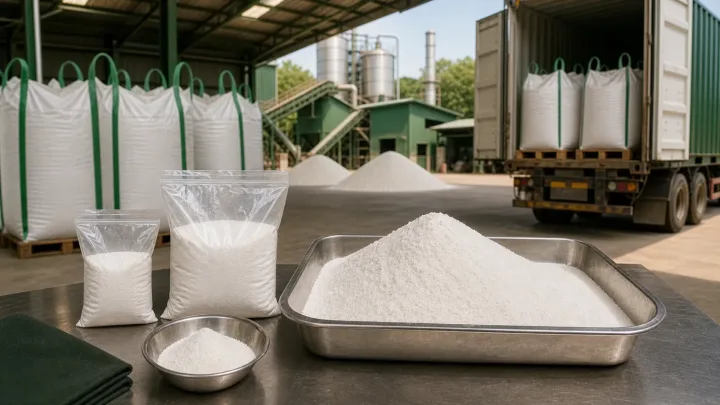
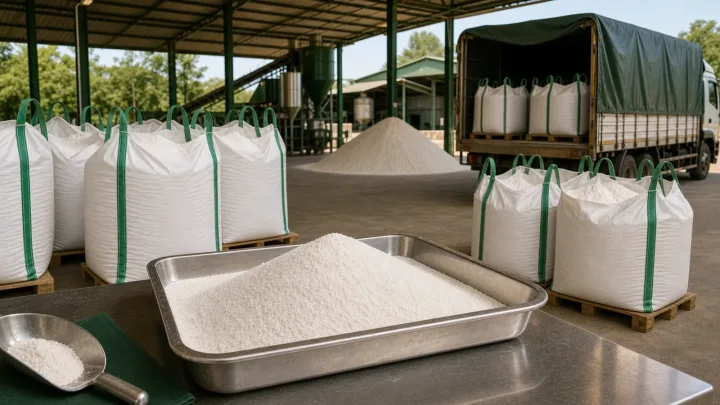
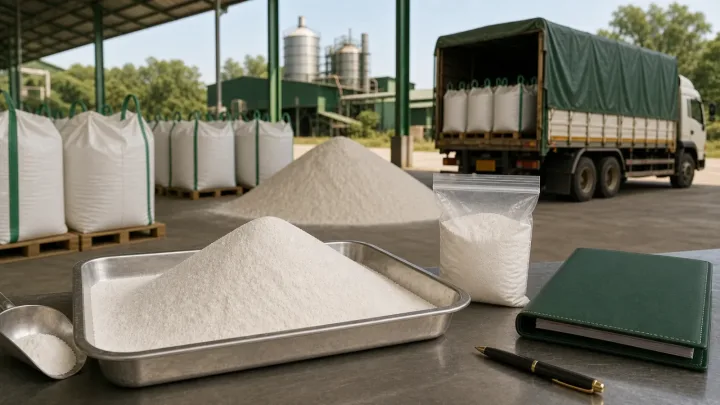
How Is Sifted Dried Cassava Pulp Different from Regular Cassava Pulp?
By Sri Thong Admin · Published 2026-06-08 · Updated 2026-06-07
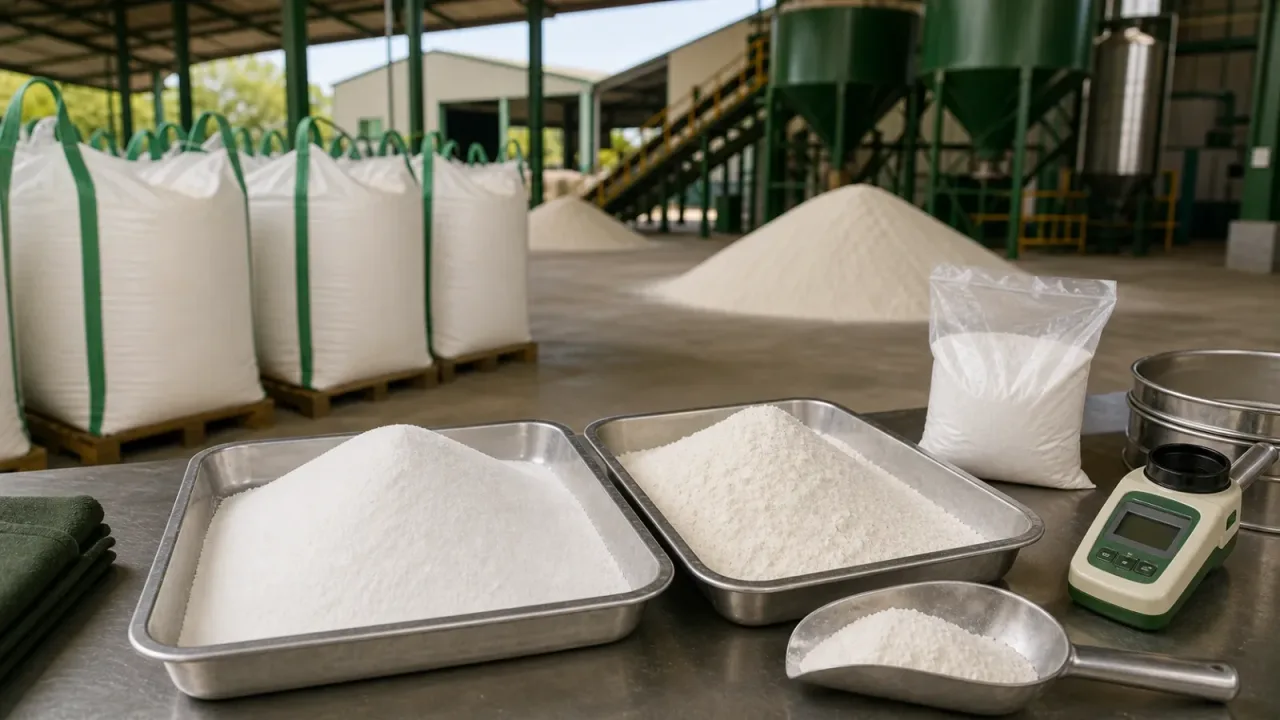
Executive Summary: Choosing Separated Dried Cassava Pulp for Maximum Production Efficiency
In Feed Cost Management, the decision to use "Separated Dried Cassava Pulp" instead of "General Cassava Pulp" is not merely paying more for a cleaner raw material, but is an investment in controlling Formulation Stability and Animal Performance. Due to its distinct properties in systematically reducing fiber levels (NDF/ADF), Ash, and Anti-nutritional factors, it directly impacts the reduction of the Feed Conversion Ratio (FCR) and mitigates Mycotoxin risks within feed mills. This article provides an in-depth analysis of structural and nutritional differences to serve as strategic decision-making data for nutritionists and production managers.
1. Introduction: The Role of Cassative Pulp in an Era of Volatile Feed Costs
In the current feed industry, the search for Alternative Ingredients to replace the continuously rising prices of corn or soybean meal is a critical challenge for feed mills. Cassava Pulp has therefore become a strategic ingredient due to its high starch-based energy source and cost accessibility.
However, the significant challenge that Nutritionists face is the "Variability" of cassava pulp quality in the market. Choosing general cassava pulp, which has high variations in peel and impurities, can lead to inaccurate nutritional estimations. This article focuses on a deep comparison between Separated Dried Cassava Pulp and General Cassava Pulp to highlight the differences in physical and chemical quality that affect long-term cost-effectiveness.
2. Differences at the Source: Raw Material & Separation Process
The difference in quality begins at the raw material management stage before the drying process.
2.1 General Cassava Pulp Production: Contamination Issues
General cassava pulp often results from volume-driven production processes that lack efficient separation of Cassava Peel from the starch content. This results in a final product with high contamination from peels and impurities such as soil or sand. This directly impacts Nutrient Density, as starch-rich areas are replaced by unwanted fiber and minerals.
Separated dried cassava pulp undergoes a peeling and impurity cleaning process before drying. This technique ensures higher purity of the pulp. Removing the peel helps reduce non-nutrient matter, making the energy intake per unit of weight more accurate and consistent for animals.
3. Deep Dive: Nutritional & Chemical Composition
When considering laboratory analysis, the differences between the two types of cassava pulp can be categorized by their chemical composition as follows:
3.1 Starch & Energy Content
Since separated dried cassava pulp removes the low-starch peel components, the starch content per unit weight is higher than general cassava pulp. This results in a more stable and higher Metabolizable Energy (ME) value used in feed formulation calculations.
3.2 Fiber Profile: NDF & ADF
One of the main issues with general cassava pulp is excessively high fiber levels:
- NDF (Neutral Detergent Fiber): General cassava pulp has high NDF due to peel contamination, which can lead to a reduction in Feed Intake.
- ADF (Acid Detergent Fiber): The peel separation in separated pulp significantly reduces ADF levels, decreasing indigestible fiber and improving Digestibility.
3.3 Ash & Mineral Content
Excessive Ash content in general cassava pulp typically arises from soil and mineral contamination from the peels, which provides no nutritional benefit to animals and can mask the concentration of macronutrients. Using separated pulp keeps Ash at a controllable level, allowing for more precise mineral balance management in formulations.
3.4 Anti-nutritional Factors
Natural cassava pulp contains certain levels of Cyanide (HCN). However, in general cassava pulp with high peel content, cyanide levels are often high and unstable. The separation and cleaning process in separated pulp reduces the risk of cumulative toxin exposure in animals.
4. Physical Properties & Moisture Control
Physical stability is a factor of utmost importance to feed mills.
Moisture Content Control: General cassava pulp often suffers from inconsistent moisture levels due to unstandardized production, which is a primary cause of fermentation within bags or silos. In contrast, separated dried cassava pulp focuses on maintaining low and stable moisture to preserve raw material quality.
Water Holding Capacity: Separated pulp, with its low fiber and high starch content, possesses different water absorption properties compared to general pulp, which affects the Texture of pellets and the Mixability during the production process.
5. Safety & Shelf-life Stability
Feed mills cannot accept the risk of Mycotoxin contamination.
- Mycotoxin Risk: General cassava pulp, with inconsistent moisture and high organic contamination, serves as a breeding ground for fungi that produce Aflatoxin, which negatively impacts animal health and food safety standards.
- Shelf-life Stability: Separated dried cassava pulp, with its high cleanliness and low moisture, has a lower microbial growth rate, leading to a longer shelf-life and easier Inventory Management.
- Production Standards: Separated pulp is designed to meet the GMP and HACCP standards required by international-standard feed mills.
6. Impact on Animal Performance & Economics
Cost-effectiveness comparisons must be viewed through "Cost per Unit of Production," not merely "Price per kg."
Impact on Animal Performance: Using separated pulp with low fiber and high energy improves the Feed Conversion Ratio (FCR) and reduces Gut Health risks, as inconsistent fiber levels can cause inflammation or diarrhea in young animals.
Cost-Benefit Analysis: Although separated dried cassava pulp has a higher unit price than general cassava pulp, when calculating the total results from reduced FCR, reduced losses from degraded raw materials, and formulation precision, separated pulp provides a Superior Economic Return.
7. Conclusion & Expert Recommendations
To clearly illustrate the differences, the comparison can be summarized as follows:
| Feature | General Cassava Pulp | Separated Dried Cassava Pulp |
| Starch & Energy Content | Low and unstable | High and stable |
| Fiber (NDF/ADFS) | High (due to peel contamination) | Low (via peel separation) |
| Ash Content | High (impurities/soil) | Low (cleaner) |
| Mycotoxin Risk | High (fluctuating moisture) | Low (well-controlled moisture) |
| Formulation Precision | Difficult (inconsistent quality) | High (consistent standard) |
Nutritionist Guidelines:
If your production goal is to create High-Standard Feed with high safety standards and consistent FCR control, choosing "Separated Dried Cassava Pulp" is the best strategic option to reduce production risks. However, if you choose to use general cassava pulp to reduce short-term costs, it is essential to have a strict Quality Control (QC) system and chemical analysis for every incoming lot to prevent long-term damage to animal production performance.
If you require Specifications, Certificate of Analysis (COA), or wish to request product samples for testing in your feed formulation, please contact our technical department for further information immediately.
Sources
- Thai Tapioca Starch Association - Tapioca Production - https://www.thaitapiocastarch.org/en/information/statistics/tapioca_production - ใช้ยืนยันภาพรวมผลผลิตมันสำปะหลังไทยและบริบท supply ของอุตสาหกรรม
- Thai Tapioca Starch Association - Export Tapioca Products - https://www.thaitapiocastarch.org/en/information/statistics/export_tapioca_products - ใช้ยืนยันสถิติส่งออกผลิตภัณฑ์มันสำปะหลัง รวมถึงหมวด Pulp
- Thai Tapioca Starch Association - Tapioca Starch Processing - https://thaitapiocastarch.org/en/information/learning_industry/tapioca_starch_processing - ใช้อธิบายกระบวนการผลิตแป้งมันและที่มาของผลพลอยได้จากโรงงานแป้งมัน
- ACFS / TAS 8803-2561 - มาตรฐานสินค้าเกษตร กากมันสำปะหลัง - https://www.opsmoac.go.th/udonthani-dwl-files-471491791858 - ใช้อ้างอิงนิยามกากมันสำปะหลังแห้ง/ผง/อัดเม็ด และข้อกำหนดพื้นฐาน เช่น ไม่พบเชื้อราหรือสิ่งแปลกปลอมที่มองเห็นได้
- Thai Feed Mill Association - Member Directory - https://www.thaifeedmill.org/member/ - ใช้ยืนยันกลุ่มลูกค้าเป้าหมาย เช่น โรงงานอาหารสัตว์และผู้ประกอบการในห่วงโซ่อาหารสัตว์
- Google Search Central - Creating Helpful, Reliable, People-first Content - https://developers.google.com/search/docs/fundamentals/creating-helpful-content - ใช้เป็นกรอบการเขียนบทความที่ตอบ intent จริง ไม่ใช่ปั่น keyword
- Thai Tapioca Trade Association - https://ttta-tapioca.org/?lang=en - ใช้ดูทิศทางตลาดมันสำปะหลัง/มันเส้นและบริบทการค้าผลิตภัณฑ์มันสำปะหลัง

Author information
Sri Thong Admin
B2B dried cassava pulp content specialist
Affiliation
SRITHONG PRODUCTTAPIOCA COMPANY LIMITED