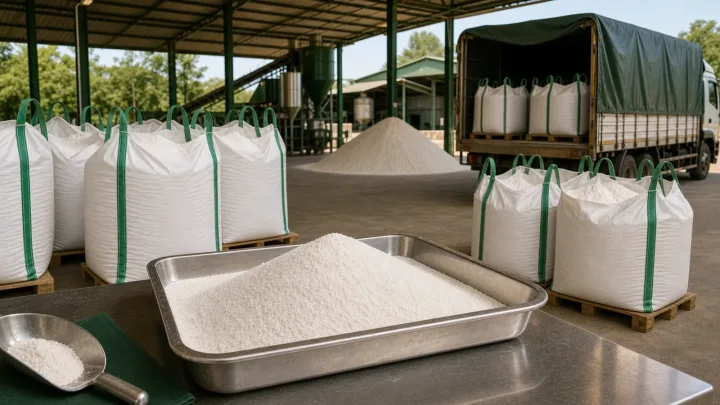
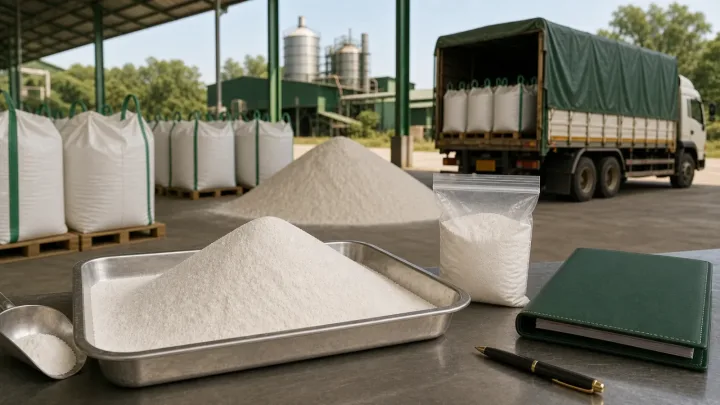
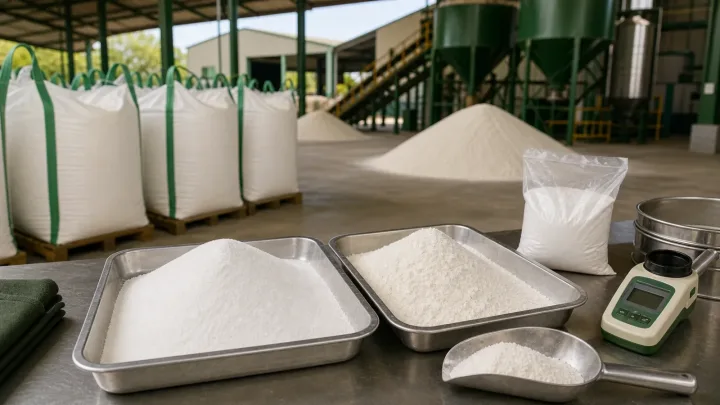
Bulk Dry Cassava Pulp Sales vs. Small Bags: What’s the Difference?
By Sri Thong Admin · Published 2026-06-10 · Updated 2026-06-07
Executive Summary: Decision-Making in Purchasing Dried Cassava Pulp: Bulk vs. Bagged Formats
Choosing the procurement format for Dried Cassava Pulp—between Bulk and Small Bags—is not merely a comparison of unit prices on a quotation, but an analysis of the Total Cost of Ownership (TCO). This includes logistics costs, quality risk management, and factory infrastructure readiness. Bulk purchasing offers advantages in terms of Economy of Scale and lower raw material costs but presents challenges in moisture and mold control. Conversely, purchasing in bags enhances precision in feed formulation and reduces contamination risks, though it involves hidden packaging costs and a higher unit price. Therefore, entrepreneurs must evaluate the trade-off between "the lowest procurement cost" and "the lowest risk of raw material quality loss" to maintain a stable Feed Conversion Ratio (FCR).
1. Introduction: The Role of Dried Cassava Pulp in the Animal Feed Industry
In the animal feed production industry, dried cassava pulp serves as a vital alternative raw material within the energy source group, offering a cost-effective option relative to the amount of starch provided to animals. Therefore, Raw Material Cost Optimization is central to profitability in feed mills.
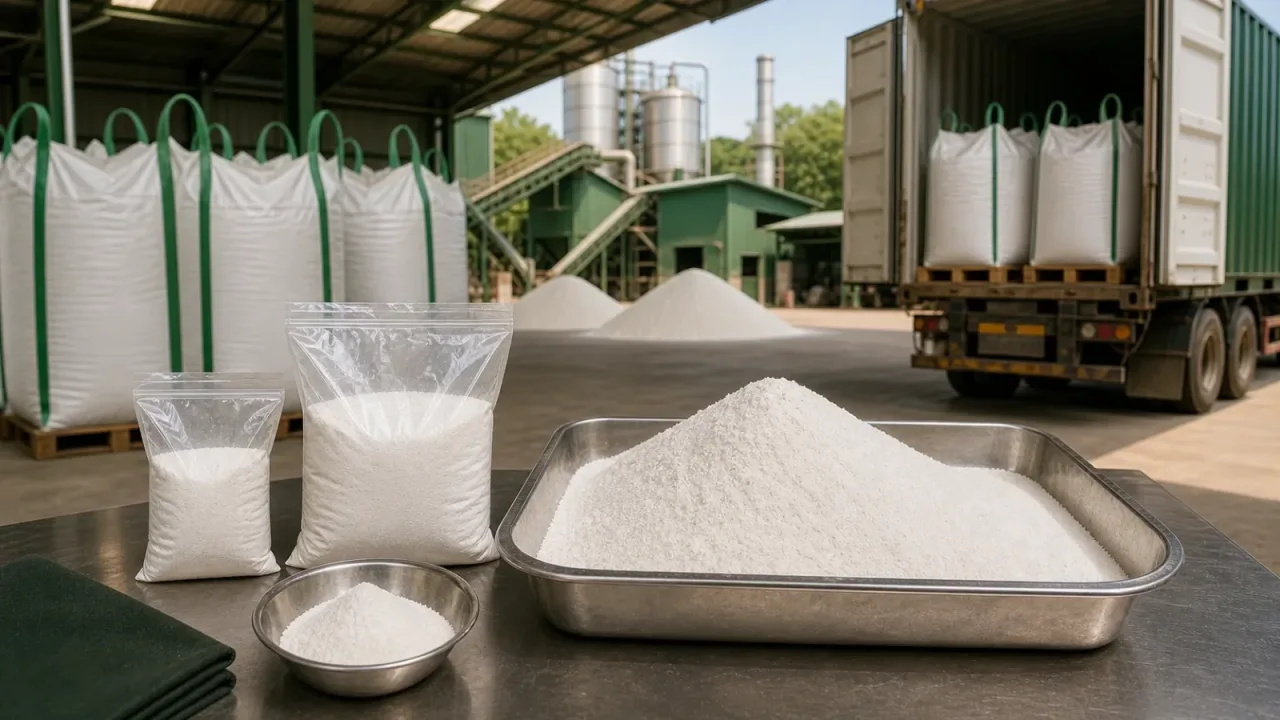
However, current market delivery formats are primarily divided into two types: Bulk Purchasing, which involves large-scale transportation without individual packaging, and Small Bags/Retail, which focuses on convenience and portioned use. This article provides an in-depth analysis across various dimensions to enable purchasers and production teams to make precise decisions regarding cost, management, and nutrient stability.
2. Analysis of Bulk Sales (Large Scale/Unpackaged)
Bulk procurement is often the primary format for large-scale feed mills (Industrial Scale) with high production capacities, involving the following considerations:
2.1 Logistics & Transportation Efficiency
The most evident advantage is Economy of Scale. Utilizing large vehicles (such as trailers or semi-trailers) significantly reduces transportation costs per ton compared to bagged transport, which incurs higher labor costs for handling and managing individual units.
2.2 Storage & Infrastructure Requirements
Receiving bulk goods requires supporting infrastructure, such as silos, enclosed warehouses, or covered bulk storage areas. Because dried cassava pulp is hygroscopic (sensitive to moisture), failure of the storage system to protect against rain or atmospheric humidity will lead to rapid raw material degradation.
2.3 Operational Challenges
The difficulty of bulk management lies in Measurement Precision. Bulk unloading may cause discrepancies between the weight stated in documents and the actual quantity received if the factory's weighing system is unstable. Additionally, there is a risk of contamination from dust or foreign matter during the unloading and conveyor-based movement processes.
2.4 Nutritional & Physical Stability
The most critical issue is Moisture Accumulation and the risk of mold growth (e.g., Aflatoxin). Storing large quantities of cassava pulp in poorly ventilated areas can lead to self-heating within the pile, which accelerates microbial growth, resulting in decreased nutritional value and potential danger to animals.
3. Analysis of Bagged Sales (Small Bags/Packaged)
Suitable for medium to small-scale farms or factories using it as a supplementary ingredient in specialized feed formulas.
3.1 Precision & Portion Control
Using bagged products allows the production department to control Feed Formulation with high precision. Since the weight of the raw material is standardized (e.g., 25 or 50 kg), it reduces weighing errors and the complexity of managing surplus materials.
3.2 Shelf-life & Protection
Packaging serves as a barrier against external moisture, dust, and insects, helping to maintain moisture content stability according to the standards specified in the COA (Certificate of Analysis) for longer periods than bulk storage.
3.3 Cost Implication
Although easier to manage, there are significant Hidden Costs, including packaging costs embedded in the unit price and a premium price compared to bulk due to more complex packaging and handling processes.
3.4 Storage Flexibility
Bagged products are easier to store in limited spaces and can be stacked in general warehouses without the need for specialized conveyor machinery.
4. Technical & Economic Deep Dive
4.1 Comparing Unit Cost vs. Total Cost of Ownership (TCO)
Purchasing decisions should not rely solely on Unit Cost (price per kilogram) but must calculate the TCO, which includes:
- Shrinkage: Weight loss due to moisture evaporation or dust loss during bulk transport
- Handling Labor: Labor costs for moving the product
- Losses: The value of raw materials lost due to mold or moisture exceeding standards
4.2 Impact on Feed Conversion Ratio (FCR)
Raw material stability directly affects FCR. If bulk materials have high moisture variance, energy calculations in the feed formula will be inaccurate, causing animals to consume more feed for less weight gain (increased FCR)—an invisible but devastating cost in the animal feed business.
4.3 Labor & Handling Complexity
A comparison between Manual Handling (using labor to lift bags) and Mechanical Handling (using loaders/conveyors). If a factory has a good automation system, bulk purchasing can significantly reduce labor costs compared to manual bag handling.
5. Decision Matrix for Producers
| Consideration Factor | Suitable for Bulk when... | Suitable for Bags when... |
| Production Scale | Large-scale feed mills (Industrial Scale) | Smallholder farms or specialized production |
| Budget/Cash Flow | High working capital available to purchase large, low-cost lots | Need to manage Cash Flow on a Just-in-time basis |
| Infrastructure | Silos or enclosed warehouses with moisture control are available | No conveyor machinery or limited storage space |
| Risk Tolerance | Willing to accept management risks in exchange for lower costs | Focus on raw material safety and consistent standards |
6. Conclusion
Summary comparison of pros and cons for decision-making
| Purchase Format | Pros | Cons |
|---|---|---|
| Bulk (Unpackaged) | Lowest unit cost, reduced packaging waste, high logistics efficiency | High infrastructure requirements, risk of moisture and mold, difficult precision management |
| Small Bags (Packaged) | Easy quality control, precise formulation, convenient storage | High unit cost, packaging waste, higher labor for handling |
Strategic Recommendation: For animal feed entrepreneurs, the ultimate goal is to strike a balance between "the lowest raw material cost" and "the lowest risk of quality loss." If your facility is equipped with silos and moisture control systems, choosing Bulk will be a strategy that creates a sustainable competitive advantage in cost. However, if you prioritize feed formulation precision and ease of management, choosing Small Bags will better mitigate operational risks.
If you require additional technical information, such as standard moisture levels, starch content, or wish to request product samples with a COA for laboratory testing, please contact our sales department to receive a quotation and detailed product specifications immediately.
Sources
- Thai Tapioca Starch Association - Tapioca Production - https://www.thaitapiocastarch.org/en/information/statistics/tapioca_production - ใช้ยืนยันภาพรวมผลผลิตมันสำปะหลังไทยและบริบท supply ของอุตสาหกรรม
- Thai Tapioca Starch Association - Export Tapioca Products - https://www.thaitapiocastarch.org/en/information/statistics/export_tapioca_products - ใช้ยืนยันสถิติส่งออกผลิตภัณฑ์มันสำปะหลัง รวมถึงหมวด Pulp
- Thai Tapioca Starch Association - Tapioca Starch Processing - https://thaitapiocastarch.org/en/information/learning_industry/tapioca_starch_processing - ใช้อธิบายกระบวนการผลิตแป้งมันและที่มาของผลพลอยได้จากโรงงานแป้งมัน
- ACFS / TAS 8803-2561 - มาตรฐานสินค้าเกษตร กากมันสำปะหลัง - https://www.opsmoac.go.th/udonthani-dwl-files-471491791858 - ใช้อ้างอิงนิยามกากมันสำปะหลังแห้ง/ผง/อัดเม็ด และข้อกำหนดพื้นฐาน เช่น ไม่พบเชื้อราหรือสิ่งแปลกปลอมที่มองเห็นได้
- Thai Feed Mill Association - Member Directory - https://www.thaifeedmill.org/member/ - ใช้ยืนยันกลุ่มลูกค้าเป้าหมาย เช่น โรงงานอาหารสัตว์และผู้ประกอบการในห่วงโซ่อาหารสัตว์
- Google Search Central - Creating Helpful, Reliable, People-first Content - https://developers.google.com/search/docs/fundamentals/creating-helpful-content - ใช้เป็นกรอบการเขียนบทความที่ตอบ intent จริง ไม่ใช่ปั่น keyword
- Thai Tapioca Trade Association - https://ttta-tapioca.org/?lang=en - ใช้ดูทิศทางตลาดมันสำปะหลัง/มันเส้นและบริบทการค้าผลิตภัณฑ์มันสำปะหลัง

Author information
Sri Thong Admin
B2B dried cassava pulp content specialist
Affiliation
SRITHONG PRODUCTTAPIOCA COMPANY LIMITED