How to Prepare a Receiving Area for Dried Cassava Pulp at a Factory or Farm
By Sri Thong Admin · Published 2026-06-18 · Updated 2026-06-07
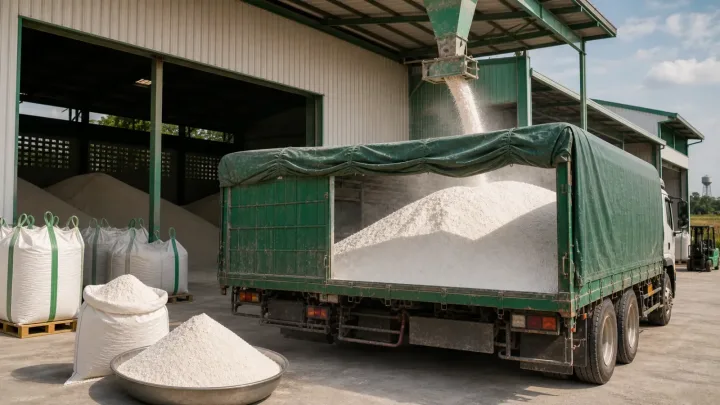
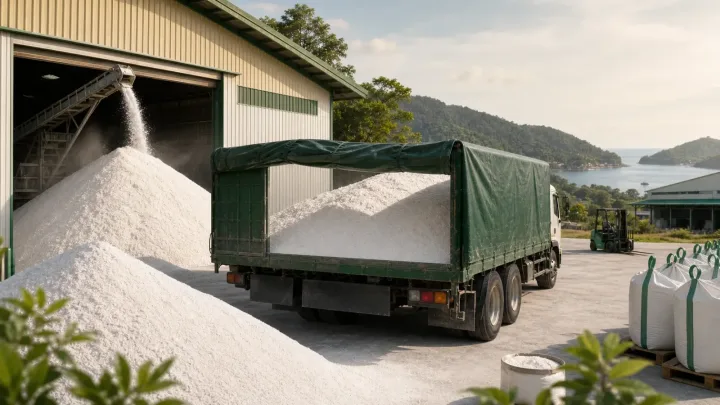
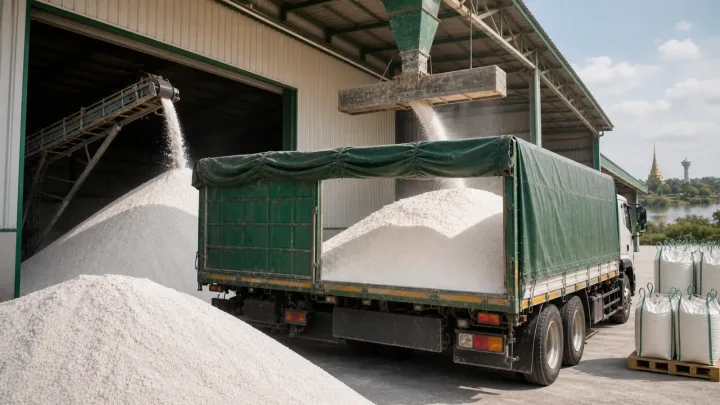
Efficient preparation of the receiving area for Dried Cassava Pulp is essential for maintaining raw material quality standards at the source. Improper area management leads not only to a loss in weight or nutritional value but also increases the risk of mold contamination and mycrotoxins, which directly impact production costs and feed safety. Therefore, establishing infrastructure systems, hygiene controls, and defining Incoming Quality Control (IQC) standards is a proactive process that factories and farms must prioritize to implement effective loss management and ensure consistent raw material quality.
1. Importance of Area Management on Raw Material Quality and Cost
In the animal feed industry, raw materials such as dried cassava pulp are highly sensitive to environmental conditions. Unsystematic receiving area preparation leads to the following key issues:
- Loss of nutritional value: Excessive moisture in storage areas triggers biological processes that degrade essential nutrients.
- Feed Safety risk: Areas with improper moisture and temperature serve as breeding grounds for mold, which produces mycotoxins that are difficult to eliminate and hazardous to animals.
- Hidden costs from Loss Management: Contamination or damage to raw materials leads to weight loss (shrinkage) and waste in managing substandard materials.
2. Infrastructure and Physical Area Preparation
The structure of the storage area must be designed to prevent external factors from affecting the raw materials.
Flooring Standards
The surface supporting the dried cassava pulp must be uniform and smooth to prevent puddles or moisture accumulation. Most importantly, preventing underground dampness is crucial; moisture barriers or sufficiently thick and dense concrete floors should be utilized to prevent moisture seepage from the soil into the material piles.
Roofing & Moisture Protection
The roof must be in perfect condition and free of leaks, as rainwater is the primary factor causing the degradation of dried cassava pulp. Additionally, relative humidity must be considered by designing the area for proper ventilation to prevent stagnant, humid air under the roof.
Ventilation System
Air circulation is essential to reduce heat accumulation within the cassava pulp piles. If air does not circulate, the rising internal temperature will accelerate microbial growth and the degradation of the material.
Pest Exclusion
The receiving area must be tightly sealed to prevent birds, rodents, or insects from entering and causing damage or introducing pathogens and contaminants into the storage area.
3. Hygiene Management and Cleaning Measures
The cleanliness of the storage area is the first line of defense against cross-contamination.
- Residual Management: Before receiving a new lot of dried cassava pulp, any leftover residue or scraps from old lots must be cleaned to prevent them from becoming a food source for microorganisms.
- Material Zoning: The receiving area should be separated from high-risk or strong-smelling raw material storage areas to prevent physical and odor contamination.
- Disinfection: Establish cleaning cycles using appropriate disinfectants that meet feed safety standards to control microbial levels in the area.
4. Site Layout and Logistics Management
Effective area management ensures a smooth workflow and reduces confusion in stock management.
Unloading Zone
The area should be designed for easy access by transport vehicles to avoid bottlenecks that could impact the factory's main production processes.
Storage Zoning
Clearly differentiate between "Incoming" (awaiting inspection) and "Stock" (passed inspection) areas to prevent substandard materials from entering the production line.
Inventory Flow
The layout must support FIFO (First-In, First-Out) or FEFO (First-Expired, First-Out) principles to ensure that earlier received materials are used first, reducing the risk of stock degradation.
5. Environmental Control and Monitoring
Proactive management helps mitigate risks before actual damage occurs.
- Moisture Control: Install moisture meters in the area or maintain a completely dry area with regular moisture testing of the raw materials.
- Dust Management: Control the dispersion of dried cassava pulp dust to maintain area cleanliness and prevent product weight loss due to dusting.
- Preventive Monitoring: Establish a regular monthly checklist for inspecting the condition of the roof, floor, and ventilation systems.
6. Incoming Quality Control (IQC) Standards
Upon arrival, the duty of the quality control team is to confirm that the raw materials meet the agreed-upon specifications.
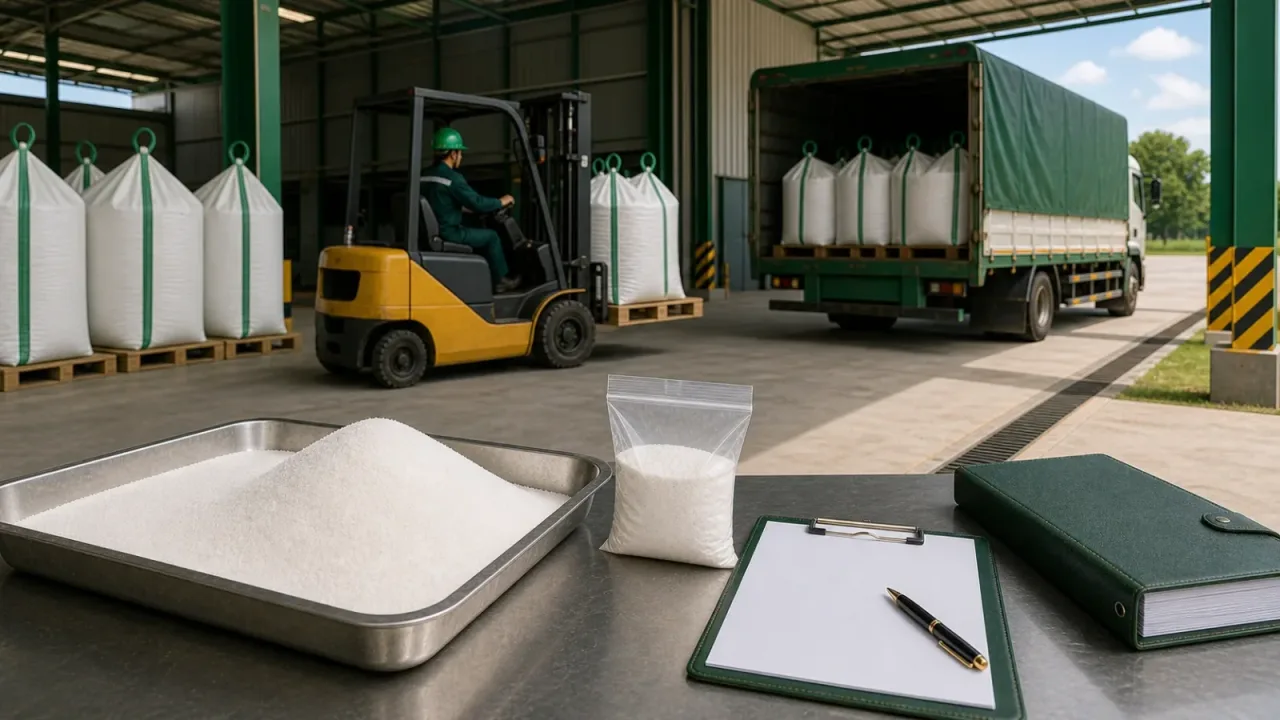
Sampling Station
A clean, safe, and efficient sampling area and equipment must be prepared to ensure that transport vehicles are not delayed excessively.
Acceptance/Rejection Criteria
Staff must follow clear inspection criteria using the following standard table:
| Inspection Item | Acceptable Characteristics | Rejection Criteria (Reject) |
| Moisture | Within standard specifications | Exceeds limit (risk of mold) |
| Color | Natural color of dried cassava pulp | Abnormal dark color or black spots |
| Odor | Clean, no rancid smell | Musty or sour smell |
| Foreign Matter | No contaminants | Presence of plastic, metal, or stones |
Traceability & Documentation
Providing space for storing receiving documents, such as delivery notes, Certificates of Analysis (COA), and daily inspection logs, is vital for establishing traceability—a cornerstone of international feed safety standards.
Sources
- Thai Tapioca Starch Association - Tapioca Production - https://www.thaitapiocastarch.org/en/information/statistics/tapioca_production - ใช้ยืนยันภาพรวมผลผลิตมันสำปะหลังไทยและบริบท supply ของอุตสาหกรรม
- Thai Tapioca Starch Association - Export Tapioca Products - https://www.thaitapiocastarch.org/en/information/statistics/export_tapioca_products - ใช้ยืนยันสถิติส่งออกผลิตภัณฑ์มันสำปะหลัง รวมถึงหมวด Pulp
- Thai Tapioca Starch Association - Tapioca Starch Processing - https://thaitapiocastarch.org/en/information/learning_industry/tapioca_starch_processing - ใช้อธิบายกระบวนการผลิตแป้งมันและที่มาของผลพลอยได้จากโรงงานแป้งมัน
- ACFS / TAS 8803-2561 - มาตรฐานสินค้าเกษตร กากมันสำปะหลัง - https://www.opsmoac.go.th/udonthani-dwl-files-471491791858 - ใช้อ้างอิงนิยามกากมันสำปะหลังแห้ง/ผง/อัดเม็ด และข้อกำหนดพื้นฐาน เช่น ไม่พบเชื้อราหรือสิ่งแปลกปลอมที่มองเห็นได้
- GP Autoparts - Truck Law 2024 - https://www.gpautoparts.co.th/en/truck-law-2024-latest-regulations-and-penalties-that-truck-owners-need-to-know/ - ใช้ประกอบข้อจำกัดน้ำหนักรถบรรทุก เช่น 10 ล้อ 25 ตัน เพื่ออธิบาย full truck load
- Google Maps - https://www.google.com/maps - ใช้เป็นแหล่งตรวจระยะทางจริงก่อนเผยแพร่บทความจังหวัด เพราะระยะทางเปลี่ยนตามจุดเริ่มต้นและเส้นทาง
- Department of Land Transport - https://www.dlt.go.th/ - ใช้เป็นแหล่งอ้างอิงหน่วยงานกำกับดูแลการขนส่งทางบกเมื่อต้องตรวจข้อกำหนดล่าสุด

Author information
Sri Thong Admin
B2B dried cassava pulp content specialist
Affiliation
SRITHONG PRODUCTTAPIOCA COMPANY LIMITED