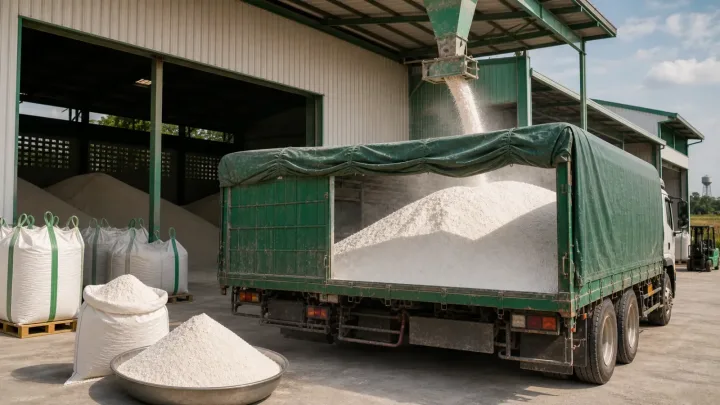
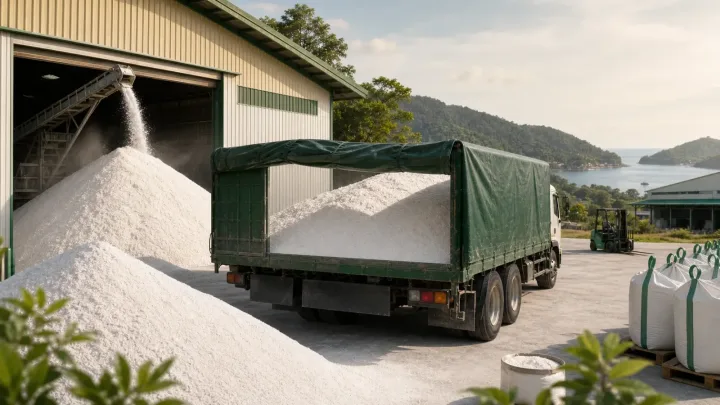
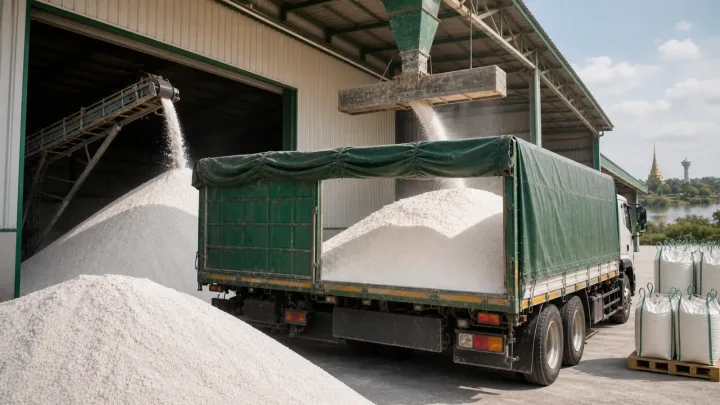
Shipping Dried Cassava Pulp from Korat to Udon Thani
By Sri Thong Admin · Published 2026-06-22 · Updated 2026-06-07
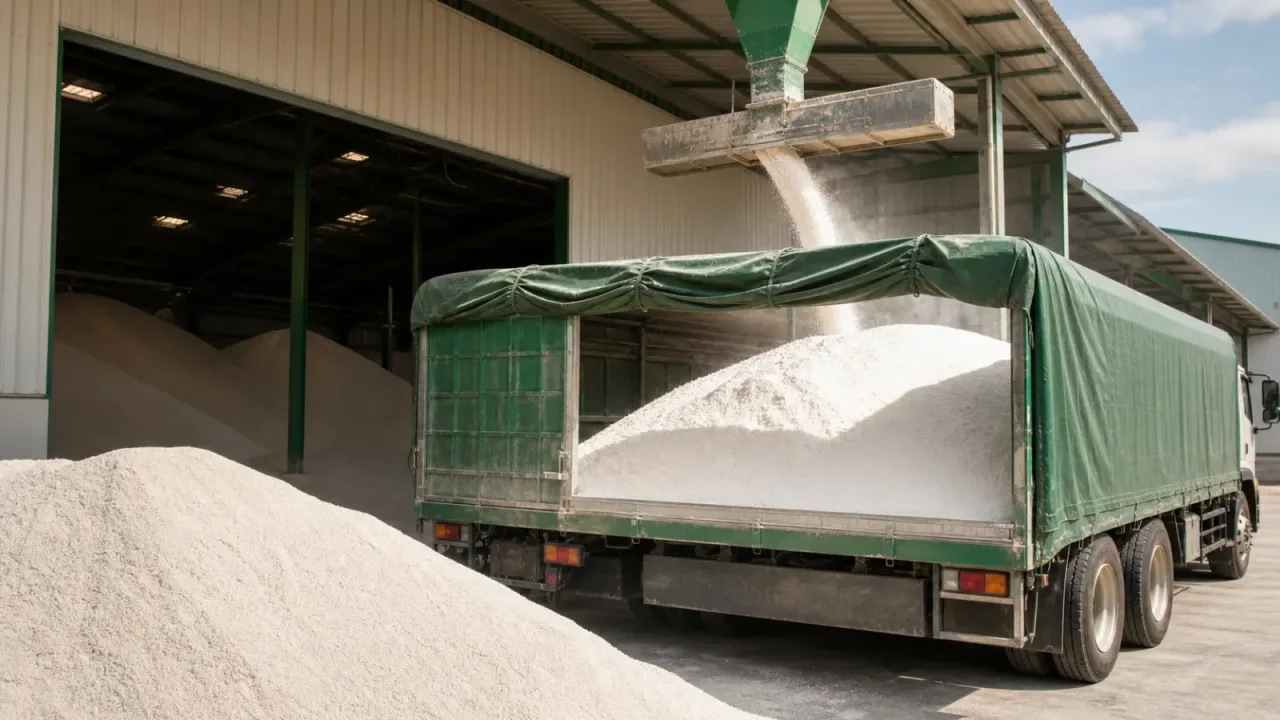
Executive Summary: Maintaining Cassava Pulp Quality Standards Throughout the Supply Chain
The core of managing animal feed raw materials within the dried cassava pulp group is not merely sourcing cost-effective materials from production hubs like Nakhon Ratchasima, but maintaining "consistency of technical standards" throughout the transportation route to end-user factories in the Upper Northeast. Efficient management must encompass everything from moisture control to prevent mold, high-efficiency logistics planning to reduce shrinkage (weight loss) during transit, to the implementation of monitoring systems that can verify data accuracy in real-time. These factors directly impact production costs and the nutritional value of the final animal feed products.
1. Supply Chain Overview
In the animal feed production industry, dried cassava pulp serves as a vital energy source and is essential for formula adjustments to control costs. However, supply chain efficiency does not end at the production plant's gate.
The strategic connection between primary raw material sources in Nakhon Ratchasima (Korat)—a high-potential production area—and major end-users, such as animal feed factories in Udon Thani and the Upper Northeast region, requires structural planning. Since distance significantly affects logistics expenses, it is a key variable in determining raw material costs. Understanding market demands for raw materials with consistent physical and chemical properties is therefore a priority for transporters and distributors to reduce price and quality fluctuations.
2. Technical Specifications & Quality Standards
Maintaining technical standards is the highest responsibility in the delivery process to ensure that when goods arrive at the destination factory, they still meet the specifications stated in the Certificate of Analysis (COA).
Controlling Physical and Chemical Risk Factors
- Moisture Content Control: Moisture is a critical variable affecting the growth of mold and microorganisms. Controlling moisture levels according to international standards is essential to prevent spoilage and degradation of the raw material during transit.
- Impurities Inspection: Screening out soil, sand, or other foreign matter from the cassava pulp to ensure the nutritive value remains as pure as possible.
- Maintaining Metabolizable Energy: Improper management can lead to a reduction in usable energy. Preserving physical properties until they reach the customer is a key indicator of supplier reliability.
3. Logistics Planning & Route Optimization
Long-distance transportation of agricultural raw materials requires in-depth analysis to minimize time and operational costs.
Resource Analysis and Selection
Analyzing the primary routes from Nakhon Ratchasima to Udon Thani requires considering road conditions and suitable rest stops to mitigate the risk of delays. Selecting the appropriate type of truck is vital to transport efficiency:
| Transport Type | Suitability | Management Advantage |
| Trailer | Suitable for high-volume single-trip transport | Reduces number of trips and lowers cost per unit |
| 10-wheel Truck | Suitable for routes with weight restrictions or narrow roads | High maneuverability for accessing pickup/delivery points |
Furthermore, precise Turnaround Time management allows animal feed factories to engage in continuous Production Planning, preventing stock-out situations.
4. Quality Assurance & Loss PreventionLosses occurring during transit, whether through weight reduction or contamination, are hidden costs that animal feed factories should not have to bear.
Damage Prevention Techniques
- Weather Protection: Ensuring Tarping Integrity with intact, tear-free covers to prevent moisture from rain, which could lead to mold issues.
- Shrinkage Management: Controlling excessive moisture evaporation, which results in a loss of product weight from the initial amount recorded at the source.
- Cross-Contamination Prevention: Inspecting the cleanliness of transport vehicles to prevent contamination from chemicals or foreign matter from previously transported goods.
5. Economic & Cost Analysis
The cost structure for transporting cassava pulp is complex and fluctuates according to economic factors.
Primary costs include fuel, vehicle depreciation, driver wages, and various fees. Calculating the Break-even Point between the raw material price at the source in Korat and the long-distance transport cost to Udon Thani is a critical consideration for procurement departments, especially during periods of fuel price volatility, which directly impacts the quotations of raw materials in the destination area.
6. Risk Management & Traceability
In the B2B industry, trust is built on Verifiable Data.
We prioritize establishing comprehensive documentation, ranging from Weight Verification at both the origin and destination to prevent fraud or error. Additionally, the integration of GPS and monitoring systems for real-time tracking allows factories to promptly assess risks related to accidents or unforeseen events along the route, ensuring maximum stability in production planning.
7. Conclusion & Future Outlook
Maintaining the quality standards of cassava pulp throughout the transport route is the heart of creating a competitive advantage in the animal feed industry. Moving forward, we are focused on developing "Green Logistics"—environmentally friendly transportation—to meet the sustainability goals of the Thai agricultural supply chain. Increasing the efficiency of the connection between production and consumption through precise technology will be the key to reducing costs and enhancing food security for the industry on an international level.
If you require product specifications, shipment status updates, or a Quotation along with product samples for quality testing, please contact our technical and sales departments for the most complete and accurate information.
Sources
- Thai Tapioca Starch Association - Tapioca Production - https://www.thaitapiocastarch.org/en/information/statistics/tapioca_production - ใช้ยืนยันภาพรวมผลผลิตมันสำปะหลังไทยและบริบท supply ของอุตสาหกรรม
- Thai Tapioca Starch Association - Export Tapioca Products - https://www.thaitapiocastarch.org/en/information/statistics/export_tapioca_products - ใช้ยืนยันสถิติส่งออกผลิตภัณฑ์มันสำปะหลัง รวมถึงหมวด Pulp
- Thai Tapioca Starch Association - Tapioca Starch Processing - https://thaitapiocastarch.org/en/information/learning_industry/tapioca_starch_processing - ใช้อธิบายกระบวนการผลิตแป้งมันและที่มาของผลพลอยได้จากโรงงานแป้งมัน
- ACFS / TAS 8803-2561 - มาตรฐานสินค้าเกษตร กากมันสำปะหลัง - https://www.opsmoac.go.th/udonthani-dwl-files-471491791858 - ใช้อ้างอิงนิยามกากมันสำปะหลังแห้ง/ผง/อัดเม็ด และข้อกำหนดพื้นฐาน เช่น ไม่พบเชื้อราหรือสิ่งแปลกปลอมที่มองเห็นได้
- GP Autoparts - Truck Law 2024 - https://www.gpautoparts.co.th/en/truck-law-2024-latest-regulations-and-penalties-that-truck-owners-need-to-know/ - ใช้ประกอบข้อจำกัดน้ำหนักรถบรรทุก เช่น 10 ล้อ 25 ตัน เพื่ออธิบาย full truck load
- Google Maps - https://www.google.com/maps - ใช้เป็นแหล่งตรวจระยะทางจริงก่อนเผยแพร่บทความจังหวัด เพราะระยะทางเปลี่ยนตามจุดเริ่มต้นและเส้นทาง
- Department of Land Transport - https://www.dlt.go.th/ - ใช้เป็นแหล่งอ้างอิงหน่วยงานกำกับดูแลการขนส่งทางบกเมื่อต้องตรวจข้อกำหนดล่าสุด

Author information
Sri Thong Admin
B2B dried cassava pulp content specialist
Affiliation
SRITHONG PRODUCTTAPIOCA COMPANY LIMITED