Shipping Dried Cassava Pulp from Korat to Ubon Ratchathani
By Sri Thong Admin · Published 2026-06-22 · Updated 2026-06-07
Executive Summary: Quality Control and Cost Efficiency in the Dried Cassava Pulp Supply Chain
The core of managing the dried cassava pulp supply chain from primary production sites in Nakhok Ratchasima to animal feed mills in Ubon Ratchathani is not merely transporting raw materials from one point to another, but maintaining "nutritional quality standards" and "moisture control" throughout the journey. This is essential to prevent degradation and Aflatoxin formation, which directly impact the Total Landed Cost and the safety of animal feed products. Efficient management requires the integration of precise processing techniques, moisture-preventative warehouse management, and logistics strategies that mitigate weather-related risks. This ensures that the raw materials arriving at the destination factory meet the COA specifications and are ready for the production process without any process loss.
1. Introduction: The Role of Dried Cassava Pulp in the Animal Feed Industry and Economic Connectivity
In the animal feed production industry, Dried Cassava Pulp serves as a vital alternative raw material and a significant carbohydrate source, particularly for ruminants, due to its optimal starch and energy levels for animal growth.
The economic structure of this raw material is tightly linked between the Upper Northeastern region, with Nakhon Ratchasima serving as a national hub for cassava processing, and the Lower Northeastern region, where Ubon Ratchathani acts as a major destination for feed mills and large-scale livestock farms. Moving raw materials across these regions is more than just logistics; it is the management of the balance between demand and supply, requiring strategic logistics planning to maintain stable and competitive production costs.
2. Technical Specifications and Quality Standards of Dried Cassable Pulp
For Feed Mill Managers, the chemical and physical properties of cassava pulp determine the Least-cost Ration. Therefore, quality standard inspections must be strictly enforced, focusing on the following key indicators:
| Nutritional Parameters | Technical Significance |
| Starch Content | The primary energy source that must remain consistent to control the animals' blood glucose levels. |
| Fiber Content | Must be at an appropriate level to assist in the rumen fermentation process. |
| Metabolizable Energy | Energy values must be stable for accurate ration formulation. |
| Moisture Content | Most Critical: Must be controlled at low levels to prevent the growth of mold and mycotoxins (Aflatoxin). |
Beyond chemical values, inspecting physical impurities such as soil, sand, or foreign matter is a top priority for feed mills. These contaminants not only reduce nutritional value but can also cause damage to machinery during the grinding and mixing processes.
3. Origin: Production Processes and Quality Control at the Nakhon Ratchasima Production Site
The quality of cassava pulp begins with the processing stage at the factories in Nakhon Ratchasima, the starting point of the supply chain:
Drying Process: The drying technique requires extreme care. Excessive temperatures may degrade certain nutrients, while insufficient moisture levels pose a risk of spoilage. Controlling temperature and duration during the drying process is essential to maximize starch and energy content.
Warehouse Management: The key is preventing the re-absorption of moisture from the atmosphere. Standardized warehouses must have controlled ventilation and proper pallet placement to ensure products do not come into contact with high-moisture floors or walls.
Pre-shipment Inspection: Before products are loaded onto trucks, sampling must be conducted to re-analyze moisture and contaminant levels to issue a Certificate of Analysis (COA) for that specific lot to the customer.
4. Logistics Strategies and Cross-Regional Transportation Management
Transporting raw materials from Nakhon Ratchasima to Ubon Ratchathani involves distances and risk factors that must be systematically managed:
- Route Optimization: Selecting the shortest routes to minimize the duration products are exposed to heat and humidity, thereby reducing fuel consumption and transportation costs.
- Payload Management: Calculating loads to comply with legal regulations and vehicle capacities to prevent structural damage to the vehicle and maintain product stability during transit.
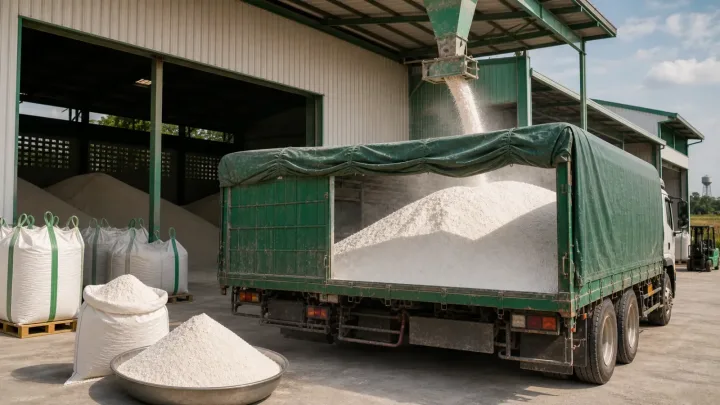
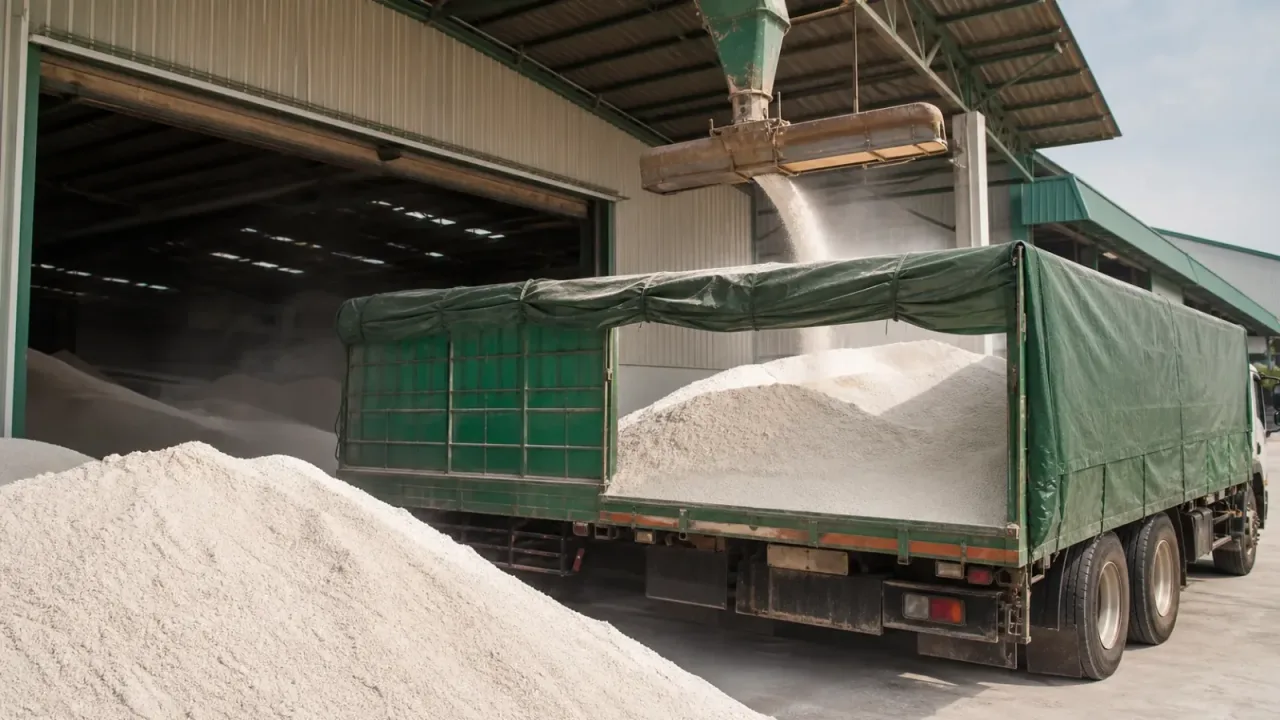
- Weather Risk Management: During the rainy season, increased atmospheric humidity is a negative factor for dried pulp. Logistics management must emphasize the integrity of tarpaulin covers and strictly prevent rainwater from penetrating the cargo.
5. Quality Assurance and Receiving at the Destination
Upon arrival at the feed mills in Ubon Ratchathani, the Quality Assurance process begins immediately according to agreed protocols:
Cargo Integrity Check: Receiving officers inspect the exterior condition of the truck, the tarpaulin covering, and any signs of water or moisture leakage to confirm that the product has not been contaminated during transit.
Sampling Protocol: Sampling must follow international standards (such as using probe samplers or quadrant sampling) to analyze moisture content and foreign matter contamination in the factory's laboratory.
Non-conformance Management: If products are found to have moisture levels exceeding standards or contaminants above set thresholds (Out of Specification), a systematic process for claims, segregation, and coordination with the production source must be implemented to prevent substandard raw materials from entering the production line.
6. Economic Analysis and Future Outlook
Managing this supply chain directly impacts the Total Landed Cost of feed mills, which includes not only the raw material price per ton but also transportation, taxes, fees, and the cost of losses due to sub-standard quality. Efficient management can significantly reduce these "hidden costs."
Market Mechanism Factors: Fluctuations in cassava yields in Nakhon Ratchasima due to climate and agricultural prices are factors that operators must monitor to plan advance purchases and manage inventory in Ubon Ratchathani sufficiently to meet demand.
Future Trends: We are entering the era of Smart Logistics, where the implementation of IoT (Internet of Things) technology, such as real-time moisture and temperature sensors within cargo holds, will play a vital role. This allows both producers and buyers to monitor the quality status of raw materials throughout their journey, enhancing transparency and sustainability in the animal feed supply chain.
If you are looking for a high-quality dried cassava pulp supplier with rigorous quality control, complete COA documentation, and full technical data to ensure confidence in your production process, contact us immediately for a quotation, product specifications, or samples for testing.
Sources
- Thai Tapioca Starch Association - Tapioca Production - https://www.thaitapiocastarch.org/en/information/statistics/tapioca_production - ใช้ยืนยันภาพรวมผลผลิตมันสำปะหลังไทยและบริบท supply ของอุตสาหกรรม
- Thai Tapioca Starch Association - Export Tapioca Products - https://www.thaitapiocastarch.org/en/information/statistics/export_tapioca_products - ใช้ยืนยันสถิติส่งออกผลิตภัณฑ์มันสำปะหลัง รวมถึงหมวด Pulp
- Thai Tapioca Starch Association - Tapioca Starch Processing - https://thaitapiocastarch.org/en/information/learning_industry/tapioca_starch_processing - ใช้อธิบายกระบวนการผลิตแป้งมันและที่มาของผลพลอยได้จากโรงงานแป้งมัน
- ACFS / TAS 8803-2561 - มาตรฐานสินค้าเกษตร กากมันสำปะหลัง - https://www.opsmoac.go.th/udonthani-dwl-files-471491791858 - ใช้อ้างอิงนิยามกากมันสำปะหลังแห้ง/ผง/อัดเม็ด และข้อกำหนดพื้นฐาน เช่น ไม่พบเชื้อราหรือสิ่งแปลกปลอมที่มองเห็นได้
- GP Autoparts - Truck Law 2024 - https://www.gpautoparts.co.th/en/truck-law-2024-latest-regulations-and-penalties-that-truck-owners-need-to-know/ - ใช้ประกอบข้อจำกัดน้ำหนักรถบรรทุก เช่น 10 ล้อ 25 ตัน เพื่ออธิบาย full truck load
- Google Maps - https://www.google.com/maps - ใช้เป็นแหล่งตรวจระยะทางจริงก่อนเผยแพร่บทความจังหวัด เพราะระยะทางเปลี่ยนตามจุดเริ่มต้นและเส้นทาง
- Department of Land Transport - https://www.dlt.go.th/ - ใช้เป็นแหล่งอ้างอิงหน่วยงานกำกับดูแลการขนส่งทางบกเมื่อต้องตรวจข้อกำหนดล่าสุด

Author information
Sri Thong Admin
B2B dried cassava pulp content specialist
Affiliation
SRITHONG PRODUCTTAPIOCA COMPANY LIMITED