Shipping Dry Cassava Pulp from Korat to Surin
By Sri Thong Admin · Published 2026-06-20 · Updated 2026-06-07
Executive Summary: The Key to Quality Control and Raw Material Cost Management of Dried Cassava Pulp
The supply chain management of dried cassava pulp, moving from production sources in Nakhon Ratchasima to animal feed mills and livestock farms in Surin, does not depend solely on the Ex-factory Price. True success lies in the "ability to maintain nutritional quality standards" and the "control of hidden logistics costs" (Landed Cost) throughout the route. Controlling moisture, preventing mycotoxin contamination, and reducing weight loss during transportation (Shrinkage) are the key economic indicators that feed producers must consider alongside the chemical properties of the raw material. This ensures that the materials entering the production process are consistent, thereby maximizing the Feed Conversion Ratio (FCR) in livestock.
1. Introduction: The Economic Linkage Between Production and Consumption Sources
In the animal feed industry, dried cassava pulp serves as a vital energy source, particularly in ruminant and poultry feed formulations, due to its appropriate carbohydrate proportion and competitive cost compared to other energy sources.
The supply chain structure of the Northeast region holds significant strategic importance. Nakhon Ratchasima serves as the "Hub" for cassava starch factories and large-scale dried cassava pulp production, while Surin is a strategic area for beef cattle and livestock farming. The movement of raw materials from supply to demand is a process that requires efficient logistics management. If the transportation process lacks proper control, the increased costs from product damage will directly impact the regional animal feed price structure.
2. Technical Specifications and Quality Standards of Dried Cassava Pulp
When purchasing raw materials for feed mills, it is essential to consider scientific indices that affect processing and utilization as follows:
Key Nutritional Values
Dried cassava pulp consists of primary nutrients focused on energy delivery, with key components including Carbohydrates (in the form of residual starch), Metabolizable Energy (ME), and Fiber content, which must be at appropriate levels for the specific type of animal being fed.
Quality Indicators Requiring Strict Control
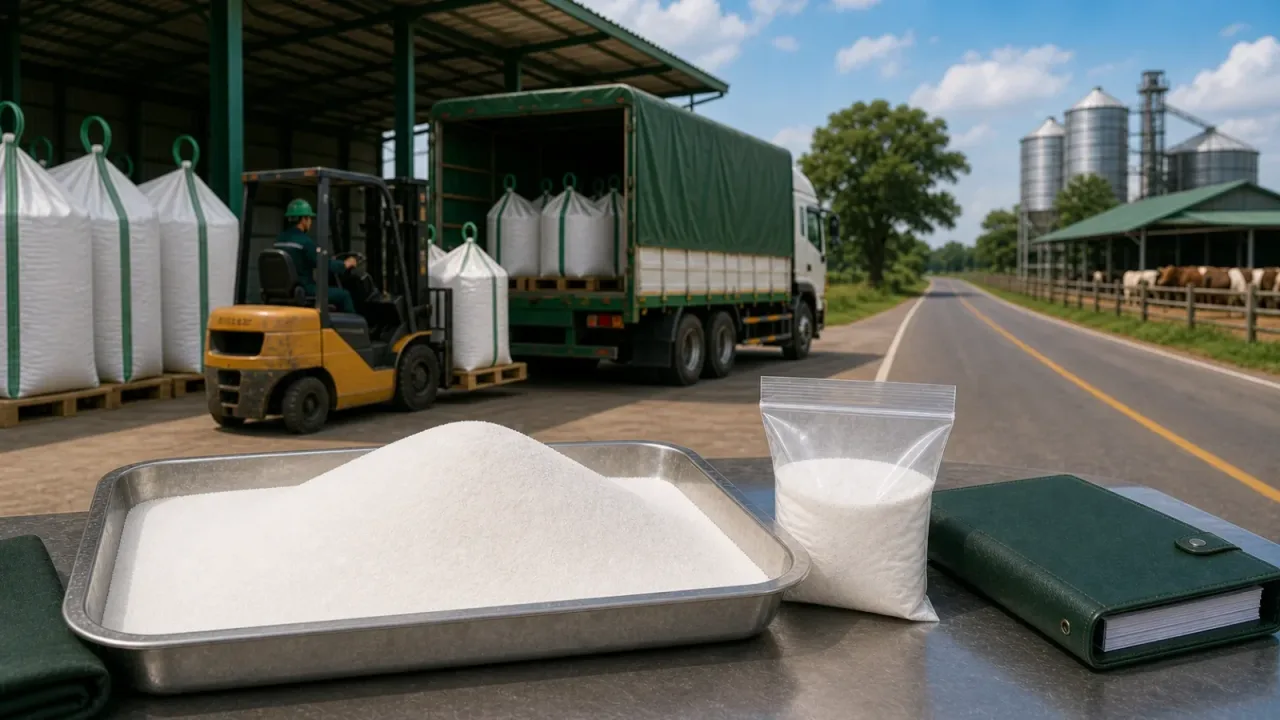
In B2B procurement, data from the Certificate of Analysis (COA) is indispensable. Key areas requiring monitoring include:
- Moisture Content: This is the most critical factor. If moisture exceeds standard storage levels, it can lead to fermentation and spoilage. Controlling moisture stability helps reduce the risk of shrinkage during transportation.
- Mycotoxin Contamination: Moisture accumulation during transport can stimulate fungal growth, which produces toxins that are hazardous to animal health and economic productivity.
- Physical Impurities: The amount of soil, sand, or plastic fragments must be kept to a minimum to prevent damage to feed mill machinery and to maintain the cleanliness standards of the feed formula.
| Inspection Index | Impact of Substandard Quality | Control Measures |
| Moisture | Mold growth, product spoilage, shrinkage | Verify COA, ensure proper tarp coverage, and store in dry areas |
| Impurities | Machinery wear, decreased feed quality | Screening before packaging |
| Mycotoxins | Animal illness, reduced yield, food safety risks | Regular laboratory testing |
3. Logistics & Transportation Management
Transporting from Nakhon Ratchasima to Surin involves distances and external factors that must be managed to ensure the product arrives in optimal condition.
Route Optimization
Choosing efficient routes helps reduce Lead Time and minimizes exposure to environments that pose moisture risks, such as routes prone to heavy rain or routes with high vibration, which could lead to product dust dispersal.
Appropriate Vehicle Types
The choice of truck type is crucial for maintaining product quality:
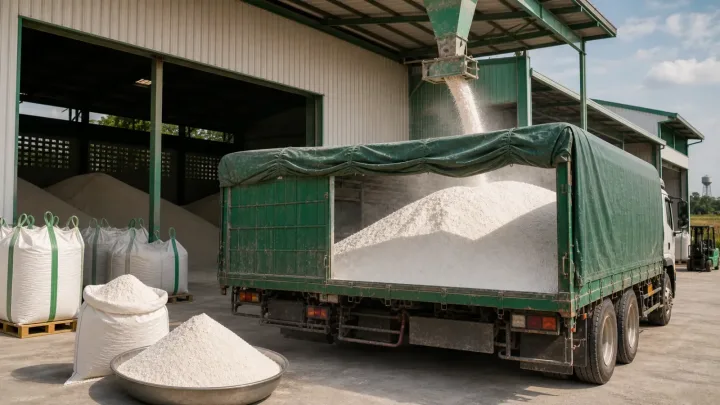
- Open-bed Trucks: These have lower transportation costs but are highly sensitive to weather, risking moisture intake from rain or high humidity in the air.
- Enclosed Trucks: Provide maximum protection against external factors, excellently preventing rain and wind. This helps maintain moisture levels according to the COA specifications, even though transportation costs are higher.
Loading/Unloading Processes and Shrinkage Reduction
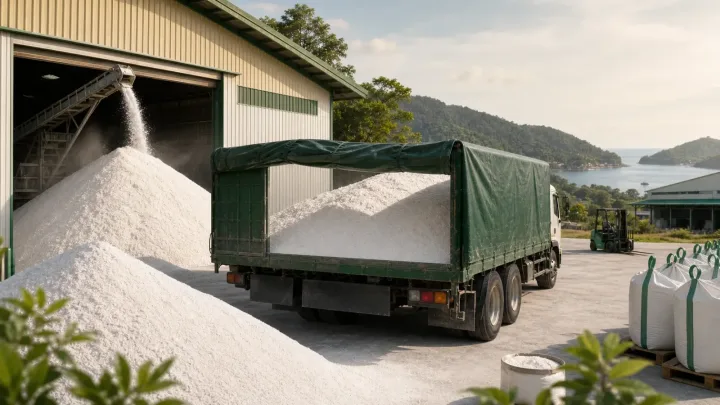
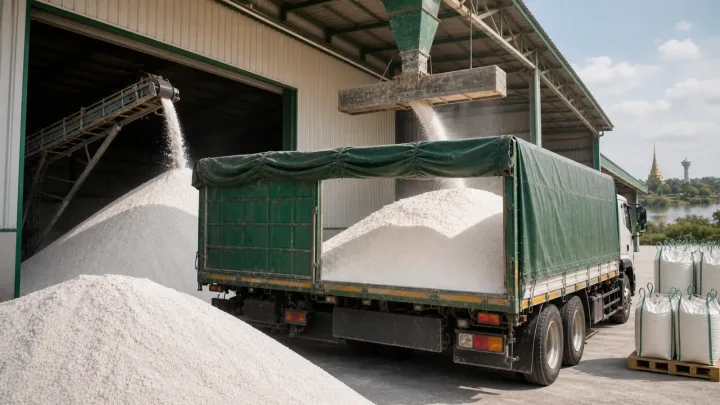
Loading techniques must be careful to prevent the dispersal of cassava dust, which represents both weight loss and an environmental issue. Additionally, precise weight monitoring between the origin and destination helps reduce disputes regarding shrinkage caused by moisture evaporation or spillage.
4. Risk Management & Quality Control During Transportation
The most significant risks on the Nakhon Ratchasima-Surin route are "Moisture" and "Contamination."
Management of Relative Humidity and Weather: During the rainy season, increased atmospheric humidity combined with rainwater penetrating the vehicle is a primary variable that causes the chemical degradation of cassava pulp. The use of high-quality, securely fastened tarpaulins is therefore a necessary standard.
Cargo Sanitation: To prevent cross-contamination, trucks must undergo a cleaning process to ensure no residues from old raw materials or chemical traces from other goods (such as fertilizers or agricultural chemicals) contaminate the dried cassava pulp, which could impact Food Safety within the animal feed chain.
5. Economic Analysis and Value Assessment
For B2B buyers, decision-making is not based solely on the Ex-factory Price per ton, but must look at the "Landed Cost"—the total cost at the farm or factory gate.
Components of Transportation Cost: These include fuel, driver wages, vehicle maintenance, and tolls, all of which fluctuate according to global crude oil prices.
Landed Cost Analysis:
| Cost Item | Significance to Decision Making |
| Ex-factory Price | The base price of the raw material |
| Freight Cost | Varies by distance and vehicle type |
| Shrinkage Cost | Weight lost due to moisture or spillage |
| Landed Cost | The figure used to calculate actual feed costs |
Therefore, selecting partners capable of maintaining consistent product quality will help reduce Landed Cost volatility. Even if the Ex-factory Price is slightly higher, the lower risk of shrinkage and contamination makes the long-term total cost more cost-effective.
6. Conclusion & Strategic Recommendations
The heart of industrial management for dried cassava pulp is maintaining "Consistency" in both nutritional quality and landed costs. Controlling the entire supply chain, from starch factories in Nakhon Ratchasima to the destination in Surin, is a shared responsibility between producers and transporters.
Future Outlook: Operators should begin implementing technology, such as using GPS Tracking to monitor transit times and adopting IoT (Internet of Things) systems to measure moisture and temperature within the cargo area. This provides real-time data, which assists in proactive risk management.
Amidst the price fluctuations of other alternative raw materials, having business partners who understand the technical details of cassava pulp and possess expertise in logistics management will be the most critical competitive advantage for the animal feed industry in the future.
Sources
- Thai Tapioca Starch Association - Tapioca Production - https://www.thaitapiocastarch.org/en/information/statistics/tapioca_production - ใช้ยืนยันภาพรวมผลผลิตมันสำปะหลังไทยและบริบท supply ของอุตสาหกรรม
- Thai Tapioca Starch Association - Export Tapioca Products - https://www.thaitapiocastarch.org/en/information/statistics/export_tapioca_products - ใช้ยืนยันสถิติส่งออกผลิตภัณฑ์มันสำปะหลัง รวมถึงหมวด Pulp
- Thai Tapioca Starch Association - Tapioca Starch Processing - https://thaitapiocastarch.org/en/information/learning_industry/tapioca_starch_processing - ใช้อธิบายกระบวนการผลิตแป้งมันและที่มาของผลพลอยได้จากโรงงานแป้งมัน
- ACFS / TAS 8803-2561 - มาตรฐานสินค้าเกษตร กากมันสำปะหลัง - https://www.opsmoac.go.th/udonthani-dwl-files-471491791858 - ใช้อ้างอิงนิยามกากมันสำปะหลังแห้ง/ผง/อัดเม็ด และข้อกำหนดพื้นฐาน เช่น ไม่พบเชื้อราหรือสิ่งแปลกปลอมที่มองเห็นได้
- GP Autoparts - Truck Law 2024 - https://www.gpautoparts.co.th/en/truck-law-2024-latest-regulations-and-penalties-that-truck-owners-need-to-know/ - ใช้ประกอบข้อจำกัดน้ำหนักรถบรรทุก เช่น 10 ล้อ 25 ตัน เพื่ออธิบาย full truck load
- Google Maps - https://www.google.com/maps - ใช้เป็นแหล่งตรวจระยะทางจริงก่อนเผยแพร่บทความจังหวัด เพราะระยะทางเปลี่ยนตามจุดเริ่มต้นและเส้นทาง
- Department of Land Transport - https://www.dlt.go.th/ - ใช้เป็นแหล่งอ้างอิงหน่วยงานกำกับดูแลการขนส่งทางบกเมื่อต้องตรวจข้อกำหนดล่าสุด

Author information
Sri Thong Admin
B2B dried cassava pulp content specialist
Affiliation
SRITHONG PRODUCTTAPIOCA COMPANY LIMITED