Ship Dried Cassava Pulp from Korat to Suphanburi
By Sri Thong Admin · Published 2026-06-22 · Updated 2026-06-07
Summary: Supply Chain Management of Dried Cassava Pulp from Nakhon Ratchasima to Suphan Buri
The core of logistics management for Dried Cassava Pulp on the Nakhon Ratchasima - Suphan Buri route does not lie solely in transporting from one point to another, but in maintaining constant "technical quality" from the starch factory to the feed mill. Controlling moisture to prevent mold, managing vehicle rotations to reduce production costs, and preventing contamination during transit are the key success factors that enable feed mills to precisely and sustainably control Feed Costs and maintain the Nutritional Value in animal feed formulas.
1. The Role of Dried Cassava Pulp in the Animal Feed Industry
In the animal feed production industry, dried cassava pulp serves as a highly important alternative raw material as a carbohydrate source, providing excellent energy through its remaining starch content, particularly for ruminants (such as beef cattle) and poultry that require specific proportions of carbohydrates in their feed formulas.
However, industrial-scale use of dried cassava pulp requires a stable supply chain, specifically along the strategic route between the primary production hub in Nakhon Ratchablema (a center for large-scale starch factories) and the major consumption hub in Suphan Buri (a center for livestock farms and feed mills). Efficient logistics management is a critical variable directly impacting Production Cost, as transportation costs often constitute a significant portion of the total raw material price.
2. Technical Specification & Quality Standard
In B2B raw material procurement, the highest priority for feed mills is "Consistency." Therefore, logistics management must go hand-in-hand with technical standard controls as follows:
- Moisture Content Control: Moisture is the highest risk factor. If moisture levels exceed specified standards (e.g., exceeding 13-14%), it creates conditions conducive to mold growth, particularly Aflatoxin, which is extremely dangerous to animals and may lead to the rejection of the entire shipment lot.
- Residual Starch Monitoring: Maintaining the starch content in the pulp according to the contract specification, enabling nutritionists to calculate feed formulas with high precision.
- Physical Impurities Management: Controlling the presence of soil, sand, or other foreign matter in the cassava pulp, which could impact factory production processes (such as machinery wear and tear) and nutritional value.
| Key Parameter | Importance to Production | Risk of Logistics Failure |
| Moisture | Prevents mold and maintains shelf life | Mold growth (Aflatoxin) and product spoilage |
| Impurities | Raw material cleanliness and feed standards | Machinery damage / Inaccurate feed formulas |
| Texture Consistency | Ease of Mixing | Uneven nutrient distribution |
3. Geographical Context and Potential of Production and Destination
The structure of this supply chain is driven by the balance between Demand and Supply. Nakhon Ratchasima serves as the strategic point for the Supply Side, as it is the largest cassava cultivation and processing hub in the country, while Suphan Buri serves as the strategic point for the Demand Side, due to the high demand from large-scale livestock farms and numerous feed mills.
A major logistical challenge is "Route Optimization." Long-distance inter-provincial transportation brings risks related to uncertain Lead Time caused by traffic or weather conditions. Therefore, route planning that minimizes the risk of truck disruptions is a priority for logistics operators.
4. Logistics & Transportation Management
To achieve the goals of delivering quality products at optimized costs, management must cover three dimensions:
4.1 Mode of Transport
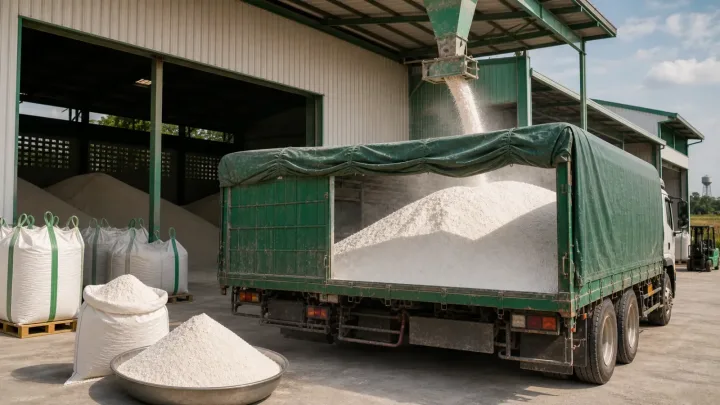
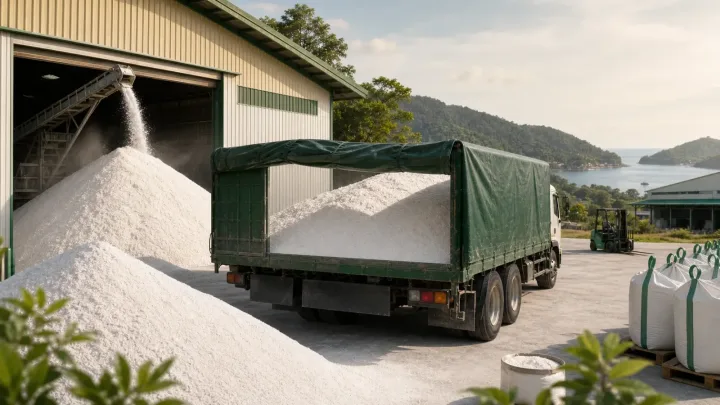
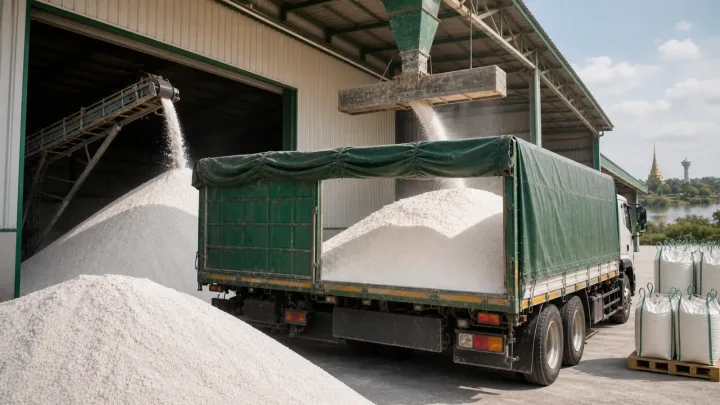
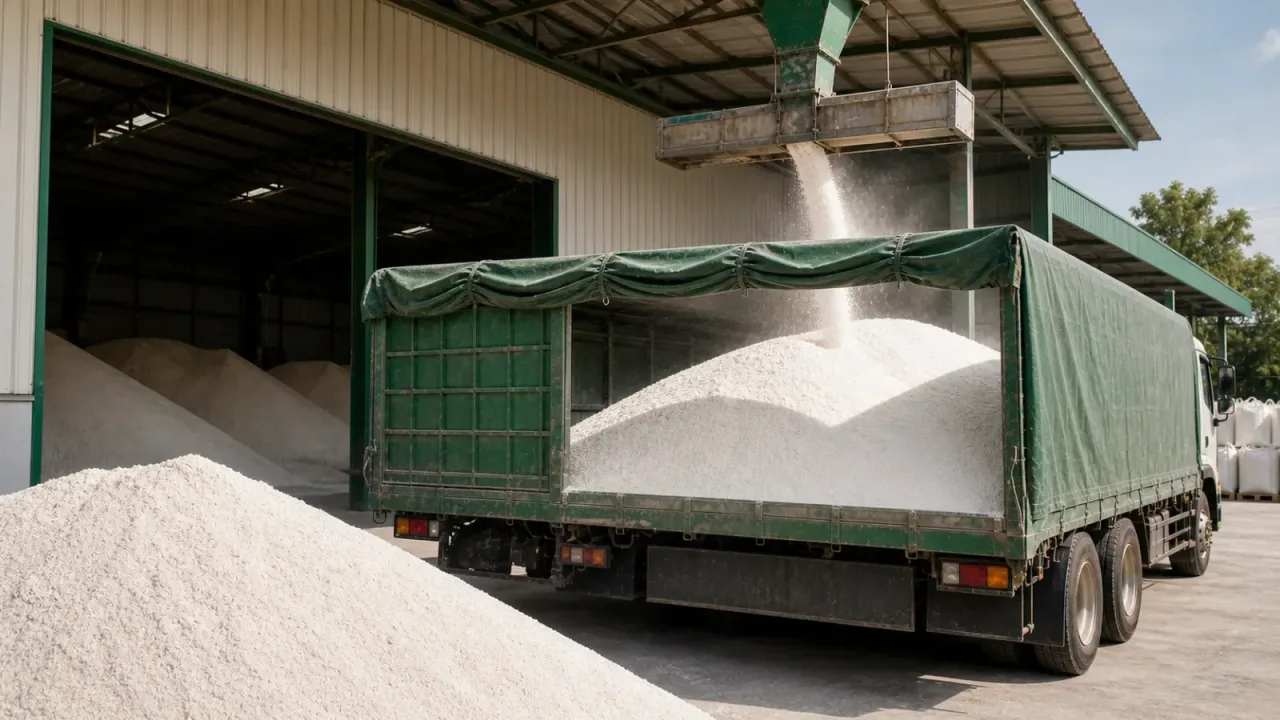
The choice of truck type must consider the nature of the product. Generally, open-top trailers or trucks with complete canvas covers are preferred to prevent direct exposure to air and rain, which helps maintain moisture levels according to standards.
"Backhaul Management"—ensuring trucks do not return empty—is a vital strategy for reducing transportation costs per unit. If the management can ensure that trucks transporting cassava pulp from Korat to Suphan Buri can pick up other raw materials for the return trip, the quotation price will become more competitive.
4.3 Lead Time Management
On-time delivery enables feed mills to conduct efficient Production Planning and Inventory Management, reducing the risk of stock-out situations.
5. Quality Assurance during Transit
In-transit risk is the most difficult to control but can be managed through strict inspection standards:
- Weather Protection: Using Canvas covers that are in perfect condition without any tears to prevent moisture from rain or condensation during the journey.
- Cross-contamination Prevention: Verifying the previous cargo history of the truck to ensure no chemicals or raw materials with strong odors have contaminated the cassava pulp.
- Truck Integrity Check: Conducting a Pre-loading Inspection of the truck bed and container condition to prevent residual soil or impurities from being loaded with the product.
6. Economic & Cost Analysis
From the perspective of Procurement and factory owners, purchasing decisions are not based solely on the "price per ton" at the factory gate, but must consider the "Total Cost of Ownership," which includes:
- Transportation Cost per Ton: Transportation costs that vary according to distance and fuel prices.
- Fuel Price Volatility: Fluctuations in fuel prices that affect long-term raw material price adjustments.
- Sourcing Strategy Analysis: Analyzing the cost-effectiveness of purchasing from nearby sources (Low Transport Cost but potentially unstable Supply) versus purchasing from distant sources like Nakhon Ratchasima (High Transport Cost but massive and standardized Supply).
7. Conclusion and Sustainable Supply Chain Development
Maintaining the quality standards of dried cassava pulp throughout the route from Nakhon Ratchasima to Suphan Buri is the key to building trust in the animal feed industry. In the near future, the implementation of Digital Logistics—such as real-time tracking systems and sensors for monitoring temperature/moisture—will play a crucial role in creating Transparency within the supply chain.
Furthermore, focusing on reducing the Carbon Footprint in the transportation process through efficient route planning and the use of eco-friendly vehicles will become the new standard for leading feed mills worldwide, responding to the global animal feed supply chain's Sustainability goals.
If you are looking for a source of dried cassava pulp that meets all technical standards, accompanied by a reliable logistics system for your feed formula stability,
you can contact us immediately to request a Technical Specification, Certificate of Analysis (COA), or a Quotation.
Sources
- Thai Tapioca Starch Association - Tapioca Production - https://www.thaitapiocastarch.org/en/information/statistics/tapioca_production - ใช้ยืนยันภาพรวมผลผลิตมันสำปะหลังไทยและบริบท supply ของอุตสาหกรรม
- Thai Tapioca Starch Association - Export Tapioca Products - https://www.thaitapiocastarch.org/en/information/statistics/export_tapioca_products - ใช้ยืนยันสถิติส่งออกผลิตภัณฑ์มันสำปะหลัง รวมถึงหมวด Pulp
- Thai Tapioca Starch Association - Tapioca Starch Processing - https://thaitapiocastarch.org/en/information/learning_industry/tapioca_starch_processing - ใช้อธิบายกระบวนการผลิตแป้งมันและที่มาของผลพลอยได้จากโรงงานแป้งมัน
- ACFS / TAS 8803-2561 - มาตรฐานสินค้าเกษตร กากมันสำปะหลัง - https://www.opsmoac.go.th/udonthani-dwl-files-471491791858 - ใช้อ้างอิงนิยามกากมันสำปะหลังแห้ง/ผง/อัดเม็ด และข้อกำหนดพื้นฐาน เช่น ไม่พบเชื้อราหรือสิ่งแปลกปลอมที่มองเห็นได้
- GP Autoparts - Truck Law 2024 - https://www.gpautoparts.co.th/en/truck-law-2024-latest-regulations-and-penalties-that-truck-owners-need-to-know/ - ใช้ประกอบข้อจำกัดน้ำหนักรถบรรทุก เช่น 10 ล้อ 25 ตัน เพื่ออธิบาย full truck load
- Google Maps - https://www.google.com/maps - ใช้เป็นแหล่งตรวจระยะทางจริงก่อนเผยแพร่บทความจังหวัด เพราะระยะทางเปลี่ยนตามจุดเริ่มต้นและเส้นทาง
- Department of Land Transport - https://www.dlt.go.th/ - ใช้เป็นแหล่งอ้างอิงหน่วยงานกำกับดูแลการขนส่งทางบกเมื่อต้องตรวจข้อกำหนดล่าสุด

Author information
Sri Thong Admin
B2B dried cassava pulp content specialist
Affiliation
SRITHONG PRODUCTTAPIOCA COMPANY LIMITED