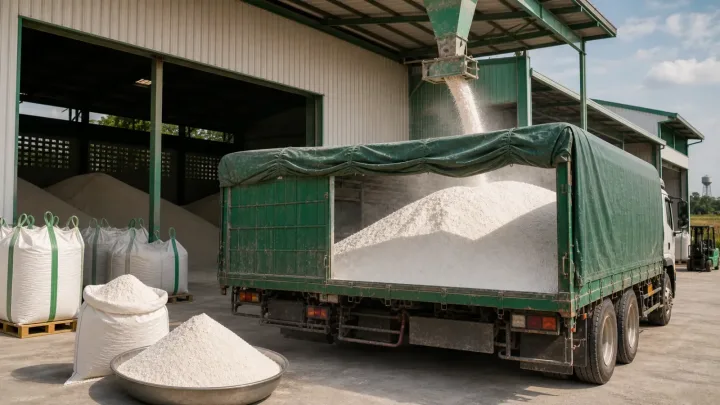
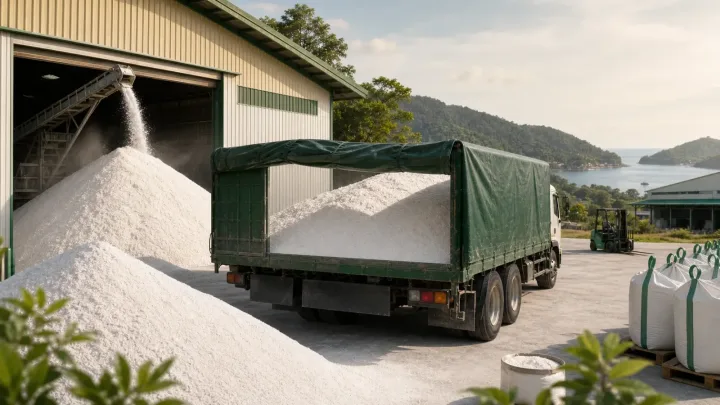
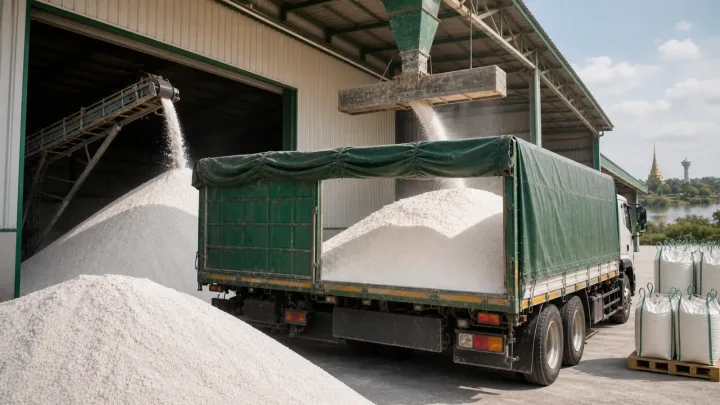
Shipping Dry Cassava Pulp from Korat to Sisaket
By Sri Thong Admin · Published 2026-06-20 · Updated 2026-06-07
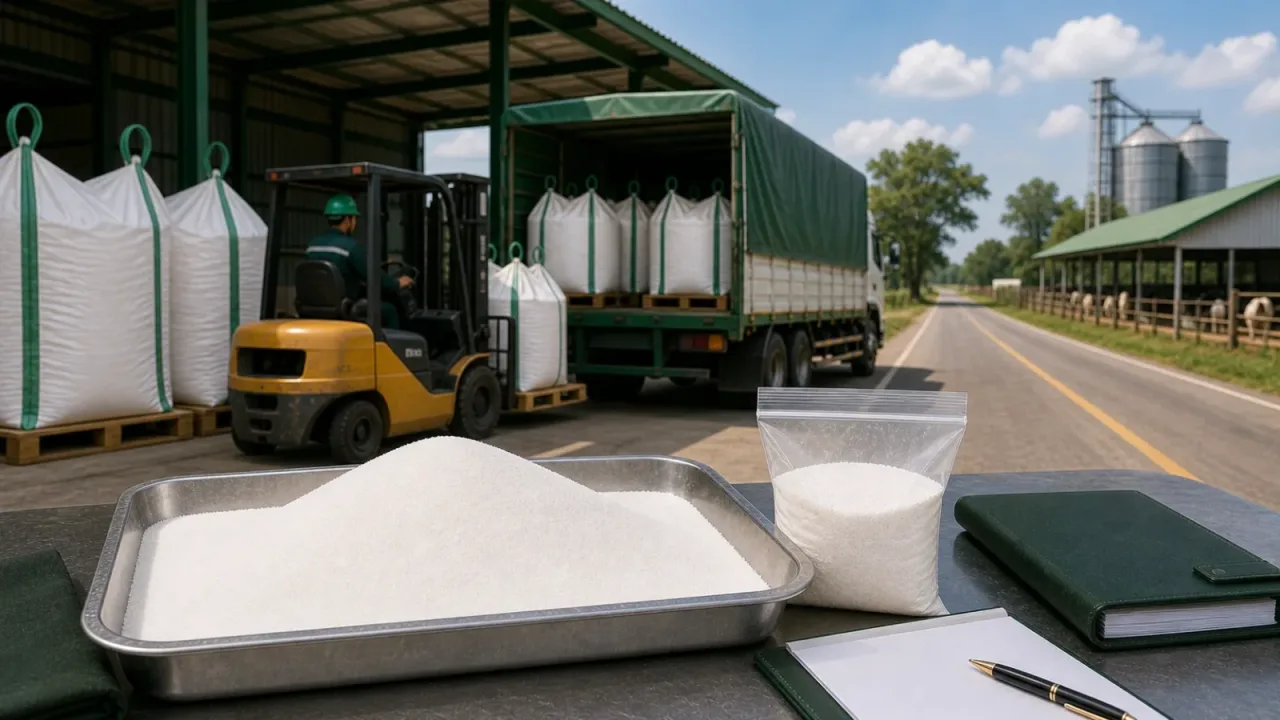
Executive Summary: Maintaining Quality Standards of Dried Cassava Pulp through Controlled Logistics Processes
The core of preserving the nutritional value of Dried Cassava Pulp, from production sources in Nakhon Ratchasima to animal feed factories in Sisaket, does not end solely with the production stage in tapioca starch factories. Instead, it depends on the efficiency of the Technical Logistics management system, which must encompass moisture control to prevent fungal growth, weight management to reduce shrinkage, and the prevention of cross-contamination from the environment during transit. Precise logistics planning and systematic traceability are essential mechanisms that ensure animal feed factories receive raw materials with physical and chemical characteristics that meet required specifications, enabling accurate animal feed formulation.
1. The Importance of the Cassava Pulp Supply Chain in the Animal Feed Industry
In the animal feed production industry, particularly for beef cattle feed, dried cassava pulp serves as a vital alternative raw material, acting as a cost-effective energy source relative to its starch and fiber content. However, the efficiency of this raw material depends not only on market availability but on "nutritional stability" throughout the supply chain.
The economic link between the tapioca starch industrial clusters in Nakhon Ratchasima—the primary production hub—and the livestock farms and feed mills in Sisaket constitutes a logistics route with distances and environmental factors that require strict control. Transportation through changing weather conditions and exposure to moisture during transit can lead to increased moisture content in the raw material, directly impacting nutrient degradation and the biosafety of the raw materials within the factory.
2. Technical Standards and Physical Characteristics to be Controlled (Quality Specification)
B2B raw material management requires clearly defined specifications to serve as a benchmark for goods receiving, with the following key factors requiring control:
2.1 Moisture Content Control
Moisture is the most critical factor in determining the shelf-life of dried cassava pulp. If moisture levels exceed the specified standard, it acts as a catalyst for the growth of mold and bacteria, which not only destroys the fiber structure but may also produce mycotoxins that are harmful to animals.
2.2 Nutritional Stability
Consistency in chemical values is essential for Least-cost Ration Formulation. The proportions of key components must be controlled as follows:
- Starch Content: The amount of starch must remain stable to maintain its role as an energy source.
- Crude Fiber: The appropriate fiber ratio for the proper functioning of the bovine digestive system.
- Crude Protein: Control to prevent protein loss due to degradation.
2.3 Contaminants Control
Monitoring foreign matter that may contaminate the material during production or transportation, such as sand, soil, or plastic fragments. If these exceed standard levels, they will affect physical quality and may cause damage to machinery in the feed production process.
| Key Indicator | Technical Importance | Risk if Substandard |
| Moisture Content | Prevents microbial growth | Mold and spoilage |
| Foreign Matter | Maintains raw material cleanliness | Machinery damage / inaccurate formulation |
| Nutrient Consistency | Accuracy in ration formulation | Reduced animal growth efficiency |
3. Technical Logistics Management Process
Transporting goods from Nakhon Ratchasima to Sisaket requires a systematic management process to minimize value loss.
3.1 Pre-loading Process
Truck inspection is an indispensable step. Trucks must undergo thorough cleaning of the cargo bed to prevent cross-contamination from other types of goods, such as fertilizers or chemicals. Additionally, the integrity of the truck's tarpaulin must be inspected to prevent moisture from rain or dew.
3.2 Loading Optimization
Loading techniques must ensure proper weight distribution to minimize shrinkage or weight loss caused by excessive compaction, which can affect the accuracy of the cargo weight upon arrival.
Route planning from Nakhon Ratchasima to Sisaket must consider transit time to reduce the duration that the raw material is exposed to accumulated heat within the cargo bed, which can trigger chemical changes in the nutrients of the pulp.
4. Risk Mitigation during Transportation
The primary risks in agricultural logistics routes are weather and environmental conditions:
- Moisture Re-absorption: Preventing humidity re-absorption from the air, especially during the rainy season, by ensuring tarpaulins are waterproof and properly sealed.
- Temperature & Aeration: Higher temperatures within the cargo bed during the day can accelerate biological reactions within the cassava pulp pile; therefore, proper ventilation management is essential.
- Contamination Prevention: Protecting the cargo from dust and roadside chemicals through secure covering.
5. Post-Arrival Quality Assurance
When the goods arrive at the factory in Sisaket, the inspection protocol must follow these standards:
1. Sampling Protocol: Sampling must follow statistical principles to ensure a representative sample of the entire truckload for measuring moisture and impurities.
2. Discrepancy Management: In cases where weight does not match the invoice or quality does not comply with the COA (Certificate of Analysis), a clear and verifiable claim process must be in place.
3. Data Traceability: All transportation data—including departure time from the origin, vehicle license plate, weather conditions during transit, and arrival inspection results—must be recorded in a system to ensure traceability to the origin.
6. Conclusion & Strategic Recommendations
For cost management in the animal feed industry, looking solely at "price per ton" may not be the most sustainable answer. Instead, conducting a Cost-Benefit Analysis between the raw material price and the actual received nutritional value (Nutrient-Adjusted Cost) is a more vital strategy. Choosing partners who utilize Controlled Environment Logistics, even if transportation costs vary slightly, will help reduce the risk of quality degradation and increase long-term production efficiency.
In the future, real-time monitoring technologies, such as the use of sensors to measure moisture and temperature inside the cargo bed during transit, will become the new standard that animal feed factories should consider to elevate the safety standards of the animal feed raw material supply chain toward greater sustainability.
Sources
- Thai Tapioca Starch Association - Tapioca Production - https://www.thaitapiocastarch.org/en/information/statistics/tapioca_production - ใช้ยืนยันภาพรวมผลผลิตมันสำปะหลังไทยและบริบท supply ของอุตสาหกรรม
- Thai Tapioca Starch Association - Export Tapioca Products - https://www.thaitapiocastarch.org/en/information/statistics/export_tapioca_products - ใช้ยืนยันสถิติส่งออกผลิตภัณฑ์มันสำปะหลัง รวมถึงหมวด Pulp
- Thai Tapioca Starch Association - Tapioca Starch Processing - https://thaitapiocastarch.org/en/information/learning_industry/tapioca_starch_processing - ใช้อธิบายกระบวนการผลิตแป้งมันและที่มาของผลพลอยได้จากโรงงานแป้งมัน
- ACFS / TAS 8803-2561 - มาตรฐานสินค้าเกษตร กากมันสำปะหลัง - https://www.opsmoac.go.th/udonthani-dwl-files-471491791858 - ใช้อ้างอิงนิยามกากมันสำปะหลังแห้ง/ผง/อัดเม็ด และข้อกำหนดพื้นฐาน เช่น ไม่พบเชื้อราหรือสิ่งแปลกปลอมที่มองเห็นได้
- GP Autoparts - Truck Law 2024 - https://www.gpautoparts.co.th/en/truck-law-2024-latest-regulations-and-penalties-that-truck-owners-need-to-know/ - ใช้ประกอบข้อจำกัดน้ำหนักรถบรรทุก เช่น 10 ล้อ 25 ตัน เพื่ออธิบาย full truck load
- Google Maps - https://www.google.com/maps - ใช้เป็นแหล่งตรวจระยะทางจริงก่อนเผยแพร่บทความจังหวัด เพราะระยะทางเปลี่ยนตามจุดเริ่มต้นและเส้นทาง
- Department of Land Transport - https://www.dlt.go.th/ - ใช้เป็นแหล่งอ้างอิงหน่วยงานกำกับดูแลการขนส่งทางบกเมื่อต้องตรวจข้อกำหนดล่าสุด

Author information
Sri Thong Admin
B2B dried cassava pulp content specialist
Affiliation
SRITHONG PRODUCTTAPIOCA COMPANY LIMITED