Shipping Dry Cassava Pulp from Korat to Saraburi
By Sri Thong Admin · Published 2026-06-19 · Updated 2026-06-07
The logistics management of Dried Cassava Pulp along the strategic Nakhon Ratchasima - Saraburi route is not merely the movement of goods from production sources to animal feed factories; it is the control of the Value Chain. This includes maintaining moisture standards to prevent mold, managing payloads to control unit costs, and establishing a Traceability system, which is the cornerstone of raw material quality assurance. This article will delve into the technical management strategies that B2-B animal feed manufacturers need to know in order to reduce the risk of quality loss and increase the efficiency of sustainable production cost management.
1. Economic Context and the Animal Feed Supply Chain: The Heart of Raw Material Security
In the animal feed industry, dried cassava pulp is classified as a vital energy source, with prices fluctuating according to agricultural market mechanisms. Therefore, supply chain management requires a deep understanding of regional dynamics.
Strategic Connection: Nakhon Ratchasima - Saraburi
Nakhon Ratchasima serves as the "Production Hub," a center for collecting raw materials from cassava processing, while Saraburi acts as the "Manufacturing Hub," home to large-scale national animal feed factories. The continuity of this route is the lifeblood of the industry. Any disruption in the logistics system will directly impact the production continuity of end-user factories.
Challenges in the Transportation Process
The primary challenges faced by animal feed producers in sourcing raw materials through logistics include controlling Quality Variance during transit, the risk of contamination from weather conditions, and fluctuations in transportation costs that affect the Total Cost of Ownership (TCO).
2. Technical Specifications & Quality Control
Effective logistics management must begin with clearly defined standards to ensure that the goods arriving at the factory strictly adhere to the agreed-upon Certificate of Analysis (COA).
Strictly Controlled Standard Parameters
| Technical Parameter | Importance in Logistics Management | Impact if Uncontrolled |
| Moisture Content | Must be controlled below standard thresholds to prevent microbial respiration | Aflatoxin development and nutrient degradation |
| Physical Impurities | Prevention of sand, soil, and metal during transit | Damage to factory machinery and degradation of feed quality |
| Starch Residue | Monitoring the consistency of the product content | Formulation Inaccuracy |
Microbiological Risk Prevention
Moisture Control is the most critical variable. Transporting dried cassava pulp during the rainy season poses a high risk of increased moisture within the packaging, which acts as a catalyst for the growth of Aspergillus fungi, which produce Aflatoxin toxins. Therefore, superior logistics management must include systematic measures to protect against external moisture.
3. Sourcing & Loading Management
Transportation efficiency begins at the loading stage at the production source (Korat Hub). The choice of packaging method must consider the volume of usage and the type of end-user factory.
Packaging Techniques for Long-Distance Transport
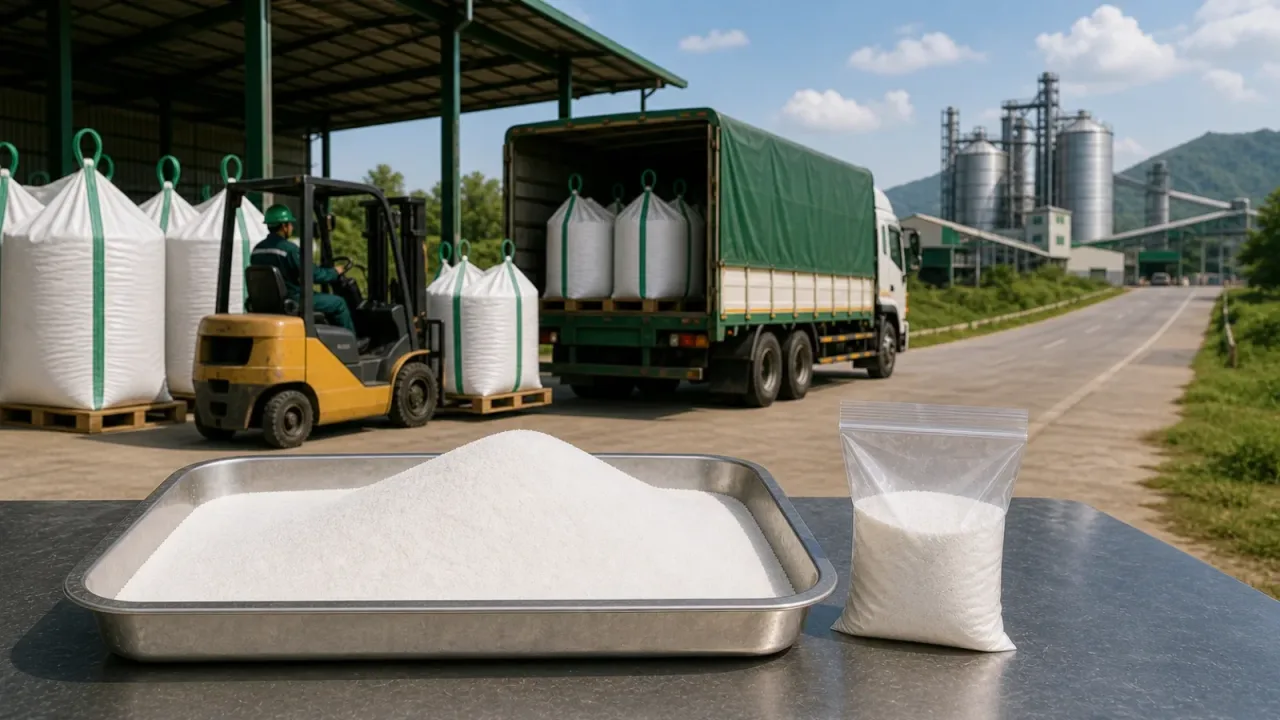
- Bulk: Suitable for high-volume transport to reduce unit costs, but requires high vigilance regarding contamination and moisture control during movement. maximizing transport efficiency through the use of large trailers
- Big Bag (Jumbo Bag): Facilitates easier inventory management, reduces the risk of cross-contamination, and allows for easy unit-based Quality Control (QC).
Payload Optimization
Managing the payload to be as close as possible to the Legal Payload limit without exceeding it is a key factor in reducing Logistics Cost per Ton. Precision in calculating the weight between the product weight and the Tare Weight is essential to prevent issues regarding overcharging or short deliveries.
4. Logistics & Route Optimization
Managing the Nakhon Ratchasima - Saraburi route requires analysis to reduce Lead Time and maintain product integrity.
Logistics Corridor Analysis
Selecting primary routes must account for road conditions and high-risk areas that may cause vibrations, which could lead to breakage in Big Bags or moisture distribution. Accurate Lead Time Management enables animal feed factories to perform efficient Raw Material Planning, thereby reducing the burden of maintaining high Safety Stock.
Vehicle Selection
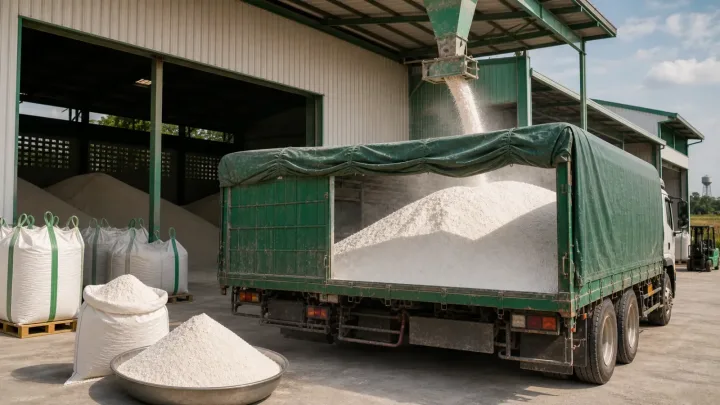
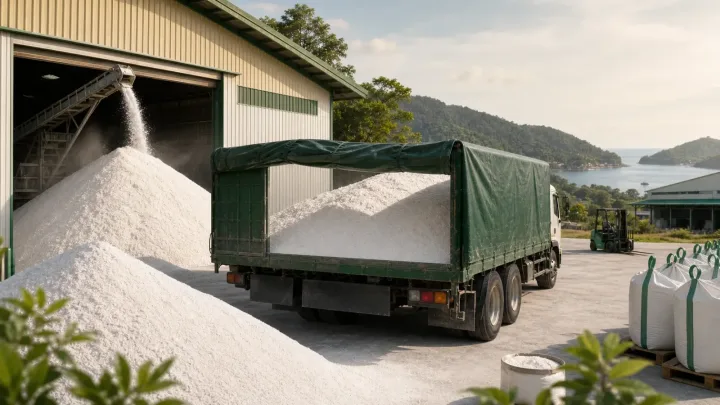
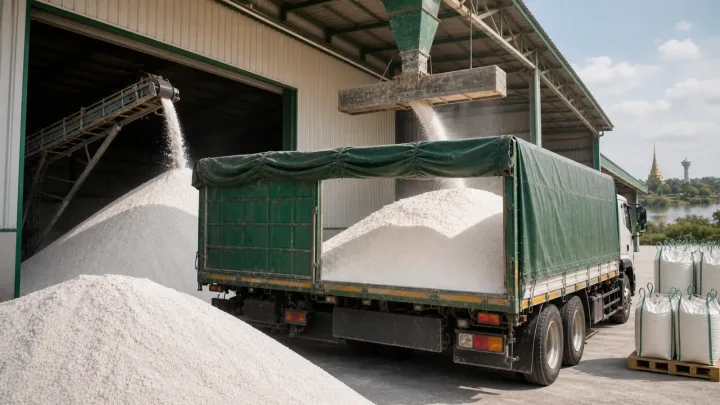
When selecting 22-wheel trailers or semi-trailers, the suitability for the specific product type must be considered. For bulk transportation, using closed systems or ensuring Tarping Integrity is indispensable to prevent dust and moisture ingress from rain during transit.
5. Preservation & Integrity during Transit
The ultimate goal is to maintain "Product Integrity"—ensuring the product remains identical to the day it left the production source.
6. Economic & Cost Analysis
B2B decision-making must be based on actual cost structures.
Logistics Cost Structure
Costs do not only consist of the Freight Rate but also include Fuel, Tolls, Labor, and Maintenance. All these factors directly influence the quoted price per unit.
Economy of Scale vs. Delivery Frequency
Analyzing the break-even point between High Volume/Low Frequency shipments (which reduce unit transport costs but require high Storage Capacity) and Low Volume/High Frequency shipments (which reduce inventory burdens but result in higher total transport costs) is vital. The appropriate strategy depends on the warehouse management capabilities of the end-user factory.
7. Conclusion & Strategic Recommendations
Success in managing the dried cassava pulp supply chain between Nakhon Ratchasima and Saraburi does not depend on finding the lowest price, but on the "Reliability" of delivering consistent quality according to established standards.
Strategic Recommendations: Animal feed factories should consider implementing Digital Logistics technologies, such as GPS Tracking for real-time product monitoring and moisture sensors within containers (where possible), for Proactive Risk Management. This will help reduce losses and create a long-term competitive advantage.
If you are looking for a sourcing partner with standardized quality control and precise logistics systems to support high-quality animal feed production, please contact us to request technical Specifications, verify Certificates of Analysis (COA), or request product samples for laboratory testing immediately.
Sources
- Thai Tapioca Starch Association - Tapioca Production - https://www.thaitapiocastarch.org/en/information/statistics/tapioca_production - ใช้ยืนยันภาพรวมผลผลิตมันสำปะหลังไทยและบริบท supply ของอุตสาหกรรม
- Thai Tapioca Starch Association - Export Tapioca Products - https://www.thaitapiocastarch.org/en/information/statistics/export_tapioca_products - ใช้ยืนยันสถิติส่งออกผลิตภัณฑ์มันสำปะหลัง รวมถึงหมวด Pulp
- Thai Tapioca Starch Association - Tapioca Starch Processing - https://thaitapiocastarch.org/en/information/learning_industry/tapioca_starch_processing - ใช้อธิบายกระบวนการผลิตแป้งมันและที่มาของผลพลอยได้จากโรงงานแป้งมัน
- ACFS / TAS 8803-2561 - มาตรฐานสินค้าเกษตร กากมันสำปะหลัง - https://www.opsmoac.go.th/udonthani-dwl-files-471491791858 - ใช้อ้างอิงนิยามกากมันสำปะหลังแห้ง/ผง/อัดเม็ด และข้อกำหนดพื้นฐาน เช่น ไม่พบเชื้อราหรือสิ่งแปลกปลอมที่มองเห็นได้
- GP Autoparts - Truck Law 2024 - https://www.gpautoparts.co.th/en/truck-law-2024-latest-regulations-and-penalties-that-truck-owners-need-to-know/ - ใช้ประกอบข้อจำกัดน้ำหนักรถบรรทุก เช่น 10 ล้อ 25 ตัน เพื่ออธิบาย full truck load
- Google Maps - https://www.google.com/maps - ใช้เป็นแหล่งตรวจระยะทางจริงก่อนเผยแพร่บทความจังหวัด เพราะระยะทางเปลี่ยนตามจุดเริ่มต้นและเส้นทาง
- Department of Land Transport - https://www.dlt.go.th/ - ใช้เป็นแหล่งอ้างอิงหน่วยงานกำกับดูแลการขนส่งทางบกเมื่อต้องตรวจข้อกำหนดล่าสุด

Author information
Sri Thong Admin
B2B dried cassava pulp content specialist
Affiliation
SRITHONG PRODUCTTAPIOCA COMPANY LIMITED