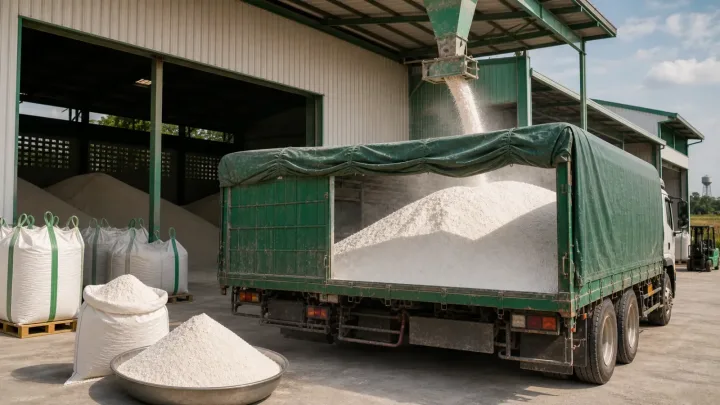
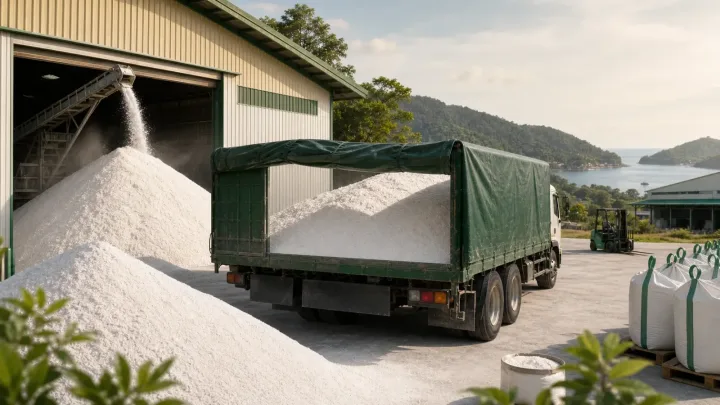
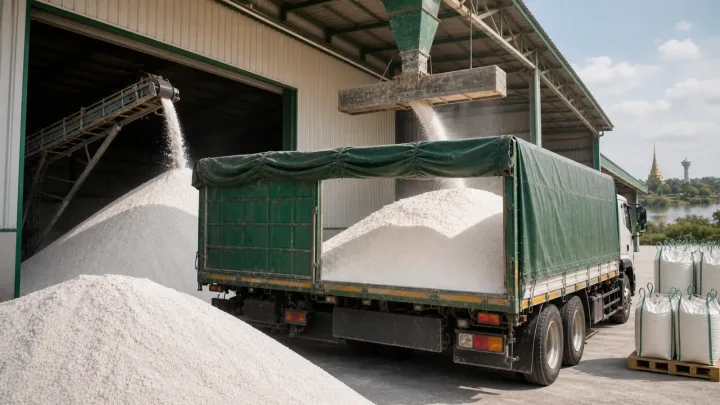
Shipping Dried Cassava Pulp from Korat to Roi Et
By Sri Thong Admin · Published 2026-06-20 · Updated 2026-06-07
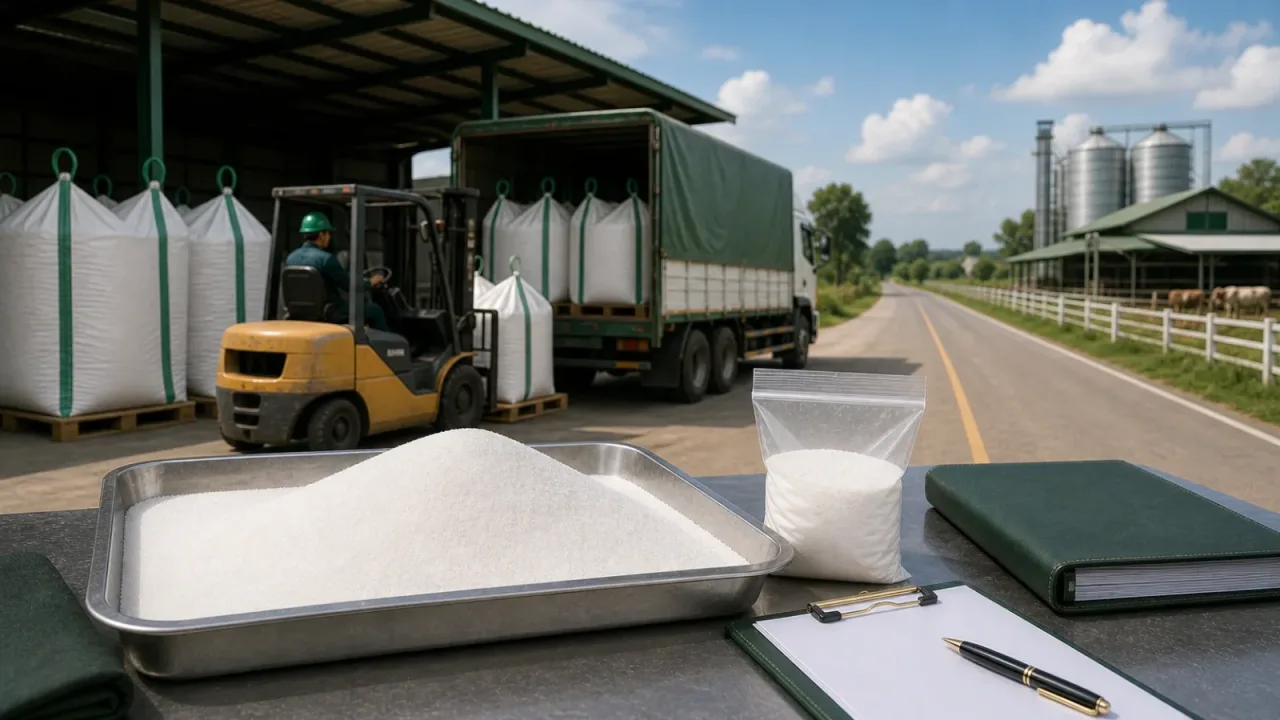
Executive Summary: Supply Chain Management Strategy for Dried Cassava Pulp for Nutritional Stability and Production Cost Control
Managing the supply chain for transporting dried cassava pulp from primary production sources in Nakhon Ratchasima to livestock areas in Roi Et is not merely about moving goods from one point to another; it is about maintaining "nutritional value standards" and "controlling hidden costs" arising from transit losses. This article analyzes the integration of Technical Specification, Proactive Logistics, and Environmental Risk Management to ensure that feed mills receive raw materials with consistent Metabolizable Energy (ME), low moisture levels according to standards, and a complete Traceability system, which are key indicators of success in controlling industrial-scale feed production costs.
1. Introduction: The Strategic Importance of the Dried Cassava Pulp Supply Chain in the Northeast
In the ruminant feed industry, dried cassava pulp serves as a vital alternative energy source for reducing diet costs. However, the challenge faced by Feed Mills is the variability in raw material quality, which depends on post-production management and transportation processes.
The geographical structure of the Northeast is unique, with Nakhon Ratchasima serving as a high-capacity Starch Factory Hub, while Roi Et and surrounding areas are hubs for livestock farms and medium-sized feed mills. The link between these two areas is a strategic route that requires efficient logistics management. If transportation lacks standardized control, it will directly impact moisture levels and the risk of contamination, which ultimately leads to higher feed costs due to a decreased Feed Conversion Ratio (FCR).
2. Analysis of Technical Specifications and Quality Standards of Dried Cassava Pulp (Technical Specification & Quality Standard)
Maintaining the technical standards of dried cassava pulp during transit is a primary mission that must be strictly implemented, with the following key variables requiring control:
- Moisture Content Control: Moisture is the primary factor determining shelf-life. Transport from Nakhon Ratchasima to Roi Et must maintain moisture at an appropriate level (typically not exceeding specified limits) to prevent the growth of fungi, particularly *Aspergillus flavus*, which is the cause of Aflatoxin contamination.
- Impurities Monitoring: During the transportation process, monitoring for foreign matter such as soil, sand, or plastic fragments is essential. High quantities of these impurities affect nutrient density and may pose a danger to the animals' digestive systems.
- Metabolizable Energy Maintenance: The transportation process must not alter the physical structure of the pulp to the point of causing nutrient degradation. This requires effective packaging management or secure tarpaulin covering to prevent nutrient loss from exposure to air and rain.
3. Logistics and Supply Chain Management Structure (Logistics & Supply Chain Management)
Efficient logistics cost management relies on systematic numerical planning and resource management:
Route Optimization and Payload Management
Selecting routes between Nakhon Ratchasima and Roi Et requires Route Optimization to minimize the time the product is exposed to heat and atmospheric conditions, as well as to reduce fuel consumption, which ultimately impacts the raw material's offered price (Price per Ton).
| Management Factor | Operational Details | Outcome Goal |
| Route Optimization | Selecting the shortest route and reducing unnecessary stops | Reducing transit time and minimizing moisture loss |
| Payload Management | Calculating load weight to maximum efficiency according to regulations | Reducing transportation cost per unit weight (Cost per Ton) |
| Shrinkage Control | Preventing excess moisture evaporation and spillage | Maintaining product weight in accordance with the COA |
Loading & Unloading Protocols
The use of open-bed trucks or trailers requires checking Cargo Cleanliness before loading to prevent Cross-Contamination from previous cargo, such as fertilizers or agricultural chemicals. Furthermore, controlling the speed of Unloading is necessary to prevent dust dispersion, which results in unnecessary product loss.
4. Quality Assurance & Risk Mitigation during Transportation (Quality Assurance & Risk Mitigation)
Supply chain risks can be mitigated through proactive preventive measures:
- Cross-Contamination Prevention: Establishing standards for transport vehicles, including verifying cargo history and using clean, tear-free Tarpaulins to prevent external chemical contamination.
- Weather Risk Management: During the rainy season, moisture risk management is paramount. The transportation system must have contingency plans to ensure 100% protection from rainfall, as a rapid increase in moisture will immediately degrade the quality of the dried cassava pulp.
- Traceability System: Maintaining data records from the source Factory Batch Number, production date, and departure time from Nakhon Ratchasima, to the arrival time in Roi Et, allowing feed mills to perform traceability if quality issues are discovered later.
5. Economic Feasibility & Cost Analysis (Economic Feasibility & Cost Analysis)
When making procurement decisions, feed mill managers must consider the Total Cost of Ownership (TCO) rather than just the price per ton. The cost structure analysis consists of:
Primary costs include Fuel Cost, Labor, and Vehicle Depreciation, all of which fluctuate according to global oil prices. If logistics providers can manage Route Optimization effectively, they can help maintain raw material price stability even during periods of energy volatility.
Furthermore, a Break-even Analysis for long-haul transportation must account for the risk of Shrinkage. If transit loss is too high, the actual Nutrient Cost per Unit will be higher than what was predicted in the product specifications.
6. Conclusion & Future Outlook (Conclusion & Future Outlook)
The management of the dried cassava pulp supply chain from Nakhon Ratchasima to Roi Et is entering the digital era. The implementation of IoT (Internet of Things) for real-time moisture monitoring within trailers and the use of GPS to track location and driving behavior will increase the precision of product quality control.
The ultimate goal of this development is to create a Transparent & Traceable Supply Chain to support international livestock production standards, which will ultimately enhance the competitiveness of the Thai livestock industry on the global stage.
Sources
- Thai Tapioca Starch Association - Tapioca Production - https://www.thaitapiocastarch.org/en/information/statistics/tapioca_production - ใช้ยืนยันภาพรวมผลผลิตมันสำปะหลังไทยและบริบท supply ของอุตสาหกรรม
- Thai Tapioca Starch Association - Export Tapioca Products - https://www.thaitapiocastarch.org/en/information/statistics/export_tapioca_products - ใช้ยืนยันสถิติส่งออกผลิตภัณฑ์มันสำปะหลัง รวมถึงหมวด Pulp
- Thai Tapioca Starch Association - Tapioca Starch Processing - https://thaitapiocastarch.org/en/information/learning_industry/tapioca_starch_processing - ใช้อธิบายกระบวนการผลิตแป้งมันและที่มาของผลพลอยได้จากโรงงานแป้งมัน
- ACFS / TAS 8803-2561 - มาตรฐานสินค้าเกษตร กากมันสำปะหลัง - https://www.opsmoac.go.th/udonthani-dwl-files-471491791858 - ใช้อ้างอิงนิยามกากมันสำปะหลังแห้ง/ผง/อัดเม็ด และข้อกำหนดพื้นฐาน เช่น ไม่พบเชื้อราหรือสิ่งแปลกปลอมที่มองเห็นได้
- GP Autoparts - Truck Law 2024 - https://www.gpautoparts.co.th/en/truck-law-2024-latest-regulations-and-penalties-that-truck-owners-need-to-know/ - ใช้ประกอบข้อจำกัดน้ำหนักรถบรรทุก เช่น 10 ล้อ 25 ตัน เพื่ออธิบาย full truck load
- Google Maps - https://www.google.com/maps - ใช้เป็นแหล่งตรวจระยะทางจริงก่อนเผยแพร่บทความจังหวัด เพราะระยะทางเปลี่ยนตามจุดเริ่มต้นและเส้นทาง
- Department of Land Transport - https://www.dlt.go.th/ - ใช้เป็นแหล่งอ้างอิงหน่วยงานกำกับดูแลการขนส่งทางบกเมื่อต้องตรวจข้อกำหนดล่าสุด

Author information
Sri Thong Admin
B2B dried cassava pulp content specialist
Affiliation
SRITHONG PRODUCTTAPIOCA COMPANY LIMITED