Shipping Dry Cassava Pulp from Korat to Prachinburi
By Sri Thong Admin · Published 2026-06-21 · Updated 2026-06-06
Executive Summary: Maintaining Dried Cassava Pulp Quality through Proactive Logistics Management
The core of managing the Dried Cassava Pulp supply chain from main production sources in Nakhon Ratchasima to animal feed factories in Prachin Buri is not merely moving mass from one point to another, but managing "quality" and "nutritional stability" throughout the journey. Controlling critical factors such as Moisture Content, protecting against ambient humidity, and reducing weight loss during transport (Shrinkage) are key variables that directly affect the Total Logistics Cost and the factory's production efficiency. Implementing risk control strategies and Traceability systems is essential to ensure that received raw materials meet COA (Certificate of Analysis) standards and are ready for precise use in ruminant feed formulas.
1. Strategic Importance of the Cassava Pulp Supply Chain
In the ruminant feed industry, dried cassava pulp is a vital energy source due to its high carbohydrate content and cost-effectiveness compared to other energy sources. Establishing an efficient supply chain structure between Nakhon Ratchasima (primary production and processing hub) and Prachin Buri (strategic area for animal feed factories) presents a logistics challenge requiring in-depth planning.
Transporting this type of raw material is complex due to its physical characteristics, which are sensitive to moisture and the environment. If the transport process lacks standardization, it can lead to degradation of the raw material, which subsequently impacts energy stability and protein levels in the feed formula. Therefore, the goal of this supply chain is not just timely delivery, but the delivery of "consistent nutritional value" under manageable costs.
2. Technical Specification & Quality Standard
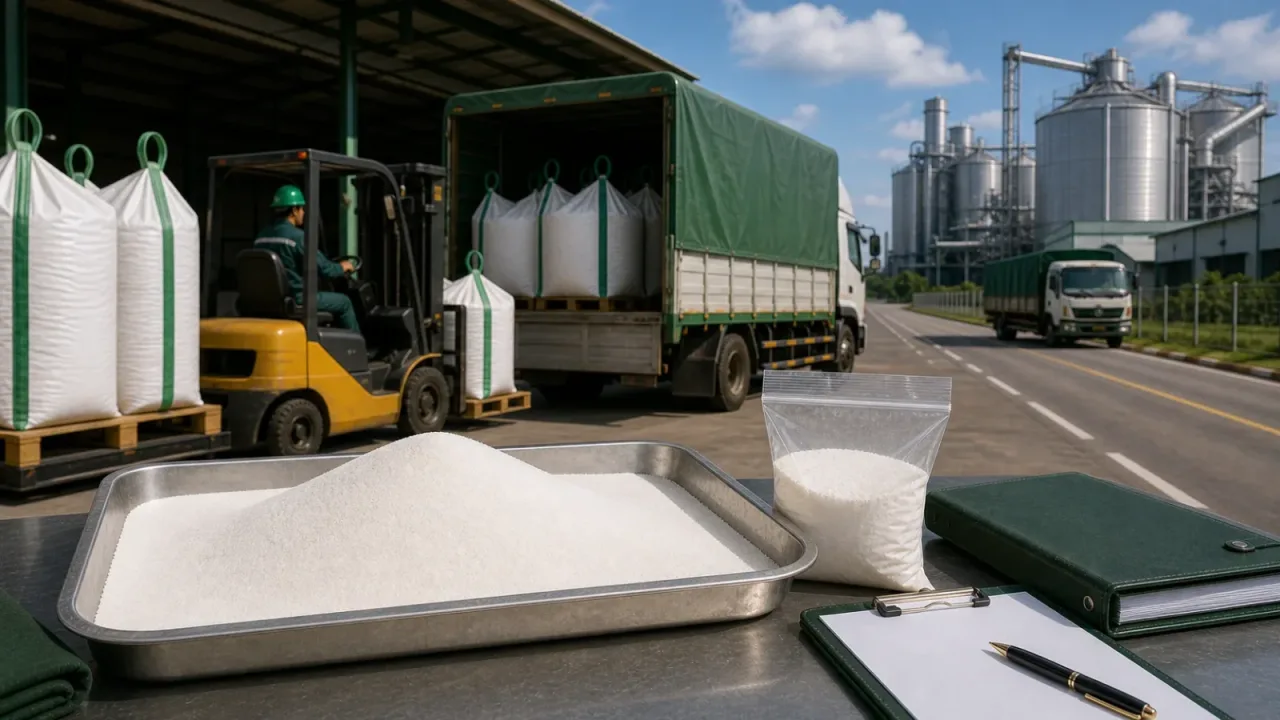
Quality control of dried cassava pulp must begin with pre-loading inspection, focusing on scientific parameters that affect storage and nutrition, as follows:
2.1 Moisture Content Control
Moisture is the most critical parameter in controlling microbial growth, especially the Aspergillus flavus group, which can produce Aflatoxin, harmful to animals. Controlling moisture within standard limits (generally not exceeding specified thresholds) helps inhibit biochemical reactions within bags or piles during transport.
2.2 Nutritional Stability
During transit, the transportation process must not cause changes in macronutrients, namely:
- Energy/Carbohydrate: Prevent starch loss from fermentation due to moisture accumulation.
- Fiber: Maintain fiber structure to prevent mechanical degradation from impact or high heat.
- Protein: Control nitrogen transformation under high humidity conditions.
2.3 Contaminant Monitoring
Before loading, quality controllers must inspect for key contaminants:
| Contaminant Type | Risk/Impact | Control Measure |
| Cyanide | Toxicity to ruminants | Verify safety levels according to Technical Spec standards |
| Foreign Matter | Damage to factory machinery | Screening and cleaning before loading |
| Metal/Plastic fragments | Food Safety | Use of magnets or sieves during the loading process |
3. Logistics & Transportation Strategy
Fleet management and route planning between Nakhont Ratchasima and Prachin Buri must focus on reducing risk factors that may affect raw material quality.
3.1 Fleet Management
Choosing the type of truck is vital for maintaining product cleanliness and quality:
- Dump Truck: Suitable for short-distance transport or in difficult-to-control weather conditions, but carries a high risk of dust and rain exposure.
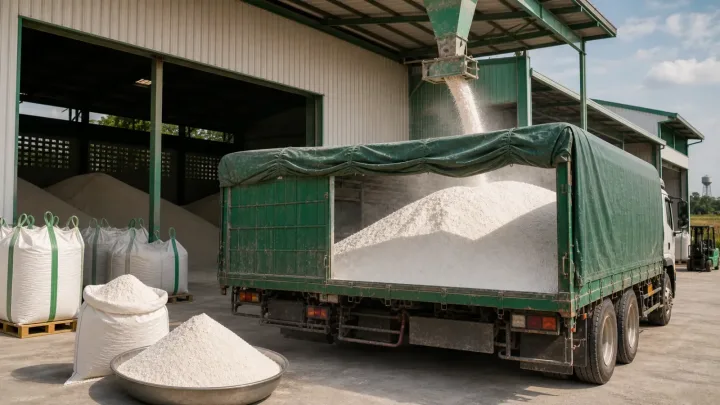
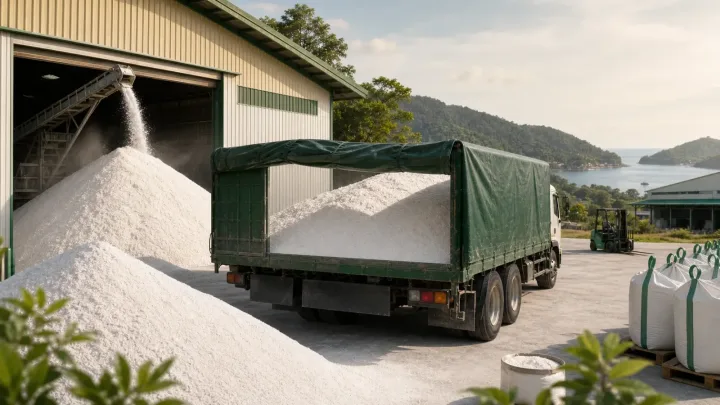
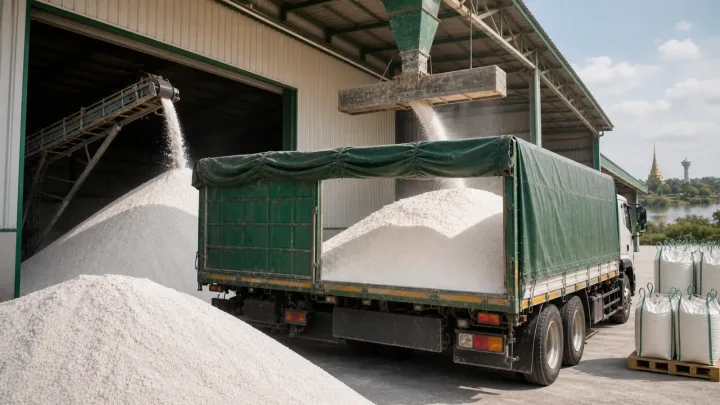
- Covered Truck: The recommended option for the Nakhon Ratchasima-Prachin Buri route to prevent moisture from rain and reduce the dispersion of fine particles (Dust Loss).
3.2 Route Optimization
Analyzing routes to reduce Transit Time is essential. Routes with high vibration risks or those passing through areas with high relative humidity (e.g., forests or mountains) must be evaluated. Reducing travel time helps mitigate the risk of heat accumulation within the material pile, which could lead to chemical degradation.
3.3 Load-Unload Process and Shrinkage Prevention
Weight loss (Shrinkage) often results from two factors: moisture evaporation and material dispersion. Utilizing adequate compaction techniques and implementing a dual-check weighing system (at origin and destination) will help reduce discrepancies in the actual quantity received.
4. In-transit Risk Management
Risks during transportation can be managed through strict inspection systems.
- Environmental Control: Using high-quality, waterproof, and vapor-barrier tarpaulins to isolate the cargo from external relative humidity.
- Cross-contamination Prevention: Transport vehicles must undergo a Cleanliness Verification process before loading to ensure no chemical residues or other raw material fragments (e.g., rice bran or molasses) contaminate the cassava pulp.
- Traceability & Tracking: Using GPS technology to track vehicle position and maintaining a Logbook that records departure time, rest stops, and weather conditions to facilitate Root Cause Analysis if substandard products are found upon arrival.
5. Economic & Cost Efficiency Analysis
B2B business decisions must be viewed through the lens of Total Cost of Ownership (TCO), not just the purchase price per ton.
5.1 Total Logistics Cost
The true cost consists of: Raw material price + Fuel + Transport labor + Vehicle depreciation + Shrinkage loss. Reducing the loss rate by even 1-2% may be more valuable than a minor negotiation on the raw material price.
5.2 Cost-Benefit Analysis
Comparing local sourcing (near the factory) with sourcing from the main production hub (Korat Source) requires considering volume reliability and consistent quality. If long-distance transport can maintain better quality, thereby reducing production waste, then selecting a distant source may offer higher economic value.
6. Conclusion & Technical Recommendations
The Critical Success Factors in the procurement and transportation of dried cassava pulp are the integration of "technical standards" and "logistical efficiency." Animal feed manufacturers should prioritize COA inspections that encompass the transportation process and select partners with clear risk management systems.
Future Recommendations: The trend of implementing IoT (Internet of Things) technology, such as real-time moisture and temperature sensors within transport containers, will become a new standard. This will allow both producers and buyers to monitor raw material quality status instantly via Cloud systems, elevating confidence in the animal feed supply chain to an international level.
Sources
- Thai Tapioca Starch Association - Tapioca Production - https://www.thaitapiocastarch.org/en/information/statistics/tapioca_production - ใช้ยืนยันภาพรวมผลผลิตมันสำปะหลังไทยและบริบท supply ของอุตสาหกรรม
- Thai Tapioca Starch Association - Export Tapioca Products - https://www.thaitapiocastarch.org/en/information/statistics/export_tapioca_products - ใช้ยืนยันสถิติส่งออกผลิตภัณฑ์มันสำปะหลัง รวมถึงหมวด Pulp
- Thai Tapioca Starch Association - Tapioca Starch Processing - https://thaitapiocastarch.org/en/information/learning_industry/tapioca_starch_processing - ใช้อธิบายกระบวนการผลิตแป้งมันและที่มาของผลพลอยได้จากโรงงานแป้งมัน
- ACFS / TAS 8803-2561 - มาตรฐานสินค้าเกษตร กากมันสำปะหลัง - https://www.opsmoac.go.th/udonthani-dwl-files-471491791858 - ใช้อ้างอิงนิยามกากมันสำปะหลังแห้ง/ผง/อัดเม็ด และข้อกำหนดพื้นฐาน เช่น ไม่พบเชื้อราหรือสิ่งแปลกปลอมที่มองเห็นได้
- GP Autoparts - Truck Law 2024 - https://www.gpautoparts.co.th/en/truck-law-2024-latest-regulations-and-penalties-that-truck-owners-need-to-know/ - ใช้ประกอบข้อจำกัดน้ำหนักรถบรรทุก เช่น 10 ล้อ 25 ตัน เพื่ออธิบาย full truck load
- Google Maps - https://www.google.com/maps - ใช้เป็นแหล่งตรวจระยะทางจริงก่อนเผยแพร่บทความจังหวัด เพราะระยะทางเปลี่ยนตามจุดเริ่มต้นและเส้นทาง
- Department of Land Transport - https://www.dlt.go.th/ - ใช้เป็นแหล่งอ้างอิงหน่วยงานกำกับดูแลการขนส่งทางบกเมื่อต้องตรวจข้อกำหนดล่าสุด

Author information
Sri Thong Admin
B2B dried cassava pulp content specialist
Affiliation
SRITHONG PRODUCTTAPIOCA COMPANY LIMITED