Shipping Dry Cassava Pulp from Korat to Maha Sarakham
By Sri Thong Admin · Published 2026-06-20 · Updated 2026-06-07
Executive Summary: Efficient Management of Cassava Residue Supply Chain
The key to producing high-quality and cost-competitive animal feed in the market is controlling raw material standards from the production source to the factory gate. Managing the cassava residue supply chain from primary production sources in Nakhon Ratchasima to animal feed factories in Mahasarakham requires the integration of "precise technical standards" and "tight logistics strategies" to reduce risks from shrinkage, mycotoxin contamination, and to maintain nutritional value. Establishing traceability systems and controlling quality at all Critical Control Points (CCPs) are the factors that will help reduce hidden costs and ensure long-term raw material security for the animal feed industry.
1. Importance of the Cassava Residue Supply Chain: The Strategic Link (Korat - Mahasarakham)
In the ruminant feed production industry, cassava residue is a vital energy source due to its appropriate starch levels and its role as a primary carbohydrate source for maintaining energy levels in feed formulas.
Nakhon Ratchasima serves as the main production hub due to its high potential for cassava processing, with numerous extraction and processing plants providing a consistent volume and quality of cassava residue. Meanwhile, Mahasarakham is a key area featuring both feed mills and large-scale livestock farms requiring large and continuous supplies of raw materials.
However, a major challenge of the transportation route between Nakhon Ratchasima and Mahasarakham is "logistics costs," which is a significant variable factor in the final raw material price. Efficiently managing distance, time, and payload is not just about transportation; it is about managing the cost structure of the entire animal feed product.
2. Technical Specification & Quality Standard of Dried Cassata Residue
B2B raw material procurement requires clear acceptance criteria to prevent batch-to-batch variation in feed formulas, focusing on controlling physical and chemical properties as follows:
| Parameters | Standard Specification | Impact of Non-conformance |
| Moisture Content | Not exceeding 12% - 14% (depending on agreement) | Mycotoxin development and spoilage |
| Starch Content | According to production source standards | Reduced energy efficiency |
| Impurities/Sand/Dirt | As low as possible | Production waste and machinery issues |
| Crude Protein | According to nutritional analysis | Loss of nutritional balance in the feed formula |
Moisture control is critical because excessive moisture acts as a biological catalyst for mold growth, affecting animal safety and chemical residues in meat.
3. Pre-loading & Preparation Management
Product quality begins at the production site. Pre-loading management is a step that raw material producers must prioritize.
- Drying Management: Using appropriate drying or kiln techniques to preserve starch structure and prevent damage from overheating.
- Packaging Strategy:
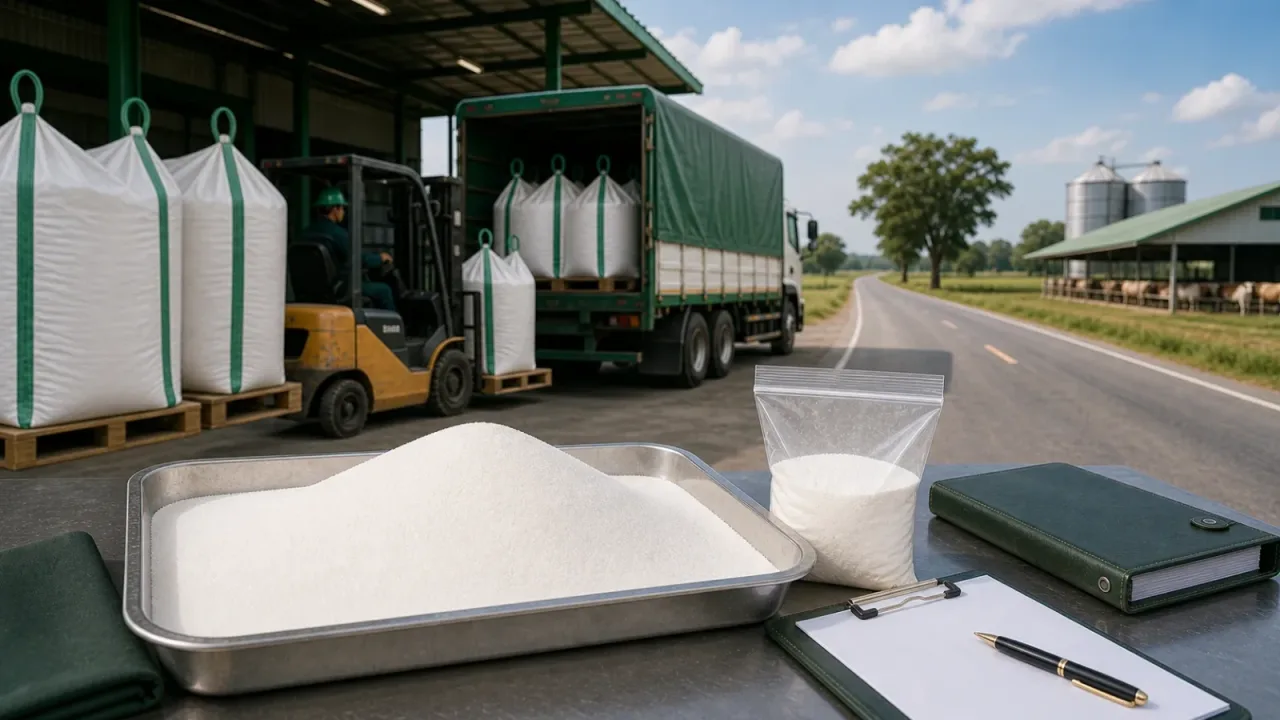
- Bagging: Suitable for products requiring high cleanliness and easy inventory counting.
- Bulk Loading: Suitable for large-scale transport to reduce packaging costs, but requires strict truck cleanliness control.
4. Logistics Strategy & Route Optimization
Transporting large quantities of raw materials from Nakhon Ratchasima to Mahasarakham requires logistics engineering planning to preserve product quality.
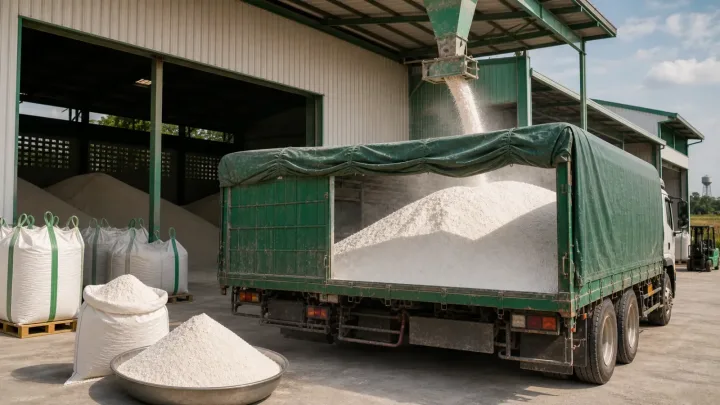
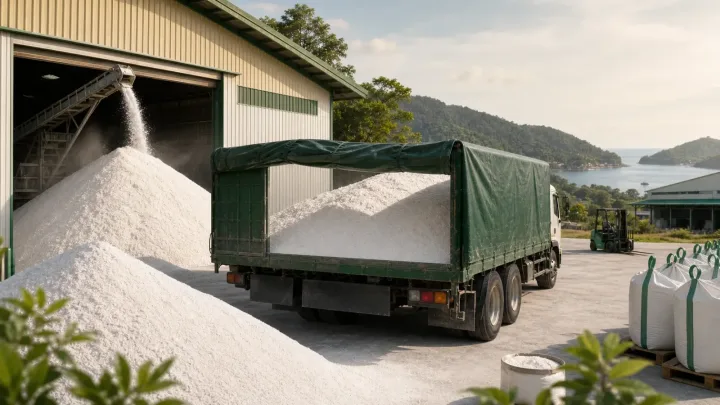
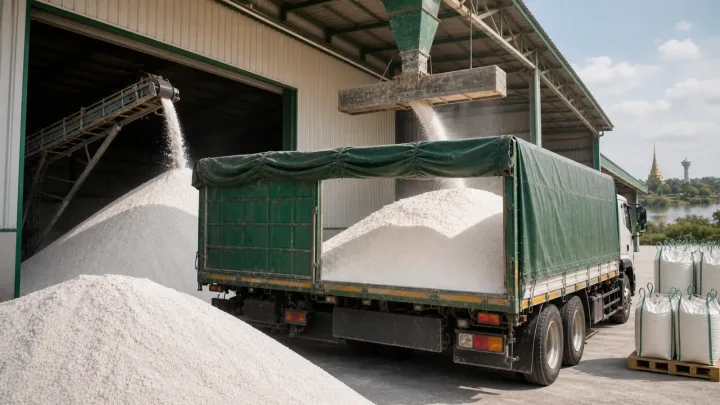
Truck Selection: Selecting closed containers/box trucks offers a significant advantage over canvas-sided trucks in terms of protecting against dust, moisture from rain, and environmental contamination. Although costs may differ, it significantly reduces the risk of product rejection.
Route & Time Management:Transit Time: Planning the fastest routes to minimize the time the product is exposed to accumulated heat within the vehicle.Route Planning: Avoiding routes with high vibration or poor road conditions to reduce physical breakdown of the raw material structure and dust dispersion.Payload Management: Controlling the payload according to legal regulations for safety and to prevent inspections that could lead to delivery delays.
5. Risk Management & Environmental Control
The unseen risks during transportation are the "silent enemies" of animal feed raw materials.
Moisture & Heat Accumulation: Under canvas covers or in closed containers, poor ventilation can cause heat from the product itself (self-heating) to accumulate, leading to high relative humidity within the packaging, resulting in mold growth and musty odors.
Shrinkage Control: Evaporation of water during transit due to high temperatures results in weight loss, which is a direct cost borne by the buyer. Controlling the internal environment of the truck is essential to maintain the product weight consistent with the weight recorded at the origin.
Contamination Prevention: Protecting against dust, roadside chemicals, or environmental contaminants (rain/mud) must be strictly enforced through the use of high-quality tarpaulins or airtight closed containers.
6. Quality Assurance & Receiving Protocol
The process at the destination factory (Mahasarakham) is the last line of defense in maintaining standards.
Sampling Protocol: Must follow international standards, such as Grid Sampling, to ensure that the tested samples are representative of the entire truckload.
Rapid Testing: Using portable moisture meters and basic impurity checks for rapid decision-making regarding product acceptance.
Non-Conformance Report (NCR): When products with excessive moisture or contamination are detected, a clear NCR process must be in place, ranging from claim notification and segregation to returns or price adjustments proportional to the damage.
Digital Traceability: Recording incoming data (Batch Number, production date, source, lab results) into a digital system to enable immediate traceability to the original production source if quality issues arise later.
7. Conclusion: Enhancing the Value Chain
Success in sourcing cassava residue does not depend on "price" alone, but on the "ability to control quality and consistency." Building a strong value chain—from selecting raw materials in Nakhon Ratchasima, intelligent logistics management, to rigorous inspection in Mahasarakham—is the key to helping feed mills reduce production risks and create a sustainable competitive advantage in the livestock industry.
Sources
- Thai Tapioca Starch Association - Tapioca Production - https://www.thaitapiocastarch.org/en/information/statistics/tapioca_production - ใช้ยืนยันภาพรวมผลผลิตมันสำปะหลังไทยและบริบท supply ของอุตสาหกรรม
- Thai Tapioca Starch Association - Export Tapioca Products - https://www.thaitapiocastarch.org/en/information/statistics/export_tapioca_products - ใช้ยืนยันสถิติส่งออกผลิตภัณฑ์มันสำปะหลัง รวมถึงหมวด Pulp
- Thai Tapioca Starch Association - Tapioca Starch Processing - https://thaitapiocastarch.org/en/information/learning_industry/tapioca_starch_processing - ใช้อธิบายกระบวนการผลิตแป้งมันและที่มาของผลพลอยได้จากโรงงานแป้งมัน
- ACFS / TAS 8803-2561 - มาตรฐานสินค้าเกษตร กากมันสำปะหลัง - https://www.opsmoac.go.th/udonthani-dwl-files-471491791858 - ใช้อ้างอิงนิยามกากมันสำปะหลังแห้ง/ผง/อัดเม็ด และข้อกำหนดพื้นฐาน เช่น ไม่พบเชื้อราหรือสิ่งแปลกปลอมที่มองเห็นได้
- GP Autoparts - Truck Law 2024 - https://www.gpautoparts.co.th/en/truck-law-2024-latest-regulations-and-penalties-that-truck-owners-need-to-know/ - ใช้ประกอบข้อจำกัดน้ำหนักรถบรรทุก เช่น 10 ล้อ 25 ตัน เพื่ออธิบาย full truck load
- Google Maps - https://www.google.com/maps - ใช้เป็นแหล่งตรวจระยะทางจริงก่อนเผยแพร่บทความจังหวัด เพราะระยะทางเปลี่ยนตามจุดเริ่มต้นและเส้นทาง
- Department of Land Transport - https://www.dlt.go.th/ - ใช้เป็นแหล่งอ้างอิงหน่วยงานกำกับดูแลการขนส่งทางบกเมื่อต้องตรวจข้อกำหนดล่าสุด

Author information
Sri Thong Admin
B2B dried cassava pulp content specialist
Affiliation
SRITHONG PRODUCTTAPIOCA COMPANY LIMITED