Shipping Dried Cassava Pulp from Korat to Lopburi
By Sri Thong Admin · Published 2026-06-19 · Updated 2026-06-07
Executive Summary: Dried Cassava Pulp Supply Chain Management Strategy (Korat - Lopburi Corridor)
Success in sourcing dried cassava pulp for the animal feed industry depends not only on the factory-gate price but, most importantly, on "the efficiency of logistics management paired with the maintenance of nutritional standards." Transporting raw materials from primary production sources in Nakhon Ratchasima to livestock hubs in Lopburi requires strict risk control, including moisture control to prevent mold, managing transportation costs per unit of weight, and maintaining cleanliness to prevent cross-contamination. This article provides an in-depth analysis of cost structures, techniques for quality preservation during transit, and approaches to establishing traceability systems, enabling animal feed factories to ensure raw material stability and controllable production costs.
1. The Role of Dried Cassava Pulp in the Animal Feed Industry
In the formulation of feed for beef and dairy cattle, Dried Cassava Pulp serves as a vital energy source, providing starch and energy levels that can replace certain grains at an appropriate cost. However, high-level usage of cassava pulp requires precise quality control to avoid any impact on animal growth rates.
The economic connection between Nakhon Ratchable (upstream raw material source) and Lopburi (downstream livestock source) is a strategically significant logistics route. The primary challenge for operators is balancing "Logistics Cost" and "Nutrient Integrity," as distance and improper transport management may lead to shrinkage or raw material degradation before reaching the factory.
2. Technical Specifications and Quality Standards
For B2B purchasing decisions, technical data is paramount. Animal feed factories must verify the following physical and chemical properties:
- Moisture Content Control: Moisture is a critical factor. If moisture levels exceed standards (typically not exceeding 14-15%, depending on the agreement), it accelerates mold growth, which can lead to the production of mycotoxins that are harmful to animals.
- Cyanide Content Verification: Since cassava pulp is a byproduct of cassava processing, controlling residual cyanide levels to remain within safe food safety standards is indispensable.
- Nutrient Analysis: It is necessary to verify TDN (Total Digestible Nutrients) and Residual Starch levels to ensure accurate feed formulation.
- Physical Cleanliness Assessment: Controlling foreign matter, such as sand, soil, or plastic fragments, is essential, as high amounts increase wear in the grinding process and increase the risk of contamination in the production line.
| Key Parameters | Control Target | Impact of Substandard Quality |
| Moisture | Low (as specified in COA) | Mold growth and spoilage |
| Cyanide | Within safety limits | Toxicity to animals and mortality rates |
| Foreign Matter | Minimal | Machinery damage and contamination |
3. Logistics & Route Optimization
The Nakhon Ratchasima - Lopburi route is a high-traffic corridor. Therefore, transportation planning must focus on reducing transit time to minimize risks from environmental changes.
Mode of Transport:
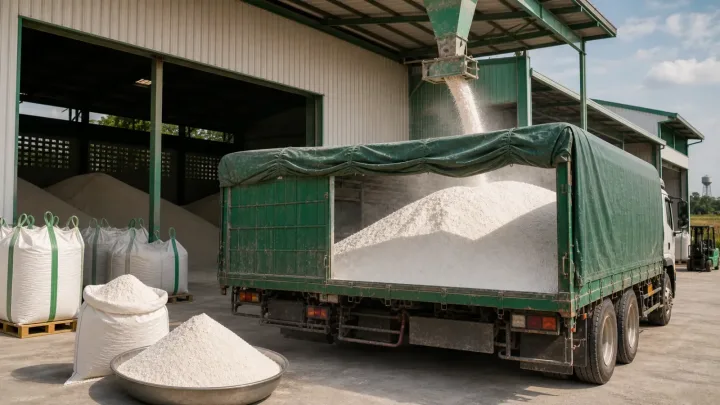
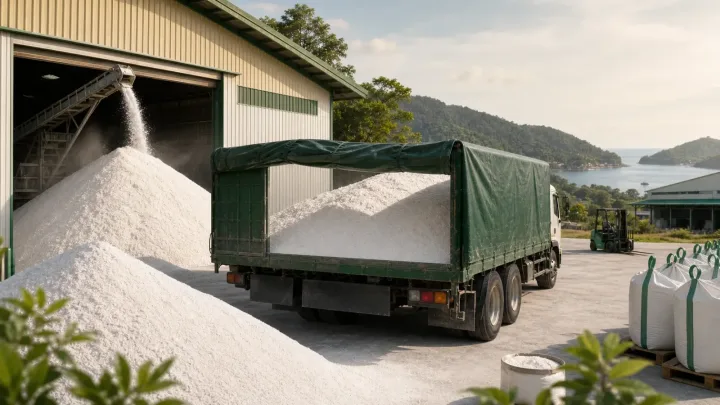
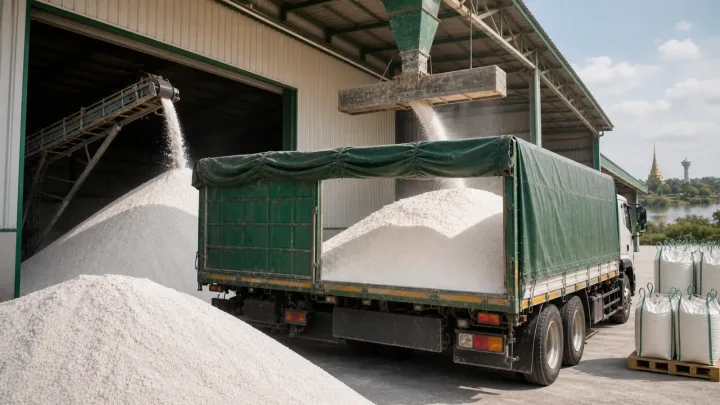
- Trailer: Suitable for high-volume transport in a single trip, helping to reduce cost per ton, but requires management of trip cycles and weight loading to comply with regulations, ensuring maximum efficiency through economies of scale.
- 10-Wheeler Truck: Offers high flexibility for accessing factories or farms with limited space, though the transport cost per ton may be higher compared to trailers.
Effective scheduling helps reduce "stockouts" or "overstocking," which impacts the production planning of animal feed factories.
4. In-transit Quality Control
Risks encountered during travel on the Nakhon Ratchasima - Lopburi route involve environmental changes, which must be systematically controlled:
1. Weather Protection: Using high-quality, secure tarpaulins to protect against moisture from rain and wind, which are the primary causes of increased moisture in cassava pulp, leading to fermentation.
2. Cross-contamination Prevention: Transport vehicles must undergo rigorous cleaning to prevent contamination from other raw materials or chemical residues from previous cargo.
3. Weight Verification: Controlling weight loss (Shrinkage Control) during transit—both from moisture evaporation and physical loss—requires weighing at both the origin and destination for transparency.
5. Economic & Cost Analysis
To evaluate the cost-effectiveness of raw material procurement, animal feed factories must consider all variable costs, which include:
| Cost Element | Impact Factors |
| Fuel Cost | Global and domestic diesel prices |
| Labor & Operation | Driver wages and vehicle depreciation |
| Sourcing Cost | Factory-gate price of starch in Nakhon Ratchasima |
A break-even analysis between the raw material price at the source (Korat) and the total landed cost at the destination (Lopburi) is vital. If energy costs fluctuate, operators must have flexible procurement strategies to maintain competitiveness.
6. Traceability & Compliance
In an era of strict food safety standards, supporting documentation for delivery is indispensable:
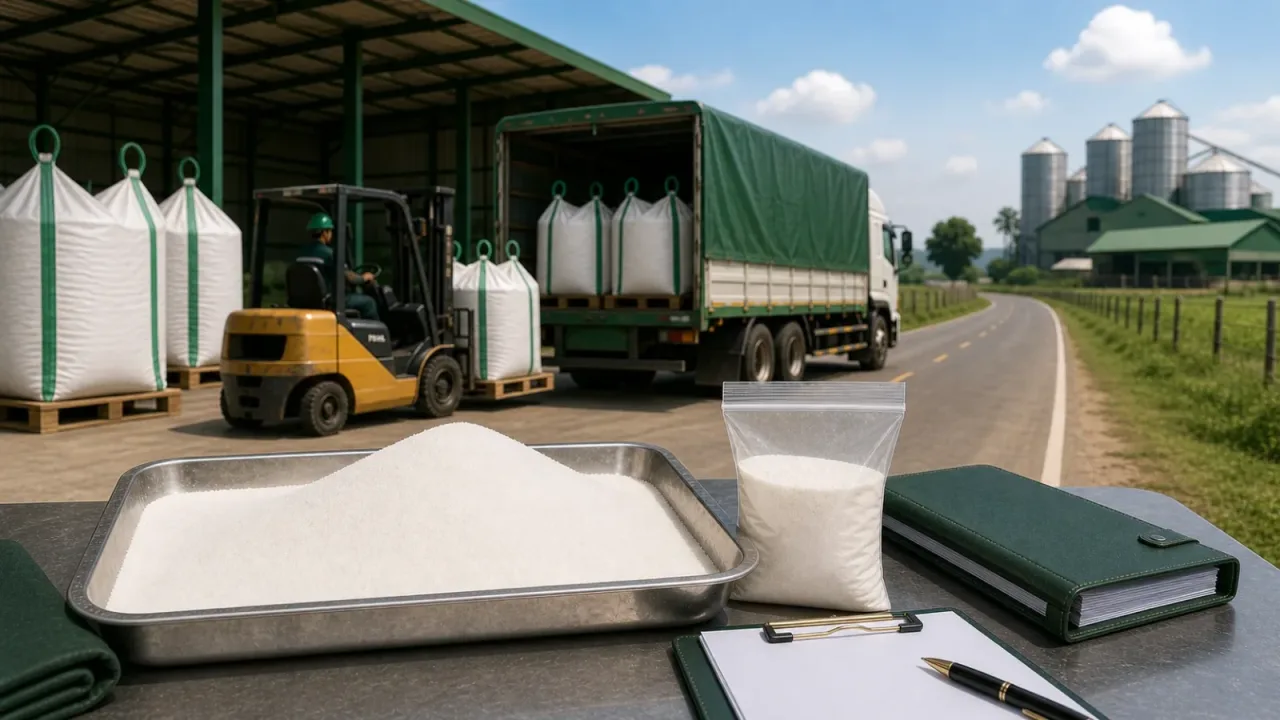
- Delivery Order (DO) & Certificate of Analysis (COA): Every shipment must be accompanied by documents confirming weight and laboratory quality analysis results, enabling factories to verify product compliance with ordered specifications.
- Digital Log System: Utilizing technology to record travel time, origin, and product status enhances transparency.
- GMP/HACCP Standards: The process of receiving and moving raw materials must adhere to Good Hygiene Management standards to prevent contamination risks to finished products.
7. Conclusion & Future Trends
The animal feed industry is entering the era of Smart Logistics. Implementing IoT (Internet of Things) technologies, such as moisture sensors within the truck bed or GPS tracking systems, will enable producers to accurately predict the quality of goods arriving at the factory.
Furthermore, prioritizing sustainability and reducing the carbon footprint in the transportation process will become the new standard used by leading global animal feed factories to evaluate partners. Therefore, selecting business partners who understand both nutritional quality and logistical efficiency is the key to sustainable success in the animal feed supply chain.
If you are looking for high-quality dried cassava pulp that meets all technical standards, complete with COA documentation and a reliable transportation system, please contact our Sales Department for product specifications, price lists, and sample requests.
Sources
- Thai Tapioca Starch Association - Tapioca Production - https://www.thaitapiocastarch.org/en/information/statistics/tapioca_production - ใช้ยืนยันภาพรวมผลผลิตมันสำปะหลังไทยและบริบท supply ของอุตสาหกรรม
- Thai Tapioca Starch Association - Export Tapioca Products - https://www.thaitapiocastarch.org/en/information/statistics/export_tapioca_products - ใช้ยืนยันสถิติส่งออกผลิตภัณฑ์มันสำปะหลัง รวมถึงหมวด Pulp
- Thai Tapioca Starch Association - Tapioca Starch Processing - https://thaitapiocastarch.org/en/information/learning_industry/tapioca_starch_processing - ใช้อธิบายกระบวนการผลิตแป้งมันและที่มาของผลพลอยได้จากโรงงานแป้งมัน
- ACFS / TAS 8803-2561 - มาตรฐานสินค้าเกษตร กากมันสำปะหลัง - https://www.opsmoac.go.th/udonthani-dwl-files-471491791858 - ใช้อ้างอิงนิยามกากมันสำปะหลังแห้ง/ผง/อัดเม็ด และข้อกำหนดพื้นฐาน เช่น ไม่พบเชื้อราหรือสิ่งแปลกปลอมที่มองเห็นได้
- GP Autoparts - Truck Law 2024 - https://www.gpautoparts.co.th/en/truck-law-2024-latest-regulations-and-penalties-that-truck-owners-need-to-know/ - ใช้ประกอบข้อจำกัดน้ำหนักรถบรรทุก เช่น 10 ล้อ 25 ตัน เพื่ออธิบาย full truck load
- Google Maps - https://www.google.com/maps - ใช้เป็นแหล่งตรวจระยะทางจริงก่อนเผยแพร่บทความจังหวัด เพราะระยะทางเปลี่ยนตามจุดเริ่มต้นและเส้นทาง
- Department of Land Transport - https://www.dlt.go.th/ - ใช้เป็นแหล่งอ้างอิงหน่วยงานกำกับดูแลการขนส่งทางบกเมื่อต้องตรวจข้อกำหนดล่าสุด

Author information
Sri Thong Admin
B2B dried cassava pulp content specialist
Affiliation
SRITHONG PRODUCTTAPIOCA COMPANY LIMITED