Shipping Dried Cassava Pulp from Korat to Khon Kaen
By Sri Thong Admin · Published 2026-06-20 · Updated 2026-06-07
Executive Summary: Maintaining Cassava Pulp Quality Standards through Efficient Logistics
The core of dried cassava pulp supply chain management along the Nakhon Ratchasima - Khon Kaen route is not merely the movement of raw materials from production sites to feed mills, but the management of "nutritional stability" and "moisture control" throughout the transportation period. This article highlights that success in raw material procurement depends on controlling microclimate risk factors within the cargo area, reducing shrinkage, and utilizing closed-transportation standards to prevent contamination. These factors are the true determinants of the landed cost and the quality of the animal feed formula during the production process.
1. Context and Importance of the Cassava Pulp Supply Chain in the Northeast
In the animal feed production industry, dried cassava pulp serves as a vital energy source and a raw material subject to high price volatility. Therefore, efficient supply chain management is a primary strategy used by feed mills to control production costs.
Nakhon Ratchasim serves as a strategic hub for collecting and processing raw materials from large-scale cultivation areas, while Khon Kaen and the upper Northeastern regions serve as significant feed production bases with continuous demand for this material. However, the distance between these two areas presents strategic challenges, particularly in maintaining the physical and chemical properties of the raw material to prevent degradation from heat and moisture during transit.
2. Technical Specifications & Quality Standards
Procuring raw materials for feed mills requires clearly defined standard criteria to ensure that incoming raw materials meet the designed feed formulation. The key indicators are as follows:
| Parameter | Standard Requirement | Impact of Deviation |
| Moisture Content | Not exceeding 14% | Fermentation, mold growth, and starch degradation |
| Starch Content | Stable according to agreed specifications | Fluctuation in Metabolizable Energy (ME) in feed formulas |
| Impurities | Minimum sand, dust, and debris | Machinery wear in factories and reduction in nutritional density |
| Color and Physical Appearance | Clean, uniform color, no sour odor | Issues with feed palatability |
Monitoring moisture levels at a limit of no more than 14% is a critical limit, as moisture levels exceeding this threshold act as an accelerator for microbiological activity within the packaging or truck body.
3. Logistics & Transportation Management
Transporting cassava pulp from Nakhon Ratchasima to Khon Kaen requires operational planning to minimize product loss at every stage:
3.1 Vehicle Selection & Loading
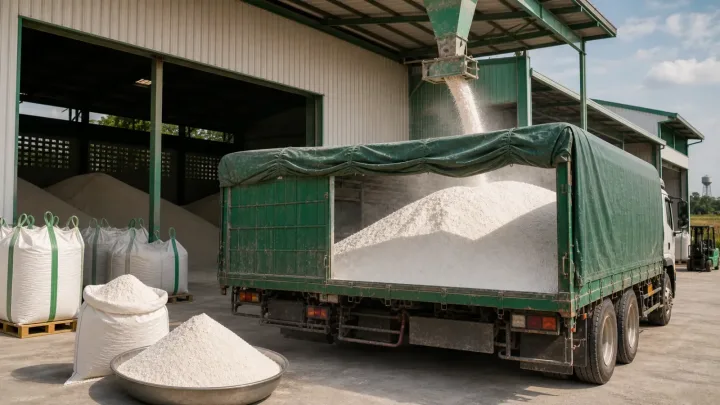
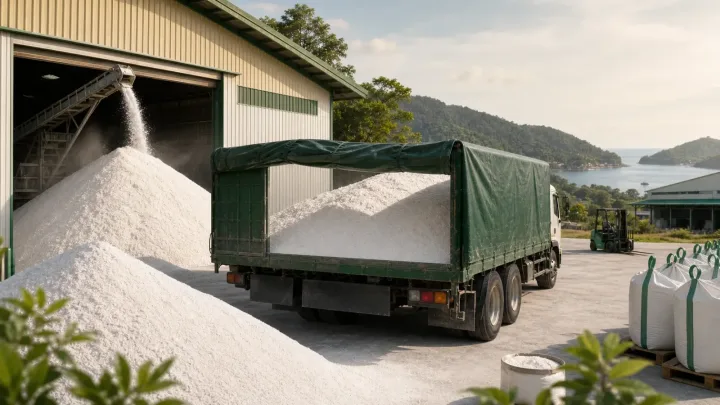
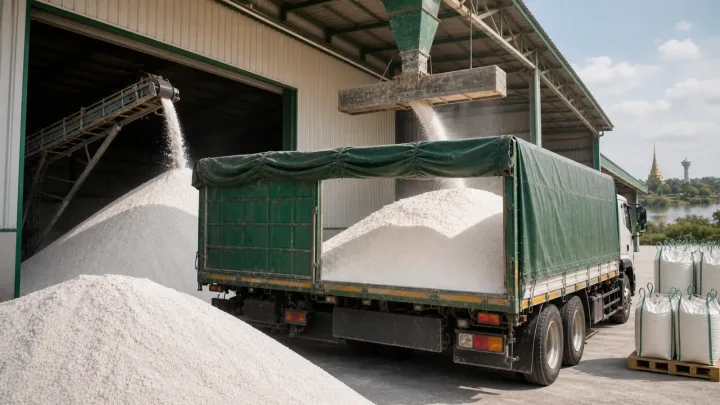
The difference between open-top trucks and closed-box/van trucks significantly impacts product quality. Using closed-box trucks is the recommended standard for producers seeking quality control, as they provide better protection against moisture from rain and reduce dust dispersion. Furthermore, loading optimization must consider weight distribution to prevent the compaction of the pulp, which could affect product density.
3.2 Route & Lead Time Management
Managing lead time is not just about speed, but about reducing the duration the product is exposed to external temperatures. Route planning that minimizes travel time helps reduce the opportunity for accumulated heat to trigger chemical processes within the raw material.
3.3 Weight Management
Verifying that the load weight complies with legal regulations and matches the Delivery Order (DO) is essential to prevent disputes between buyers and sellers and to ensure accuracy in calculating the unit cost of the raw material.
4. Risk Management during Transit
The most critical risk in the logistics process is "Microclimate Change" within the truck body.
- Condensation Control: When temperatures inside the truck fluctuate between day and night, residual moisture may condense into water droplets on the truck ceiling and drip onto the surface of the pulp, leading to moisture hotspots that exceed standards.
- Mycotoxin Prevention: Increased moisture combined with accumulated heat is the primary driver for mold growth and the production of mycotoxins, which are highly dangerous to animals and impact food safety standards.
- External Factors: Managing risks from rain and unpredictable weather on Northeastern routes requires regular inspection measures for the integrity of tarpaulins or truck seals.
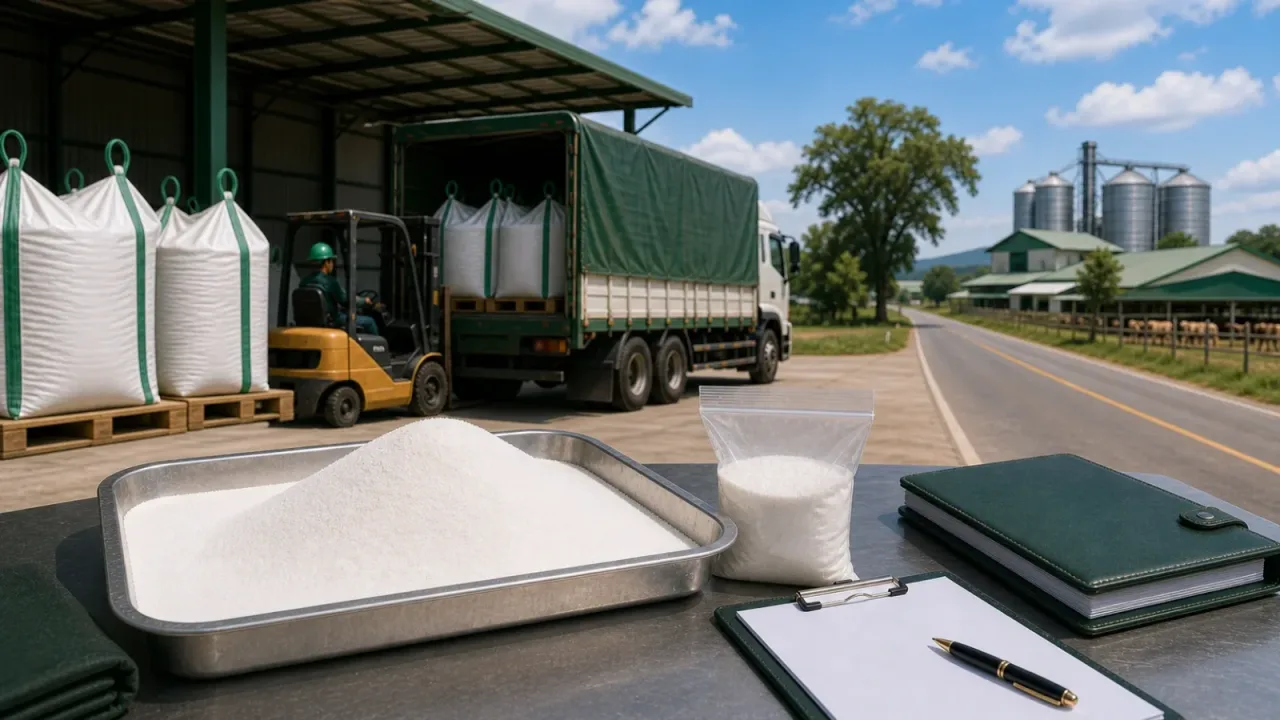
- Incoming Quality Control (IQC): Factories in Khon Kaen must have a systematic sampling process, including testing for moisture, odor, and impurities, before accepting goods into silos or warehouses.
5. Economic & Cost-Benefit Analysis
When deciding on partners or transportation services, feed mill executives should consider the "Total Cost of Ownership" rather than just the "Price per Ton":
Logistics Cost Structure: This includes fuel costs, labor, depreciation, and most importantly, Shrinkage, which results from moisture evaporation or weight loss during transportation.
Material vs. Logistics Cost Ratio: Choosing cheaper transportation that lacks quality control (such as open-top trucks vulnerable to rain) may lead to quality loss, the value of which often exceeds the savings from lower freight costs. Investing in Value-added Logistics—transportation focused on quality preservation—is therefore a long-term value creation strategy.
6. Conclusion & Strategic Recommendations
For sustainable growth in the animal feed industry, establishing a Standardization of Transit Protocol between production sources in Nakhon Ratchasima and factories in Khon Kaen is essential. Organizations should consider implementing Digital Tracking technology to monitor both product location and the internal environment of the cargo area to ensure supply chain traceability.
In the future, traceability and the maintenance of food safety standards will become critical requirements. Selecting partners with quality-centric logistics management systems is not merely about purchasing raw materials, but about preserving the stability of the entire animal feed production process.
If you are looking for standardized dried cassava pulp that meets all technical specifications, complete with COA documentation and reliable logistics management to support the needs of feed mills in the Northeastern region, please contact us immediately to request product specifications, pricing, or laboratory test samples.
Sources
- Thai Tapioca Starch Association - Tapioca Production - https://www.thaitapiocastarch.org/en/information/statistics/tapioca_production - ใช้ยืนยันภาพรวมผลผลิตมันสำปะหลังไทยและบริบท supply ของอุตสาหกรรม
- Thai Tapioca Starch Association - Export Tapioca Products - https://www.thaitapiocastarch.org/en/information/statistics/export_tapioca_products - ใช้ยืนยันสถิติส่งออกผลิตภัณฑ์มันสำปะหลัง รวมถึงหมวด Pulp
- Thai Tapioca Starch Association - Tapioca Starch Processing - https://thaitapiocastarch.org/en/information/learning_industry/tapioca_starch_processing - ใช้อธิบายกระบวนการผลิตแป้งมันและที่มาของผลพลอยได้จากโรงงานแป้งมัน
- ACFS / TAS 8803-2561 - มาตรฐานสินค้าเกษตร กากมันสำปะหลัง - https://www.opsmoac.go.th/udonthani-dwl-files-471491791858 - ใช้อ้างอิงนิยามกากมันสำปะหลังแห้ง/ผง/อัดเม็ด และข้อกำหนดพื้นฐาน เช่น ไม่พบเชื้อราหรือสิ่งแปลกปลอมที่มองเห็นได้
- GP Autoparts - Truck Law 2024 - https://www.gpautoparts.co.th/en/truck-law-2024-latest-regulations-and-penalties-that-truck-owners-need-to-know/ - ใช้ประกอบข้อจำกัดน้ำหนักรถบรรทุก เช่น 10 ล้อ 25 ตัน เพื่ออธิบาย full truck load
- Google Maps - https://www.google.com/maps - ใช้เป็นแหล่งตรวจระยะทางจริงก่อนเผยแพร่บทความจังหวัด เพราะระยะทางเปลี่ยนตามจุดเริ่มต้นและเส้นทาง
- Department of Land Transport - https://www.dlt.go.th/ - ใช้เป็นแหล่งอ้างอิงหน่วยงานกำกับดูแลการขนส่งทางบกเมื่อต้องตรวจข้อกำหนดล่าสุด

Author information
Sri Thong Admin
B2B dried cassava pulp content specialist
Affiliation
SRITHONG PRODUCTTAPIOCA COMPANY LIMITED