Shipping Dry Cassava Pulp from Korat to Chonburi
By Sri Thong Admin · Published 2026-06-22 · Updated 2026-06-07
Overview of Dried Cassava Pulp Quality Management in the Supply Chain
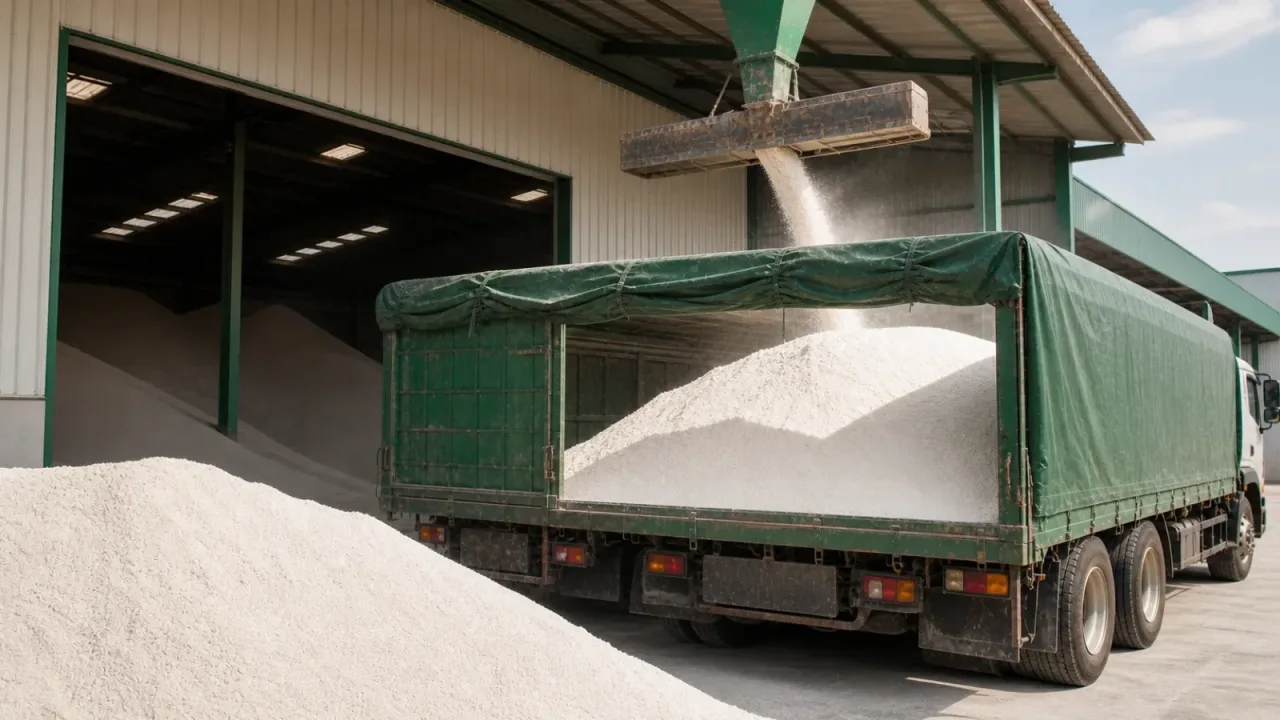
Success in producing high-quality animal feed does not depend on the feed formula alone, but on the ability to maintain "Nutritional Stability" throughout the entire transport route from the production source to the factory. Efficient supply chain management for dried cassava pulp—ranging from moisture control at the origin in Nakhon Ratchasima, logistics management to reduce weight loss and prevent contamination during transit to production bases in Chonburi, to strict raw material inspection at the destination—is the decisive factor in a feed mill's confidence regarding both cost and quality. The core priority is ensuring that nutritional values and microbiological safety standards strictly adhere to the agreed-upon COA (Certificate of Analysis).
1. Introduction: The Importance of the Dried Cassava Pulp Supply Chain in the Animal Feed Industry
In the animal feed industry, dried cassava pulp serves as a critical alternative raw material, acting as an essential energy and carbohydrate source for ruminant and poultry feed formulas. Consistent quality of dried cassava pulp allows animal nutritionists to calculate feed formulas precisely, reducing production cost volatility.
However, the greatest challenge in this industry is "geographical connectivity." Primary raw material sources are located in agricultural areas such as Nakhon Ratchableshima, while most large-scale feed mills and livestock farms are situated in economic and industrial hubs like Chonburi. The long distance between the origin and the destination poses risks of material degradation. Maintaining quality during long-distance transportation is not merely a logistics issue, but a matter of preserving nutritional value and food safety, which must be strictly controlled at every stage.
2. Technical Specifications of Dried Cassava Pulp
Establishing clear technical standards is the foundation of B2B business, enabling feed mills to utilize raw materials without impacting production processes. Key indicators include:
| Parameters | Importance | Impact if Substandard |
| Moisture Content | Controlled to prevent mold growth | Spoilage and heat generation in warehouses |
| Aflatoxin and Microorganism levels | Safety for animals and end consumers | Mycotoxin contamination in animal products |
| Particle Size | Mixing uniformity | Material segregation in mixing tanks |
| Caking | Material flowability | Clogging in feeding/conveying systems |
| Nutritional Value (Energy/Fiber) | Precision in feed formulation | Feed energy values failing to meet targets |
3. Pre-loading Quality Control - Korat Side
The quality of cassava pulp must be established at the origin factory in Nakhon Ratchasima through the following strict control processes:
- Drying Process: Controlling drying temperature and duration to reduce moisture to standard levels, which is a key factor in inhibiting microbial growth and preventing starch degradation.
-
4. Logistics & Transportation Management
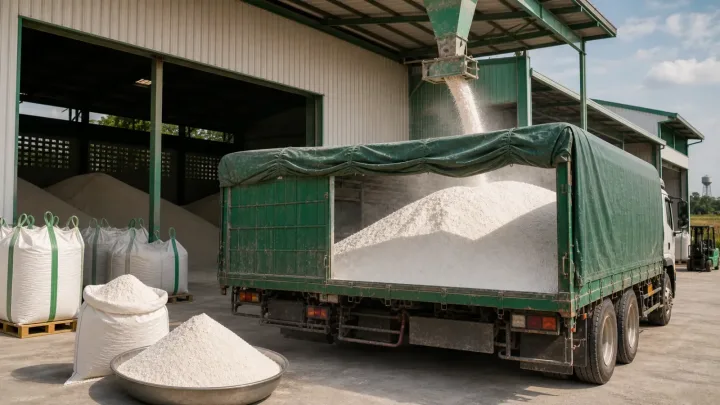
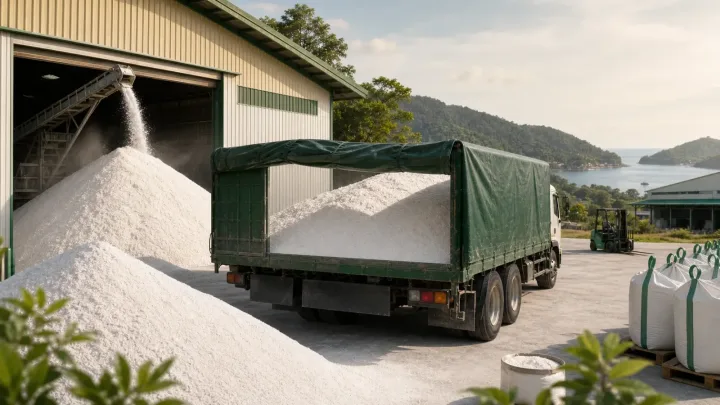
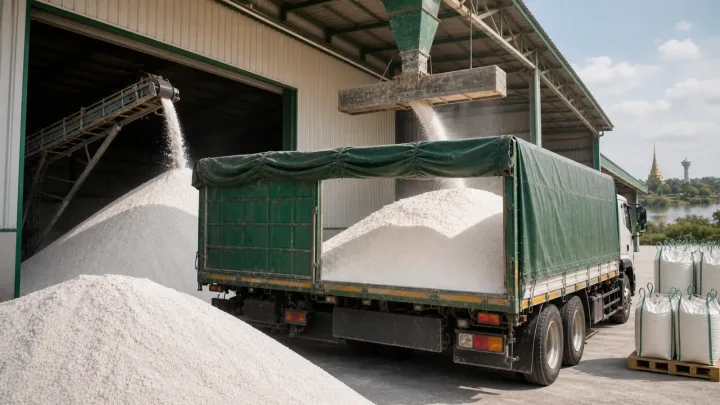
Transportation from Nakhon Ratchasima to Chonburi requires a precision logistics strategy to minimize loss during transit:
Packaging Strategy: Choosing between Big Bags/Jumbo Bags (which reduce contamination risk and are easier to manage) and Bulk Loading (which focuses on speed and lower cost), primarily depending on the customer's receiving capabilities.
Fleet Management: Trucks must undergo cleanliness inspections to prevent cross-contamination from previous loads, and containers must be checked for tightness to prevent moisture and dust ingress.
Route & Load Optimization: Implementing route planning systems to reduce lead time and weight shrinkage (from evaporation), as well as controlling load capacity in accordance with the law and maintaining balance for maximum long-distance driving safety.
5. Risk Mitigation during Transit
The most critical risks during land transportation are external factors that may affect raw material quality:
- Moisture Protection: Using high-standard tarpaulins and sealing containers tightly to prevent rainwater and atmospheric humidity from entering the product.
- Cross-contamination Prevention: Implementing truck history inspection measures to ensure no residual chemicals or other raw materials with odors or contaminants remain.
- Weight Loss Management: Controlling dust dispersion and unnecessary moisture evaporation through secure packaging, ensuring the weight arriving at the destination matches the delivery documents.
- Monitoring System: Implementing real-time tracking technology so customers can monitor transit status, with advanced systems capable of monitoring the environmental conditions inside the container.
6. Receiving & Quality Assurance - Chonburi Side
When raw materials arrive at the feed mill in Chonburi, the final verification process confirms accuracy:
Weighbridge & Documentation: Weighing via a weighbridge to compare with the origin weight and verifying the accuracy of traceability documents, such as Batch Numbers and the COA.
Re-sampling & Verification: The factory's Quality Control (QC) team will perform re-sampling to analyze moisture and contamination levels again, ensuring physical and chemical characteristics meet the contracted specifications.
Storage Management: Once passed, raw materials are moved into silos or warehouses, requiring effective space management and environmental control to preserve quality for as long as possible before production.
7. Conclusion: Creating Value through Supply Chain Efficiency
From a cost management perspective, selecting dried cassava pulp should not merely consider "Price per Ton" but should involve a Cost-Benefit Analysis that includes hidden costs from quality risks and delivery delays. Investing in a highly efficient supply chain, even if management costs are slightly higher, provides worthwhile returns in terms of material reliability—the foundation of trust in the international animal feed industry.
If you require additional technical information, wish to review the latest COA analysis, or need raw material samples for testing in your formulas, please contact our technical sales department to coordinate your requirements directly.
Sources
- Thai Tapioca Starch Association - Tapioca Production - https://www.thaitapiocastarch.org/en/information/statistics/tapioca_production - ใช้ยืนยันภาพรวมผลผลิตมันสำปะหลังไทยและบริบท supply ของอุตสาหกรรม
- Thai Tapioca Starch Association - Export Tapioca Products - https://www.thaitapiocastarch.org/en/information/statistics/export_tapioca_products - ใช้ยืนยันสถิติส่งออกผลิตภัณฑ์มันสำปะหลัง รวมถึงหมวด Pulp
- Thai Tapioca Starch Association - Tapioca Starch Processing - https://thaitapiocastarch.org/en/information/learning_industry/tapioca_starch_processing - ใช้อธิบายกระบวนการผลิตแป้งมันและที่มาของผลพลอยได้จากโรงงานแป้งมัน
- ACFS / TAS 8803-2561 - มาตรฐานสินค้าเกษตร กากมันสำปะหลัง - https://www.opsmoac.go.th/udonthani-dwl-files-471491791858 - ใช้อ้างอิงนิยามกากมันสำปะหลังแห้ง/ผง/อัดเม็ด และข้อกำหนดพื้นฐาน เช่น ไม่พบเชื้อราหรือสิ่งแปลกปลอมที่มองเห็นได้
- GP Autoparts - Truck Law 2024 - https://www.gpautoparts.co.th/en/truck-law-2024-latest-regulations-and-penalties-that-truck-owners-need-to-know/ - ใช้ประกอบข้อจำกัดน้ำหนักรถบรรทุก เช่น 10 ล้อ 25 ตัน เพื่ออธิบาย full truck load
- Google Maps - https://www.google.com/maps - ใช้เป็นแหล่งตรวจระยะทางจริงก่อนเผยแพร่บทความจังหวัด เพราะระยะทางเปลี่ยนตามจุดเริ่มต้นและเส้นทาง
- Department of Land Transport - https://www.dlt.go.th/ - ใช้เป็นแหล่งอ้างอิงหน่วยงานกำกับดูแลการขนส่งทางบกเมื่อต้องตรวจข้อกำหนดล่าสุด

Author information
Sri Thong Admin
B2B dried cassava pulp content specialist
Affiliation
SRITHONG PRODUCTTAPIOCA COMPANY LIMITED