Shipping Dry Cassava Pulp from Korat to Chaiyaphum
By Sri Thong Admin · Published 2026-06-19 · Updated 2026-06-07
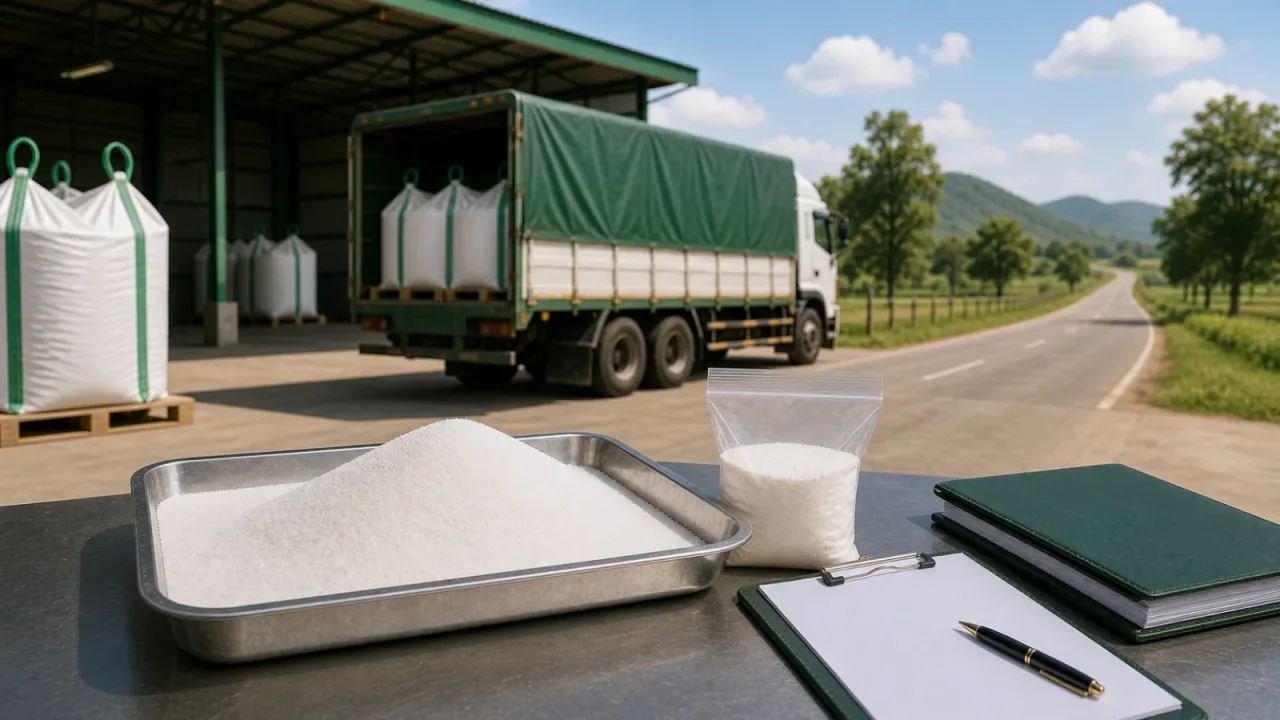
Maintaining the quality standards of Dried Cassava Pulp in the supply chain between Nakhon Ratchasima and Chaiyaphum is crucial for delivering consistent nutritional value to the animal feed industry. The core of the operation lies not merely in transportation from origin to destination, but in moisture management, controlling conditions during transit, and preventing contamination risks. This ensures that the energy source for ruminants maintains the precise Non-Fiber Carbohydrate (NFC) levels and physical characteristics required by feed mills, directly impacting production efficiency and the total cost of the supply chain.
1. Importance of the Cassava Pulp Supply Chain between Nakhon Ratchasima and Chaiyaphum
Nakhon Ratchasima serves as a major hub for the cassava starch industry in Thailand, acting as a collection center for yields and home to numerous large-scale starch extraction plants. This results in a significant by-product: "cassava pulp," which is a high-potential raw material for use as an alternative energy source in animal feed formulas.
Meanwhile, Chaiyaphum is an area experiencing continuous expansion in livestock farming and feed production plants. Consequently, the demand for high-quality, consistent raw materials is a primary economic driver between these two provinces. This economic connection relies not only on transaction volumes but on the "ability to maintain quality" throughout the transportation route to minimize losses caused by nutrient degradation before reaching the producers.
2. Technical Specifications and Quality Standards of Dried Cassava Pulp
For feed mills, establishing clear Technical Specifications is the foundation of production Quality Control (QC), with key parameters to monitor as follows:
Moisture Content Standards
Moisture is the most critical factor in storage and transportation. Dried cassava pulp must be controlled within appropriate moisture levels to inhibit the growth of mold, which is a major cause of mycotoxins in animal feed. If moisture levels exceed standards, it will lead to the degradation of the raw material during transit from Nakhable to Chaiyaphum.
Nutritional Value and Key Nutrients
Maintaining stable energy levels in the form of Non-Fiber Carbohydrate (NFC) and fiber proportions according to agreed specifications is essential for mills to verify. Additionally, control of residues or foreign substances that could affect the animals' digestion process is required.
Physical Characteristics and Cleanliness
Raw materials must possess texture uniformity and be contamination-free from foreign materials such as soil, sand, metal fragments, or plastic pieces, which could cause damage to machinery in the feed production process.
3. Pre-loading & Packaging Logistics
The process of preparing goods before loading onto trucks is a step that helps reduce quality risks at the source:
- Post-drying moisture control: After the drying process, temperature and moisture must be re-inspected to ensure the product is sufficiently stable before packaging.
- Weight verification and documentation: Preparing logistics documentation that clearly specifies the Lot number, net weight, and preliminary analysis results (COA - Certificate of Analysis) for verification at the receiving point.
Comparison of Packaging Formats for Transportation
| Packaging Format | Advantages for Feed Mills | Risks to Control |
| Bulk | Convenient for continuous production processes | Risk of moisture re-absorption from air and contamination during transit |
| Bagged | Easy to manage, clear lot separation, reduces risk of cross-contamination | Packaging costs and labor costs for handling and unloading |
4. Route Optimization & Transportation Management
Transport planning from Nakhon Ratchasima to Chaiyapum must prioritize environmental factors:
Route & Time Management: Transport scheduling must minimize the duration that the product is exposed to external weather conditions to reduce the risk of temperature fluctuations.
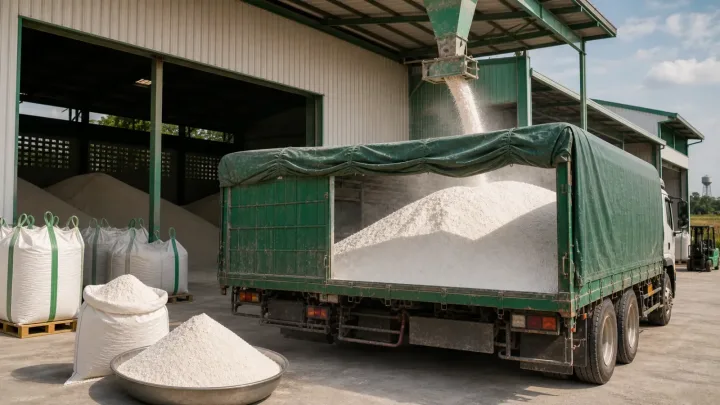
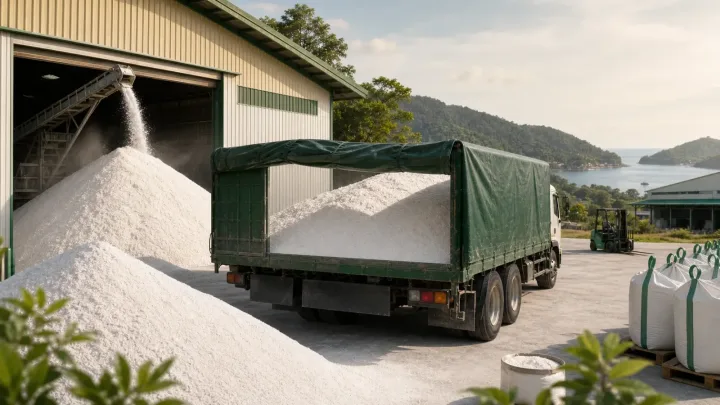
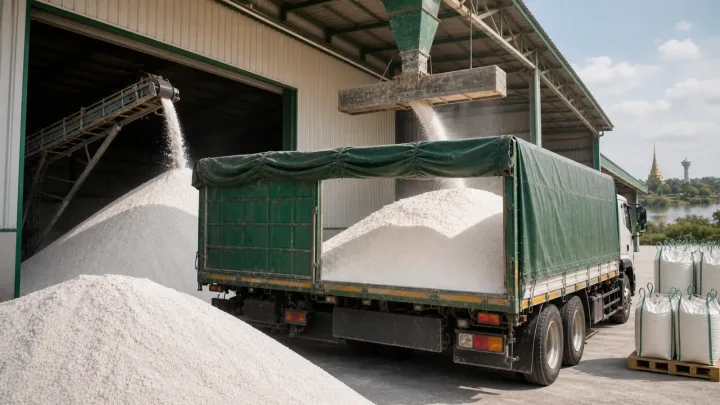
Vehicle Type: Trucks used must be tarp-covered trucks or containerized trucks to protect against rain and humidity from the weather. Ventilation control within the truck bed is also vital to prevent heat accumulation within the cassava pulp pile, which could lead to internal moisture buildup and spoilage of the raw material.
5. Quality Assurance & Risk Mitigation
The primary risks on the transport route between these two provinces are moisture and contamination:
- Re-hydration: During the rainy season, there is a high probability that raw materials will absorb moisture from the air or water droplets from the truck's tarp, causing moisture levels to exceed the specified standards.
- Cross-contamination: Trucks used for transport must undergo strict cleaning to prevent contamination from other raw materials or chemical residues left in the truck bed.
- Destination Inspection: Destination mills must have sampling procedures to verify product conformance. If non-conformance is found, there must be a systematic management process for returns or claims to maintain the standards of the animal feed formula.
6. Conclusion & Future Outlook
Managing the cassava pulp supply chain between Nakhon Ratchasima and Chaiyaphum is not merely about transporting goods, but about managing "nutritional quality." Efficient cost-efficiency is not achieved by choosing the lowest price, but by reducing the waste caused by sub-standard products during transit.
In the future, Traceability technology will play a significant role in monitoring product quality, from the moment it leaves the starch factory to its arrival at the feed mill. This will help build confidence among B2B customers that the received raw materials maintain consistent standards, truly contributing to the sustainability of the animal feed supply chain in the lower Northeastern region.
Sources
- Thai Tapioca Starch Association - Tapioca Production - https://www.thaitapiocastarch.org/en/information/statistics/tapioca_production - ใช้ยืนยันภาพรวมผลผลิตมันสำปะหลังไทยและบริบท supply ของอุตสาหกรรม
- Thai Tapioca Starch Association - Export Tapioca Products - https://www.thaitapiocastarch.org/en/information/statistics/export_tapioca_products - ใช้ยืนยันสถิติส่งออกผลิตภัณฑ์มันสำปะหลัง รวมถึงหมวด Pulp
- Thai Tapioca Starch Association - Tapioca Starch Processing - https://thaitapiocastarch.org/en/information/learning_industry/tapioca_starch_processing - ใช้อธิบายกระบวนการผลิตแป้งมันและที่มาของผลพลอยได้จากโรงงานแป้งมัน
- ACFS / TAS 8803-2561 - มาตรฐานสินค้าเกษตร กากมันสำปะหลัง - https://www.opsmoac.go.th/udonthani-dwl-files-471491791858 - ใช้อ้างอิงนิยามกากมันสำปะหลังแห้ง/ผง/อัดเม็ด และข้อกำหนดพื้นฐาน เช่น ไม่พบเชื้อราหรือสิ่งแปลกปลอมที่มองเห็นได้
- GP Autoparts - Truck Law 2024 - https://www.gpautoparts.co.th/en/truck-law-2024-latest-regulations-and-penalties-that-truck-owners-need-to-know/ - ใช้ประกอบข้อจำกัดน้ำหนักรถบรรทุก เช่น 10 ล้อ 25 ตัน เพื่ออธิบาย full truck load
- Google Maps - https://www.google.com/maps - ใช้เป็นแหล่งตรวจระยะทางจริงก่อนเผยแพร่บทความจังหวัด เพราะระยะทางเปลี่ยนตามจุดเริ่มต้นและเส้นทาง
- Department of Land Transport - https://www.dlt.go.th/ - ใช้เป็นแหล่งอ้างอิงหน่วยงานกำกับดูแลการขนส่งทางบกเมื่อต้องตรวจข้อกำหนดล่าสุด

Author information
Sri Thong Admin
B2B dried cassava pulp content specialist
Affiliation
SRITHONG PRODUCTTAPIOCA COMPANY LIMITED