Shipping Dried Cassava Pulp from Korat to Chachoengsao
By Sri Thong Admin · Published 2026-06-21 · Updated 2026-06-07
Executive Summary: Maintaining Dried Cassava Pulp Standards through Proactive Logistics Processes
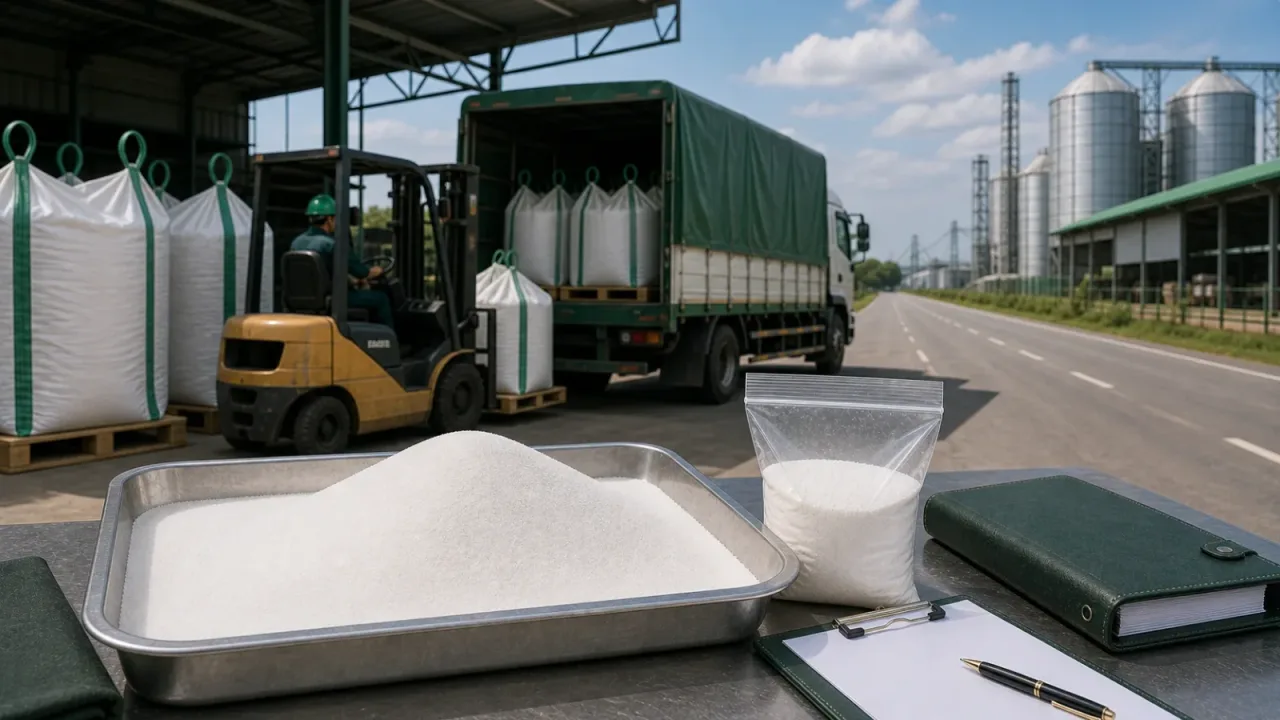
The success in managing the supply chain of dried cassava pulp—from major production sources in Nakhon Ratchasima to animal feed factories in the Chachoengsao area—does not depend solely on production standards at the source. The core lies in controlling risk factors during long-distance transportation, managing moisture, preventing contamination, and maintaining consistent bulk density of the raw material. Efficient logistics management and Proactive Quality Control are critical indicators that help reduce hidden costs from raw material degradation and ensure Nutritional Stability for industrial-scale animal feed factories.
1. Introduction: The Importance of the Cassata Pulp Supply Chain in the Animal Feed Industry
In the animal feed production industry, particularly the Beef Cattle Feed segment, dried cassava pulp serves as a strategic raw material and a vital energy source with an optimized cost per unit of energy. However, since Thailand's primary raw material sources are concentrated in the Northeastern region, specifically Nakhon Ratchasima, while many animal feed processing plants and large-scale farms are located in the Eastern region, such as Chachoengsao, a "distance gap" is created, leading to significant logistics challenges.
Transporting processed agricultural raw materials over such long distances is not merely the movement of goods from one point to another; it is the management of Quality Risk Management. If the transportation process lacks proper control, the raw materials may undergo chemical degradation or contamination from external factors, which directly impacts Feed Formulation and the total production costs of the factory.
2. Technical Specifications and Chemical Properties of Dried Cassava Pulp
For B2B customers, accurate technical information is paramount. Procurement at the factory level requires strict monitoring of key parameters to comply with animal feed production standards, as detailed in the following table:
| Technical Parameter | Qualitative Importance | Impact of Uncontrolled Factors |
|---|---|---|
| Moisture Content | Controlled to inhibit microbial growth | Mold growth and fermentation |
| Starch Content | Indicator of Digestible Energy | Loss of nutritional value and energy efficiency |
| Crude Fiber | Control of dietary structure proportions | Affects animal digestibility |
| Contaminants (Aflatoxin/Impurities) | Food Safety | Toxic residues in animal products and loss of trust |
| Bulk Density | Accuracy in calculating cargo volume | Errors in loading capacity calculations affecting transport costs |
Maintaining constant moisture levels throughout the transportation period from Korat to Chachoengsao is the most significant challenge, as weather conditions during the journey can lead to Moisture Absorption, which can subsequently trigger mold growth and the production of Aflatoxin.
3. Logistics Management and Route Optimization
Transportation planning on the Nakhon Ratchasima - Chachoengsao route requires detailed analysis to preserve both the "time" and "quality" of the raw materials, considering the following factors:
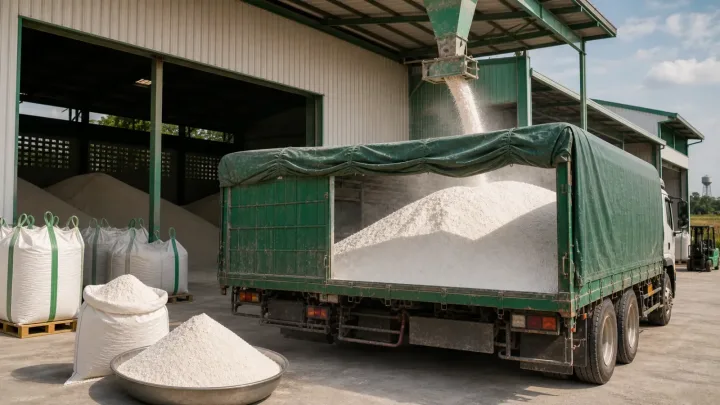
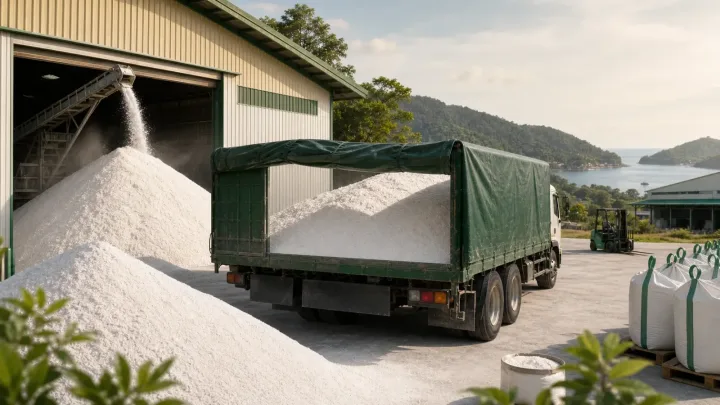
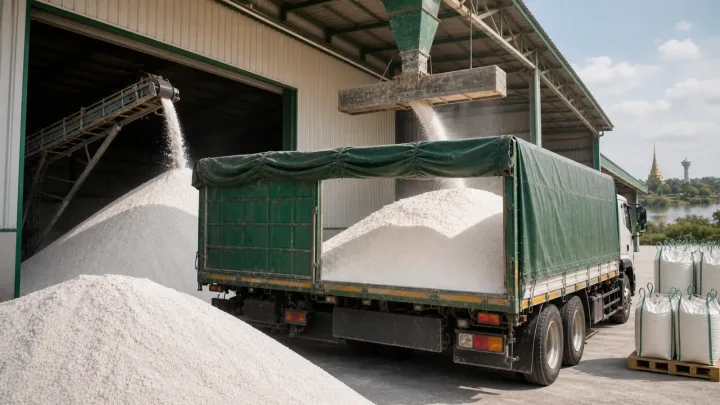
- Trucking Selection: Utilizing curtain-side trailers or fully tarped trucks is more critical than using standard open-bed trucks to prevent product loss due to wind and to protect against moisture from rain.
- Route and Risk Analysis: Planning routes to avoid prolonged traffic congestion to minimize the time the raw material is exposed to accumulated heat within the cargo area.
- Payload Management: Calculating weight in compliance with regulations and Bulk Density parameters to ensure maximum efficiency (Cost per Ton Optimization) without risking legal delays that could disrupt the delivery process.
- Hidden Cost Management: Controlling fuel and toll costs through planning the shortest and safest routes to maintain the stability of the raw material's quoted price.
4. Quality Preservation and Risk Mitigation during Transportation
To prevent the quality of the product at the destination from being inferior to the product leaving the origin factory, Risk Mitigation measures must cover all dimensions as follows:
1. Moisture and Weather Protection: Verifying Tarp Integrity before departure and monitoring weather conditions to strictly plan transportation during the rainy season.
2. Heat Build-up Management: In cases of transportation during the summer, ventilation in the cargo area is essential to prevent the internal temperature of the cassava pulp pile from rising too high, which could trigger fermentation within the truck.
3. Product Loss Prevention: Sealing vulnerable points of the transport vehicle to prevent wind from blowing cassava pulp particles out of the truck, thereby ensuring the weight remains consistent with the shipping documents.
4. Traceability System: Utilizing Logistics Data Logging or transport records (e.g., departure time, arrival time, approximate temperature, tarp status) to enable traceability if any abnormalities are detected upon arrival at the destination factory.
5. Economic Analysis and Industry Trends
From the perspective of an animal feed factory, considering only the "price per ton" may not reflect the true Total Cost of Ownership, as inefficient logistics management can lead to other hidden costs, such as:
- Cost per Ton Analysis: Analyzing costs that include shrinkage during transit and quality risks.
- Impact of External Factors: Fluctuations in diesel prices and production seasons, which affect raw material stock planning.
- Smart Logistics Trend: The trend of using GPS and real-time moisture/temperature sensors in containers or trucks, allowing destination factories to prepare for product reception with high precision.
- Sustainability: Building a sustainable Supplier-Buyer Partnership by focusing on the sharing of quality data and clear transportation plans.
6. Conclusion
Maintaining the quality standards of dried cassava pulp from Nakhon Ratchasima to Chachoengsao requires integrated management, ranging from controlling chemical standards at the source to implementing proactive logistics strategies to mitigate risks during transit. The key to success lies not just in speed of delivery, but in the ability to maintain the "consistency" of the raw material properties, enabling animal feed factories to utilize them in their production processes with maximum confidence and efficiency.
Sources
- Thai Tapioca Starch Association - Tapioca Production - https://www.thaitapiocastarch.org/en/information/statistics/tapioca_production - ใช้ยืนยันภาพรวมผลผลิตมันสำปะหลังไทยและบริบท supply ของอุตสาหกรรม
- Thai Tapioca Starch Association - Export Tapioca Products - https://www.thaitapiocastarch.org/en/information/statistics/export_tapioca_products - ใช้ยืนยันสถิติส่งออกผลิตภัณฑ์มันสำปะหลัง รวมถึงหมวด Pulp
- Thai Tapioca Starch Association - Tapioca Starch Processing - https://thaitapiocastarch.org/en/information/learning_industry/tapioca_starch_processing - ใช้อธิบายกระบวนการผลิตแป้งมันและที่มาของผลพลอยได้จากโรงงานแป้งมัน
- ACFS / TAS 8803-2561 - มาตรฐานสินค้าเกษตร กากมันสำปะหลัง - https://www.opsmoac.go.th/udonthani-dwl-files-471491791858 - ใช้อ้างอิงนิยามกากมันสำปะหลังแห้ง/ผง/อัดเม็ด และข้อกำหนดพื้นฐาน เช่น ไม่พบเชื้อราหรือสิ่งแปลกปลอมที่มองเห็นได้
- GP Autoparts - Truck Law 2024 - https://www.gpautoparts.co.th/en/truck-law-2024-latest-regulations-and-penalties-that-truck-owners-need-to-know/ - ใช้ประกอบข้อจำกัดน้ำหนักรถบรรทุก เช่น 10 ล้อ 25 ตัน เพื่ออธิบาย full truck load
- Google Maps - https://www.google.com/maps - ใช้เป็นแหล่งตรวจระยะทางจริงก่อนเผยแพร่บทความจังหวัด เพราะระยะทางเปลี่ยนตามจุดเริ่มต้นและเส้นทาง
- Department of Land Transport - https://www.dlt.go.th/ - ใช้เป็นแหล่งอ้างอิงหน่วยงานกำกับดูแลการขนส่งทางบกเมื่อต้องตรวจข้อกำหนดล่าสุด

Author information
Sri Thong Admin
B2B dried cassava pulp content specialist
Affiliation
SRITHONG PRODUCTTAPIOCA COMPANY LIMITED