Shipping Dried Cassava Pulp from Korat to Buriram
By Sri Thong Admin · Published 2026-06-19 · Updated 2026-06-07
Executive Summary: The Essence of Maintaining Dried Cassava Pulp Quality in the Supply Chain
Success in sourcing Dried Cassava Pulp for the animal feed industry depends not only on an appropriate price per ton but also on the ability to maintain "nutritional value" and "biosequality" throughout the transportation route from production sites in Nakhon Ratchasima to animal feed factories in Buriram. Effective logistics management requires strict quality control, ranging from the pre-loading stage and moisture prevention during transit to traceability systems, in order to reduce the risk of mold and contamination, which directly impacts production costs and the safety standards of the final animal feed products.
1. Context and Importance of the Cassava Pulp Supply Chain in the Animal Feed Industry
In animal feed formulations, dried cassava pulp serves as a vital energy source, particularly as a source of carbohydrates and starch that increases energy density in ruminant and poultry feed. Therefore, the consistency of raw material standards is a critical factor that feed mills must control.
Based on geographical analysis, Nakhon Ratchasima serves as the hub of the cassava starch industry with high production capacity, making it a significant upstream source. Meanwhile, Buriram province is an area with high demand for raw materials to supply feed mills and large-scale farms. Establishing a logistics route connecting these two areas presents economic challenges, as logistics costs often constitute a major proportion of the total raw material cost. Consequently, management strategies that can reduce shrinkage during transit and maintain stable moisture levels are essential for maintaining competitiveness.
2. Pre-Loading Quality Control Standards
The quality control process at the loading point is the most important first line of defense to prevent raw material issues from entering the customer's production system.
Physical and Chemical Property Inspection
- Moisture Content Control: This is the most critical variable. If moisture levels exceed the specified standard (generally should be low enough to inhibit microbial growth), it significantly increases the risk of mold development, particularly Asertpergillus flavus, which can produce Aflatoxin, a substance hazardous to animals.
- Contaminants Inspection: Detecting sand, soil, and other non-cassava materials to prevent physical contamination that could affect the grinding and pelleting processes.
- Preliminary Nutrient Assessment: Checking starch and fiber levels to ensure the product meets the specifications stated in the COA (Certificate of Analysis).
Packaging and Transportation Standards
The choice of transportation method affects product degradation:
| Transportation Method | Advantages | Precautions |
| Sacks | Easy to control cleanliness, clear portion control | High labor costs, risk of packaging tears, and degradation from atmospheric moisture |
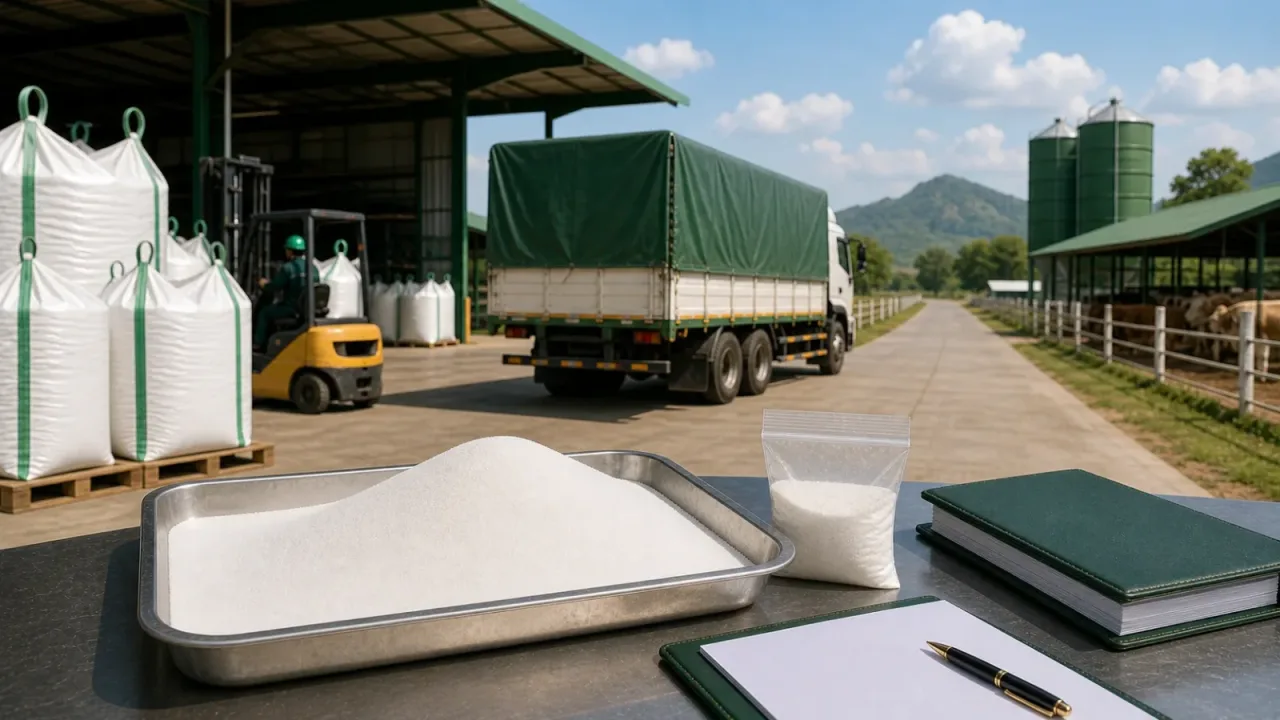
| Bulk | Reduced unit cost, suitable for large volumes | Risk of contamination during transit and moisture accumulation within the truck |
3. Logistics & Transportation Strategy
Moving raw materials from Nakhon Ratchasima to Buriram requires proactive planning to reduce lead time and maintain product quality.
Selection of Appropriate Vehicles
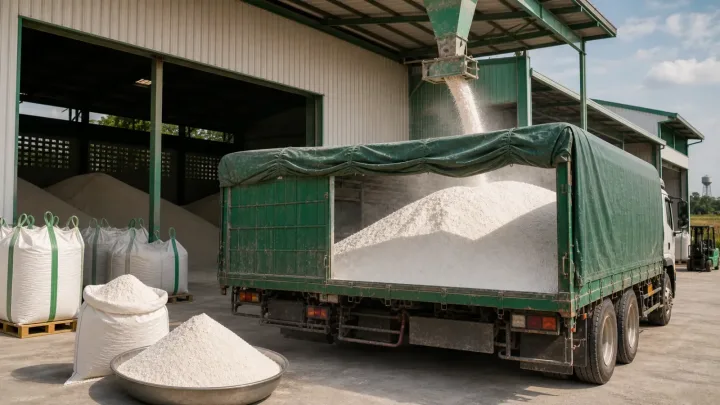
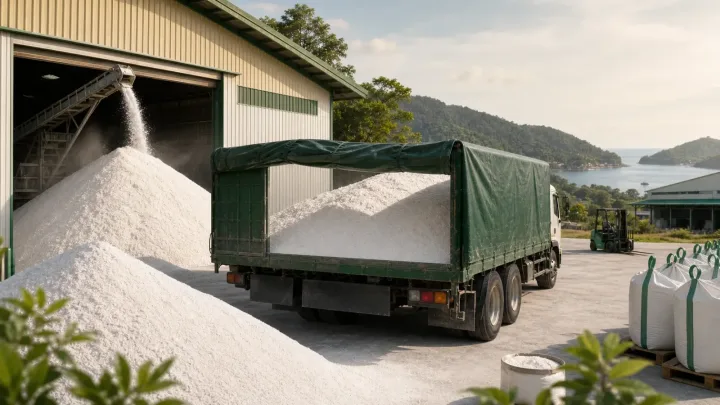
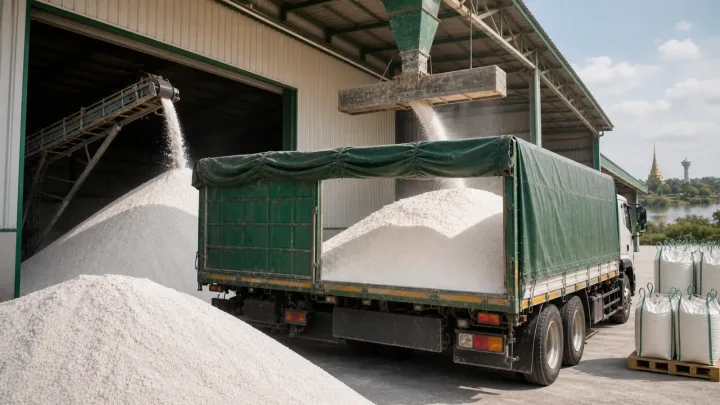
The use of flatbed trucks with sideboards is a popular standard as they provide a certain level of ventilation. However, the critical factor is the use of a tarpaulin cover, which must be thick and in perfect condition to prevent rainwater and external humidity from directly contacting the product. Additionally, using bulk trucks for large-scale transport requires regular inspection of the truck bed's cleanliness.
Route & Time Optimization
Analyzing the Nakhon Ratchasima - Buriram route must consider road conditions and safe rest stops to achieve lead time reduction. Reducing time on the road means reducing the opportunity for the product to be exposed to accumulated heat or moisture for prolonged periods.
Load Management
Accuracy in weighing at both the origin and destination is essential to prevent shrinkage issues, which may result from moisture evaporation or physical loss during handling.
4. In-Transit Risk Management
Risks occurring during transit can significantly affect product quality if there are no supporting measures.
Environmental Control
A common problem is "condensation" occurring under the truck's tarpaulin. As temperatures within the truck bed fluctuate between day and night, accumulated moisture may turn into water droplets falling onto the surface of the cassava pulp, which is the beginning of spoilage.
Cross-contamination Prevention
Truck cleanliness standards must be strictly inspected. Vehicles that have previously carried other agricultural products or chemicals must undergo a cleaning process and an inspection for residual traces before being loaded with cassava pulp.
Handling Force Majeure
In the event of delays due to accidents or weather (heavy rain), the logistics team must have a protocol to immediately inspect the product condition during stops to assess whether the product still meets the required standards.
5. Post-Delivery & Quality Assurance
The final step is verifying the accuracy of the product at the destination factory (Receivability Protocol).
- Sampling Process: Sampling must follow statistical standards to ensure that a representative portion of the entire truckload is evaluated.
- Re-testing: Using on-site moisture meters to compare against the values specified in the origin COA. If moisture levels are found to be higher than the agreed threshold, a record of product rejection or grade downgrading must be made.
- Loss Assessment: Calculating the weight difference between the origin and destination to evaluate the efficiency of the transportation process.
- Traceability System: Recording data regarding origin, production date, and transport history into the system for transparency and to support Food Safety standards (such as GMP, HACCP).
6. Conclusion & Future Outlook
The core of dried cassava pulp supply chain management is maintaining the balance between "logistics cost control" and "raw material quality preservation." Reducing costs alone while neglecting moisture and contamination control will lead to immense damage to the animal feed production process.
In the future, technology will play a vital role in elevating these standards, such as installing IoT sensors to monitor moisture and temperature inside trucks in real-time, as well as using GPS tracking to monitor routes and assess driving behaviors that may cause product impact. This will enable animal feed producers to be confident that the received raw materials are of consistent quality and fully traceable at every step.
Sources
- Thai Tapioca Starch Association - Tapioca Production - https://www.thaitapiocastarch.org/en/information/statistics/tapioca_production - ใช้ยืนยันภาพรวมผลผลิตมันสำปะหลังไทยและบริบท supply ของอุตสาหกรรม
- Thai Tapioca Starch Association - Export Tapioca Products - https://www.thaitapiocastarch.org/en/information/statistics/export_tapioca_products - ใช้ยืนยันสถิติส่งออกผลิตภัณฑ์มันสำปะหลัง รวมถึงหมวด Pulp
- Thai Tapioca Starch Association - Tapioca Starch Processing - https://thaitapiocastarch.org/en/information/learning_industry/tapioca_starch_processing - ใช้อธิบายกระบวนการผลิตแป้งมันและที่มาของผลพลอยได้จากโรงงานแป้งมัน
- ACFS / TAS 8803-2561 - มาตรฐานสินค้าเกษตร กากมันสำปะหลัง - https://www.opsmoac.go.th/udonthani-dwl-files-471491791858 - ใช้อ้างอิงนิยามกากมันสำปะหลังแห้ง/ผง/อัดเม็ด และข้อกำหนดพื้นฐาน เช่น ไม่พบเชื้อราหรือสิ่งแปลกปลอมที่มองเห็นได้
- GP Autoparts - Truck Law 2024 - https://www.gpautoparts.co.th/en/truck-law-2024-latest-regulations-and-penalties-that-truck-owners-need-to-know/ - ใช้ประกอบข้อจำกัดน้ำหนักรถบรรทุก เช่น 10 ล้อ 25 ตัน เพื่ออธิบาย full truck load
- Google Maps - https://www.google.com/maps - ใช้เป็นแหล่งตรวจระยะทางจริงก่อนเผยแพร่บทความจังหวัด เพราะระยะทางเปลี่ยนตามจุดเริ่มต้นและเส้นทาง
- Department of Land Transport - https://www.dlt.go.th/ - ใช้เป็นแหล่งอ้างอิงหน่วยงานกำกับดูแลการขนส่งทางบกเมื่อต้องตรวจข้อกำหนดล่าสุด

Author information
Sri Thong Admin
B2B dried cassava pulp content specialist
Affiliation
SRITHONG PRODUCTTAPIOCA COMPANY LIMITED