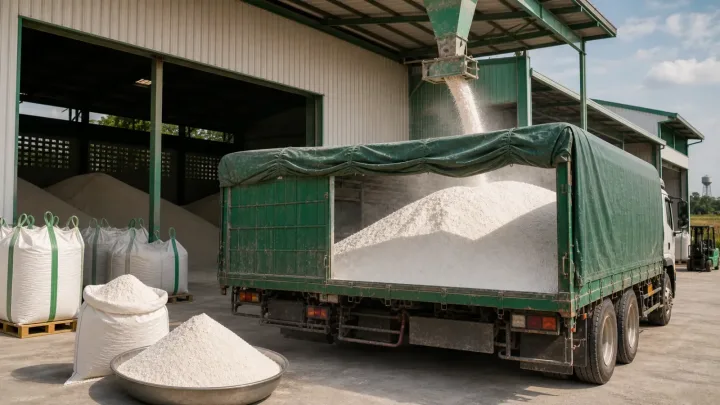
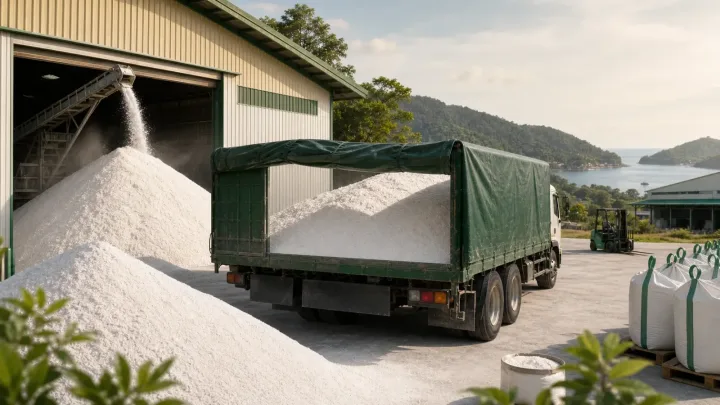
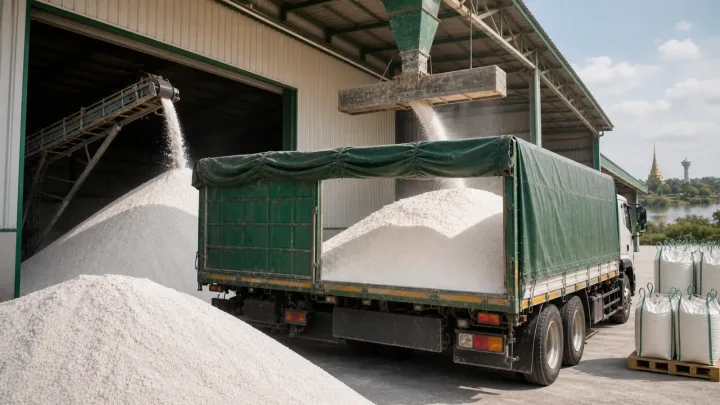
Shipping Dried Cassava Pulp from Korat to Bangkok and the Greater Bangkok Area
By Sri Thong Admin · Published 2026-06-21 · Updated 2026-06-07
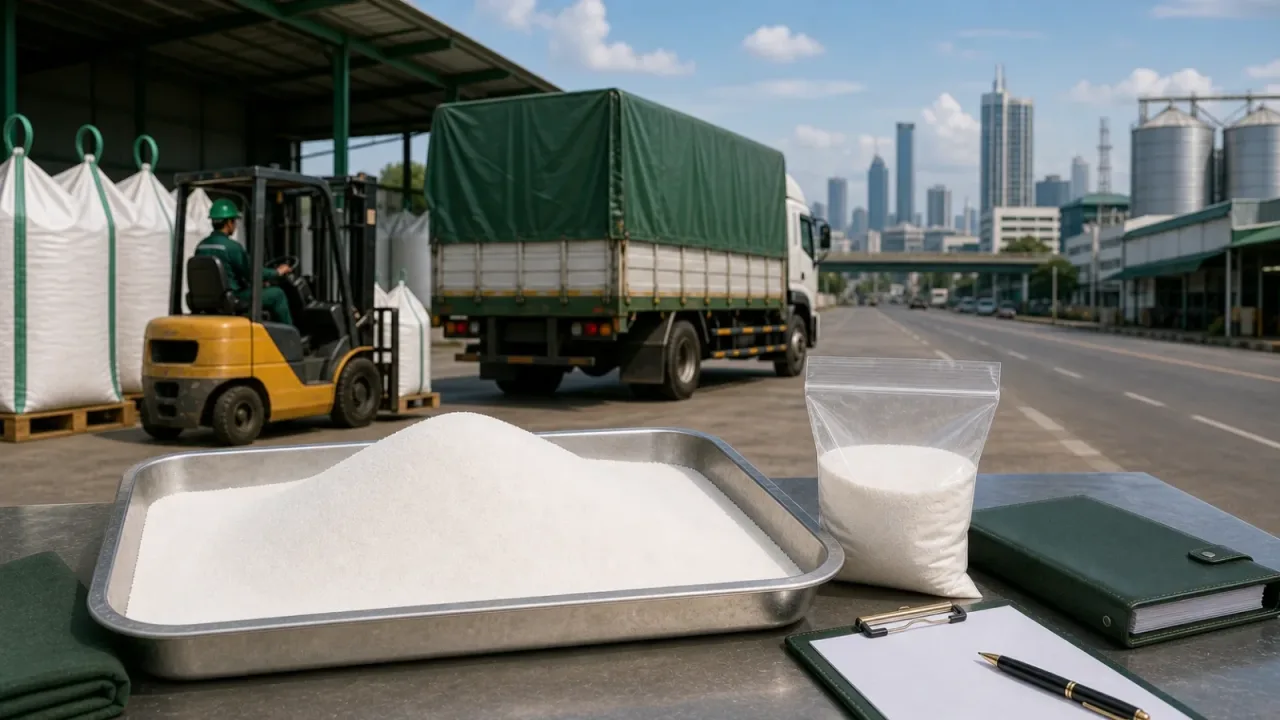
The efficient logistics management of dried cassava pulp is not merely about moving goods from production sources in Nakhon Ratchamosima to feed mills in Bangkok and its vicinity, but also about maintaining Quality Integrity and Feed Cost Management through moisture inspection processes, precise route planning, and risk prevention during transit. This ensures that the raw materials reaching feed manufacturers possess full nutritional value according to standards and incur the lowest possible hidden costs from weight loss.
1. Supply Chain Overview
Nakhon Ratchasima is the heart of Thailand's cassava industry, as it is a major production hub with numerous cassava starch factories located there. Consequently, dried cassava pulp (a by-product of the production process) is available in massive quantities and with consistent quality.
Conversely, the demand for dried cassava pulp in the feed mill industry is largely concentrated in Bangkok, its vicinity, and the central region, due to the convenience of accessing infrastructure and distributing products to other livestock farms. This connection makes "logistics" a critical variable; if transportation management is inefficient, it will directly impact feed costs, as transportation expenses and transit loss rates are costs that the factories must bear.
2. Technical Specifications & Quality Standards
For feed mills, the quality of cassava pulp is not measured by quantity alone but must also consider detailed physical and chemical characteristics as follows:
- Moisture Content Control: Moisture is a primary factor determining shelf-life. If moisture levels exceed standard thresholds, it can trigger the growth of microbes and fungi, affecting animal safety.
- Nutritional Value: Maintaining stable levels of Metabolizable Energy (ME), Crude Protein (CP), and carbohydrates as specified in the Certificate of Analysis (COA) is the core element in Least-cost Formulation.
- Contamination Control: Monitoring for aflatoxin contamination and foreign matter, such as soil or plastic pieces, during the storage period prior to transport, to prevent impacts on animal health and production standards.
3. Pre-shipment Quality Control
The standard of operations before products leave the origin factory (Pre-shipment) serves as the first line of quality assurance:
Weight & Batch Tracking: Accurate Weight Verification at both the origin and destination, along with Batch Tracking to ensure Traceability if quality issues are discovered later.
Packaging Strategy: Selecting appropriate packaging formats, such as Bulk for large-scale transport or Bagged for cleanliness control and ease of use, to reduce the risk of loss during unloading.
4. Logistics & Fleet Management
Truck management must align with demand volumes and distances to create a balance between efficiency and cost (Efficiency vs Cost):
| Truck Type | Suitability | Advantages |
| 6-wheel truck | Small volume / Urban distribution | High maneuverability; good for narrow areas |
| 10-wheel truck | Medium volume / Focus on speed | Balance between weight and cost |
| Trailer | Large volume / Bulk transport | Lowest cost per unit (Economy of Scale) |
Beyond selecting truck types, Route Optimization from Korat to Bangkok must consider avoiding heavy traffic during peak hours and managing Turnaround Time to ensure products arrive at the factory as scheduled (Just-in-Time), reducing the risk of raw material shortages in the production line.
5. Transit Quality Assurance
Risks that often occur during road transport are difficult to control but can be managed through strict Standard Operating Procedures (SOP):
- External Factor Prevention: Inspecting Tarpaulin Integrity to prevent moisture from rain and wind, which is the primary cause of sudden spikes in moisture levels. Most importantly, controlling ventilation in the truck bed to prevent Heat Accumates from microbial respiration, which could lead to mold and unpleasant odors.
- Vehicle Hygiene Standards: Every truck must undergo a cleanliness inspection of the truck bed before loading to prevent cross-contamination from previously transported goods.
6. Cost Structure & Economic Analysis
In industrial raw material procurement, considering only the "price per ton" may not reflect the true cost. Factory managers should consider the following components:
Variable Costs: These include fuel, driver wages, and vehicle depreciation, which often fluctuate according to distance and market fuel prices.
Shrinkage Management: Moisture evaporation during transport (Weight Loss due to Evaporation) is a critical factor to control. If moisture is poorly managed, products may experience significant weight loss upon arrival.
Cost-Effectiveness Analysis (FTL vs LTL):
Full Truckload (FTL) transport typically offers lower unit costs and reduced contamination risks compared to Less than Truckload (LTL) transport, which, while more flexible, involves higher risks regarding timing and product quality that require careful monitoring.
7. Conclusion & Future Trends
The core of dried cassava pulp logistics management is maintaining precision between "product quality" and "punctuality." Future technologies will play a vital role in elevating these standards, such as the use of GPS and IoT for real-time tracking of product status and temperature in containers, which will enable feed mills to plan production more accurately.
Furthermore, the Green Logistics trend—reducing the Carbon Footprint in the supply chain—is becoming a new standard prioritized by the global feed industry. Choosing partners with systematic transport management not only assists in cost control but also builds long-term sustainability for the animal feed supply chain.
Sources
- Thai Tapioca Starch Association - Tapioca Production - https://www.thaitapiocastarch.org/en/information/statistics/tapioca_production - ใช้ยืนยันภาพรวมผลผลิตมันสำปะหลังไทยและบริบท supply ของอุตสาหกรรม
- Thai Tapioca Starch Association - Export Tapioca Products - https://www.thaitapiocastarch.org/en/information/statistics/export_tapioca_products - ใช้ยืนยันสถิติส่งออกผลิตภัณฑ์มันสำปะหลัง รวมถึงหมวด Pulp
- Thai Tapioca Starch Association - Tapioca Starch Processing - https://thaitapiocastarch.org/en/information/learning_industry/tapioca_starch_processing - ใช้อธิบายกระบวนการผลิตแป้งมันและที่มาของผลพลอยได้จากโรงงานแป้งมัน
- ACFS / TAS 8803-2561 - มาตรฐานสินค้าเกษตร กากมันสำปะหลัง - https://www.opsmoac.go.th/udonthani-dwl-files-471491791858 - ใช้อ้างอิงนิยามกากมันสำปะหลังแห้ง/ผง/อัดเม็ด และข้อกำหนดพื้นฐาน เช่น ไม่พบเชื้อราหรือสิ่งแปลกปลอมที่มองเห็นได้
- GP Autoparts - Truck Law 2024 - https://www.gpautoparts.co.th/en/truck-law-2024-latest-regulations-and-penalties-that-truck-owners-need-to-know/ - ใช้ประกอบข้อจำกัดน้ำหนักรถบรรทุก เช่น 10 ล้อ 25 ตัน เพื่ออธิบาย full truck load
- Google Maps - https://www.google.com/maps - ใช้เป็นแหล่งตรวจระยะทางจริงก่อนเผยแพร่บทความจังหวัด เพราะระยะทางเปลี่ยนตามจุดเริ่มต้นและเส้นทาง
- Department of Land Transport - https://www.dlt.go.th/ - ใช้เป็นแหล่งอ้างอิงหน่วยงานกำกับดูแลการขนส่งทางบกเมื่อต้องตรวจข้อกำหนดล่าสุด

Author information
Sri Thong Admin
B2B dried cassava pulp content specialist
Affiliation
SRITHONG PRODUCTTAPIOCA COMPANY LIMITED