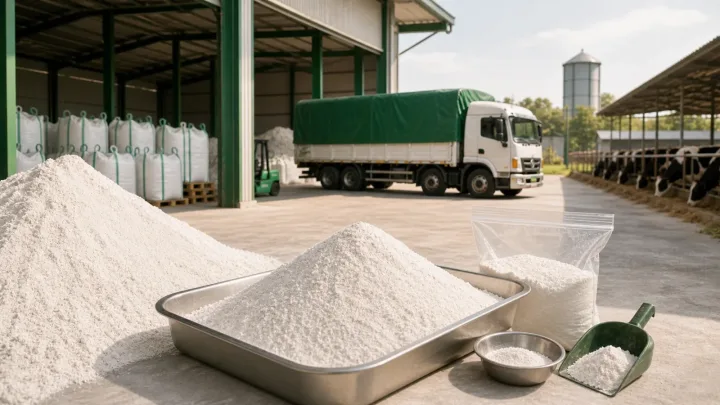
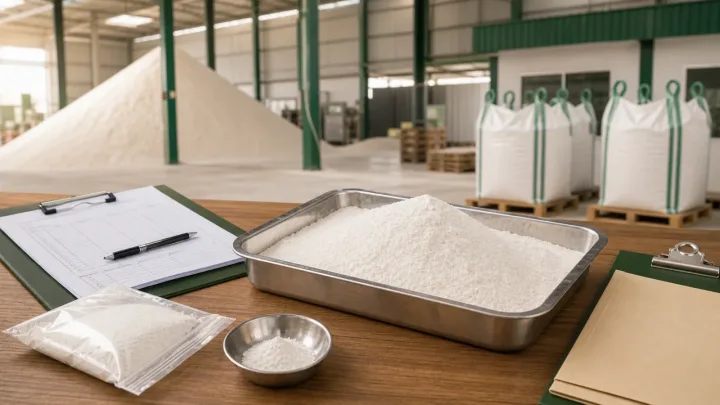
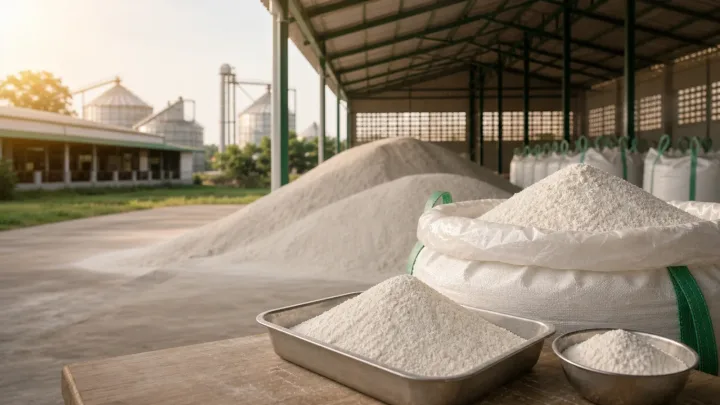
Wholesale Dried Cassava Pulp for Animal Feed Mills
By Sri Thong Admin · Published 2026-06-08 · Updated 2026-06-07
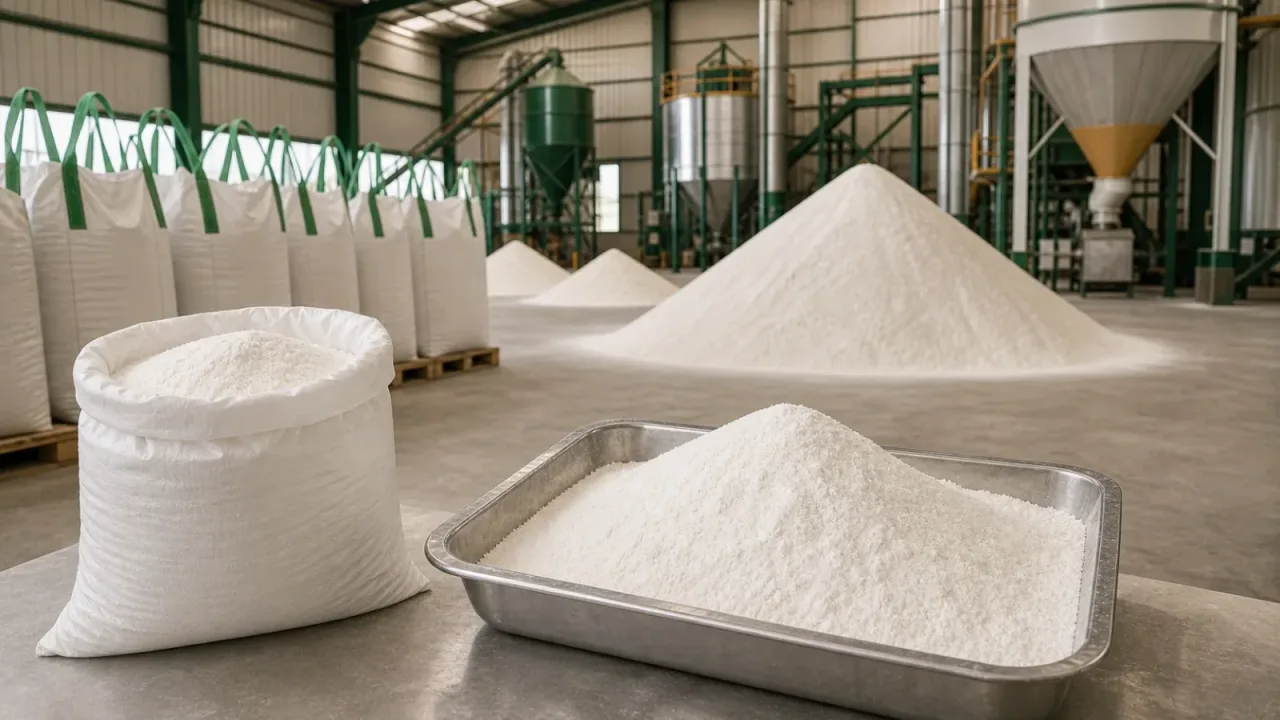
Executive Summary: Strategic Cost Optimization with Dried Cassava Pulp
In a highly volatile animal feed raw material market, Dried Cassava Pulp has emerged as a vital alternative ingredient for cost optimization in feed mills. It serves as an efficient alternative energy source derived from residual starch. Selecting dried cassava pulp produced under strict standards—controlling moisture and contaminants—not only reduces the cost per energy unit compared to primary ingredients like corn but also stabilizes feed formulas through a stable supply chain. The key to selecting a partner lies in their ability to deliver nutritional consistency and provide traceable Certificates of Analysis (COA).
1. The Strategic Role of Dried Cassava Pulp in the Animal Feed Industry
Currently, the global animal feed industry is facing price challenges from primary raw materials, such as corn and soybean meal, which fluctuate according to global market mechanisms and climatic conditions. Finding economically viable alternative energy sources is therefore a top priority for animal nutritionists and feed mill procurement departments.
Dried Cassava Pulp is a by-product of the cassava starch production process, which undergoes a moisture reduction process to an appropriate level for storage and long-distance transportation. With its standout property as an easily digestible carbohydrate source, dried cassava pulp is not merely a "low-cost ingredient" but a "strategic ingredient" that enables feed mills to implement Least Cost Formulation (LCF) to cope with rising primary ingredient prices without compromising animal growth performance.
2. Deep Dive into Nutritional & Chemical Profile
The industrial use of dried cassava pulp requires a detailed consideration of its chemical composition to ensure that the energy values achieved in the feed formula meet the intended targets.
Main Nutritional Components
- Carbohydrates (Residual Starch): The core of cassava pulp is the starch remaining from the starch extraction process, which serves as the primary energy source for animals to utilize in metabolic energy production.
- Crude Fiber: The fiber content in cassava pulp aids gastrointestinal function, particularly in ruminants; however, it must be controlled to prevent excessively high levels that could negatively impact the digestibility of other nutrients.
- Protein: Although protein levels are not as high as soybean meal, knowing the exact Crude Protein value is crucial for calculating the amino acid balance in the feed formula.
Importance of Energy and Nutrient Values
The Metabolizable Energy (ME) value of dried cassava pulp is critically important. In ruminants, cassava pulp is efficiently converted into Volatile Fatty Acids (VFAs) in the rumen, whereas in monogastrics, the focus is primarily on utilizing the residual starch.
Furthermore, moisture content is a key variable affecting nutrient density. If moisture levels are too high, the nutrient content per kilogram decreases, and unnecessary transportation costs increase. A comparison between fresh and dried cassava pulp clearly demonstrates the difference in energy concentration and nutrient quality preservation.
3. Quality Assurance & Safety Standards
For feed mills, the greatest risk is receiving inconsistent raw materials, which can affect the standards of the finished animal feed. Therefore, quality control must cover the following dimensions:
Moisture and Mold Control
Moisture limits must be controlled at a sufficiently low level to inhibit microbial growth. Excessive moisture leads to mold growth and the production of mycotoxins (such as Acyclotoxin/Aflatoxin), which pose severe risks to animal health and may lead to product recalls in the market.
Impurities Control
The separation process must be efficient to reduce physical impurities such as sand, dust, and cassava peel fragments. These impurities not only reduce nutritional value but also cause damage to machinery in the feed milling process, such as Hammer Mills and Pellet Mills.
Physical Consistency
Raw materials with uniform particle size assist in precise mixing within the feed mixer, reducing the problem of nutrient segregation within the feed bags.
4. Production & Processing Technology
The quality of dried cassava pulp begins with the processing stage. Controlling the drying process is the most critical step.
Temperature control during the drying process must be precise to maintain starch integrity and prevent degradation caused by excessive heat (thermal degradation), which would affect the actual energy available to the animals. Additionally, efficient moisture reduction technology helps extend shelf-life and reduces excess weight from moisture, making long-distance transportation more cost-effective.
5. Wholesale Supply Chain & Logistics
Large-scale feed mills require confidence in an uninterrupted supply of raw materials for their production processes. Therefore, supply chain management must include the following elements:
- Production Capacity and Volume: Suppliers must have the capability to provide large bulk volumes to meet the demands of large-scale factories.
- Bulk Storage Management: Storage must involve environmental controls to prevent moisture and contamination.
- Logistics Optimization: Efficient route planning and appropriate vehicle selection are necessary to maintain raw material quality until it reaches the factory.
- Seasonal Supply Management: Since cassava availability depends on the season, suppliers with robust stock management systems can help mitigate price volatility and shortage risks for customers.
6. Economic Analysis for Feed Formulators
From a nutritionist's perspective, the decision to use dried cassava pulp is driven by the principle of Least Cost Formulation (LCF), which involves calculating feed formulas to achieve complete nutritional value at the lowest possible cost.
| Value Indicator | Consideration Details |
| Cost per Energy Unit | Comparing the price per energy unit (e.g., THB per MJ or kcal) between cassava pulp and corn. |
| Nutrient Density | The density of starch and energy per unit of weight to reduce transportation costs. |
| Impact on Total Feed Cost | The overall impact on the feed cost structure per kilogram when adjusting ingredient proportions. |
This analysis allows feed mills to effectively use cassava pulp as a tool to mitigate total cost of production volatility when the prices of other energy ingredients in the market rise.
7. Conclusion & Supplier Selection Criteria
Selecting a supplier for dried cassava pulp is not just about choosing "price," but about choosing "trust" in quality and supply chain stability to ensure smooth and standardized animal feed production.
Checklist for Feed Mills when auditing Suppliers:
- Traceability: Ability to trace the origin of the raw materials.
- Lab Report & COA: Provision of laboratory analysis reports clearly specifying moisture, protein, starch, and impurity levels for every delivery lot.
- Production Capacity: Capability to support large orders and ensure continuous delivery.
- Quality Consistency: Having consistent production control standards that do not fluctuate seasonally.
In the future, as the demand for protein and energy in the global livestock industry continues to rise, standardized dried cassava pulp will remain a strategic ingredient that cannot be overlooked by the modern animal feed industry.
Sources
- Thai Tapioca Starch Association - Tapioca Production - https://www.thaitapiocastarch.org/en/information/statistics/tapioca_production - ใช้ยืนยันภาพรวมผลผลิตมันสำปะหลังไทยและบริบท supply ของอุตสาหกรรม
- Thai Tapioca Starch Association - Export Tapioca Products - https://www.thaitapiocastarch.org/en/information/statistics/export_tapioca_products - ใช้ยืนยันสถิติส่งออกผลิตภัณฑ์มันสำปะหลัง รวมถึงหมวด Pulp
- Thai Tapioca Starch Association - Tapioca Starch Processing - https://thaitapiocastarch.org/en/information/learning_industry/tapioca_starch_processing - ใช้อธิบายกระบวนการผลิตแป้งมันและที่มาของผลพลอยได้จากโรงงานแป้งมัน
- ACFS / TAS 8803-2561 - มาตรฐานสินค้าเกษตร กากมันสำปะหลัง - https://www.opsmoac.go.th/udonthani-dwl-files-471491791858 - ใช้อ้างอิงนิยามกากมันสำปะหลังแห้ง/ผง/อัดเม็ด และข้อกำหนดพื้นฐาน เช่น ไม่พบเชื้อราหรือสิ่งแปลกปลอมที่มองเห็นได้
- Feedipedia - Cassava peels, cassava pomace and other cassava by-products - https://www.feedipedia.org/node/526 - ใช้เป็นฐานข้อมูลคุณค่าทางอาหารและข้อจำกัดของ cassava by-products ในอาหารสัตว์
- FAO - Processing cassava for animal feeds - https://www.fao.org/4/x5458e/x5458e0d.htm - ใช้อธิบาย cassava/tapioca products ในอาหารสัตว์และรูปแบบสินค้า เช่น chips/pellets
- FAO - A review of ruminant responses to cassava-based diets - https://www.fao.org/4/x5458e/x5458e07.htm - ใช้ยืนยันว่าการใช้ในสัตว์เคี้ยวเอื้องต้องจัดสมดุลโปรตีน แร่ธาตุ วิตามิน และอาหารหยาบ
- JIRCAS - Cassava pulp is suitable as beef cattle feed - https://www.jircas.go.jp/en/publication/research_results/2018_a02 - ใช้เป็นข้อมูลอ้างอิงสำหรับกลุ่มฟาร์มโคและโคขุน โดยเน้นคุณค่าทางอาหาร ความสม่ำเสมอ และข้อควรจัดการ

Author information
Sri Thong Admin
B2B dried cassava pulp content specialist
Affiliation
SRITHONG PRODUCTTAPIOCA COMPANY LIMITED