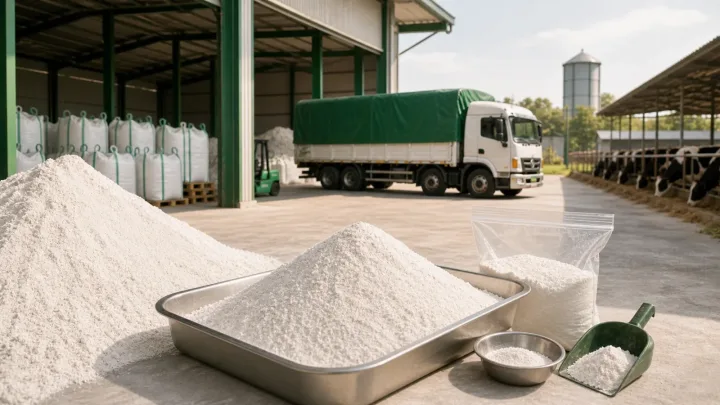
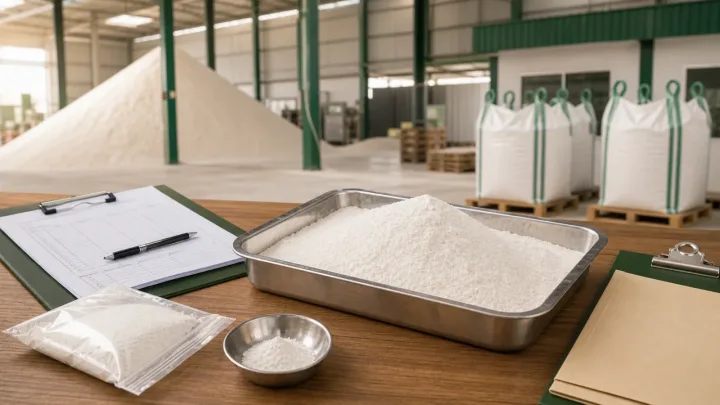
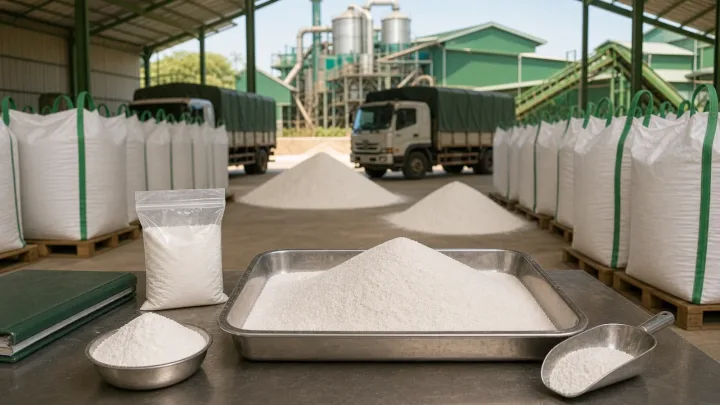
Dry Cassava Pulp for Animal Feed Mills: What to Check
By Sri Thong Admin · Published 2026-06-25 · Updated 2026-06-06
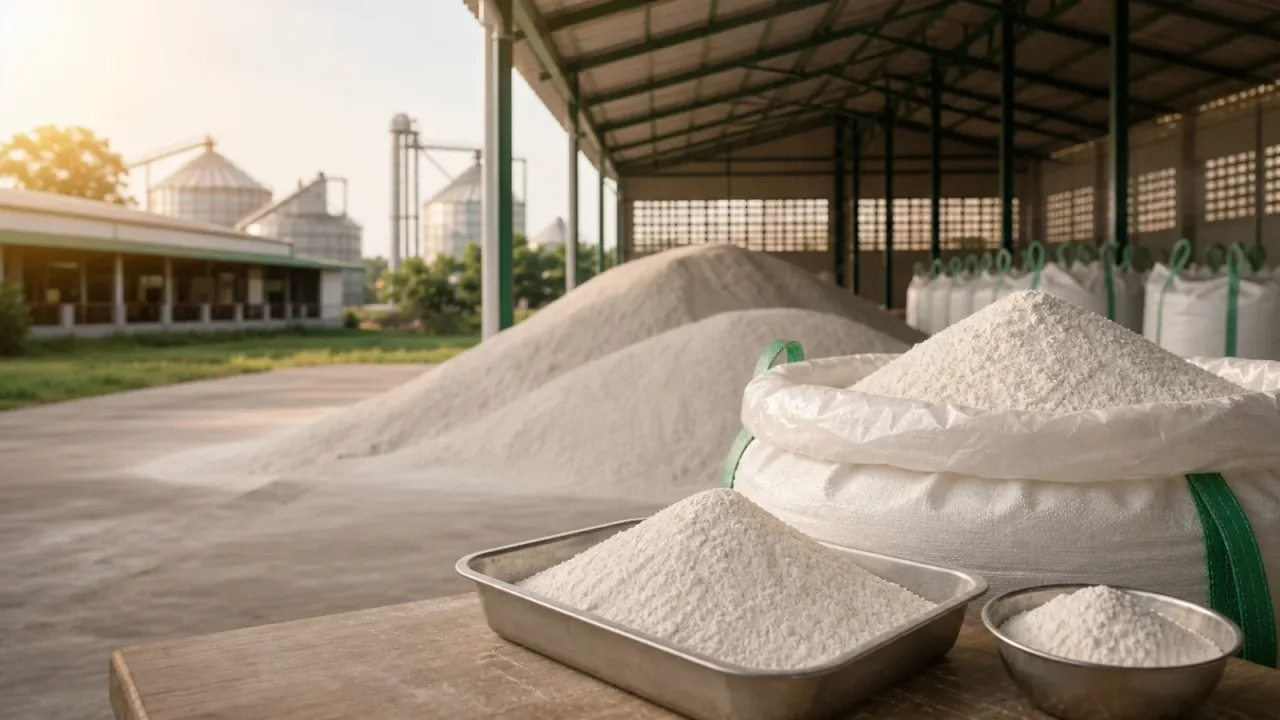
Executive Summary: The Core of Selecting Dried Cassava Pulp for Feed Mills
Purchasing dried cassava pulp for use in the animal feed production industry should not rely solely on "price per ton" as the only deciding factor. Success in cost-optimization and maintaining nutrient consistency depends on an in-depth assessment across four key dimensions: stable nutrient value (specifically starch and energy content), physical properties affecting the production process (moisture and particle size), safety from contaminants (HCN and Mycotoxins), and supply chain consistency (batch-to-batch consistency). Selecting raw materials with clear and verifiable COA (Certificate of Analysis) will help reduce the risk of formula deviation and sustainably prevent damage to machinery in the pelleting process.
1. Introduction: The Strategic Role of Cassava Pulp in Animal Feed Formulas
In an era where the prices of primary raw materials like maize are highly volatile, dried cassava pulp has emerged as a vital "energy substitute" in the animal feed industry due to its high carbohydrate proportion and more manageable costs.
However, the challenge faced by feed mills is "raw material uncertainty." If a mill focuses only on cost reduction without considering nutrient consistency, it can trigger a domino effect, ranging from incorrect formula calculations (nutrient imbalance) and decreased animal growth rates (higher FCR) to issues within the production line. Therefore, understanding the in-depth characteristics of cassava pulp is essential for both nutritionists and purchasing departments.
2. Nutritional Profile Analysis
Nutritional analysis is not just about looking at averages; it is about understanding the potential for feed conversion efficiency.
2.1 Starch Content
Starch is the primary indicator of energy value in cassava pulp. Economically, if the raw material has lower starch content but the price remains the same, it results in a higher cost per energy unit. Monitoring consistent starch levels allows nutritionists to accurately plan the use of alternative energy sources.
2.2 Crude Protein (CP)
Although cassava pulp has low protein levels, knowing the precise CP value is crucial for planning "protein supplementation." If the CP value in cassava pulp fluctuates significantly, it leads to inaccuracies in calculating the proportions of soybean meal or other protein sources, which ultimately impacts the total cost of the feed formula.
Dimension of Fiber Analysis (Crude Fiber - CF)
Excessively high fiber levels directly affect digestibility, particularly in monogastric animals such as swine and poultry. If CF levels exceed the standards set in the formula, the actual energy received by the animal will decrease, potentially leading to gastrointestinal issues.
2.4 Digestible Energy (TDN or ME)
For least-cost formulation, nutritionists require accurate Total Digestible Nutrients (TDN) or Metabolizable Energy (ME) values to serve as a base for calculating the allocation of other ingredients. Having reliable net energy data from laboratory analysis enables mills to maintain production standards under the lowest possible costs.
3. Physical and Chemical Properties
These properties directly impact the "manufacturing process" and "shelf-life."
3.1 Moisture Content
Moisture is the most critical variable. If moisture levels exceed standards, the risk of mold growth and fermentation within bags or silos increases. This not only destroys nutrient quality but can also lead to caking, making it difficult to transport through the batching system.
3.2 pH Level
Changes in pH levels are indicators of fermentation or raw material degradation. Monitoring pH ensures that the raw materials received by the factory are free from microbial contamination that causes spoilage.
3.3 Ash Content and Particle Size
Excessively high ash content often indicates contamination with impurities such as soil or sand, while particle size affects flowability and efficiency in the pelleting process. Inconsistent particle size can affect the Pellet Durability Index (PDI) and cause dust formation during production.
4. Safety and Contaminants
The safety of raw materials is the highest responsibility of a feed mill.
- Hydrogen Cyanide (HCN): Since cassava pulp is derived from the cassava plant, controlling HCN levels within safety standards is non-negotiable, as this toxin directly impacts the respiratory system and enzymes in animals.
-
5. Supply Chain & Logistics Management
High quality must be accompanied by a reliable management system.
Consideration Factor Impact on Feed Mill Management Approach Batch-to-batch Consistency Feed formula deviation Quality Assurance (QA) Agreement Storage & Packaging Contamination and degradation Use of moisture-proof packaging and clean Silos Nutrient-to-Price Ratio Real production cost management Calculating price per nutrient unit instead of price per ton 6. Conclusion and Professional Recommendations
Selecting high-quality dried cassava pulp suppliers requires collaboration between two parties:
For Purchasing: Focus on establishing contracts with clear basic specifications and defining product claim conditions when abnormalities are found via lab testing, as well as evaluating cost-effectiveness based on the "nutrient-to-price ratio."
For Nutritionists: Request a Certificate of Analysis (COA) for every purchase lot to use for formula adjustment in alignment with the actual quality of the received raw materials.
If you are looking for raw materials with consistent standards, complete with full specifications and COA documents for procurement consideration or formula development, you can contact our team of experts immediately for additional technical information or to request product samples for laboratory testing.
Sources
- Thai Tapioca Starch Association - Tapioca Production - https://www.thaitapiocastarch.org/en/information/statistics/tapioca_production - ใช้ยืนยันภาพรวมผลผลิตมันสำปะหลังไทยและบริบท supply ของอุตสาหกรรม
- Thai Tapioca Starch Association - Export Tapioca Products - https://www.thaitapiocastarch.org/en/information/statistics/export_tapioca_products - ใช้ยืนยันสถิติส่งออกผลิตภัณฑ์มันสำปะหลัง รวมถึงหมวด Pulp
- Thai Tapioca Starch Association - Tapioca Starch Processing - https://thaitapiocastarch.org/en/information/learning_industry/tapioca_starch_processing - ใช้อธิบายกระบวนการผลิตแป้งมันและที่มาของผลพลอยได้จากโรงงานแป้งมัน
- ACFS / TAS 8803-2561 - มาตรฐานสินค้าเกษตร กากมันสำปะหลัง - https://www.opsmoac.go.th/udonthani-dwl-files-471491791858 - ใช้อ้างอิงนิยามกากมันสำปะหลังแห้ง/ผง/อัดเม็ด และข้อกำหนดพื้นฐาน เช่น ไม่พบเชื้อราหรือสิ่งแปลกปลอมที่มองเห็นได้
- Feedipedia - Cassava peels, cassava pomace and other cassava by-products - https://www.feedipedia.org/node/526 - ใช้เป็นฐานข้อมูลคุณค่าทางอาหารและข้อจำกัดของ cassava by-products ในอาหารสัตว์
- FAO - Processing cassava for animal feeds - https://www.fao.org/4/x5458e/x5458e0d.htm - ใช้อธิบาย cassava/tapioca products ในอาหารสัตว์และรูปแบบสินค้า เช่น chips/pellets
- FAO - A review of ruminant responses to cassava-based diets - https://www.fao.org/4/x5458e/x5458e07.htm - ใช้ยืนยันว่าการใช้ในสัตว์เคี้ยวเอื้องต้องจัดสมดุลโปรตีน แร่ธาตุ วิตามิน และอาหารหยาบ
- JIRCAS - Cassava pulp is suitable as beef cattle feed - https://www.jircas.go.jp/en/publication/research_results/2018_a02 - ใช้เป็นข้อมูลอ้างอิงสำหรับกลุ่มฟาร์มโคและโคขุน โดยเน้นคุณค่าทางอาหาร ความสม่ำเสมอ และข้อควรจัดการ

Author information
Sri Thong Admin
B2B dried cassava pulp content specialist
Affiliation
SRITHONG PRODUCTTAPIOCA COMPANY LIMITED