How to Register a Dried Cassava Pulp Supplier with an Animal Feed Mill
By Sri Thong Admin · Published 2026-06-25 · Updated 2026-06-06
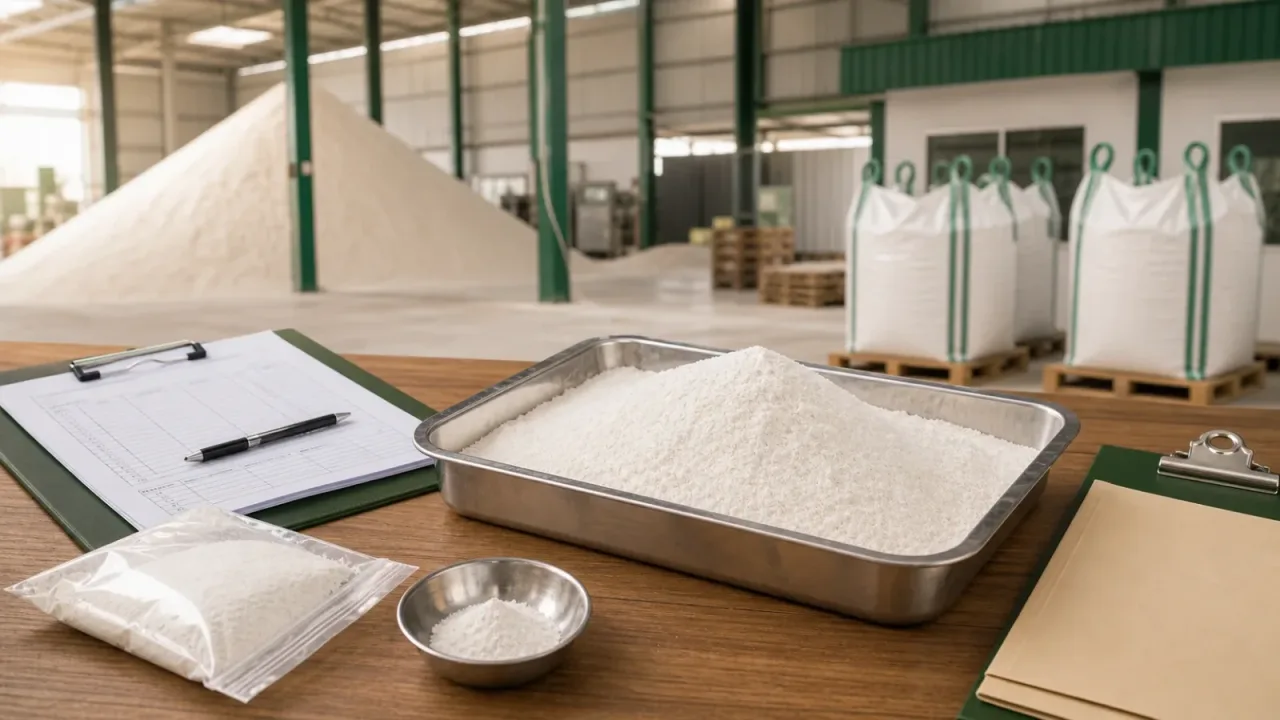
Summary of Key Content: The Heart of Being a Standardized Dried Cassava Pulp Supplier for Animal Feed Factories
Entering the supply chain of animal feed production factories as a dried cassava pulp supplier is not measured by product quantity or price alone; the core elements are "Standard Consistency" and "Traceability." Successful supplier registration requires readiness in 4 key dimensions: 1) Accurate physical and chemical property standards, 2) Clean and traceable production processes, 3) Reliable documentation and laboratory analysis results (CoA), and 4) Stability in logistics management to prevent raw material shortages in the production line.
1. Introduction: The Importance of Raw Material Quality and Supplier Selection for Animal Feed Factories
In the animal feed production industry, carbohydrate-based raw materials such as "Cassava Pulp" serve as a vital energy source in feed formulas. Therefore, controlling the quality of this raw material directly impacts production costs and animal growth performance.
Animal feed factories prioritize "Feed Safety" above all else, as the risk of using substandard raw materials—such as fungal contamination or mycotoxins—can lead to losses in livestock production and impact end-consumer confidence. Consequently, being a certified supplier with standardized management systems is not just about selling a product, but about creating sustainable business opportunities through trust in product quality.
2. Physical and Chemical Property Standards of Dried Cassable Pulp (Technical Specification)
Delivering products with consistent nutritional values is what animal feed factories require to ensure that "Least Cost Formulation" does not deviate. Key indicators that suppliers must control are as follows:
| Parameter | Significance to Production |
| Moisture Content | Must be controlled at specified levels to prevent mold growth and spoilage during storage. |
| Crude Fiber and Starch | Maintaining nutrient consistency to ensure stable energy values in feed formulas. |
| Impurities | Control of sand, soil, and other foreign matter must be maintained to avoid impacting the animal's digestive system. |
| Contaminants | Monitoring levels of Aflatoxin, Heavy Metals, and pesticide residues must not exceed safety standards. |
| Physical Properties | Color and odor must be normal, without rancid or musty smells, and texture fineness must be consistent. |
3. Production and Quality Control Standards (Production & Quality Control)
Animal feed factories do not only inspect the finished product at the destination but also consider the "Process" that produces it.
Raw Material Management and Production Process
Suppliers must have an efficient upstream raw material management system, starting from selecting high-quality cassava sources. The production process must follow clear steps, including cleaning to reduce impurities, extraction, and most importantly, the "Drying Process," which must control temperature and time appropriately to preserve nutritional value and prevent moisture accumulation.
Storage and Packaging Management
Storage Management must strictly control humidity in warehouses, implementing the FIFO (First-In, First-Out) system to prevent products from sitting in stock too long and degrading. A clear Pest Control plan is also required. Additionally, the packaging or materials used for packing must be strong enough to prevent moisture and contamination during transportation.
4. Documentation and Traceability Systems (Documentation & Traceability)
From the perspective of the factory's Quality Assurance (QA) department, "what is not recorded, did not happen." Therefore, a documentation system serves as proof of a supplier's transparency.
- Business Registration Documents: Having factory licenses (Rong. 4), VAT registration (P.P. 20), and proper Thai legal documents.
- Certificate of Analysis (CoA): Providing quality analysis results per production lot, specifying key chemical and physical values so that the factory can use them to verify accuracy before receiving goods.
- Traceability System: The ability to record data back to the source (Farm/Farm Gate), through the production process, to the production date and delivery lot.
- Standard Operating Procedures (SOPs): Having written procedural manuals to confirm that product quality results from standardized processes, not coincidence.
5. Assessment and Registration Process (Supplier Audit & Registration Process)
Becoming an official partner usually involves a rigorous assessment process as follows:
1. Pre-qualification
Submitting initial assessment documents or a Vendor Profile for the factory to consider preliminary capabilities, including financial status, production capacity, and necessary documentation standards.
2. On-site Audit
A factory audit process conducted by the animal feed factory's Auditors, which focuses on inspecting Hygiene, Safety, Production, and Storage systems to ensure that the actual site complies with the submitted documents.
3. Sample Testing
Sending product samples to the factory's laboratory (Lab) to check nutritional values and contaminants against the agreed-upon Specifications.
4. Contractual Agreement
The final step is the execution of a sales contract and a Quality Agreement to define the scope of responsibility and the quality standards that must be jointly maintained.
6. Logistics Management and Supply Continuity (Logistics & Supply Chain Reliability)
The risk that animal feed factories fear most is "supply disruption," which affects the entire production plan.
Supply Capacity: Suppliers must have production planning and reserve stock volumes that align with customer demand, even during periods of high demand.
Transportation Hygiene: Trucks used must be clean, free of contaminating odors, and controlled to prevent cross-contamination from other types of goods.
Risk Management: Professional suppliers must have contingency plans for crises, such as droughts affecting cassava supply or logistics issues, to ensure that product delivery remains continuous.
7. Summary and Entrepreneur Checklist (Summary & Supplier Checklist)
Becoming a Grade A supplier in the animal feed raw material group does not rely solely on having a good product, but on presenting "Reliability" through a verifiable system. If you can prepare according to the checklist below, your chances of being selected as a primary partner will be very high.
Supplier Readiness Checklist:
- [ ] Quality: Product analysis results (CoA) comply with the factory's required Specifications.
- [ ] Process: Clear production standards (SOP) and Quality Control (QC) systems are in place.
- [ ] Documentation: Factory licenses (Rong. 4), VAT registration (P.P. 20), and Traceability documents are ready for inspection.
- [ ] Storage: Warehouse systems are clean, safe, and utilize the FIFO system.
- [ ] Logistics: Reliable delivery plans and standard truck cleaning protocols are in place.
Sources
- Thai Tapioca Starch Association - Tapioca Production - https://www.thaitapiocastarch.org/en/information/statistics/tapioca_production - ใช้ยืนยันภาพรวมผลผลิตมันสำปะหลังไทยและบริบท supply ของอุตสาหกรรม
- Thai Tapioca Starch Association - Export Tapioca Products - https://www.thaitapiocastarch.org/en/information/statistics/export_tapioca_products - ใช้ยืนยันสถิติส่งออกผลิตภัณฑ์มันสำปะหลัง รวมถึงหมวด Pulp
- Thai Tapioca Starch Association - Tapioca Starch Processing - https://thaitapiocastarch.org/en/information/learning_industry/tapioca_starch_processing - ใช้อธิบายกระบวนการผลิตแป้งมันและที่มาของผลพลอยได้จากโรงงานแป้งมัน
- ACFS / TAS 8803-2561 - มาตรฐานสินค้าเกษตร กากมันสำปะหลัง - https://www.opsmoac.go.th/udonthani-dwl-files-471491791858 - ใช้อ้างอิงนิยามกากมันสำปะหลังแห้ง/ผง/อัดเม็ด และข้อกำหนดพื้นฐาน เช่น ไม่พบเชื้อราหรือสิ่งแปลกปลอมที่มองเห็นได้
- Feedipedia - Cassava peels, cassava pomace and other cassava by-products - https://www.feedipedia.org/node/526 - ใช้เป็นฐานข้อมูลคุณค่าทางอาหารและข้อจำกัดของ cassava by-products ในอาหารสัตว์
- FAO - Processing cassava for animal feeds - https://www.fao.org/4/x5458e/x5458e0d.htm - ใช้อธิบาย cassava/tapioca products ในอาหารสัตว์และรูปแบบสินค้า เช่น chips/pellets
- FAO - A review of ruminant responses to cassava-based diets - https://www.fao.org/4/x5458e/x5458e07.htm - ใช้ยืนยันว่าการใช้ในสัตว์เคี้ยวเอื้องต้องจัดสมดุลโปรตีน แร่ธาตุ วิตามิน และอาหารหยาบ
- JIRCAS - Cassava pulp is suitable as beef cattle feed - https://www.jircas.go.jp/en/publication/research_results/2018_a02 - ใช้เป็นข้อมูลอ้างอิงสำหรับกลุ่มฟาร์มโคและโคขุน โดยเน้นคุณค่าทางอาหาร ความสม่ำเสมอ และข้อควรจัดการ

Author information
Sri Thong Admin
B2B dried cassava pulp content specialist
Affiliation
SRITHONG PRODUCTTAPIOCA COMPANY LIMITED