What to Know Before Booking a Truck for Dried Cassava Pulp Transport
By Sri Thong Admin · Published 2026-06-18 · Updated 2026-06-07
Conclusion: The Essence of Logistics Management for Dried Cassava Pulp
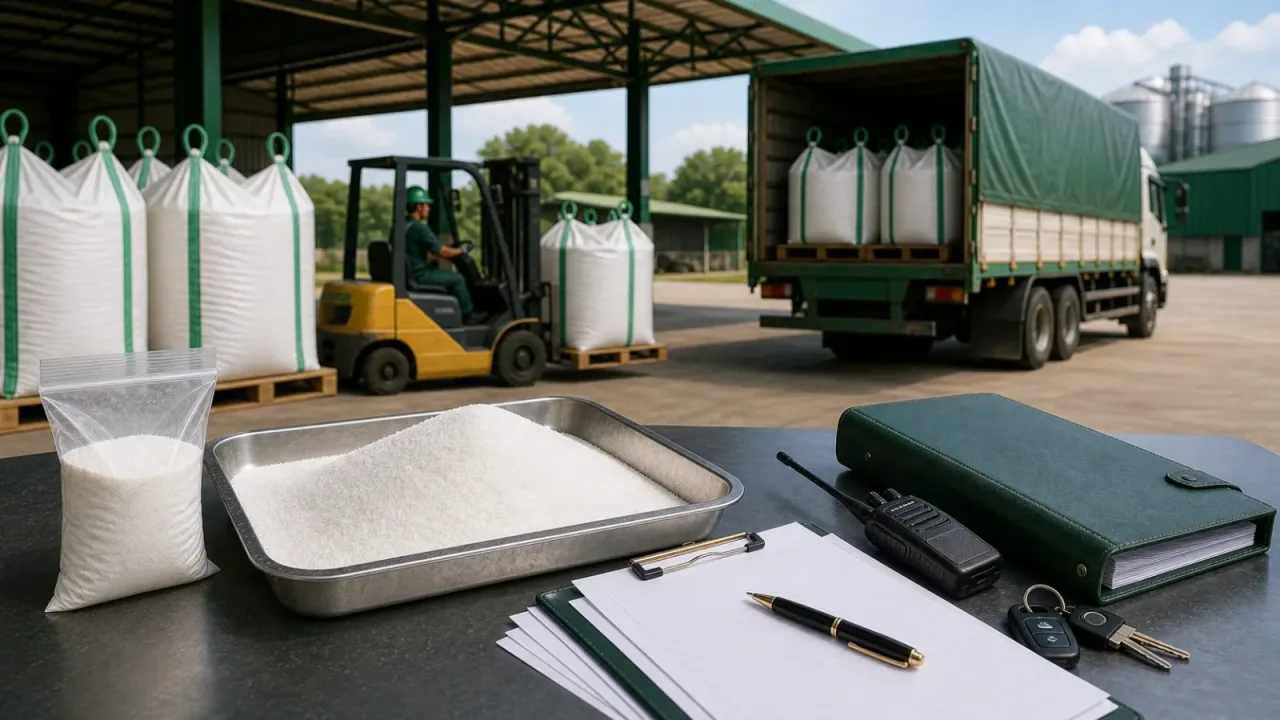
Managing the transport of Dried Cassava Pulp for the animal feed industry is not just about moving goods from origin to destination; it is about managing "risks" and "hidden costs" that directly impact Production Cost and the Nutrient Integrity of finished products. Controlling standards—from pre-loading inspection and selecting the appropriate vehicle type to managing weight in compliance with the law and planning for volatile weather—is the deciding factor in whether an animal feed factory can maintain consistent raw material standards and prevent contamination or unnecessary weight loss, ultimately leading to business sustainability and stable profits.
1. The Importance of Logistics Management in Animal Feed Raw Materials
In the animal feed production industry, raw materials like Dried Cassava Pulp serve as vital energy sources. Therefore, efficient logistics management directly affects the entire cost structure of the factory.
Impact of Transport Costs on Animal Feed Production Costs
Transport costs represent a major proportion of Raw Material Cost. If the transportation process is poorly planned—such as experiencing weight loss during transit due to increased moisture or improper route management—the Cost per Nutrient will inevitably increase.
The Link Between Transport Quality and Nutrient Integrity
The quality of Dried Cassable Pulp does not end at the raw material production plant; it must be maintained through to the Mixing Process. Substandard transport, such as allowing goods to be exposed to external moisture, can destroy key nutrients and increase the risk of raw material degradation within storage silos.
Risks from Substandard Transport
Common issues in uncontrolled transport include Shrinkage caused by evaporation or moisture absorption, as well as the risk of contamination that could render an entire Lot unusable, thereby impacting production schedules and animal feed safety standards.
2. Pre-loading Quality Control
The pre-loading inspection process is the first line of defense in preventing quality issues that may arise during transit.
Moisture Content Control
Moisture content is the most critical variable. If moisture exceeds the specified standard (Specification), it has two consequences: first, it results in an inflated weight (which creates issues for auditing and cost control); and second, it acts as an accelerator for the growth of mold and microbes within the truck bed.
Contamination Check
Detecting sand, soil, or other debris within the Dried Cassava Pulp not only reduces the quality of the raw material but can also lead to increased wear and tear on machinery during the factory's Grinding process.
Assessment of Aflatoxin & Mold Risk
The risk of Mycotoxins often begins with moisture accumulation in the dead zones of the transport vehicle. Therefore, inspecting the cleanliness and dryness of the material before loading is essential to prevent cross-contamination that could compromise animal safety.
3. Vehicle Selection & Suitability
The characteristics of the transport vehicle directly affect the preservation of Dried Cassava Pulp quality throughout the journey.
Difference Between Open Trucks and Closed/Covered Trucks
Using open trucks may pose risks from rain or high humidity, especially during the rainy season, whereas closed or covered trucks help maintain a stable moisture level in accordance with the COA (Certificate of Analysis) more effectively.
Truck Cleanliness Check
Crucially, it is vital to verify what type of material the truck previously carried, such as chemical fertilizers or agricultural chemicals. If the truck bed is not sufficiently clean, chemical contamination that is hazardous to animals may occur.
Vehicle Structure: Leakage and Tarpaulin Integrity
In cases where open trucks must be used, inspecting the integrity of the roof and the tarpaulin coverage is indispensable. Torn or degraded tarpaulins allow rainwater or moisture to seep in, which is a primary cause of product damage.
4. Weight Management & Compliance
Efficient transport must operate within legal frameworks to prevent delays in the receiving process.
Legal Payload Limits
Overloading is not only illegal and risks detention but also increases the risk of road accidents and may cause transport delays, which impacts the overall Delivery Schedule.
Weight Verification Standards
To ensure transparency and reduce disputes between the sender and receiver, verifying the accuracy of scales at both the origin and destination is essential. Implementing a standardized weighing system ensures precision in raw material stock management.
Relationship Between Bulk Density and Loading Volume
Dried Cassava Pulp has a Bulk Density that may change depending on moisture levels. Therefore, calculating the load must consider both weight and the available space in the truck bed to achieve maximum transport efficiency per trip.
5. Logistics Costing & Scheduling
Proper logistics planning allows factories to precisely control budgets and production plans.
Transport Cost Structure
Cost calculations should encompass distance, tolls, and driver allowances to ensure that transport pricing reflects reality and allows for efficient budget management.
Lead Time and Production Cycles
Truck Queuing management must align with the capacity of the silos and the Production Cycle. If too many trucks arrive simultaneously, it creates a bottleneck at the receiving point; conversely, if trucks arrive too late, production may be interrupted.
Hidden Costs
Operators should account for loading/unloading labor costs and, most importantly, the "cost of damage from wet products," which can be several times higher than the transport cost itself.
6. Risk Management
Preparing contingency plans is the heart of maintaining supply chain continuity.
Weather Contingency Plan
Especially during the rainy season, having a contingency plan—such as utilizing extra-sealed vehicles or preparing covered storage areas—will help mitigate the risk of raw material damage.
Tracking & Communication
Utilizing GPS technology or communication systems that allow for real-time vehicle tracking enables factories to accurately plan for receiving goods and preparing silo space.
Liability & Claims Protocol
Clear responsibility standards should be established within the transport contract. If it is found that moisture exceeds standards or contamination occurred during transport, the procedures for claims and accountability must be clearly defined to minimize disputes between partners.
7. Conclusion: Creating Transport Standards for Sustainability
High-quality Dried Cassava Pulp transport management involves establishing standards from origin to destination to ensure that the raw materials entering the animal feed factory meet all required physical and chemical properties.
Checklist for Operators
- Check moisture content and contaminants before every loading.
- Verify the cleanliness and structural integrity of the vehicle (roof/tarpaulin).
- Ensure weight complies with the law and is appropriate for the volume.
- Prepare weather contingency plans and tracking communication systems.
Building strong Carrier Relationship Management and selecting partners who understand the nature of the raw material will help animal feed factories reduce production risks and create a long-term competitive advantage in both cost and quality.
If you require additional technical information regarding the properties of Dried Cassava Pulp, COA documents, or wish to request product samples for production standard testing, please contact our team of experts for information and a quotation immediately.
Sources
- Thai Tapioca Starch Association - Tapioca Production - https://www.thaitapiocastarch.org/en/information/statistics/tapioca_production - ใช้ยืนยันภาพรวมผลผลิตมันสำปะหลังไทยและบริบท supply ของอุตสาหกรรม
- Thai Tapioca Starch Association - Export Tapioca Products - https://www.thaitapiocastarch.org/en/information/statistics/export_tapioca_products - ใช้ยืนยันสถิติส่งออกผลิตภัณฑ์มันสำปะหลัง รวมถึงหมวด Pulp
- Thai Tapioca Starch Association - Tapioca Starch Processing - https://thaitapiocastarch.org/en/information/learning_industry/tapioca_starch_processing - ใช้อธิบายกระบวนการผลิตแป้งมันและที่มาของผลพลอยได้จากโรงงานแป้งมัน
- ACFS / TAS 8803-2561 - มาตรฐานสินค้าเกษตร กากมันสำปะหลัง - https://www.opsmoac.go.th/udonthani-dwl-files-471491791858 - ใช้อ้างอิงนิยามกากมันสำปะหลังแห้ง/ผง/อัดเม็ด และข้อกำหนดพื้นฐาน เช่น ไม่พบเชื้อราหรือสิ่งแปลกปลอมที่มองเห็นได้
- GP Autoparts - Truck Law 2024 - https://www.gpautoparts.co.th/en/truck-law-2024-latest-regulations-and-penalties-that-truck-owners-need-to-know/ - ใช้ประกอบข้อจำกัดน้ำหนักรถบรรทุก เช่น 10 ล้อ 25 ตัน เพื่ออธิบาย full truck load
- Google Maps - https://www.google.com/maps - ใช้เป็นแหล่งตรวจระยะทางจริงก่อนเผยแพร่บทความจังหวัด เพราะระยะทางเปลี่ยนตามจุดเริ่มต้นและเส้นทาง
- Department of Land Transport - https://www.dlt.go.th/ - ใช้เป็นแหล่งอ้างอิงหน่วยงานกำกับดูแลการขนส่งทางบกเมื่อต้องตรวจข้อกำหนดล่าสุด

Author information
Sri Thong Admin
B2B dried cassava pulp content specialist
Affiliation
SRITHONG PRODUCTTAPIOCA COMPANY LIMITED