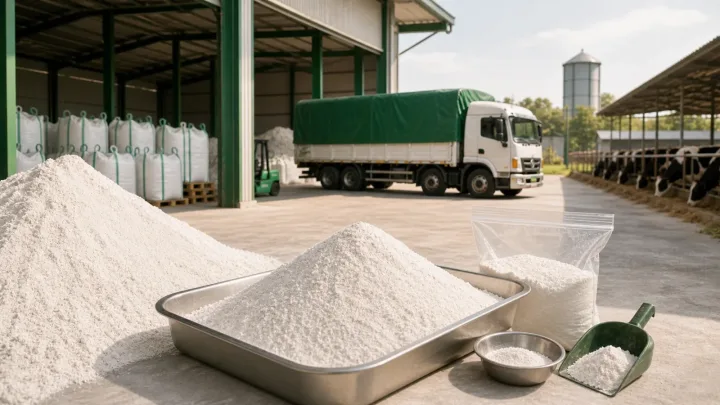
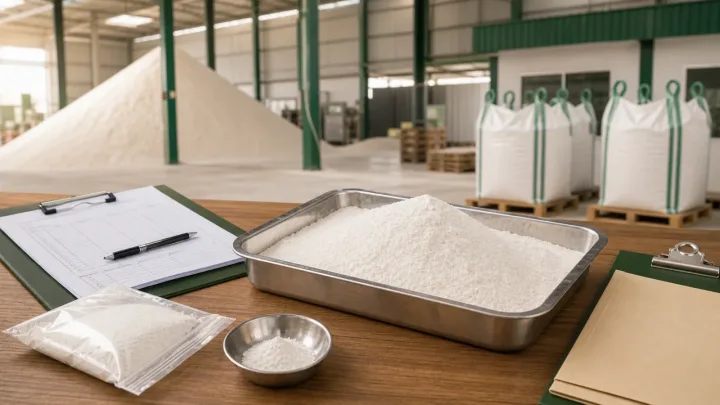
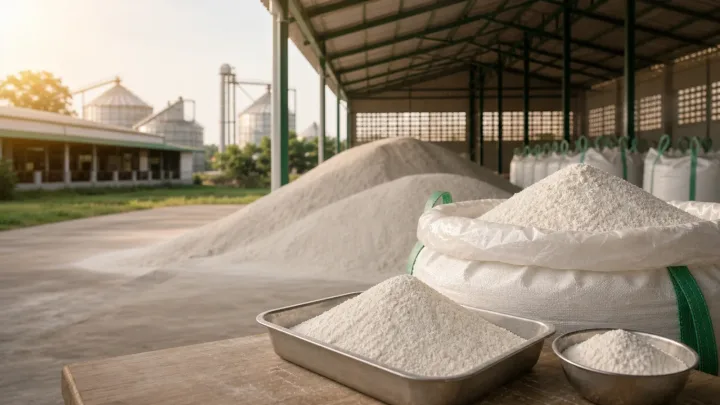
Screened Sun-Dried Cassava Pulp for Feed Mills and Large Farms
By Sri Thong Admin · Published 2026-06-04 · Updated 2026-06-06
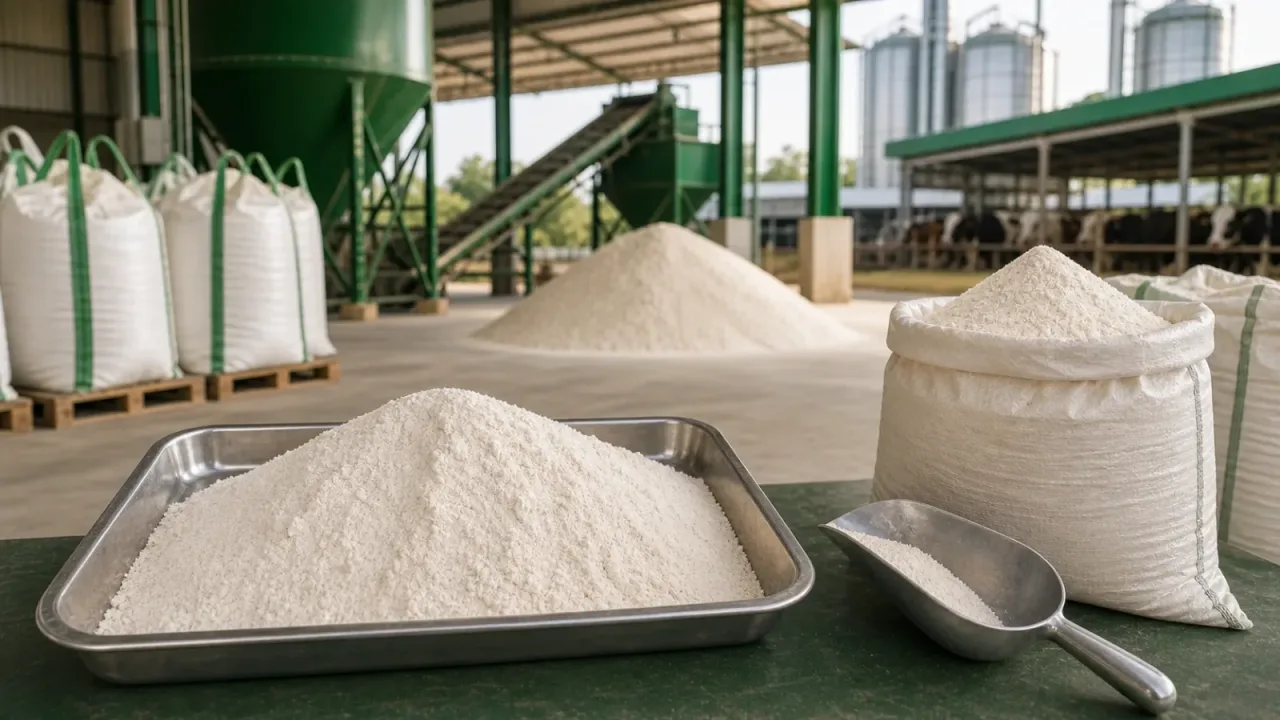
Executive Summary: Enhancing Cost Efficiency with Dried Sifted Cassava Pulp
Amidst the price volatility of key raw materials such as maize and cassava chips, Dried Sifted Cassava Pulp has emerged as a strategic alternative for feed mills and large-scale livestock farms. The core value of this raw material lies not only in its lower cost but in its "consistency of physical and nutritional standards." This consistency enables Precision Feeding, reduces the risk of foreign matter contamination, and enhances production efficiency through optimized moisture control and particle size. Consequently, it directly contributes to maintaining optimal Feed Conversion Ratio (FCR) and achieving sustainable Total Feed Cost management.
1. Introduction: The Role of Cassava Pulp in the Modern Animal Feed Industry
The modern animal feed production industry is facing significant challenges from supply chain uncertainties. Primary raw materials like maize often suffer from price surges driven by global market mechanisms and drought conditions, while cassava chips—a vital energy source—experience fluctuations in production volume depending on the season.
Seeking Alternative Energy Sources that can replace or supplement diets without compromising animal growth performance is therefore essential. Dried Sifted Cassava Pulp has been developed to overcome the limitations of "fresh cassava pulp," which is characterized by high moisture, high spoilage risk, and difficulty in maintaining transport standards. Shifting to a "dried and sifted" format allows feed mills to manage raw material inventories for longer periods, reduce losses during storage, and establish production stability with consistent feed quality.
2. Physical Characteristics and Technical Specifications
For B2B customers, physical standards are a decisive factor as critical as nutritional values, as they directly impact machinery performance and Feed Mill Efficiency.
Sifting & Particle Size Control
The Sifting Process is the heart of producing sifted cassava pulp. Controlling the Particle Size to ensure uniformity promotes Homogeneity within the mixer, reducing the risk of material Segregation during both the production and transportation processes.
Moisture Control
Low moisture standards are a vital factor in inhibiting the growth of Molds and bacteria. Maintaining moisture at industry-standard levels extends Shelf-life and prevents heat accumulation within raw material silos.
Purity & Impurity Free
High-quality raw materials must undergo processes to remove impurities such as sand, soil, or woody debris to prevent damage to machinery (such as grinders or pellet mills) and to maintain the accuracy of energy values in the feed formulation.
3. Nutritional Profile & Energy Value Analysis
Using cassava pulp as a substitute for other ingredients requires a detailed understanding of its nutrient structure for precise formulation.
| Key Component | Role in Animals | Technical Considerations |
| Starch / Carbohydrate | Primary Energy Source (Metabolizable Energy - ME) | A key variable for replacing maize or cassava chips |
| Crude Fiber | Supports digestion and physical structure | Must be controlled and not too high in monogastric animals to prevent digestive issues |
| Crude Protein | Component of growth | While not as high as soybean meal, it must be accounted for to ensure Amino Acid balance |
Dried Sifted Cassava Pulp provides energy in the form of carbohydrates that animals can utilize effectively. However, because the fiber proportion is higher than other energy sources (such as maize), it must be managed through careful calculation within the feed ration.
4. Strategic Advantages for Feed Mills
Industrial-scale feed mills prioritize "Consistency" over price alone, and sifted cassava pulp addresses this in three main dimensions:
- Precision Feeding: When raw materials have stable physical and chemical standards (Low Variation), nutritionists can formulate highly efficient diets without needing excessively high Safety Margins.
- Production Efficiency: The appropriate Flowability of sifted cassava pulp helps reduce Caking in conveying systems and minimizes clogging in mixers or Pellet Mills.
- Storage & Stability: Due to low moisture and a sifted structure, the raw material maintains high stability during silo storage, reducing the risk of value loss due to nutrient degradation.
5. Application in Large-scale Farming
Utilizing cassava pulp in farming requires an understanding of the digestive physiology of different animal groups:
Monogastric Animals (Swine & Poultry)
In pigs and poultry, the use of cassava pulp must focus on controlling Fiber levels to avoid impacting the Average Daily Gain (ADG) and Feed Conversion Ratio (FCR). Using it in appropriate proportions can increase dietary energy without disrupting the gastrointestinal tract.
Ruminants
For beef and dairy cattle, cassava pulp serves as an excellent energy source for supplementation in TMR (Total Mixed Ration) diets, helping to increase energy levels during Rumen Fermentation, which subsequently enhances milk yield or body weight gain.
6. Quality Assurance & Safety
Food Safety begins with Feed Safety. Manufacturers adhering to high standards must prioritize:
- Cyanide Management: The drying process must involve controlled temperature and timing to ensure that the natural cyanide compounds in cassava are decomposed to levels safe for animals.
- Mycotoxin Management: Strict moisture control is the first line of defense in reducing the risk of contamination from Aflatoxin and other mycotoxins.
- Laboratory Testing: Delivered raw materials should be accompanied by a Certificate of Analysis (COA) clearly stating moisture content, nutritional capacity, and impurity levels.
7. Economic Outlook & Conclusion
Incorporating Dried Sifted Cassava Pulp into the feed supply chain is not merely about finding cheaper ingredients; it is about conducting a Cost-Benefit Analysis between the purchase price per ton and the resulting Yield Improvement, Waste Reduction in the production process, and the maintenance of formula stability.
In terms of Sustainability, the efficient utilization of agricultural By-products helps reduce production costs and enhances raw material security for the industry.
Recommendation for Entrepreneurs: When performing Supplier Selection, you should not consider price per unit alone. You should evaluate Quality Consistency, Logistics Reliability, and Data Transparency to build a sustainable business partnership.
If you require in-depth information regarding Specifications, Laboratory Analysis (COA), or would like to request raw material samples for testing in your feed formulas, please contact our technical department immediately for further details and a quotation.
Sources
- Thai Tapioca Starch Association - Tapioca Production - https://www.thaitapiocastarch.org/en/information/statistics/tapioca_production - ข้อมูลสำหรับยืนยันภาพรวมผลผลิตมันสำปะหลังไทยและบริบท supply ของอุตสาหกรรม
- Thai Tapioca Starch Association - Export Tapioca Products - https://www.thaitapiocastarch.org/en/information/statistics/export_tapioca_products - ข้อมูลสำหรับยืนยันสถิติส่งออกผลิตภัณฑ์มันสำปะหลัง รวมถึงหมวด Pulp
- Thai Tapioca Starch Association - Tapioca Starch Processing - https://thaitapiocastarch.org/en/information/learning_industry/tapioca_starch_processing - ข้อมูลสำหรับอธิบายกระบวนการผลิตแป้งมันและที่มาของผลพลอยได้จากโรงงานแป้งมัน
- ACFS / TAS 8803-2561 - มาตรฐานสินค้าเกษตร กากมันสำปะหลัง - https://www.opsmoac.go.th/udonthani-dwl-files-471491791858 - ข้อมูลอ้างอิงนิยามกากมันสำปะหลังแห้ง/ผง/อัดเม็ด และข้อกำหนดพื้นฐาน เช่น ไม่พบเชื้อราหรือสิ่งแปลกปลอมที่มองเห็นได้
- Feedipedia - Cassava peels, cassava pomace and other cassava by-products - https://www.feedipedia.org/node/526 - ข้อมูลภาพรวมสำหรับฐานข้อมูลคุณค่าทางอาหารและข้อจำกัดของ cassava by-products ในอาหารสัตว์
- FAO - Processing cassava for animal feeds - https://www.fao.org/4/x5458e/x5458e0d.htm - ข้อมูลสำหรับอธิบาย cassava/tapioca products ในอาหารสัตว์และรูปแบบสินค้า เช่น chips/pellets
- FAO - A review of ruminant responses to cassava-based diets - https://www.fao.org/4/x5458e/x5458e07.htm - ข้อมูลสำหรับยืนยันว่าการใช้ในสัตว์เคี้ยวเอื้องต้องจัดสมดุลโปรตีน แร่ธาตุ วิตามิน และอาหารหยาบ
- JIRCAS - Cassava pulp is suitable as beef cattle feed - https://www.jircas.go.jp/en/publication/research_results/2018_a02 - ข้อมูลวิจัยเกี่ยวกับการใช้กากมันสำปะหลังในอาหารโคและข้อควรจัดการ

Author information
Sri Thong Admin
B2B dried cassava pulp content specialist
Affiliation
SRITHONG PRODUCTTAPIOCA COMPANY LIMITED