Shipping Dry Cassava Pulp from Korat to Mukdahan
By Sri Thong Admin · Published 2026-06-23 · Updated 2026-06-06
Executive Summary: The Essence of Maintaining Dried Cassava Pulp Quality in the Supply Chain
The success in managing the supply chain of dried cassava pulp from its primary production source in Nakhon Ratchasima to distribution points and farms in Mukdahan does not rely solely on on-time delivery. The core importance lies in "Nutritional Stability" throughout the journey. Controlling moisture to prevent the growth of Aspergillus flavus, managing heat accumulation in truck beds to prevent re-moisture, and verifying vehicle cleanliness to prevent cross-contamination are critical indicators that directly affect animal feed production costs and the growth performance of animals at the destination farms. Efficient logistics management, therefore, must systematically integrate technical standards, route planning, and physical risk control.
1. The Role of Dried Cassable Pulp in the Animal Feed Industry and Geographical Connectivity
In the animal feed production industry, Dried Cassava Pulp serves as a vital carbohydrate source, particularly in formulating diets for beef and swine, due to its remaining starch content and appropriate fiber levels. However, these nutritional values are highly vulnerable to environmental conditions during transportation.
Geographically, the route between Nakhon Ratchasima and Mukdahan holds high strategic economic importance. Nakhon Ratchasima serves as a hub for large-scale cassava starch factories equipped with modern production technology, while the Mukdahan area and the upper Northeastern region are hubs for livestock farms and feed ingredient distribution points. Connecting these two areas requires a logistics system that is not merely about mass movement, but the movement of "quality" to ensure nutrient standards remain as consistent as if they had just left the factory.
2. Technical Specifications & Quality Control Standards
For feed mills, the acceptance of raw materials depends on the ability to control the following technical variables:
2.1 Moisture Content Control
Moisture is the most critical factor. If the moisture content in the dried cassava pulp exceeds specified standards, it creates an environment conducive to fungal growth, particularly Aspergillus flavus, which can produce Aflatoxin—a substance hazardous to animals and a threat to food chain safety.
2.2 Maintaining Nutritional Integrity
Management must focus on maintaining stable starch and fiber levels, as well as controlling residual cyanogenic glycosides to levels that meet food safety standards, which must be regularly verified through a Certificate of Analysis (COA).
2.3 Physical Contamination Inspection
The transportation process must include controls to prevent contamination from soil, sand, or metal fragments, which not only degrades the quality of the raw material but can also cause damage to machinery in the feed mill production process.
3. Upstream Management: Production Processes and Raw Material Selection in Nakhon Ratchasima
The quality of cassava pulp begins with the production processes in cassava starch factories in Nakhon Ratchasima. Effective upstream management includes:
- Production Standards: Controlling the extraction and drying processes to precisely reduce moisture to the specified specifications.
- Stock Management: Storing cassava pulp in silos or well-ventilated warehouses to prevent moisture accumulation and heat buildup within the material pile.
- Batch Consistency: Conducting laboratory tests to analyze quality for every production batch before loading onto transport vehicles, ensuring that the exported goods possess consistent chemical and physical properties.
4. Logistics Strategy and Midstream Risk Mitigation
Long-distance transportation from Nakhon Ratchasima to Mukdahan faces several risk factors that impact product quality:
4.1 Route Optimization
Analyzing distance and lead time is essential to minimize the duration that raw materials are exposed to unsuitable environmental conditions and to align delivery timing with the production schedules of the destination factories.
Environmental Control During Transport
- Re-moisture Issue: Heat generated in the truck bed during travel through hot areas can cause internal moisture to evaporate and subsequently condense, resulting in higher moisture levels than at the point of origin.
- Cross-contamination Prevention: Precautions against road dust or chemicals that may drift and come into contact with the product.
4.2 Truck Hygiene
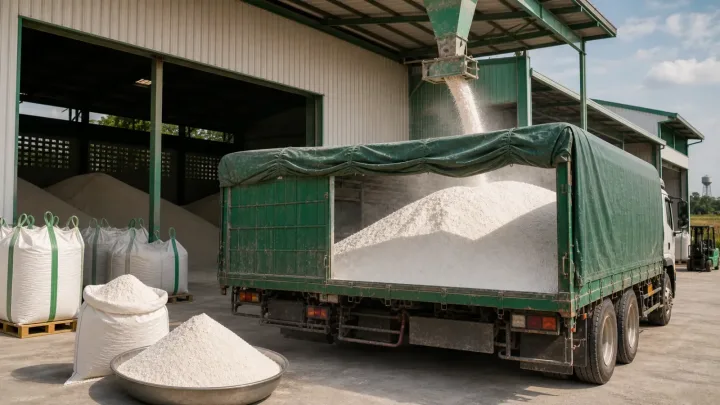
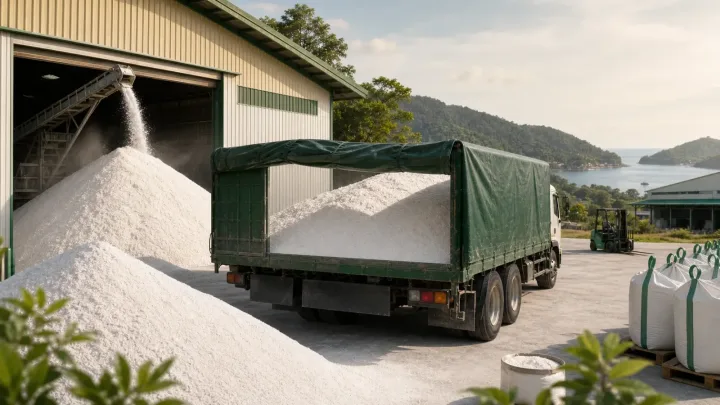
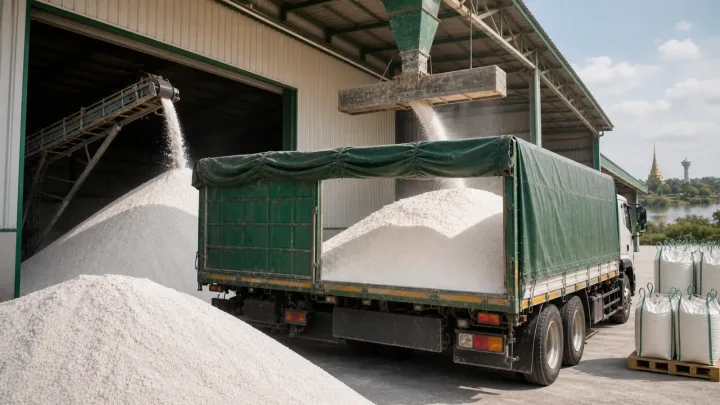
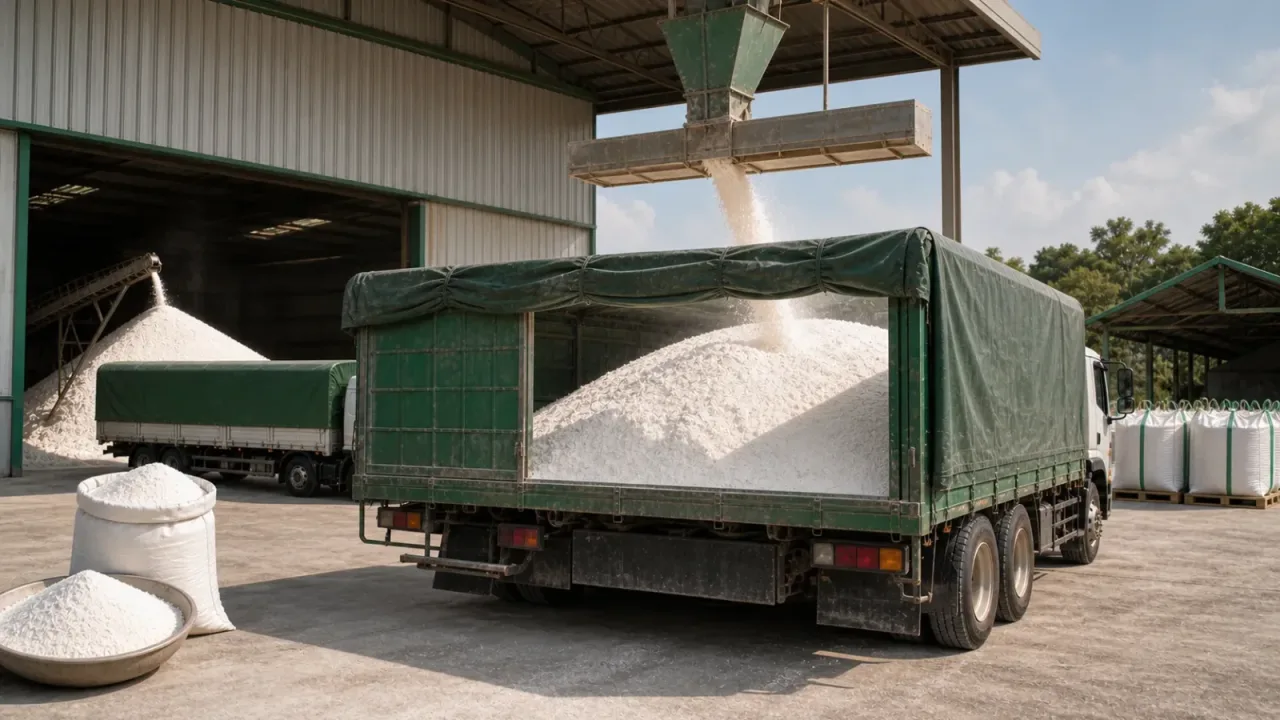
The cleanliness of the trucks is an indispensable factor. Vehicles used for transport must undergo rigorous cleaning to prevent contamination from other types of goods (such as fertilizer or chemicals), and the integrity of the tarpaulin must be inspected to protect against rainwater and external environmental interference.
5. Economic Analysis and Cost-Efficiency
Business decisions within the B2B sector must consider value beyond just the price per ton:
| Consideration Factor | Analysis Detail |
| Transport Cost Structure | Consists of fuel costs, vehicle depreciation, and lead time management costs. |
| Transport Model | Comparing bulk transportation (reducing unit cost) against small-scale distribution (increasing stock management flexibility). |
| Opportunity Cost | The impact of transport delays that could lead to feed production line interruptions or raw material shortages on farms. |
6. Conclusion & Future Outlook
The key to success in maintaining the quality of dried cassava pulp throughout the supply chain is the creation of verifiable standards at every stage—from the drying process at the source and the cleanliness of transport vehicles to route management that mitigates the risk of re-moisture.
In the future, Smart Logistics technology will play a vital role, such as the use of IoT sensors to monitor moisture levels and temperature inside truck beds in real-time, allowing buyers to assess product quality before the vehicle arrives at the factory. Furthermore, the focus on a Sustainable Feed Supply Chain will become the new standard for global operators, encompassing the reduction of the carbon footprint from transportation and the most efficient management of resources.
Sources
- Thai Tapioca Starch Association - Tapioca Production - https://www.thaitapiocastarch.org/en/information/statistics/tapioca_production - ใช้ยืนยันภาพรวมผลผลิตมันสำปะหลังไทยและบริบท supply ของอุตสาหกรรม
- Thai Tapioca Starch Association - Export Tapioca Products - https://www.thaitapiocastarch.org/en/information/statistics/export_tapioca_products - ใช้ยืนยันสถิติส่งออกผลิตภัณฑ์มันสำปะหลัง รวมถึงหมวด Pulp
- Thai Tapioca Starch Association - Tapioca Starch Processing - https://thaitapiocastarch.org/en/information/learning_industry/tapioca_starch_processing - ใช้อธิบายกระบวนการผลิตแป้งมันและที่มาของผลพลอยได้จากโรงงานแป้งมัน
- ACFS / TAS 8803-2561 - มาตรฐานสินค้าเกษตร กากมันสำปะหลัง - https://www.opsmoac.go.th/udonthani-dwl-files-471491791858 - ใช้อ้างอิงนิยามกากมันสำปะหลังแห้ง/ผง/อัดเม็ด และข้อกำหนดพื้นฐาน เช่น ไม่พบเชื้อราหรือสิ่งแปลกปลอมที่มองเห็นได้
- GP Autoparts - Truck Law 2024 - https://www.gpautoparts.co.th/en/truck-law-2024-latest-regulations-and-penalties-that-truck-owners-need-to-know/ - ใช้ประกอบข้อจำกัดน้ำหนักรถบรรทุก เช่น 10 ล้อ 25 ตัน เพื่ออธิบาย full truck load
- Google Maps - https://www.google.com/maps - ใช้เป็นแหล่งตรวจระยะทางจริงก่อนเผยแพร่บทความจังหวัด เพราะระยะทางเปลี่ยนตามจุดเริ่มต้นและเส้นทาง
- Department of Land Transport - https://www.dlt.go.th/ - ใช้เป็นแหล่งอ้างอิงหน่วยงานกำกับดูแลการขนส่งทางบกเมื่อต้องตรวจข้อกำหนดล่าสุด

Author information
Sri Thong Admin
B2B dried cassava pulp content specialist
Affiliation
SRITHONG PRODUCTTAPIOCA COMPANY LIMITED