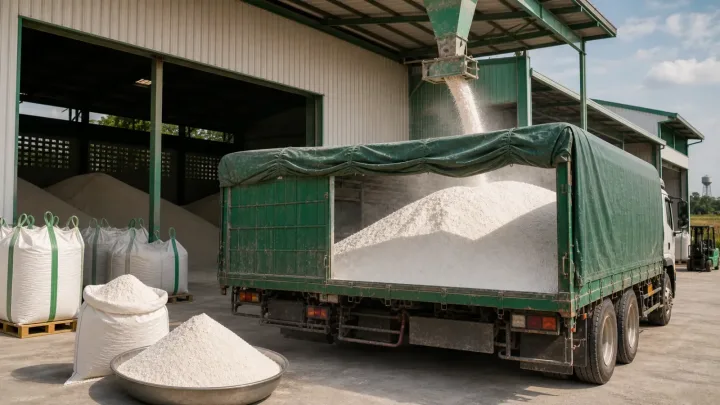
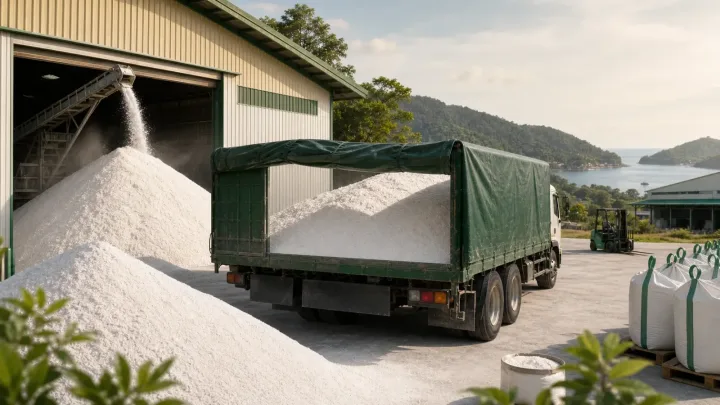
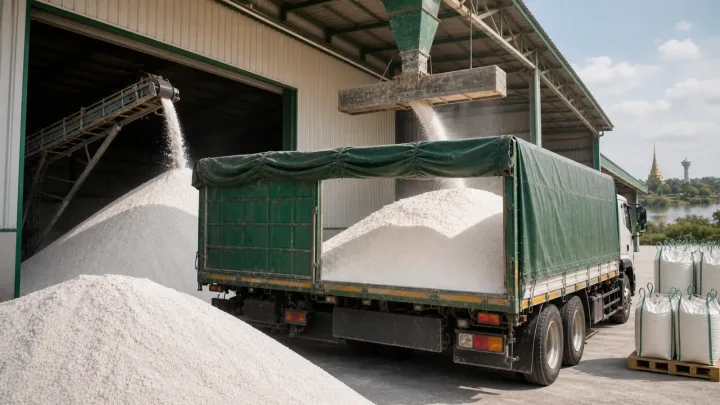
Shipping Dried Cassava Pulp from Korat to Kalasin
By Sri Thong Admin · Published 2026-06-23 · Updated 2026-06-07
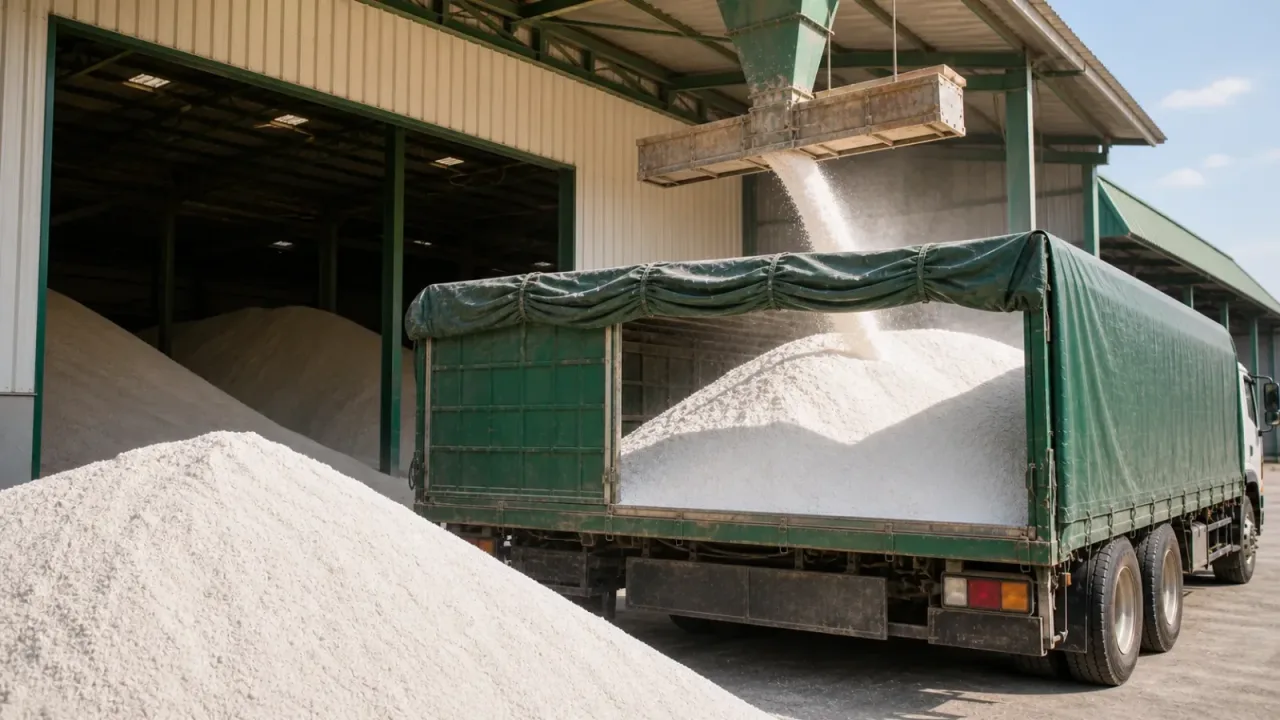
Overview of Dried Cassava Residue Supply Chain Management
The key to creating a competitive advantage in the animal feed and livestock production industry is not limited solely to sourcing highly nutritious raw materials, but also encompasses "the efficiency of maintaining raw material quality throughout the transportation route" from production sources in the Lower Northeastern region to major livestock hubs. Effective management must integrate everything from pre-loading quality control, logistics planning to reduce hidden costs, risk management during transit to prevent contamination and moisture, to accurate destination receiving processes. This ensures that every ton of raw material delivered to factories or farms maintains its physical and chemical properties according to the COA (Certificate of Analysis) standards, which is a decisive factor for the long-term cost-effectiveness of meat production.
1. Economic Importance and Animal Feed Supply Chain Linkage
In the beef cattle fattening and animal feed production industries, Dried Cassava Residue/Pulp serves as a vital energy source with a cost-effective profile compared to other raw materials. However, supply chain efficiency depends on the systematic linkage between production areas and usage areas.
The supply chain structure of cassava residue in Thailand involves movement from primary raw material sources, such as Nakhon Ratchaima—a central cassava processing hub—to key livestock areas like Kalasin province. Efficient management must look beyond just the price per ton and consider the "Total Landed Cost," which includes raw material costs, transportation costs, and potential losses during transit. If the logistics process is inefficient, increased transportation costs and raw material degradation will directly impact the Cost of Goods Sold (COGS) for downstream operators.
2. Pre-loading Quality Control
Errors occurring at the source cannot be rectified once the goods reach the destination. Therefore, Pre-loading QC is the most critical step in loss prevention, focusing on the following key areas:
Moisture Content Management
Moisture content is a critical variable that determines the shelf-life of dried cassava residue. Moisture testing before loading must adhere to agreed-upon standards (e.g., not exceeding 12-14%, depending on specifications). If moisture levels are too high, it acts as a catalyst for the growth of mold and bacteria, leading to nutrient degradation and potential contamination with mycotoxins, which are hazardous to animals.
Impurities & Contaminants
Inspection must cover physical foreign objects such as soil, sand, or plastic fragments. High levels of these impurities affect the nutritional value and can cause issues in the animal feed manufacturing process at the factory.
Packaging & Loading Stability
The choice of transport method must be determined by the requirements of the destination:
| Transport Method | Advantages | Risks to Control |
| Bulk | Low packaging cost, high volume capacity | Risk of cross-contamination and high moisture |
| Bagged | Easy to maintain cleanliness, easy to store, reduced contamination | Higher packaging costs, payload management |
3. Logistics & Route Optimization
Logistics management for processed agricultural raw materials is not merely about moving goods, but about the strategic management of cost and lead time.
Route Analysis
Transporting from Nakhon Ratchasima to Kalasin requires planning for the shortest and most suitable routes to reduce vibration, which can affect the compaction of the product in the truck, and to minimize travel time to reduce the duration the goods are exposed to unnecessary heat and moisture.
Truck Selection & Payload Management
Selecting the appropriate vehicle type (e.g., trailers, 10-wheel trucks) must align with customer demand volumes to achieve trip optimization. Furthermore, payload management must strictly comply with legal regulations to prevent delays caused by roadside inspections, which would disrupt the supply chain.
4. In-transit Risk Management
The most significant risk during transit is the change in environmental conditions, which can degrade the quality of the cassava residue.
- Moisture Re-absorption: During the rainy season or when transporting through high-humidity areas, products may re-absorb moisture from the air. Using standard-compliant tarpaulins or sealed containers is essential.
- It is crucial to prevent the product from coming into contact with chemicals or other raw materials that may be present on the vehicle.
- GPS Tracking: GPS technology is used not only for location tracking but also to control Lead Time according to the plan and to ensure traceability in the event of accidents or unusual delays.
5. Post-delivery Verification & QA
The final and most critical step in confirming the success of the process is the inspection at the receiving point (destination in Kalasin) to ensure the goods meet the purchased specifications.
Sampling & Lab Analysis
Upon arrival, a sampling process must be conducted according to international standards to re-verify moisture, protein, and impurity levels, comparing them against the COA provided by the origin.
Weight & Documentation
Net weight verification via a weighbridge must be conducted transparently, comparing the weight figures between the origin and the destination to verify invoice accuracy and prevent product shrinkage.
Non-conformance Handling
In cases where products are found to exceed moisture standards or are contaminated, clear handling procedures must be in place, such as issuing a Non-Conformance Report (NCR), segregation, or coordinating returns/replacements, to ensure that such lots do not enter the animal feed production process.
6. Conclusion: Maximizing Efficiency in the Animal Feed Supply Chain
Maintaining the quality of dried cassava residue from Nakhon Ratchasima to Kalasin is not just a matter of transportation, but a process of Total Quality Management (TQM)—from moisture control during pre-loading, precise logistics planning, and in-transit risk prevention, to verifiable receiving processes.
In the future, the trend toward adopting Smart Logistics technology, such as real-time moisture sensors within truck compartments or traceability systems capable of monitoring travel history and environmental conditions at all times, will become the new standard, elevating the Thai animal feed industry's reliability and global competitiveness.
Sources
- Thai Tapioca Starch Association - Tapioca Production - https://www.thaitapiocastarch.org/en/information/statistics/tapioca_production - ใช้ยืนยันภาพรวมผลผลิตมันสำปะหลังไทยและบริบท supply ของอุตสาหกรรม
- Thai Tapioca Starch Association - Export Tapioca Products - https://www.thaitapiocastarch.org/en/information/statistics/export_tapioca_products - ใช้ยืนยันสถิติส่งออกผลิตภัณฑ์มันสำปะหลัง รวมถึงหมวด Pulp
- Thai Tapioca Starch Association - Tapioca Starch Processing - https://thaitapiocastarch.org/en/information/learning_industry/tapioca_starch_processing - ใช้อธิบายกระบวนการผลิตแป้งมันและที่มาของผลพลอยได้จากโรงงานแป้งมัน
- ACFS / TAS 8803-2561 - มาตรฐานสินค้าเกษตร กากมันสำปะหลัง - https://www.opsmoac.go.th/udonthani-dwl-files-471491791858 - ใช้อ้างอิงนิยามกากมันสำปะหลังแห้ง/ผง/อัดเม็ด และข้อกำหนดพื้นฐาน เช่น ไม่พบเชื้อราหรือสิ่งแปลกปลอมที่มองเห็นได้
- GP Autoparts - Truck Law 2024 - https://www.gpautoparts.co.th/en/truck-law-2024-latest-regulations-and-penalties-that-truck-owners-need-to-know/ - ใช้ประกอบข้อจำกัดน้ำหนักรถบรรทุก เช่น 10 ล้อ 25 ตัน เพื่ออธิบาย full truck load
- Google Maps - https://www.google.com/maps - ใช้เป็นแหล่งตรวจระยะทางจริงก่อนเผยแพร่บทความจังหวัด เพราะระยะทางเปลี่ยนตามจุดเริ่มต้นและเส้นทาง
- Department of Land Transport - https://www.dlt.go.th/ - ใช้เป็นแหล่งอ้างอิงหน่วยงานกำกับดูแลการขนส่งทางบกเมื่อต้องตรวจข้อกำหนดล่าสุด

Author information
Sri Thong Admin
B2B dried cassava pulp content specialist
Affiliation
SRITHONG PRODUCTTAPIOCA COMPANY LIMITED