Shipping Dry Cassava Pulp from Korat to Phitsanulok
By Sri Thong Admin · Published 2026-06-23 · Updated 2026-06-07
Summary of Key Essences of Dried Cassava Pulp Quality Management in the Supply Chain
Success in managing Dried Cassava Pulp for the animal feed industry depends not only on sourcing sufficient quantities from production sites but also on maintaining nutritional stability throughout the logistics journey. Especially along the strategic route from Nakhon Ratchasima to Phitsanulok, which covers a long distance, controlling technical risk factors such as Moisture Content, preventing Self-heating, and managing Shrinkage are critical variables that directly impact the Unit Cost and the accuracy of Feed Formulation at the destination mills.
1. Introduction: The Importance of the Cassava Pulp Supply Chain in the Animal Feed Industry
In the animal feed industry, dried cassava pulp plays a vital role as an efficient energy source for ruminants due to its appropriate carbohydrate content. However, maintaining consistent nutritional value from the production source to the feed mill is a complex process engineering challenge.
The transportation route between Nakhon Ratchima (a major cassava processing hub) and Phitsanulok (a key hub for livestock farms and feed mills in the lower northern region) involves distances that are subject to weather variability and internal heat management within the cargo. Therefore, effective logistics management is not just about moving goods, but about managing "quality" to mitigate the risks of Mycotoxins development and nutrient loss.
2. Pre-loading Quality Control
The quality control process must begin before loading (Pre-loading) to establish a clear baseline for both the origin and the destination.
2.1 Moisture Content Control
Moisture is the most critical factor in determining shelf-life. The standard acceptable by feed mills to prevent the outbreak of mold and microorganisms is to control moisture at an appropriate level (Target < 12-14%). If moisture exceeds this threshold, it will lead to biological reactions within the truck.
2.2 Contamination Inspection
Detecting high levels of soil, sand, or cassava peel not only reduces the Dry Matter (DM) of the raw material but also impacts machinery in the feed production process (such as grinders) and affects the accuracy of nutrient proportion calculations.
2.3 Texture & Physical Property
Verifying the consistency of particle size and physical characteristics to ensure that the delivered raw material has homogeneity, which is a fundamental requirement for feed formulation.
3. Logistics & Transportation Management
Selecting the appropriate transportation resources directly impacts the Unit Cost of the raw material and product safety.
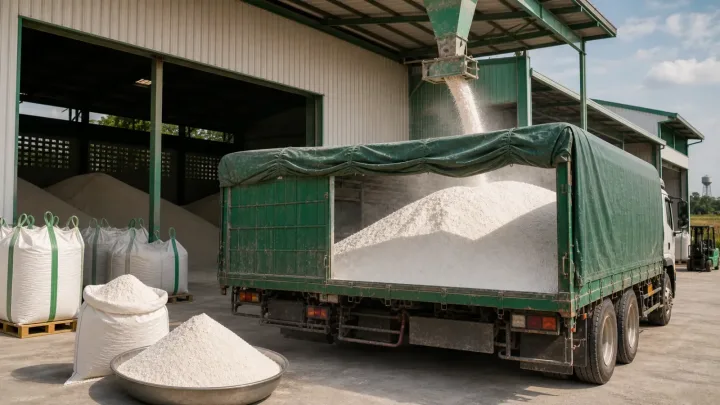
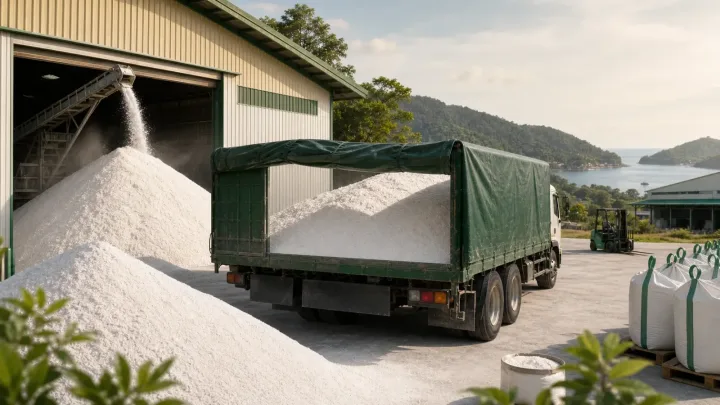
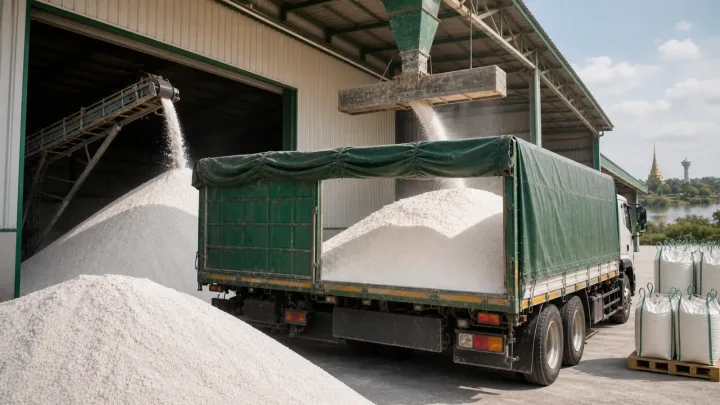
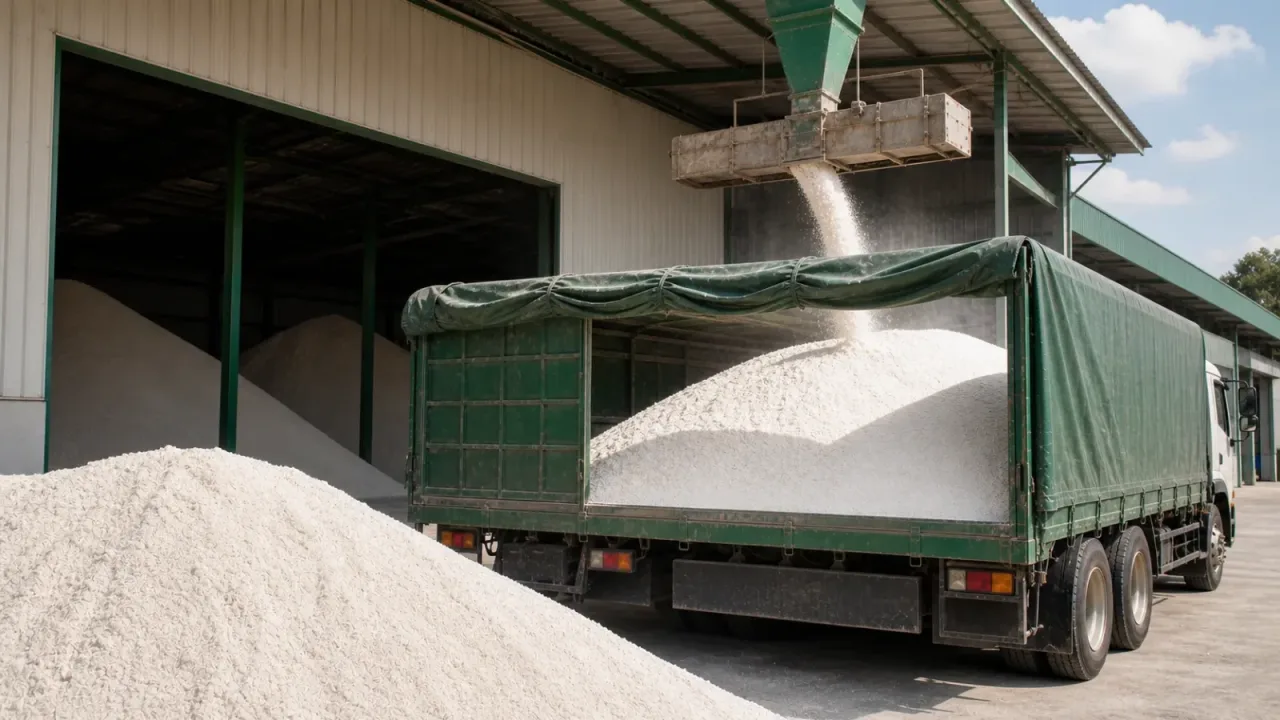
3.1 Selection of Appropriate Truck Types
| Truck Type | Advantages | Precautions |
| Flatbed Trailer | High Payload | Risk of moisture from rain and external contamination if not properly tarped |
| Side-board Truck | Provides better protection against lateral foreign objects | Volume and weight calculations must be precise to avoid Overweight |
3.2 Route & Load Optimization
Route management from Korat to Phitsanulok must consider standardized rest stops to reduce excessively long transit times. This includes Load Optimization planning to ensure every trip achieves Full Truck Load, which significantly helps reduce the Logistics Cost per Ton.
4. In-transit Risk Mitigation
Risks occurring during long-distance movement are the most difficult to control without a robust management system.
- External Protection: Utilizing high-quality and intact Tarping systems to prevent rainwater and high relative humidity from entering the cassava pulp pile, which is the primary cause of spoilage.
- Biological Activity Monitoring: Controlling the accumulation of heat within the cassava pulp pile (Self-heating) caused by microbial activity when moisture levels are too high, which leads to chemical changes in the raw material.
- Shrinkage Management: Monitoring the rate of moisture evaporation during transit to compare with the origin weight and prevent errors in inventory planning.
5. Destination Inspection & Receiving
When the goods arrive at the destination factory in Phitsanulok, the Verification process is the final step to confirm that the products meet the agreed-upon Specifications.
The Sampling process must be systematic, taking samples from multiple positions within the truck to find the true average for both Moisture and contaminants. Furthermore, Weight Verification via a standard Weighbridge to compare with the origin's delivery note is a crucial step in inventory and raw material cost management.
Once passed inspection, storage in Silos or Warehouses must follow hygienic principles to maintain the quality controlled throughout the journey until the day of use.
6. Conclusion & Expert Recommendations
The Key Success Factors in managing dried cassava pulp involve viewing "Logistics as a part of quality control." Maintaining moisture levels below 14% and preventing external moisture during transport are essential aspects that feed mills should not overlook.
In the future, implementing IoT Sensors for real-time monitoring of moisture and temperature within the transport containers will be a vital tool, enabling operators to predict risks and manage the Supply Chain sustainably. If you require in-depth information regarding product Specifications, Certificates of Analysis (COA), or wish to request raw material samples for quality testing, please contact our team of experts for further information and quotations based on your actual usage volume.
Sources
- Thai Tapioca Starch Association - Tapioca Production - https://www.thaitapiocastarch.org/en/information/statistics/tapioca_production - ใช้ยืนยันภาพรวมผลผลิตมันสำปะหลังไทยและบริบท supply ของอุตสาหกรรม
- Thai Tapioca Starch Association - Export Tapioca Products - https://www.thaitapiocastarch.org/en/information/statistics/export_tapioca_products - ใช้ยืนยันสถิติส่งออกผลิตภัณฑ์มันสำปะหลัง รวมถึงหมวด Pulp
- Thai Tapioca Starch Association - Tapioca Starch Processing - https://thaitapiocastarch.org/en/information/learning_industry/tapioca_starch_processing - ใช้อธิบายกระบวนการผลิตแป้งมันและที่มาของผลพลอยได้จากโรงงานแป้งมัน
- ACFS / TAS 8803-2561 - มาตรฐานสินค้าเกษตร กากมันสำปะหลัง - https://www.opsmoac.go.th/udonthani-dwl-files-471491791858 - ใช้อ้างอิงนิยามกากมันสำปะหลังแห้ง/ผง/อัดเม็ด และข้อกำหนดพื้นฐาน เช่น ไม่พบเชื้อราหรือสิ่งแปลกปลอมที่มองเห็นได้
- GP Autoparts - Truck Law 2024 - https://www.gpautoparts.co.th/en/truck-law-2024-latest-regulations-and-penalties-that-truck-owners-need-to-know/ - ใช้ประกอบข้อจำกัดน้ำหนักรถบรรทุก เช่น 10 ล้อ 25 ตัน เพื่ออธิบาย full truck load
- Google Maps - https://www.google.com/maps - ใช้เป็นแหล่งตรวจระยะทางจริงก่อนเผยแพร่บทความจังหวัด เพราะระยะทางเปลี่ยนตามจุดเริ่มต้นและเส้นทาง
- Department of Land Transport - https://www.dlt.go.th/ - ใช้เป็นแหล่งอ้างอิงหน่วยงานกำกับดูแลการขนส่งทางบกเมื่อต้องตรวจข้อกำหนดล่าสุด

Author information
Sri Thong Admin
B2B dried cassava pulp content specialist
Affiliation
SRITHONG PRODUCTTAPIOCA COMPANY LIMITED