Shipping Dried Cassava Pulp from Korat to Nong Khai
By Sri Thong Admin · Published 2026-06-24 · Updated 2026-06-06
Summary: Logistics Management of Dried Cassava Pulp to Maintain Raw Material Standards in the Animal Feed Supply Chain
Logistics management for dried cassava pulp on the Nakhon Ratchasima - Nong Khai route is not merely moving goods from one point to another; it is a process of Technical Quality Control throughout the entire journey. This involves maintaining moisture content, preventing mold contamination, and reducing weight loss due to evaporation (shrinkage). The key to efficient transportation lies in the integration of grading standards at the loading point, selecting appropriate vehicle types, and verifying the accuracy of weight and documentation (COA) at the receiving point. This ensures that end-user animal feed factories receive raw materials with consistent nutritional value, aligned with Least Cost Formulation, and can precisely control production costs.
1. The Role of Dried Cassava Pulp in the Animal Feed Supply Chain
In the animal feed production industry, dried cassava pulp serves as a vital energy source (carbohydrate source), particularly for ruminants, due to its starch and carbohydrate content which is essential for the rumen fermentation process.
The economic structure of this raw material is closely linked between "production sources" and "consumption points." Nakhon Ratchasima serves as the primary processing and collection hub due to the availability of cassava processing plants, while the upper northeastern region, such as Nong Khai province, acts as a strategic point with high demand for both domestic production and export via border checkpoints. The challenge for entrepreneurs lies in logistics management; inefficient transportation processes directly impact increased raw material costs and risks to nutritional quality.
2. Quality Standards and Technical Specifications
For animal feed factories, the acceptance of raw materials depends on the scientific values specified in the Certificate of Analysis (COA). Long-distance transportation, therefore, requires the control of several key variables:
- Moisture Content Control: Moisture levels exceeding standards (generally not exceeding 12-14%, depending on specifications) are the primary factor stimulating mold growth, which can lead to the production of aflatoxin, posing a severe risk to animal health.
- Impurable & Physical Contaminants: Controlling the presence of soil, sand, or other debris to maintain raw material purity and prevent machinery wear during the production process.
- Nutritional Value: Maintaining residual starch levels and preventing the degradation of nutrients during transit.
| Technical Parameter | Impact if Uncontrolled | Control Objective |
| Moisture | Mold and Aflatoxin | Below specified standard threshold |
| Impurities | Reduces nutritional value and increases foreign matter | Maximum purity according to specifications |
| Shrinkage | Weight loss leading to higher unit costs | Maintain weight as stable as possible |
3. Upstream Management: Loading Operations (Korat Loading Operations)
Logistics efficiency begins even before the vehicle departs from the factory in Nakhon Ratchasima. The processes that require strictness include:
Grading: Raw materials must undergo preliminary quality inspection to ensure that all goods loaded into the trucks meet the same standard, reducing the variability of materials entering the production line.
Weight Management: A significant issue in transporting dry raw materials is "Shrinkage," or weight loss due to the evaporation of remaining moisture under hot weather conditions. Therefore, calculating the dispatch weight and inspecting the density of the raw material is crucial.
Cross-contamination Prevention: Vehicles used for transport must undergo vehicle sanitation to ensure there is no residue from other types of materials, such as lime or agricultural chemicals, which would affect animal feed safety.
4. Transportation Strategy and Route Optimization
The route from Nakhon Ratchasima to Nong Khai involves distance and weather factors that must be analyzed to select the most appropriate mode of transport.
Truck Selection:
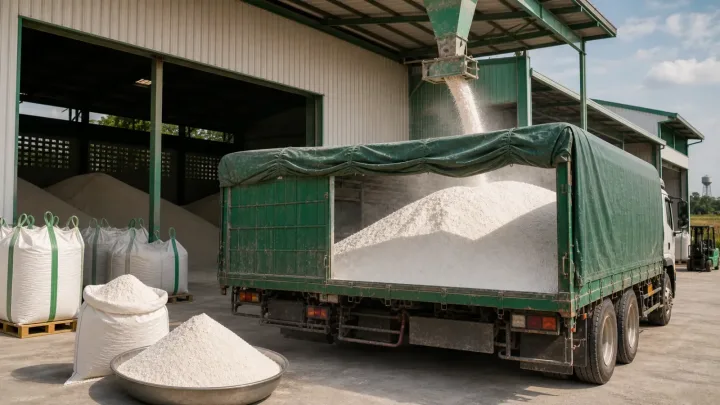
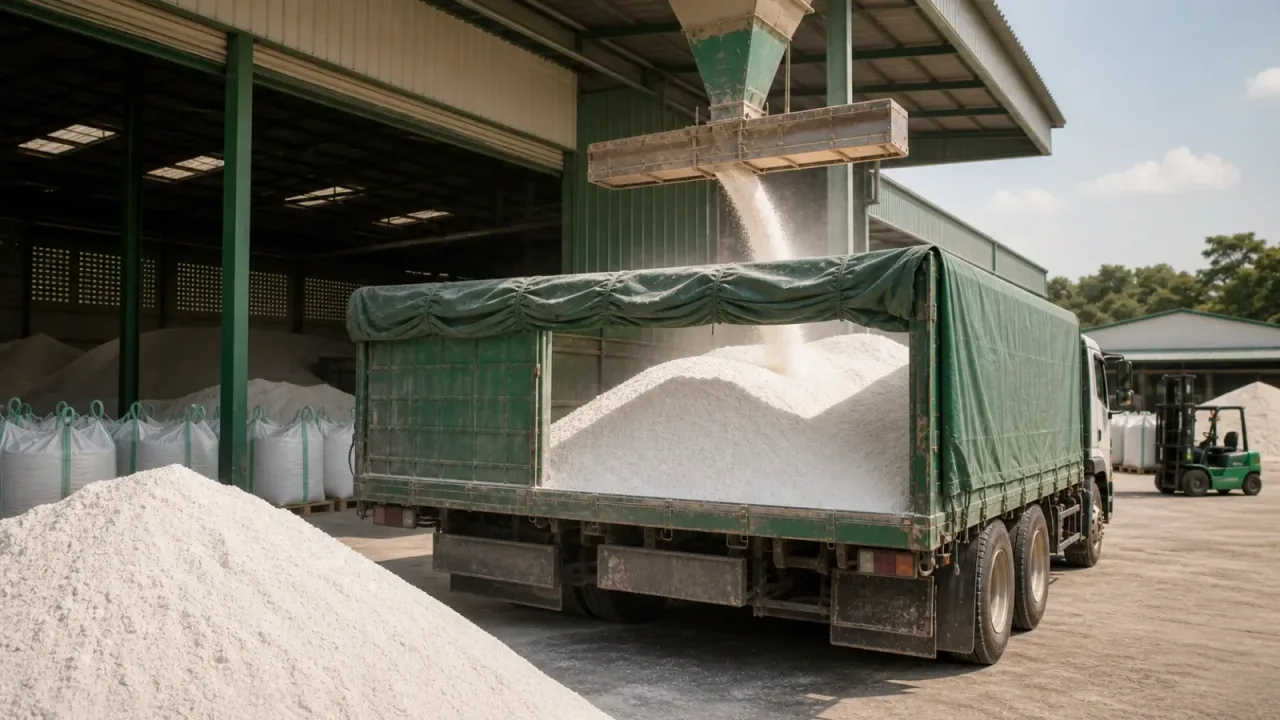
- Bulk (Trailers/Semi-trailers): Suitable for high-volume transportation and reduces loading time, but must emphasize the integrity of the tarpaulin to prevent moisture from rain.
- Bagged: Suitable for transportation requiring maximum moisture control and prevention of contaminants, though it may involve higher labor costs and handling time.
Lead Time Management: A short and consistent transit time helps reduce the risk of heat accumulation within the cargo area, which is a key variable that causes moisture changes and affects the quality of the cassava pulp.
5. In-transit Quality Control
The most significant risks during transit are weather conditions and vehicle leakage.
Environmental Control: Even if not using temperature-controlled (Reefer) trucks, maintaining the integrity of the roof and tarpaulin is indispensable to prevent rainwater or atmospheric moisture from seeping into the product.
Real-time Monitoring: The use of GPS Tracking technology not only assists in position tracking for unloading schedule planning but also enables logistics controllers to assess risks if a vehicle becomes stuck in areas with high humidity or prolonged adverse weather conditions.
6. Downstream Management and Receiving Protocol (Unloading & Receiving Protocol at Nong Khai)
When the goods arrive at the animal feed factory in Nong Khai, the receiving process is the final gate that determines the quality of the product.
Incoming Quality Inspection: Inspectors must perform random sampling to measure moisture content and re-verify physical contamination, referencing the COA from the origin.
Documentation & Weight Analysis: Checking the weight discrepancy between the origin (Korat) and the destination (N Nong Khai) to analyze loss/shrinkage, and verifying the accuracy of shipping documents for use in raw material accounting and actual cost calculation.
Storage Stability: Once accepted, raw materials must be moved into a storage system that can control ventilation to maintain stable quality until the next production cycle.
7. Economic Impact & Conclusion
Economically, reducing logistics costs should not focus solely on finding the lowest freight cost, but rather on finding the optimization between "transportation costs" and "value of material damage." Choosing a transport method that is too cheap but lacks quality control may lead to massive losses from non-conforming goods or the occurrence of toxic contamination.
The future trend in the animal feed industry is the implementation of Digital Supply Chain technology to ensure data traceability, from the processing plants in Nakhon Ratchasima to the production plants in Nong Khai. Close coordination between producers and users through standardized logistics management systems will be the key to creating sustainability for the regional animal feed supply chain.
Sources
- Thai Tapioca Starch Association - Tapioca Production - https://www.thaitapiocastarch.org/en/information/statistics/tapioca_production - ใช้ยืนยันภาพรวมผลผลิตมันสำปะหลังไทยและบริบท supply ของอุตสาหกรรม
- Thai Tapioca Starch Association - Export Tapioca Products - https://www.thaitapiocastarch.org/en/information/statistics/export_tapioca_products - ใช้ยืนยันสถิติส่งออกผลิตภัณฑ์มันสำปะหลัง รวมถึงหมวด Pulp
- Thai Tapioca Starch Association - Tapioca Starch Processing - https://thaitapiocastarch.org/en/information/learning_industry/tapioca_starch_processing - ใช้อธิบายกระบวนการผลิตแป้งมันและที่มาของผลพลอยได้จากโรงงานแป้งมัน
- ACFS / TAS 8803-2561 - มาตรฐานสินค้าเกษตร กากมันสำปะหลัง - https://www.opsmoac.go.th/udonthani-dwl-files-471491791858 - ใช้อ้างอิงนิยามกากมันสำปะหลังแห้ง/ผง/อัดเม็ด และข้อกำหนดพื้นฐาน เช่น ไม่พบเชื้อราหรือสิ่งแปลกปลอมที่มองเห็นได้
- GP Autoparts - Truck Law 2024 - https://www.gpautoparts.co.th/en/truck-law-2024-latest-regulations-and-penalties-that-truck-owners-need-to-know/ - ใช้ประกอบข้อจำกัดน้ำหนักรถบรรทุก เช่น 10 ล้อ 25 ตัน เพื่ออธิบาย full truck load
- Google Maps - https://www.google.com/maps - ใช้เป็นแหล่งตรวจระยะทางจริงก่อนเผยแพร่บทความจังหวัด เพราะระยะทางเปลี่ยนตามจุดเริ่มต้นและเส้นทาง
- Department of Land Transport - https://www.dlt.go.th/ - ใช้เป็นแหล่งอ้างอิงหน่วยงานกำกับดูแลการขนส่งทางบกเมื่อต้องตรวจข้อกำหนดล่าสุด

Author information
Sri Thong Admin
B2B dried cassava pulp content specialist
Affiliation
SRITHONG PRODUCTTAPIOCA COMPANY LIMITED