Why You Don’t Need Lab Tests for Every Lot—Yet Can Still Control Quality
By Sri Thong Admin · Published 2026-06-12 · Updated 2026-06-06
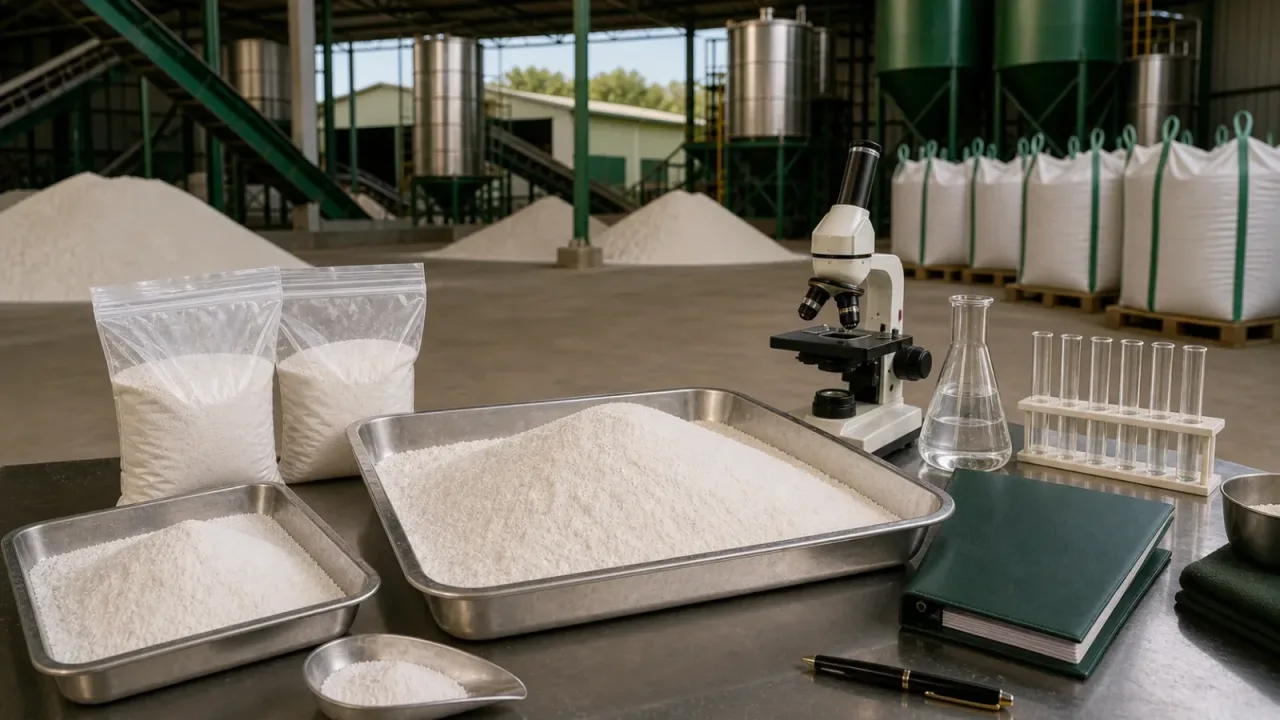
Quality management in the modern animal feed industry is not about maximizing the frequency of laboratory testing, but rather about creating an effective "Prevention" system through upstream risk control. This involves risk-based assessment of raw materials, building reliable supplier partnerships, and utilizing technology for real-time production monitoring. The core objective is to shift from "detecting errors" to "creating a system where errors cannot occur," which helps reduce lead time, minimize waste, and sustainably increase product consistency.
1. A Paradigm Shift from "Detection" to "Prevention"
In the past, many feed mills held the belief that "testing every lot is the best guarantee of safety." However, in practice, relying on a Reactive Control strategy—waiting for analysis results after raw materials have already entered the factory—presents massive limitations.
When we rely solely on laboratory analysis, it leads to increased hidden costs, including:
- Lead time costs: Raw materials must be kept in quarantine while awaiting lab results, causing production interruptions or lack of continuity.
- Waste costs: If abnormalities are detected after the fact, recalling or managing substandard materials is difficult and expensive.
- Decision-making risk: Reactive testing occurs after an error has already happened, rather than preventing it from occurring.
Therefore, building a robust Quality Assurance (QA) system requires shifting from Quality Control (QC)—which merely functions to "sort good products from bad"—to creating a system that controls inputs and production processes, ensuring that the final results meet the predetermined specifications from the very beginning.
2. Risk Management via Sampling Plans (Statistical Approach)
Instead of using a "one-size-fits-all" approach, international-standard feed mills utilize Risk-based Assessment to determine the appropriate testing frequency and sample size.
Classifying raw materials by risk level allows for efficient laboratory resource allocation:
| Risk Level | Material Characteristics | Control Strategy |
| High-risk | Materials with a high potential for contamination, such as additives, moisture-sensitive materials, or materials from new sources. | Detailed analysis for every lot and strict verification of the Certificate of Analysis (CoA). |
| Medium-risk | Basic raw materials with seasonal variations, such as soybean meal or corn. | Use a statistical Sampling Plan and conduct testing at determined periodic intervals. |
| Low-risk | Materials with high stability and a proven track record of quality. | Focus on document verification and periodic spot checks. |
Implementing international standards such as ANSI/ASQ Z1.4 to define the Acceptance Quality Limit (AQL) enables factories to determine statistically confident sample sizes without excessive testing. This reduces the laboratory workload while maintaining precision in quality control.
3. Upstream Quality Control: Supplier Quality Assurance (SQA)
The key to reducing the laboratory testing burden is shifting the role from "buyer" to "business partner" (Supplier Partnership). Upstream quality control through the SQA system ensures that raw materials leaving the supplier's factory meet the required standards before they ever reach our facility.
Key mechanisms include:
- Effective use of Certificate of Analysis (CoA): A CoA is not just a supporting document for receiving goods; it must undergo a verification process to ensure that the reported values align with historical data and our specific raw material specifications.
- Supplier Audit & Rating: Conducting on-site audits to evaluate GMP/HACCP standards and implementing a grading system to distinguish highly reliable suppliers from those posing higher risks.
- Defining measurable specifications: Establishing clear agreement on chemical and physical standards (Clearance of Specs) to reduce ambiguity during the receiving process.
4. Process Control through In-process Monitoring
The most effective form of quality control is In-process Monitoring, which detects abnormalities before products become finished goods, focusing on identifying Critical Control Points (CCP) according to HACCP principles.
Utilizing Physical Parameters as proxy indicators for quality can be achieved without waiting for time-consuming chemical lab results, such as:
- Particle Size: Controlling particle size through screen analysis to maintain nutritional consistency.
- Moisture & Temperature: Using sensors to monitor moisture and temperature during the pelletizing process to prevent the growth of mold and microorganisms.
- Bulk Density: Monitoring the density of the feed to control packaging costs and transportation standards.
The implementation of automation and real-time sensors enables immediate process adjustment when values begin to deviate from standards, reducing the likelihood of Out of Specification (OOS) products.
5. Using Statistics for Control and Prediction (Statistical Process Control - SPC)
When continuous monitoring data is available, we can elevate our control from "problem-solving" to "prediction" using Statistical Process Control (SPC) tools.
The use of Control Charts allows production managers to perform trend analysis on deviations. For example, if the moisture content in raw materials shows a continuous upward trend—even if it has not yet exceeded the Upper Control Limit—the system provides an early warning signal to investigate the root cause before a real problem occurs.
Variance Analysis helps the factory understand which factor is driving quality fluctuations—whether it is a common cause (inherent raw material variability) or a special cause (an abnormality in the production process)—leading to more accurate business decisions.
6. The Modern Role of the Laboratory
In a modern quality management system, the laboratory is not merely responsible for "testing everything," but serves as a unit for Laboratory Verification and Validation.
- Verification: Verifying the accuracy of the system, such as performing random tests to confirm that the supplier's CoA remains accurate.
- Targeted Testing: Conducting specific analyses (Corrective Action) when signals of abnormality are detected by the process control system or when high-risk raw materials are identified.
- Validation: Serving to confirm that the established production processes and control systems can consistently produce goods according to the required standards.
7. Conclusion: Building a Sustainable Quality Culture
Reducing the frequency of laboratory testing does not mean lowering standards; it means increasing the efficiency of risk management. The success of an animal feed factory does not depend on how well you detect errors, but on how well you prevent them from occurring.
The core essence is to create a system that links Risk Management + Process Control + Supplier Trust to achieve Consistent Quality, grounded in Traceability and Data Integrity, which are the essential foundations of Operational Excellence in the global animal feed industry.
Sources
- Thai Tapioca Starch Association - Tapioca Production - https://www.thaitapiocastarch.org/en/information/statistics/tapioca_production - ใช้ยืนยันภาพรวมผลผลิตมันสำปะหลังไทยและบริบท supply ของอุตสาหกรรม
- Thai Tapioca Starch Association - Export Tapioca Products - https://www.thaitapiocastarch.org/en/information/statistics/export_tapioca_products - ใช้ยืนยันสถิติส่งออกผลิตภัณฑ์มันสำปะหลัง รวมถึงหมวด Pulp
- Thai Tapioca Starch Association - Tapioca Starch Processing - https://thaitapiocastarch.org/en/information/learning_industry/tapioca_starch_processing - ใช้อธิบายกระบวนการผลิตแป้งมันและที่มาของผลพลอยได้จากโรงงานแป้งมัน
- ACFS / TAS 8803-2561 - มาตรฐานสินค้าเกษตร กากมันสำปะหลัง - https://www.opsmoac.go.th/udonthani-dwl-files-471491791858 - ใช้อ้างอิงนิยามกากมันสำปะหลังแห้ง/ผง/อัดเม็ด และข้อกำหนดพื้นฐาน เช่น ไม่พบเชื้อราหรือสิ่งแปลกปลอมที่มองเห็นได้
- FAO - Roots, tubers, plantains and bananas in animal feeding - https://www.fao.org/4/T0554E/T0554E05.htm - ใช้ยืนยันประเด็นความชื้น สิ่งปลอมปน เถ้า ทราย และความเสี่ยง aflatoxin ในสินค้า cassava/feed
- FAO - Thailand Feed and Feed Ingredient Standards - https://www.fao.org/fileadmin/user_upload/affris/docs/standard/Thailand_Feed_and_Feed_Ingredient_Standards.pdf - ใช้เป็นตัวอย่างโครงสร้างค่าวิเคราะห์วัตถุดิบอาหารสัตว์ เช่น moisture, protein, fiber, ash
- DLD - การตรวจอะฟลาทอกซินในวัตถุดิบอาหารสัตว์ - https://qcontrol.dld.go.th/images/Prototype/knowledge/analysis/2565/13.pdf - ใช้สนับสนุนหัวข้อ aflatoxin, วิธีวิเคราะห์ และเหตุผลที่ควรตรวจเป็นรอบเมื่อมีความเสี่ยง

Author information
Sri Thong Admin
B2B dried cassava pulp content specialist
Affiliation
SRITHONG PRODUCTTAPIOCA COMPANY LIMITED