Korat Dried Cassava Pulp for Collectors and Traders
By Sri Thong Admin · Published 2026-06-09 · Updated 2026-06-07
Executive Summary: The Core of Being a Professional Dried Cassava Pulp Trader
Operating as an Aggregator and Trader in the dried cassava pulp industry in Nakhon Ratchasima does not rely solely on the ability to secure large volumes. The key to profitability and sustainability lies in managing "quality" and "supply continuity." Success in this B2B business depends on controlling moisture content and residual starch levels to meet the standards of animal feed factories, as well as efficiently managing logistics costs and shrinkage during transit. Building trust through traceability and implementing clear Standard Operating Procedures (SOPs) will transform a trader from a mere intermediary into a strategic partner that feed mills can rely on for long-term supply contracts.
1. Context and Importance of the Dried Cassava Pulp Industry in the Korat Region
Nakhon Ratchasima, or "Korat," serves as a primary strategic hub for the cassava starch industry in Thailand. With an abundance of raw material sources and a high density of cassava starch factories, a massive volume of by-products is generated: "Dried Cassava Pulp."
In the animal feed industry structure, dried cassava pulp is classified as a high-energy alternative feedstock that can replace primary ingredients like maize (corn) in certain production formulas. A trader's ability to access production sources directly in the Korat region provides a significant advantage in cost management.
The role of the aggregator and trader is therefore vital within the supply chain, acting as the intermediary that collects products from cassava yards and starch factories to distribute them to large-scale feed mills. Managing risks related to quantity and quality during varying seasons is the primary challenge faced by traders.
2. Deep Dive into Physical and Chemical Characteristics (Technical Specifications & Nutritional Profile)
For feed mill clients, technical data is the deciding factor for purchasing. Understanding nutritional values and physical standards is an area that traders cannot afford to neglect.
Moisture Content Standards
Moisture is the most critical factor in storage. If moisture levels exceed the specified standards (generally controlled to stay within optimal levels for preservation), it can lead to mold growth and fermentation, which could render the entire batch unusable.
Residual Starch and Energy Value
The value of dried cassava pulp depends on the amount of residual starch, which serves as the primary energy source. The higher this value, the higher the nutritional worth, directly influencing the purchasing decisions of feed producers.
Control of Impurities and Cleanliness
Traders must inspect for impurities such as sand, fiber, and cassava peel. If these are present in excessive amounts, they can affect palatability and potentially disrupt the production processes within feed mills.
| Parameters | Importance for Purchasing Decision | Impact if Below Standard |
| Moisture | High | Mold growth, product degradation, weight loss |
| Residual Starch | High | Reduced energy in feed formulas, increased feed costs |
| Impurities | Medium | Excessive fiber levels, cleanliness issues in the production process |
| Biological Contamination | High | Food Safety risks |
3. Sourcing & Supply Chain Management Mechanisms
Effective supply chain management begins with selecting reliable sources (Sourcing). Building relationships with cassava starch factories and cassava yards in the Korat area will enable traders to access the required volumes even during periods of scarcity.
Seasonality is an uncontrollable factor that requires proactive planning. Fluctuations in the cassava starch production season directly impact the supply of dried cassava pulp in the market. Professional traders must engage in supply planning to maintain supply continuity and ensure that contracts with end-customers are not compromised.
Regarding logistics, managing freight costs from production sites in Korat to feed mills is a key driver of profit. Efficient route planning and organized loading sequences can help reduce the total landed cost of the product.
4. Quality Assurance & Standardization for Aggregators
Building credibility as a trader requires a standardized inspection system (SOPs).
On-site Inspection Techniques
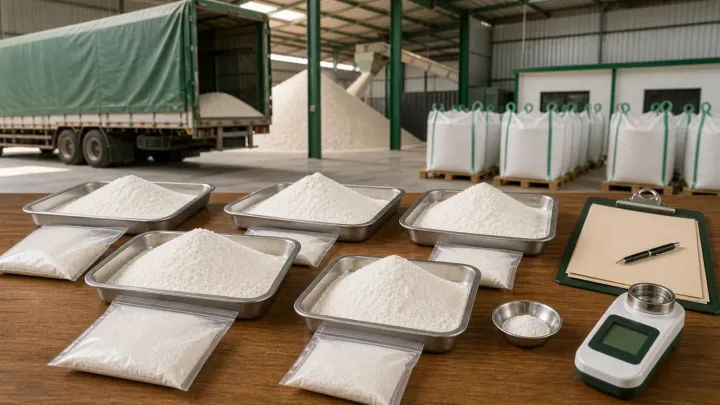
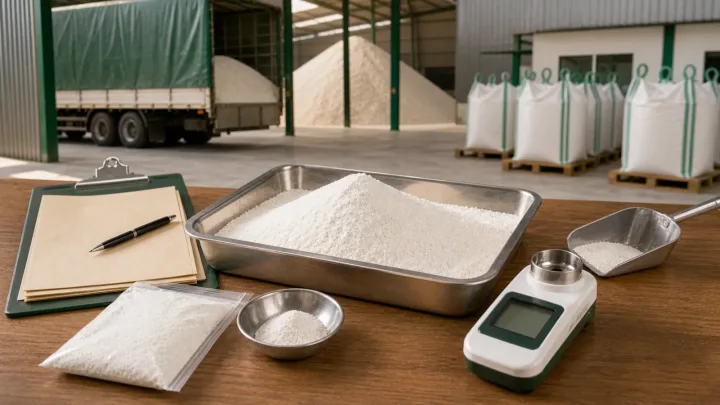
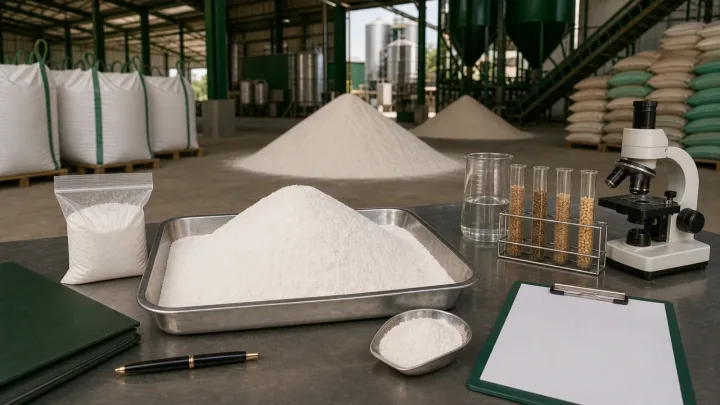
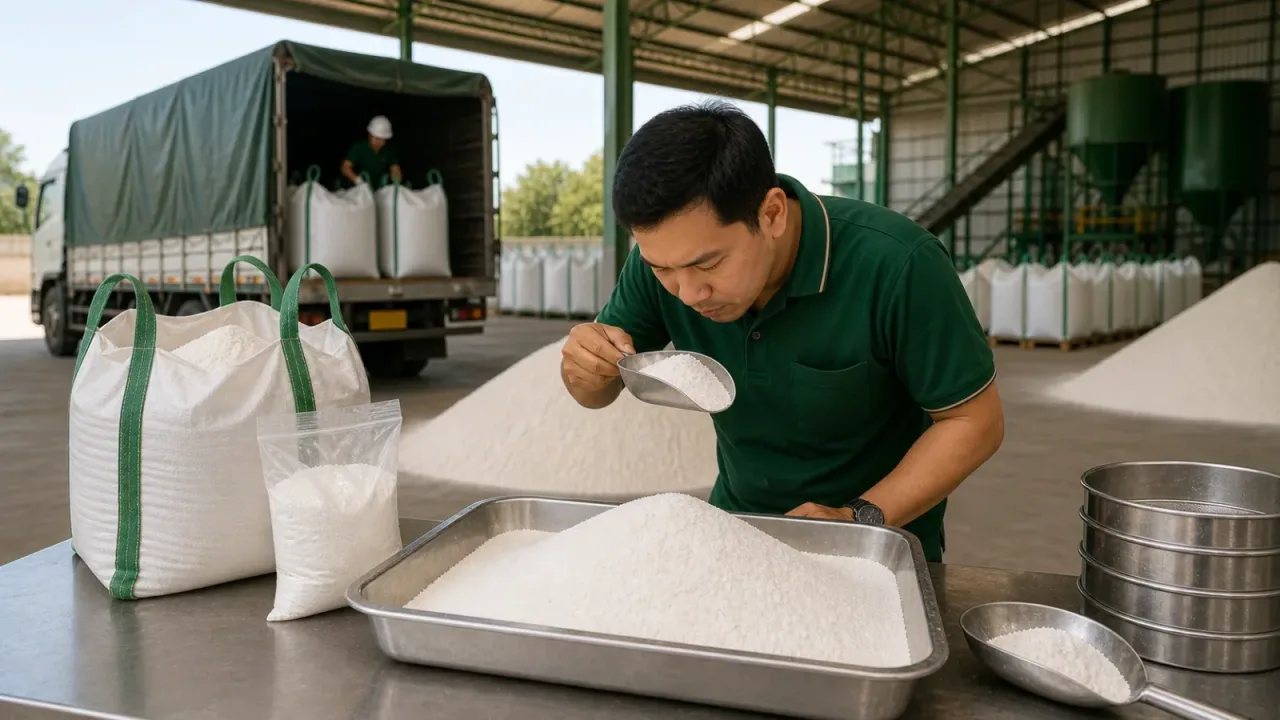
Traders should implement basic inspection guidelines, such as sampling moisture levels using portable moisture meters, sniffing for signs of fermentation, and visual inspections to check for impurities and mold.
It is essential to monitor for mold and unpleasant odors, which are signals of raw material degradation. If high-risk products are found, there must be a systematic process for segregation and the management of non-conforming products to prevent them from contaminating high-quality batches.
Establishing clear purchasing standards and communicating them to suppliers in advance will help reduce conflicts and ensure consistent product quality for end-partners.
5. Economic & Trading Dynamics: Cost Management and Profit Generation
Trading dried cassava pulp involves price volatility driven by cassava starch prices, fuel prices, and global market demand. Traders must conduct a detailed analysis of the cost structure, which includes:
- Product Cost
- Logistics/Freight Cost
- Shrinkage/Loss (due to moisture evaporation or increase)
- Operating Expenses
Effective inventory management helps mitigate risks from price fluctuations. Furthermore, establishing long-term relationships with both suppliers and end-users facilitates fixed-price or forward contracts, which provides long-term business stability.
6. Risk Management & Compliance
Risks are not limited to product quality; they also encompass storage and transportation. Maintaining the cleanliness of transport vehicles and preventing moisture ingress during transit is essential.
Legally, traders must comply with regulations regarding the movement of agricultural raw materials and must maintain robust contract management, particularly regarding payment terms and quality guarantees.
The future trend lies in sustainability and traceability. International feed mills are increasingly demanding information regarding the origin of the dried cassava pulp and its production processes. Therefore, data readiness will be a significant competitive advantage.
7. Conclusion & Future Outlook
The demand for dried cassava pulp in both global and Thai markets is projected to grow continuously alongside the expansion of the livestock industry. For traders in the era of Digital Transformation, the opportunity lies in leveraging technology and data for price and volume forecasting (Data-driven Trading). Adapting to systematic operations, implementing clear inspection standards, and providing technical data to customers will determine which traders can sustainably grow into leaders within this supply chain.
Sources
- Thai Tapioca Starch Association - Tapioca Production - https://www.thaitapiocastarch.org/en/information/statistics/tapioca_production - ใช้ยืนยันภาพรวมผลผลิตมันสำปะหลังไทยและบริบท supply ของอุตสาหกรรม
- Thai Tapioca Starch Association - Export Tapioca Products - https://www.thaitapiocastarch.org/en/information/statistics/export_tapioca_products - ใช้ยืนยันสถิติส่งออกผลิตภัณฑ์มันสำปะหลัง รวมถึงหมวด Pulp
- Thai Tapioca Starch Association - Tapioca Starch Processing - https://thaitapiocastarch.org/en/information/learning_industry/tapioca_starch_processing - ใช้อธิบายกระบวนการผลิตแป้งมันและที่มาของผลพลอยได้จากโรงงานแป้งมัน
- ACFS / TAS 8803-2561 - มาตรฐานสินค้าเกษตร กากมันสำปะหลัง - https://www.opsmoac.go.th/udonthani-dwl-files-471491791858 - ใช้อ้างอิงนิยามกากมันสำปะหลังแห้ง/ผง/อัดเม็ด และข้อกำหนดพื้นฐาน เช่น ไม่พบเชื้อราหรือสิ่งแปลกปลอมที่มองเห็นได้
- FAO - Roots, tubers, plantains and bananas in animal feeding - https://www.fao.org/4/T0554E/T0554E05.htm - ใช้ยืนยันประเด็นความชื้น สิ่งปลอมปน เถ้า ทราย และความเสี่ยง aflatoxin ในสินค้า cassava/feed
- FAO - Thailand Feed and Feed Ingredient Standards - https://www.fao.org/fileadmin/user_upload/affris/docs/standard/Thailand_Feed_and_Feed_Ingredient_Standards.pdf - ใช้เป็นตัวอย่างโครงสร้างค่าวิเคราะห์วัตถุดิบอาหารสัตว์ เช่น moisture, protein, fiber, ash
- DLD - การตรวจอะฟลาทอกซินในวัตถุดิบอาหารสัตว์ - https://qcontrol.dld.go.th/images/Prototype/knowledge/analysis/2565/13.pdf - ใช้สนับสนุนหัวข้อ aflatoxin, วิธีวิเคราะห์ และเหตุผลที่ควรตรวจเป็นรอบเมื่อมีความเสี่ยง

Author information
Sri Thong Admin
B2B dried cassava pulp content specialist
Affiliation
SRITHONG PRODUCTTAPIOCA COMPANY LIMITED