What Is Sifted Cassava Pulp, and How Does It Help Reduce Contaminants?
By Sri Thong Admin · Published 2026-06-11 · Updated 2026-06-06
Conclusion: Refined Cassava Residue as a High-Quality and High-Safety Alternative Ingredient
Processed cassava residue (Cassava Residue) is not merely a by-product of the cassava starch industry; it serves as an efficient energy source to replace corn and broken rice. The key differentiator of high-quality cassava residue is its "ability to control impurities and natural toxins" through drying, heat treatment, and fermentation technologies, which significantly reduce hydrogen cyanide (HCN) levels and physical foreign matter. Utilizing standardized cassava residue in animal feed production is, therefore, a crucial strategy for managing raw material costs alongside maintaining nutritional consistency and reducing the risk of mycrotoxins, ensuring maximum safety within the animal feed production chain.
1. The Importance of Alternative Ingredients in the Modern Animal Feed Industry
In the current economic climate, the animal feed industry faces price volatility of primary ingredients such as maize (corn) and broken rice, driven by both climatic factors and global market mechanisms. These factors directly impact production costs (Feed Cost) and the profitability of feed mills.
Consequently, seeking "alternative ingredients" that can substitute primary materials without affecting animal growth performance is a vital challenge. Cassava residue/pulp has emerged as a significant energy source due to its high carbohydrate content and more stable price trends compared to primary ingredients. However, utilizing cassava residue at an industrial scale requires rigorous quality control to ensure that such ingredients do not introduce new risks into feed formulations.
2. Deep Dive: What is Refined Cassava Residue?
Refined cassava residue is a by-product of the cassava starch production process, resulting from the separation of fiber from starch water during the extraction stage. Without proper management, cassava residue may become waste; however, through refinement and quality management processes, it becomes a highly nutritious raw material.
Chemical Composition and Nutritional Profile
Understanding the nutritional structure of cassava residue is essential for animal nutritionists to ensure precise feed formulation calculations, as follows:
| Primary Components | Details and Characteristics |
| Carbohydrate | A primary energy source due to the residual starch remaining from the production process. |
| Crude Fiber | Higher fiber levels than corn, which must be considered regarding the digestive limits of each animal species. |
| Crude Protein | Low content compared to primary protein sources, with variability depending on the quality of the cassava roots used. |
| Moisture Content | A critical factor; if moisture exceeds standards, it leads to mold growth and rapid degradation. |
3. The Problem of "Impurities" and Natural Toxins in Cassava
Although cassava residue offers advantages in terms of price and energy, using raw cassava residue that has not undergone standardized refinement processes brings biological and physical risks that feed mills cannot overlook.
Cyanogenic Glycosides: The Silent Threat from Cyanogenic Compounds
Cassava tissues naturally contain compounds called Cyanogenic Glycosides, which, when broken down by enzymes during production or by animal mastication, release Hydrogen Cyanide (HCN) gas. If HCN levels in the residue exceed specified standards, it can severely impact the respiratory system and energy utilization of animals.
Physical Impurities
The harvesting and transportation processes of cassava roots often bring soil, sand, and other debris into the residue. Sand contamination not only reduces nutritional value but also causes machine wear in feed mills and may adversely affect nutrient absorption in the animal's digestive tract.
Risks from Mold and Mycotoxins
Due to the naturally high moisture content of cassava residue, if the drying process fails to control moisture at safe levels, the residue becomes an ideal breeding ground for mold. This leads to the production of mycotoxins, such as Aflatoxin, which poses a significant danger to food safety in animals produced for human consumption.
4. Mechanisms for Reducing Impurities and Toxins in Cassava Residue
To ensure refined cassava residue is "ready-to-use" for high-standard feed mills, engineering and biotechnology processes are required to address the aforementioned issues.
HCN Reduction Techniques
- Drying Process: Rapidly reducing moisture helps accelerate the evaporation of residual HCN gas within the intercellular spaces of the residue.
- Heat Treatment: Controlling the temperature at an appropriate level helps break the chemical bonds of cyanogenic compounds, reducing toxin levels to within safe limits.
- Fermentation Process: Utilizing effective microorganisms (Probiotics) in the fermentation of cassava residue can help decompose cyanide and increase the bioavailability of nutrients, as well as help adjust pH levels to inhibit the growth of pathogens.
Moisture and Contamination Standard Control
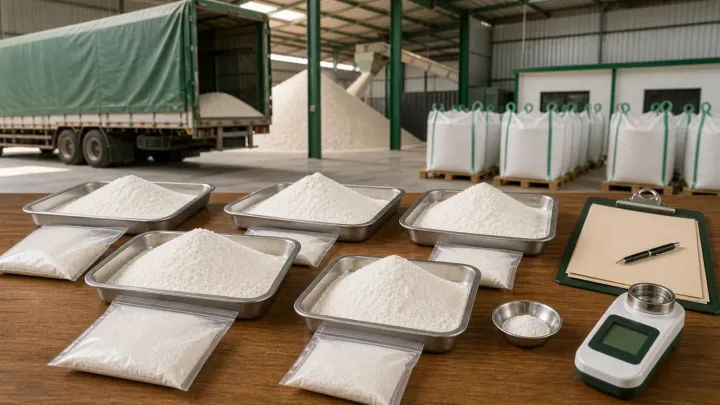
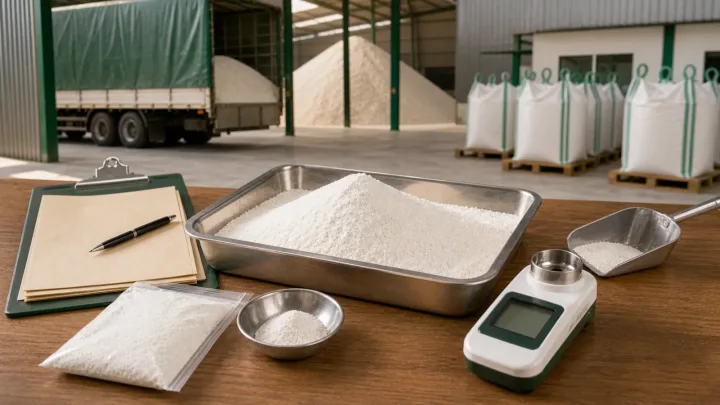
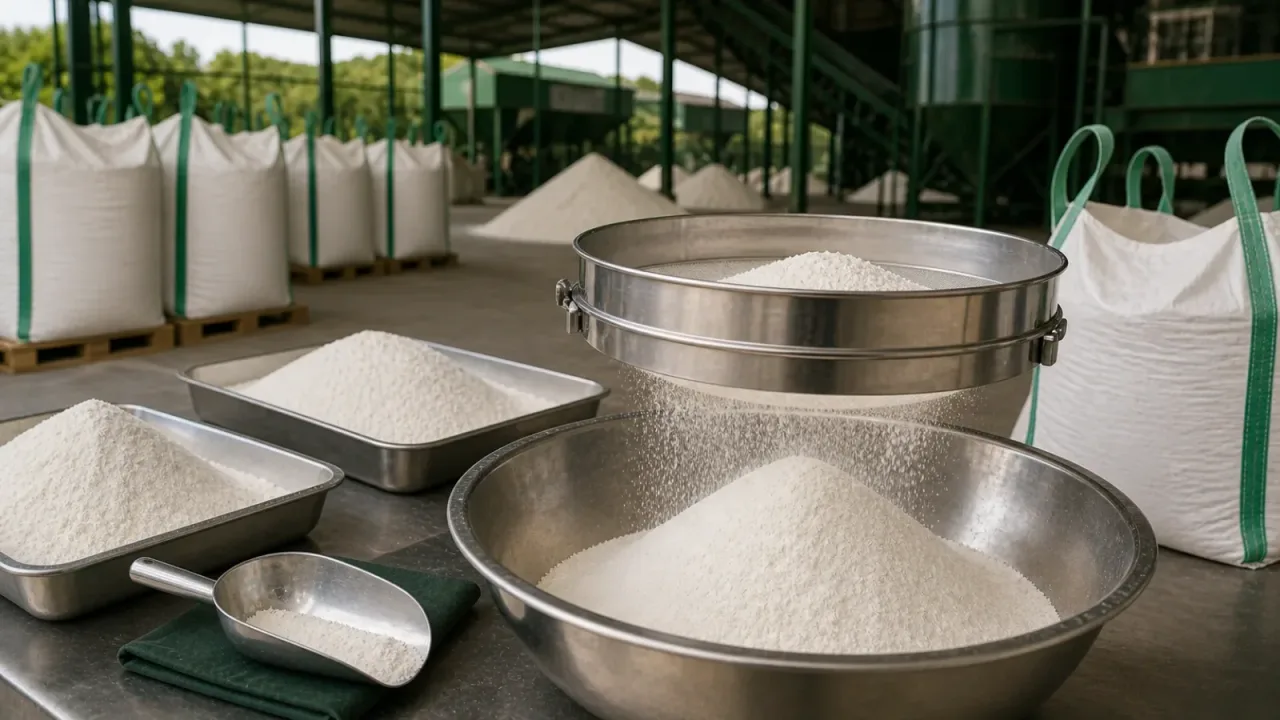
Using screening systems and physical cleaning to separate soil and sand from the residue, combined with relative humidity control during the packaging stage to prevent mold contamination (Mycotoxin Control), is the key to ensuring the consistent quality of refined cassava residue.
5. The Role of Cassava Residue in "Reducing Impurities" in Total Feed Formulations
Using high-quality refined cassava residue is not just about cost reduction, but about "risk management" in feed formulation optimization.
In cases where primary ingredients like corn carry a high risk of Aflatoxin contamination, using refined cassava residue that has undergone well-controlled moisture and toxin processes can help reduce the proportion of high-risk ingredients in the formulation. Using cassava residue with nutritional consistency allows animal nutritionists to lower the Coefficient of Variation (CV) in feed formulations, resulting in more stable animal production and enhanced biosafety.
6. Technical Considerations for Animal Nutritionists
For animal nutritionists and Quality Control (QC) departments, using refined cassava residue in feed formulations involves several technical considerations:
- Inclusion Level: Since cassava residue has a higher crude fiber level than other energy ingredients, increasing the proportion of cassava residue excessively may affect the digestibility of animals, particularly in young animals.
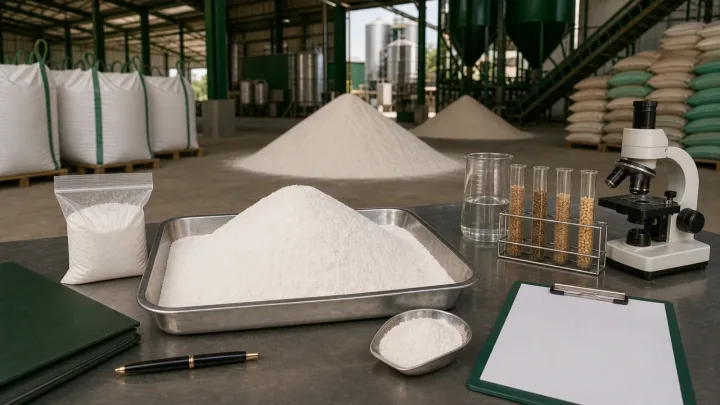
- Quality Control: Every batch of cassava residue entering the mill must be verified via a Certificate of Anaylsis (COA), focusing on moisture content, ash content, and residual HCN levels.
- Post-production Stability: Caution must be taken when storing cassava residue in high-humidity areas, as moisture re-absorption into the material can stimulate mold growth.
7. Conclusion
Standardized refined cassava residue is a sustainable solution for the animal feed industry to balance "cost reduction" with "quality maintenance." Once processed through physical impurity reduction and natural toxin reduction using appropriate technologies, refined cassava residue will become a clean, safe, and environmentally friendly raw material for the future of animal feed production.
If you require additional technical information, detailed nutritional specifications, or wish to request product samples and Certificates of Analysis (COA) for feed formulation trials, please contact our technical department for detailed information.
Sources
- Thai Tapioca Starch Association - Tapioca Production - https://www.thaitapiocastarch.org/en/information/statistics/tapioca_production - ใช้ยืนยันภาพรวมผลผลิตมันสำปะหลังไทยและบริบท supply ของอุตสาหกรรม
- Thai Tapioca Starch Association - Export Tapioca Products - https://www.thaitapiocastarch.org/en/information/statistics/export_tapioca_products - ใช้ยืนยันสถิติส่งออกผลิตภัณฑ์มันสำปะหลัง รวมถึงหมวด Pulp
- Thai Tapioca Starch Association - Tapioca Starch Processing - https://thaitapiocastarch.org/en/information/learning_industry/tapioca_starch_processing - ใช้อธิบายกระบวนการผลิตแป้งมันและที่มาของผลพลอยได้จากโรงงานแป้งมัน
- ACFS / TAS 8803-2561 - มาตรฐานสินค้าเกษตร กากมันสำปะหลัง - https://www.opsmoac.go.th/udonthani-dwl-files-471491791858 - ใช้อ้างอิงนิยามกากมันสำปะหลังแห้ง/ผง/อัดเม็ด และข้อกำหนดพื้นฐาน เช่น ไม่พบเชื้อราหรือสิ่งแปลกปลอมที่มองเห็นได้
- FAO - Roots, tubers, plantains and bananas in animal feeding - https://www.fao.org/4/T0554E/T0554E05.htm - ใช้ยืนยันประเด็นความชื้น สิ่งปลอมปน เถ้า ทราย และความเสี่ยง aflatoxin ในสินค้า cassava/feed
- FAO - Thailand Feed and Feed Ingredient Standards - https://www.fao.org/fileadmin/user_upload/affris/docs/standard/Thailand_Feed_and_Feed_Ingredient_Standards.pdf - ใช้เป็นตัวอย่างโครงสร้างค่าวิเคราะห์วัตถุดิบอาหารสัตว์ เช่น moisture, protein, fiber, ash
- DLD - การตรวจอะฟลาทอกซินในวัตถุดิบอาหารสัตว์ - https://qcontrol.dld.go.th/images/Prototype/knowledge/analysis/2565/13.pdf - ใช้สนับสนุนหัวข้อ aflatoxin, วิธีวิเคราะห์ และเหตุผลที่ควรตรวจเป็นรอบเมื่อมีความเสี่ยง

Author information
Sri Thong Admin
B2B dried cassava pulp content specialist
Affiliation
SRITHONG PRODUCTTAPIOCA COMPANY LIMITED