What Moisture Level Should Dried Cassava Pulp Be?
By Sri Thong Admin · Published 2026-06-11 · Updated 2026-06-07
Technical Summary: Moisture Control in Cassava Pulp for Maximum Efficiency in the Animal Feed Industry
Managing the quality of Dried Cassava Pulp in the animal feed industry depends on more than just nutrient content; the core lies in "Moisture Control," a decisive factor for both Feed Safety and economic viability. Maintaining moisture within appropriate Standard Specifications is a key mechanism for inhibiting the growth of fungi and mycrotoxins, while also preserving Nutrient Stability against chemical reactions or uncontrolled fermentation. Therefore, monitoring moisture alongside Water Activity ($a_w$) is a process that feed mills must prioritize to prevent the risk of Dry Matter Loss and the increase of hidden costs from unnecessary water weight.
1. The Role and Importance of Cassava Pulp in the Animal Feed Industry
Cassava pulp is an alternative raw material that plays a vital role as an Energy Source due to its appropriate Starch and Fiber content for feed formulations. However, the physical and chemical characteristics of dried cassava pulp are highly sensitive to environmental conditions.
The importance of quality control is not limited to moisture testing but also includes maintaining "Feed Safety." If moisture levels are inconsistent, it directly affects Nutrient Stability; excessive moisture accelerates carbohydrate degradation, causing nutritional values specified in the Certificate of Analysis (COA) to be inaccurate upon arrival at the user's site.
2. The Ideal Moisture Range
At an industrial level, establishing Standard Specifications must refer to storage capacity and Processing Compatibility, considering the following points:
Relationship between Moisture Content and Water Activity ($a_w$)
Measuring only Moisture Content in percentage weight may be insufficient for a full risk assessment because "Water Activity ($a_w$)" indicates the amount of free water available for microbial growth. Even if the overall moisture appears low, if the $a_w$ exceeds the Critical Point, fungal contamination may occur.
| Parameter | Technical Significance |
| Moisture Content (%) | Indicates the amount of water in the material relative to total weight (Weight basis) |
| Water Activity ($a_w$) | Indicates the potential for biochemical reactions and microbial growth |
| Critical Point | The moisture level at which structural and nutritional changes begin to occur |
3. High Moisture Risks
When cassava pulp moisture exceeds the specified threshold, it brings unacceptable risks to feed mills as follows:
- Microbial & Fungal Growth: High moisture provides conditions conducive to the proliferation of Aspergillus and Penicillium fungi.
- Mycotoxin Contamination: As fungi grow, they produce toxins such as Aflatoxin or Ochratoxin. These toxins are heat-resistant and can persist in feed products, impacting animal health and damaging food chain confidence.
- Uncontrolled Fermentation: High moisture stimulates microbial activity under unsuitable conditions, leading to Self-heating in storage piles, which destroys the molecular structure of starch and protein.
- Shelf-life Reduction: Raw materials with high moisture have a significantly shorter shelf life, increasing the risk of material loss during storage in Silos.
4. Economic & Nutritional Implications
Improper moisture levels affect Production Costs in two different directions:
Case: High Moisture
Beyond quality risks, "Dry Matter Loss" occurs because excess water replaces the weight of primary nutrients. Additionally, "Transportation Costs" increase unreasonably as factories must pay for the extra "water weight" in each shipment.
Case: Over-drying
Excessive drying to achieve the lowest possible moisture may lead to "Nutrient Degradation" due to accumulated heat. It also affects "Processing Efficiency" because overly dry materials may have physical properties that are difficult to mix in feed mixers.
Accurate Valuation: Buyers and nutritionists should evaluate raw materials based on their "Dry Matter Value" (actual nutrient weight) rather than just the total weight (As-is basis) to achieve the true nutrient cost per unit.
5. Production & Drying Process Control
To achieve consistent quality in cassava pulp, drying technology is a critical factor:
- Drying Technology: Sun Drying carries risks of moisture inconsistency and high contamination potential, whereas Mechanical Drying allows for better condition control.
- Key Parameters: Must control Temperature to prevent nutrient destruction, appropriate Retention Time, and Airflow to thoroughly extract moisture from the material.
- Moisture Uniformity: The goal is to ensure all production lots have similar moisture levels (Low Standard Deviation) to reduce variability in feed formulations.
6. Quality Control & Monitoring
Creating a reliable monitoring system is the heart of a B2T Supply Chain:
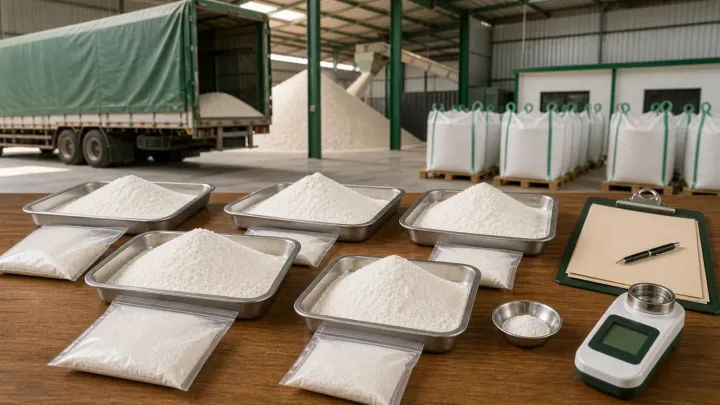
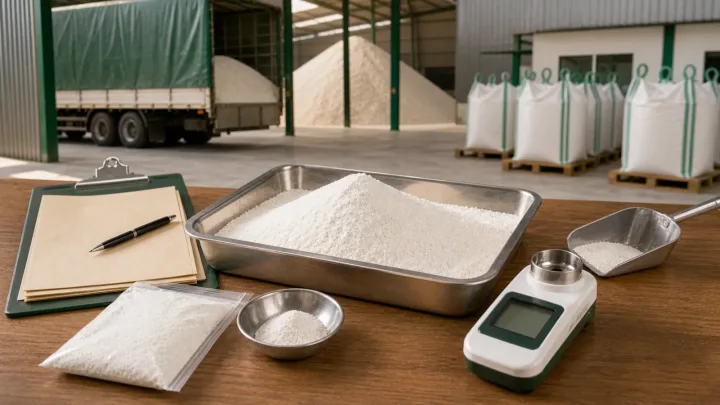
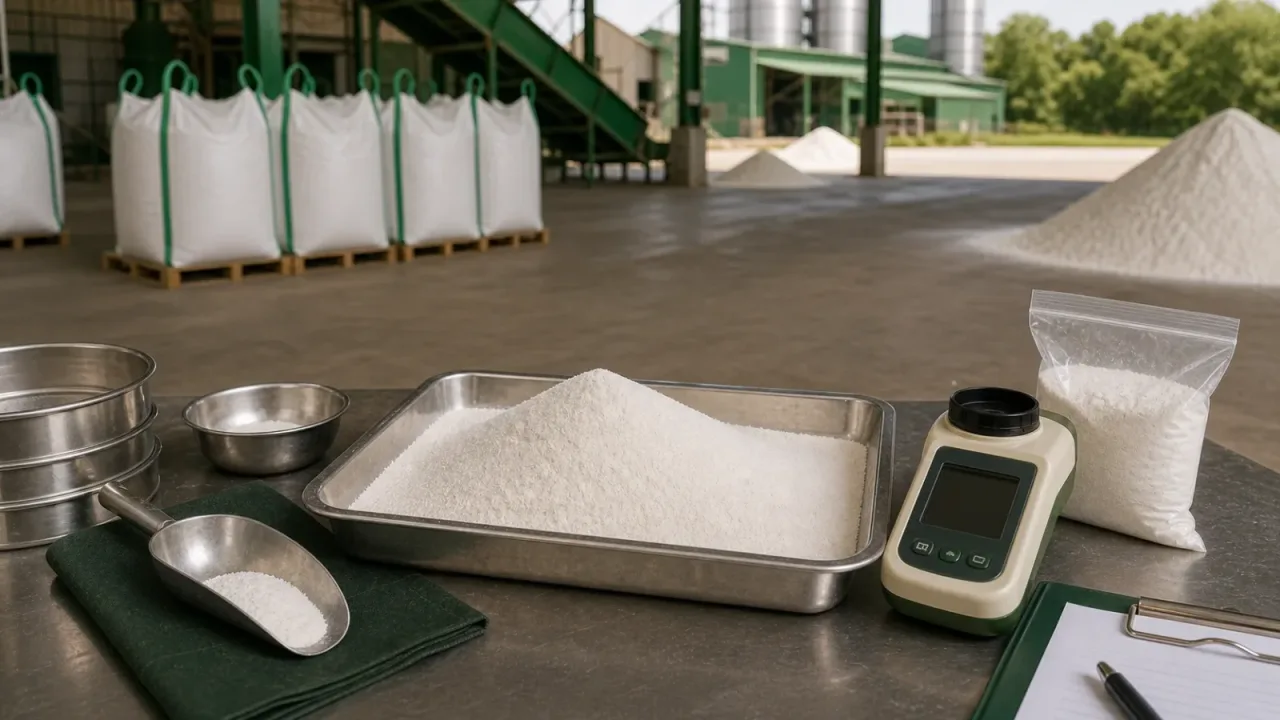
Standard Moisture Measurement Methods: While a Moisture Meter is convenient for on-site Rapid Tests, for international standard verification, the Oven-drying Method (drying in a temperature-controlled oven) should be used for maximum accuracy.
Acceptance/Rejection Criteria: Feed mills should clearly specify the maximum allowable moisture in purchase agreements. If moisture exceeds the specification (Out of Specification), a clear management system must be in place.
Traceability System: Establishing a system capable of tracing back to the production source and Batch Tracking will allow for the containment of damage and rapid problem management if moisture or mold issues are detected.
7. Conclusion & Technical Recommendations
Selecting high-quality cassava pulp is not about finding the lowest moisture, but about finding the "Balance" between production costs and feed safety. Maintaining moisture at the appropriate level will sustainably preserve Dry Matter and prevent Mycotoxin risks.
Checklist for Farm Managers and Feed Mill Producers:
- [ ] Verify that the Moisture Content in the COA matches the specified standard.
- [ ] Assess moisture alongside physical characteristics (no clumping or heat in storage piles).
- [ ] Check Mycotoxin Test results if moisture risks were found in previous lots.
- [ ] Calculate costs by comparing Dry Matter Value for economic viability.
- [ ] Evaluate product specification Uniformity from suppliers across each delivery lot.
If you require in-depth information regarding Specifications, Laboratory Analysis results (COA), or wish to request product samples for testing in your production process, please contact our technical department immediately for information and a quotation.
Sources
- Thai Tapioca Starch Association - Tapioca Production - https://www.thaitapiocastarch.org/en/information/statistics/tapioca_production - ใช้ยืนยันภาพรวมผลผลิตมันสำปะหลังไทยและบริบท supply ของอุตสาหกรรม
- Thai Tapioca Starch Association - Export Tapioca Products - https://www.thaitapiocastarch.org/en/information/statistics/export_tapioca_products - ใช้ยืนยันสถิติส่งออกผลิตภัณฑ์มันสำปะหลัง รวมถึงหมวด Pulp
- Thai Tapioca Starch Association - Tapioca Starch Processing - https://thaitapiocastarch.org/en/information/learning_industry/tapioca_starch_processing - ใช้อธิบายกระบวนการผลิตแป้งมันและที่มาของผลพลอยได้จากโรงงานแป้งมัน
- ACFS / TAS 8803-2561 - มาตรฐานสินค้าเกษตร กากมันสำปะหลัง - https://www.opsmoac.go.th/udonthani-dwl-files-471491791858 - ใช้อ้างอิงนิยามกากมันสำปะหลังแห้ง/ผง/อัดเม็ด และข้อกำหนดพื้นฐาน เช่น ไม่พบเชื้อราหรือสิ่งแปลกปลอมที่มองเห็นได้
- FAO - Roots, tubers, plantains and bananas in animal feeding - https://www.fao.org/4/T0554E/T0554E05.htm - ใช้ยืนยันประเด็นความชื้น สิ่งปลอมปน เถ้า ทราย และความเสี่ยง aflatoxin ในสินค้า cassava/feed
- FAO - Thailand Feed and Feed Ingredient Standards - https://www.fao.org/fileadmin/user_upload/affris/docs/standard/Thailand_Feed_and_Feed_Ingredient_Standards.pdf - ใช้เป็นตัวอย่างโครงสร้างค่าวิเคราะห์วัตถุดิบอาหารสัตว์ เช่น moisture, protein, fiber, ash
- DLD - การตรวจอะฟลาทอกซินในวัตถุดิบอาหารสัตว์ - https://qcontrol.dld.go.th/images/Prototype/knowledge/analysis/2565/13.pdf - ใช้สนับสนุนหัวข้อ aflatoxin, วิธีวิเคราะห์ และเหตุผลที่ควรตรวจเป็นรอบเมื่อมีความเสี่ยง

Author information
Sri Thong Admin
B2B dried cassava pulp content specialist
Affiliation
SRITHONG PRODUCTTAPIOCA COMPANY LIMITED