What Ash in Dried Cassava Pulp Says About Quality
By Sri Thong Admin · Published 2026-06-13 · Updated 2026-06-06
Analysis of Ash Content in Cassava Pulp: An Indicator of Purity and Economic Efficiency for Feed Mills
Essential Summary: Ash content in cassava pulp is not merely a figure representing mineral content, but a key indicator reflecting the cleanliness of raw materials, the efficiency of the starch extraction process at the source, and the economic value in feed formulation. An increase in Ash content is directly related to the amount of impurities, such as sand and soil, which leads to the "Nutrient Dilution" phenomenon—the dilution of energy and protein in the diet—consequently increasing the cost per unit of nutrient. Maintaining stable Ash levels is therefore a critical strategy for preserving nutritional standards and the stability of feed production costs.
1. The Science of Ash Content
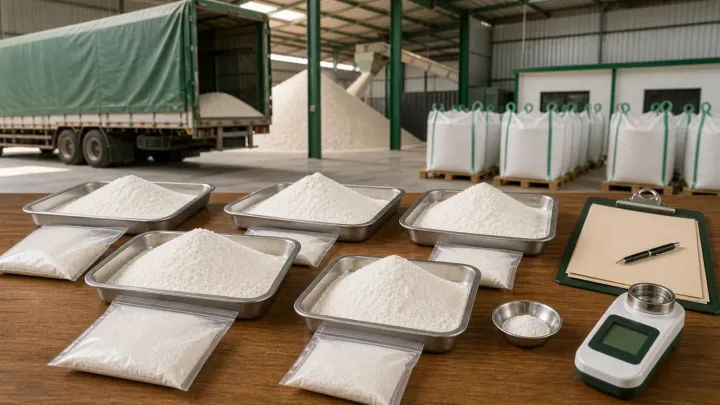
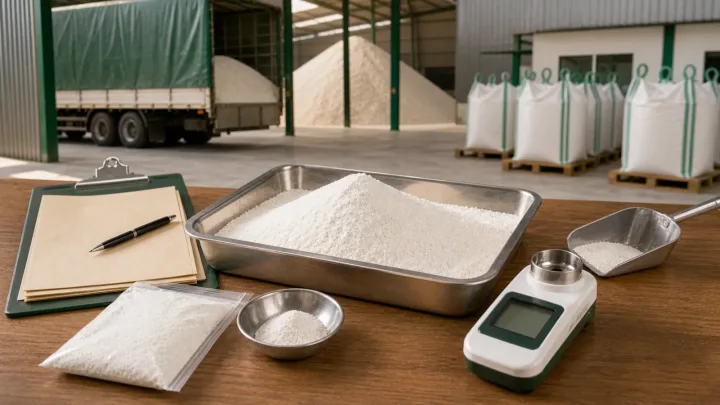
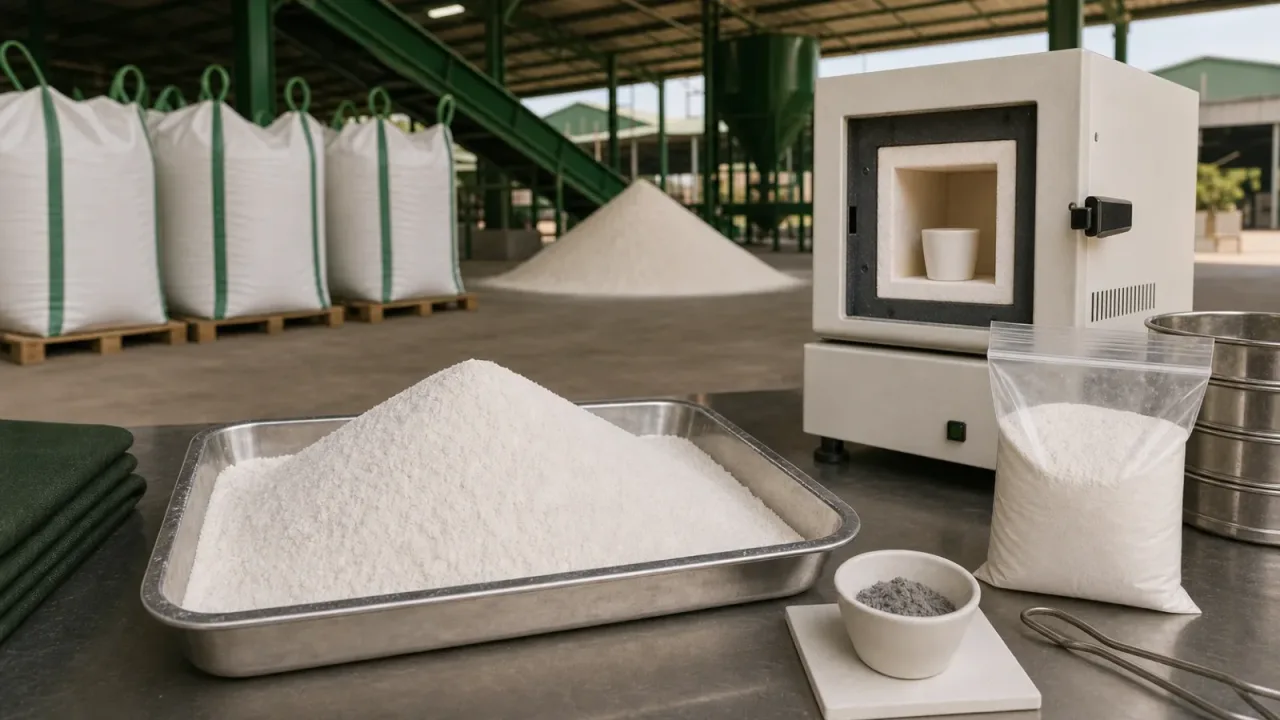
In Proximate Analysis, Ash refers to the inorganic matter remaining after the combustion of organic matter at high temperatures in a laboratory. In the context of cassava pulp, this value is vital in indicating the non-organic components present in the raw material.
Differentiating Between Beneficial Minerals and Impurities
We must distinguish between "essential minerals" and "impurities." While Ash includes minerals beneficial to animals, such as Calcium (Ca), Phosphorus (P), Magnesium (Mg), and Potassium (K), if the Ash level exceeds standard limits, the increase often stems from non-nutritional inorganic matter, such as Silica (SiO2), which is a primary component of sand and soil.
Inverse Relationship with Organic Matter
In analytical chemistry, as Ash increases, the proportion of Organic Matter (OM)—which contains nutritious components such as starch and fiber—must decrease proportionally. Therefore, evaluating Ash is effectively assessing nutrient density. A higher Ash content implies a decrease in the energy available to animals per unit of weight.
2. Indicator of Impurities
For feed mills, Ash serves as a "warning signal" regarding the cleanliness of the upstream process. Excessively high ash content usually does not originate from natural minerals in plant tissue, but from external impurities.
Detection of Impurities (Sand, Soil, and Grit)
The presence of soil and sand in cassava pulp is the main cause of spiking Ash levels. These impurities often bypass the washing or harvesting stages. If the separation efficiency in starch factories is inadequate, the raw materials delivered to feed mills will be inconsistent.
Impact on the Animal's Digestive System
The accumulation of large amounts of inert matter, such as grit, can affect the digestive systems of animals, particularly monogastric species, potentially impacting digestive function and nutrient absorption, which subsequently affects Average Daily Gain (ADG) and Feed Conversion Ratio (FCR).
3. Indicator of Production and Extraction Efficiency
Ash is also a vital tool for assessing the extraction efficiency of the starch production process.
Relationship Between Ash and Starch Content
In the cassava pulp production process, if the starch extraction is efficient, the maximum amount of starch is separated from the pulp into the starch product. However, if the extraction is incomplete or if there is high inorganic contamination, higher Ash levels reflect a loss of potential energy from the starch remaining in the pulp.
Nutrient Density Analysis
As Ash levels rise, nutrient density decreases immediately, as energy-providing organic matter (Metabolizable Energy) is replaced by non-energetic inorganic matter. Monitoring Ash is thus an assessment of the true quality of the "raw material core" and whether its nutrient concentration is sufficient.
4. Impact on Nutritional Value
Feed formulation must consider the biological impacts when Ash levels in raw materials fluctuate.
- Nutrient Dilution Effect: Higher ash leads to the dilution of Metabolizable Energy (ME) and Crude Protein (CP) in the diet, forcing producers to increase cassava pulp inclusion levels to maintain the same nutrient levels, which impacts total cost.
- Digestibility: High levels of inert matter may indirectly affect the digestibility of the raw material, as these impurities provide no nutritional value and may interfere with enzymatic activity in the digestive tract.
- Mineral Imbalance: Although ash contains minerals, uncontrolled increases in Ash can lead to risks of mineral imbalances, such as a distorted Ca:P ratio, which hinders bone development in young animals.
5. Economic Implications
This is the most critical point for procurement departments and nutritionists when deciding on raw material purchases.
Cost per Unit of Nutrient Analysis
Considering only the "Price per kg" is an economic error in feed ingredient procurement. Buyers should consider the "cost per unit of energy" or "cost per unit of protein." If cassava pulp is cheaper but has very high Ash due to soil and sand contamination, the actual cost to achieve the required ME level in the formulation will be higher than purchasing a more expensive raw material with low Ash.
| Consideration | High Quality (Low Ash) | Low Quality (High Ash) |
| Energy Density | High (Nutrient Dense) | Low (Diluted) |
| Contamination Risk | Low (Clean) | High (Contains Soil/Sand) |
| Formulation Difficulty | Easy (Constant/Stable) | Hard (Fluctuating/Unstable) |
| Hidden Cost | Low | High (Paying for "Dirt") |
Managing Hidden Cost Risks
Purchasing high-ash raw materials is akin to "paying for dirt" instead of buying energy. Inconsistent Ash levels also present significant challenges in controlling the standards of finished feed, creating a risk that nutrient levels in the diet will not meet specified standards.
6. Conclusion & Recommendations
Ash content in cassava pulp is a mirror reflecting the quality of production processes and raw material management. Maintaining stable and standard Ash levels is essential for feed mills aiming to preserve production efficiency and precise cost control.
Recommendations for Feed Producers:
- COA (Certificate of Analysis) Verification: Do not look only at the price; carefully inspect Ash levels and their relationship with Organic Matter in every delivered lot.
- Use of Lab Analysis: Conduct in-house lab sampling to compare with the supplier's COA to ensure raw material consistency.
- Cost-Effectiveness Assessment: Nutritionists should use Ash data to calculate the cost per unit of nutrient (Cost per unit of ME/CP) for the most accurate purchasing decisions.
Sources
- Thai Tapioca Starch Association - Tapioca Production - https://www.thaitapiocastarch.org/en/information/statistics/tapioca_production - ใช้ยืนยันภาพรวมผลผลิตมันสำปะหลังไทยและบริบท supply ของอุตสาหกรรม
- Thai Tapioca Starch Association - Export Tapioca Products - https://www.thaitapiocastarch.org/en/information/statistics/export_tapioca_products - ใช้ยืนยันสถิติส่งออกผลิตภัณฑ์มันสำปะหลัง รวมถึงหมวด Pulp
- Thai Tapioca Starch Association - Tapioca Starch Processing - https://thaitapiocastarch.org/en/information/learning_industry/tapioca_starch_processing - ใช้อธิบายกระบวนการผลิตแป้งมันและที่มาของผลพลอยได้จากโรงงานแป้งมัน
- ACFS / TAS 8803-2561 - มาตรฐานสินค้าเกษตร กากมันสำปะหลัง - https://www.opsmoac.go.th/udonthani-dwl-files-471491791858 - ใช้อ้างอิงนิยามกากมันสำปะหลังแห้ง/ผง/อัดเม็ด และข้อกำหนดพื้นฐาน เช่น ไม่พบเชื้อราหรือสิ่งแปลกปลอมที่มองเห็นได้
- FAO - Roots, tubers, plantains and bananas in animal feeding - https://www.fao.org/4/T0554E/T0554E05.htm - ใช้ยืนยันประเด็นความชื้น สิ่งปลอมปน เถ้า ทราย และความเสี่ยง aflatoxin ในสินค้า cassava/feed
- FAO - Thailand Feed and Feed Ingredient Standards - https://www.fao.org/fileadmin/user_upload/affris/docs/standard/Thailand_Feed_and_Feed_Ingredient_Standards.pdf - ใช้เป็นตัวอย่างโครงสร้างค่าวิเคราะห์วัตถุดิบอาหารสัตว์ เช่น moisture, protein, fiber, ash
- DLD - การตรวจอะฟลาทอกซินในวัตถุดิบอาหารสัตว์ - https://qcontrol.dld.go.th/images/Prototype/knowledge/analysis/2565/13.pdf - ใช้สนับสนุนหัวข้อ aflatoxin, วิธีวิเคราะห์ และเหตุผลที่ควรตรวจเป็นรอบเมื่อมีความเสี่ยง

Author information
Sri Thong Admin
B2B dried cassava pulp content specialist
Affiliation
SRITHONG PRODUCTTAPIOCA COMPANY LIMITED