What Is Aflatoxin in Animal Feed Raw Materials, and Why Must You Be Cautious?
By Sri Thong Admin · Published 2026-06-12 · Updated 2026-06-06
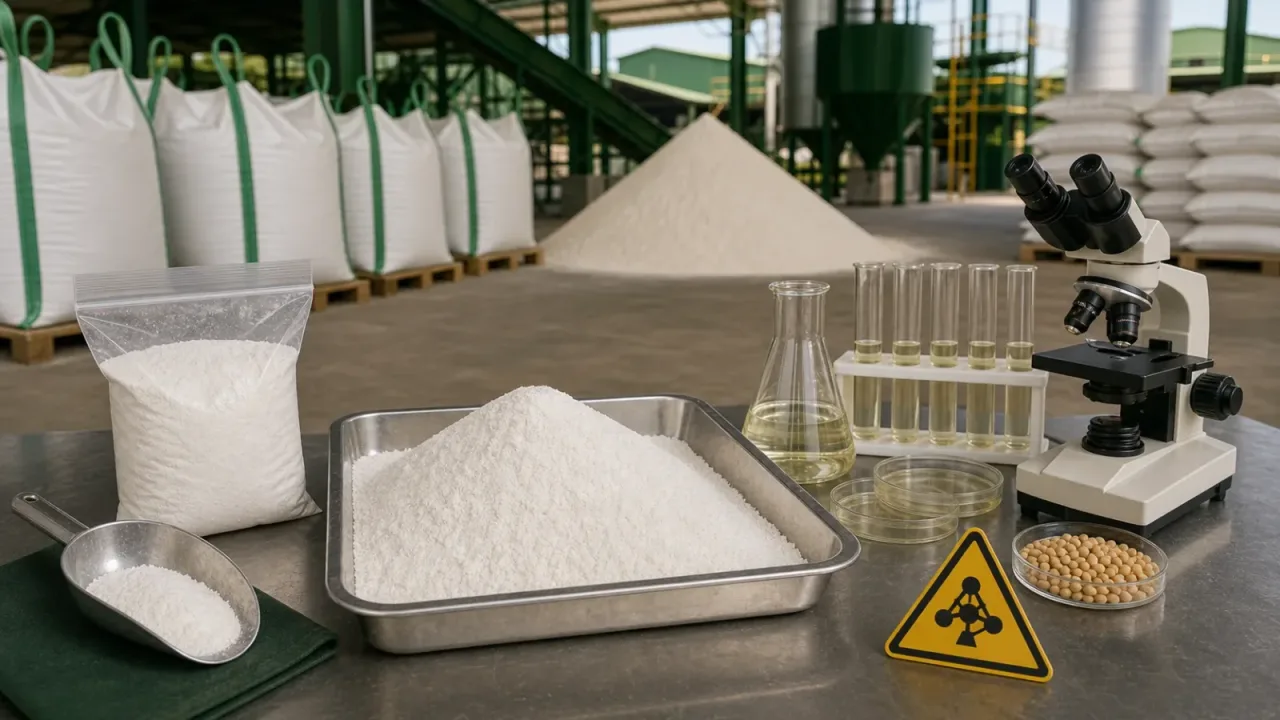
Summary: Aflatoxin Management in the Animal Feed Industry
Aflatoxin is one of the most severe and widespread mycotoxins in the animal feed production chain. Contamination does not only impact reduced animal growth performance or increased Feed Conversion Ratio (FCR) costs, but also poses risks to consumer safety through the "carry-over effect" in meat, milk, and eggs. Effective management requires in-depth understanding, ranging from controlling moisture in upstream raw materials and utilizing advanced analytical testing to employing efficient Mycotoxin Binders to bind toxins, in order to maintain production standards and competitiveness in the international export market.
1. Introduction: The Invisible Crisis in the Animal Feed Chain
In the animal feed production industry, raw material safety is the heart of cost control and product quality. However, one of the most serious problems is the "silent threat" that cannot be seen with the naked eye: Aflatoxin contamination.
Aflatoxin belongs to the group of Mycotoxins, which are secondary metabolites produced by certain types of fungi. These toxins are highly heat-stable, meaning that heat-based feed production processes, such as pelleting, cannot destroy the chemical structure of Aflatoxin. Therefore, quality control must focus on prevention, starting from the raw material selection stage and production process management, to comply with international safety standards and prevent economic losses that may arise from contamination levels exceeding standards.
2. Deep Dive into the Root Cause: Mechanisms and Sources of Aflatoxin
Understanding the root cause of Aflatoxin production is key to proactive prevention planning, which primarily involves fungal species, environmental conditions, and raw material characteristics.
2.1 Fungal Species
Aflatoxin production occurs through the metabolic processes of fungi in the Aspergillus group, with the primary species affecting the animal feed industry being:
- Aspergillus flavus: The most common species found in cereal-based raw materials.
- Aspergillus parasiticus: Capable of producing various types of Aflatoxin (e.g., B1, B2, G1, G2) and often found in specific environments.
2.2 Environmental Triggers
These fungi develop and produce toxins when in optimal conditions. Factors that feed mills and raw material suppliers must monitor closely include:
- Moisture Content: Excessive moisture levels in raw materials or storage silos are a primary trigger for fungal outbreaks.
- Temperature: Hot and humid (tropical) climates are conducive to rapid fungal reproduction.
- Post-harvest Management: Storage in damp areas, insufficient ventilation, or contamination during transportation.
2.3 High-risk Ingredients
| Ingredient Type | Risk Level | Key Cause |
| Corn/Maize | Very High | The primary energy source for fungi and often accumulates moisture during harvest. |
| Soybean | High | Risk from moisture management during production and storage. |
3. Pathophysiology in Livestock
Aflatoxin affects animals across multiple systems simultaneously, categorized into two types: acute toxicity from high doses over a short period, and chronic toxicity from continuous low-level exposure.
3.1 Acute Toxicity
When animals rapidly ingest high amounts of Aflatoxin, it leads to Hepatotoxicity, or severe liver cell damage, resulting in liver inflammation, tissue necrosis, and potentially acute death within the herd.
3.2 Chronic Toxicity
This is harder to detect but causes greater long-term damage to profitability due to gradual effects, such as:
- Immunosuppression: The toxins suppress white blood cell function, leading to low immunity and increased vulnerability to other bacterial or viral infections on the farm.
- Growth Depression: Damage to cells in the gastrointestinal tract and liver leads to a higher FCR (Feed Conversion Ratio); animals consume the same amount of feed but cannot efficiently convert it into meat or weight.
- Reproductive Toxicity: In poultry, reduced hatch rates and thin, fragile eggshells are observed. In mammals, lower conception rates or fetal abnormalities may occur. Disruption of intestinal enzyme activity leads to Nutrient Malabsorption, where essential nutrients are not fully utilized.
4. The Food Safety Link: One Health Concept
From a One Health perspective, animal and human safety are inextricably linked. Aflatoxin contamination in animal feed leads to risks in the human food chain via the Carry-over effect.
When animals consume contaminated raw materials, some toxins can accumulate and be transferred to animal-derived products such as Meat, Eggs, and Milk. Although levels may not cause acute poisoning in humans, long-term exposure is high-risk because Aflatoxin possesses carcinogenic properties, particularly regarding liver cancer.
Furthermore, for feed mills focused on exports, the Sanitary and Phytosanitary (SPS) measures of trading partners are extremely strict. Detecting residues exceeding standards can lead to product rejection and trade barriers, impacting the company's reputation and economic value.
5. Mitigation and Control Strategies
Controlling Aflatoxin cannot be achieved in a single step; it requires integrated management.
5.1 Pre-harvest & Post-harvest Management
Silo Management and "Farm-to-Factory" quality control of raw materials are the most critical first lines of defense. Reducing grain moisture to appropriate levels before storage helps inhibit fungal growth.
5.2 Analytical Testing
Standardized feed mills must have rigorous QC processes using recognized testing techniques, such as:
- ELISA (Enzyme-Linked Immunosorbent Assay): Suitable for rapid screening of large quantities of raw materials.
- HPLC (High-Performance Liquid Chromatography): Used for confirmation to achieve high precision at the molecular level.
5.3 Mycotoxin Deactivation
In cases where raw materials have controllable levels of contamination, Mycotoxin Binders technology is a vital tool. High-efficiency binders help reduce toxin absorption in the animal's gastrointestinal tract. Common adsorbents include:
- Bentonite: A clay compound with properties for adsorbing certain types of toxins.
- Yeast Cell Wall (Glucan/Mannan): Technology derived from yeast cell walls that can bind toxins and help boost intestinal immunity.
6. Conclusion: Building Sustainable Safety Standards
Managing Aflatoxin is not the responsibility of a single party but must result from the integration of knowledge and collaboration between raw material producers, feed mills, and farmers. Continuous monitoring and the implementation of effective toxin management technologies not only protect animal health and production efficiency but also ensure Food Security and the sustainable maintenance of international food safety standards.
Sources
- Thai Tapioca Starch Association - Tapioca Production - https://www.thaitapiocastarch.org/en/information/statistics/tapioca_production - ใช้ยืนยันภาพรวมผลผลิตมันสำปะหลังไทยและบริบท supply ของอุตสาหกรรม
- Thai Tapioca Starch Association - Export Tapioca Products - https://www.thaitapiocastarch.org/en/information/statistics/export_tapioca_products - ใช้ยืนยันสถิติส่งออกผลิตภัณฑ์มันสำปะหลัง รวมถึงหมวด Pulp
- Thai Tapioca Starch Association - Tapioca Starch Processing - https://thaitapiocastarch.org/en/information/learning_industry/tapioca_starch_processing - ใช้อธิบายกระบวนการผลิตแป้งมันและที่มาของผลพลอยได้จากโรงงานแป้งมัน
- ACFS / TAS 8803-2561 - มาตรฐานสินค้าเกษตร กากมันสำปะหลัง - https://www.opsmoac.go.th/udonthani-dwl-files-471491791858 - ใช้อ้างอิงนิยามกากมันสำปะหลังแห้ง/ผง/อัดเม็ด และข้อกำหนดพื้นฐาน เช่น ไม่พบเชื้อราหรือสิ่งแปลกปลอมที่มองเห็นได้
- FAO - Roots, tubers, plantains and bananas in animal feeding - https://www.fao.org/4/T0554E/T0554E05.htm - ใช้ยืนยันประเด็นความชื้น สิ่งปลอมปน เถ้า ทราย และความเสี่ยง aflatoxin ในสินค้า cassava/feed
- FAO - Thailand Feed and Feed Ingredient Standards - https://www.fao.org/fileadmin/user_upload/affris/docs/standard/Thailand_Feed_and_Feed_Ingredient_Standards.pdf - ใช้เป็นตัวอย่างโครงสร้างค่าวิเคราะห์วัตถุดิบอาหารสัตว์ เช่น moisture, protein, fiber, ash
- DLD - การตรวจอะฟลาทอกซินในวัตถุดิบอาหารสัตว์ - https://qcontrol.dld.go.th/images/Prototype/knowledge/analysis/2565/13.pdf - ใช้สนับสนุนหัวข้อ aflatoxin, วิธีวิเคราะห์ และเหตุผลที่ควรตรวจเป็นรอบเมื่อมีความเสี่ยง

Author information
Sri Thong Admin
B2B dried cassava pulp content specialist
Affiliation
SRITHONG PRODUCTTAPIOCA COMPANY LIMITED